
Freedom
The Hidden Dangers Behind Democratic Socialism’s Growing Appeal


Faith Facts
- Democratic socialism promotes government control over economic decisions, contradicting biblical principles of individual stewardship and personal responsibility
- Socialist policies have historically led to economic collapse and religious persecution in nations that adopted them
- The movement’s appeal to younger Americans reflects a lack of understanding about socialism’s track record and God-given principles of freedom
A troubling trend is sweeping across America, particularly among younger generations who are increasingly drawn to the promises of democratic socialism. Yet few seem to understand what they’re actually embracing—or the dangerous path it leads down.
The appeal of democratic socialism lies in its carefully crafted messaging about equality, fairness, and compassion. But beneath the attractive surface lies an ideology fundamentally at odds with the Christian principles upon which our nation was founded.
Democratic socialism centralizes power in the hands of government bureaucrats rather than empowering individuals and families. This directly contradicts the biblical model of personal stewardship, where God entrusts resources to individuals who are accountable for how they use them. Scripture consistently affirms private property rights and warns against covetousness—the very foundation upon which socialism is built.
The economic track record speaks for itself. Every nation that has embraced socialist policies has experienced devastating consequences: economic stagnation, loss of innovation, and the erosion of personal freedoms. Venezuela, once South America’s wealthiest nation, descended into poverty and chaos under socialist leadership.
Even more concerning is socialism’s historical hostility toward religious freedom. When government becomes the ultimate authority and provider, faith in God is inevitably marginalized. Socialist regimes throughout history—from the Soviet Union to China—have systematically persecuted believers and attempted to replace worship of God with worship of the state.
The Bible provides clear guidance on these matters. Second Thessalonians 3:10 instructs that “if anyone is not willing to work, let him not eat.” This isn’t callousness—it’s wisdom about human nature and the dignity found in productive labor. Proverbs repeatedly warns against laziness while praising diligence and hard work.
American prosperity has been built on principles of limited government, free enterprise, and individual liberty—concepts rooted in a biblical worldview. Our founders understood that when government grows too large, individual freedom shrinks. They recognized that rights come from God, not government, and that government’s role is to protect those God-given rights, not redistribute wealth according to bureaucratic whims.
Christians who care about justice and the poor should recognize that free markets have lifted more people out of poverty than any other system in human history. Genuine compassion means creating opportunities for people to flourish through their own efforts, not creating dependency on government programs that trap generations in poverty.
The rising popularity of democratic socialism among young Americans reflects a failure in our educational system and culture. Many have never been taught basic economics, the history of socialism’s failures, or the biblical principles that made America exceptional. Instead, they’ve been fed a steady diet of grievance politics and utopian promises.
As people of faith, we must speak truth into this cultural moment. We must educate our children and communities about both the practical failures and spiritual dangers of socialism. We must defend the principles of individual liberty, limited government, and free enterprise that have allowed America to become a beacon of hope and prosperity.
The choice before us is clear: Will we embrace an ideology that centralizes power and diminishes both economic freedom and religious liberty? Or will we recommit to the time-tested principles that honor God, respect individual dignity, and create genuine opportunity for all Americans to pursue the dreams He’s placed in their hearts?
This isn’t merely a political or economic question—it’s a spiritual and moral one that will determine what kind of nation we pass on to future generations.
Let us know what you think, please share your thoughts in the comments below.


Faith Facts
- Irish teacher Enoch Burke was released from prison after serving 700 days for refusing to use transgender pronouns at his former school.
- Burke was jailed for contempt of court after he continued teaching at Wilson’s Hospital School despite being suspended for objecting to pronoun policies on religious grounds.
- The High Court in Dublin ordered his release, though the underlying legal dispute over religious freedom and transgender ideology remains unresolved.
Irish teacher Enoch Burke walked free after spending 700 days behind bars, marking a significant moment in a legal battle that has captured international attention. The High Court in Dublin ordered his release, though the case that led to his imprisonment remains far from over.
Burke’s ordeal began when he refused to address a transitioning student by preferred pronouns at Wilson’s Hospital School, citing his Christian faith and conscience. His stand against what he views as compelled speech rooted in transgender ideology cost him his freedom for nearly two years.
The teacher was not imprisoned for his beliefs themselves, but for contempt of court after he continued to show up at the school following his suspension. Burke maintained that he could not in good conscience stay away from his teaching duties, even under court order, because doing so would validate policies he believes contradict biblical truth.
This case has become a flashpoint in the broader cultural conflict between religious liberty and the advancing transgender movement. For many Christians, Burke’s imprisonment represents a chilling precedent where the state can jail believers for refusing to compromise their convictions.
Despite his release, the fundamental questions at the heart of this dispute remain unanswered. Can schools and governments compel religious individuals to speak in ways that violate their deeply held beliefs? What happens when the demands of modern gender ideology collide with centuries-old Christian teachings about male and female?
Burke’s supporters view him as a modern-day confessor who chose imprisonment over betraying his faith. His critics argue he brought the consequences upon himself by defying court orders, regardless of the underlying moral questions.
The case has drawn comparisons to other high-profile conflicts in Western nations where Christian business owners, educators, and professionals have faced legal consequences for declining to participate in or affirm LGBT ideology. From bakers to florists to counselors, believers across the English-speaking world find themselves increasingly at odds with cultural elites who demand conformity.
What makes Burke’s case particularly striking is the severity of the penalty — 700 days in prison for what amounts to a disagreement over pronouns and religious freedom. Such a lengthy incarceration for a non-violent offense rooted in conscience has raised eyebrows even among those who don’t share his theological convictions.
The teacher’s release does not mean vindication or victory in the legal sense. The court orders that led to his imprisonment may still stand, and the school’s policies remain in place. Burke’s future as an educator in Ireland appears uncertain at best.
This ongoing saga serves as a warning to Christians worldwide about the cost of faithfulness in an age increasingly hostile to traditional biblical teaching. The question facing believers is not whether such conflicts will arise, but how we will respond when our turn comes.
Burke’s willingness to endure imprisonment rather than compromise demonstrates a level of conviction that challenges comfortable Christianity. His example raises uncomfortable questions for those of us who claim to follow Christ but rarely face serious consequences for doing so.
As Western societies continue to enshrine gender ideology into law and policy, cases like Burke’s will likely multiply. The collision between Christian conscience and state-enforced ideology is accelerating, leaving believers to decide what price they’re willing to pay for truth.
Let us know what you think, please share your thoughts in the comments below.
Faith Facts
- A federal appeals court ruled that Maine can require private religious schools to adopt state LGBT policies in order to qualify for a tuition assistance program
- The 1st U.S. Circuit Court of Appeals upheld Maine’s Human Rights Act provisions, forcing schools to choose between their Christian beliefs and public funding
- Christian schools argue the requirement violates their religious freedom by compelling them to compromise biblical teachings on marriage and gender
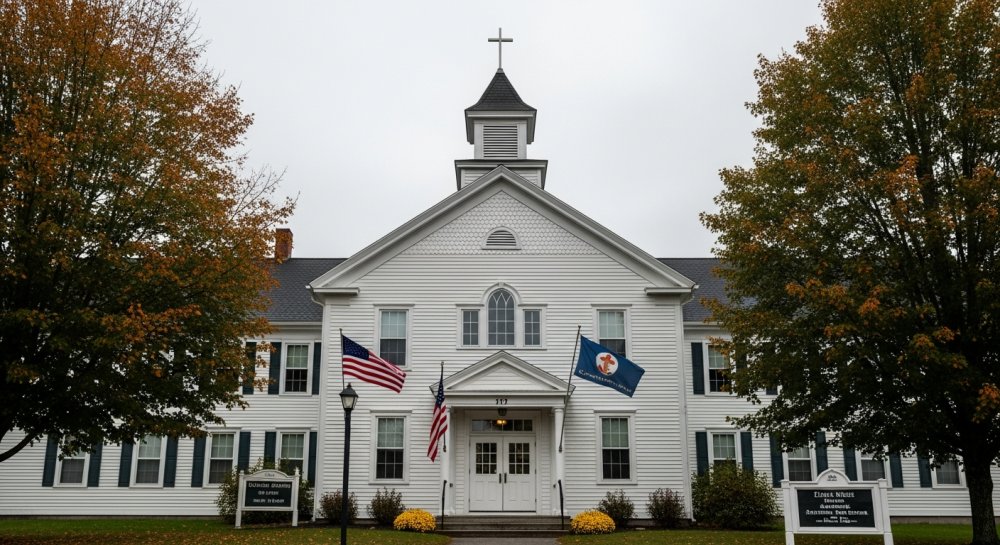
A federal appeals court has delivered a blow to religious freedom, ruling that Maine has the authority to force private Christian schools to adopt the state’s LGBT policies as a condition for participating in a tuition assistance program. The decision places faithful institutions in an impossible position: compromise core biblical principles or forfeit access to public educational funding.
The 1st U.S. Circuit Court of Appeals upheld provisions of Maine’s Human Rights Act that require schools receiving state tuition assistance to comply with state non-discrimination policies covering sexual orientation and gender identity. This means Christian schools must either abandon their traditional teachings on marriage and biological sex or exclude themselves from programs that help families afford private education.
For Christian families in rural Maine communities without local public high schools, this ruling creates a serious dilemma. The state’s tuition assistance program was designed to help these families access education, but now it comes with strings attached that directly conflict with sincerely held religious beliefs.
Religious liberty advocates warn this decision sets a dangerous precedent. It suggests that government can use financial incentives to coerce religious institutions into abandoning their foundational beliefs. The ruling effectively creates a two-tiered system where only secular schools can fully participate in public programs without compromising their values.
The case highlights the growing tension between LGBT advocacy and religious freedom in American society. While proponents of the ruling argue it protects students from discrimination, critics maintain it discriminates against religious institutions and the families who choose them specifically because of their faith-based values.
Christian schools maintain that their admissions and employment policies flow directly from biblical teaching. They argue that being forced to hire staff or admit students in ways that contradict Scripture violates the First Amendment’s guarantee of religious exercise. These institutions don’t exist to exclude, but to create communities grounded in shared faith convictions.
The implications extend beyond Maine. Similar conflicts are emerging across the nation as states attempt to leverage funding mechanisms to compel religious organizations to conform to progressive social policies. The question at stake is whether religious Americans can participate fully in civic life without abandoning their beliefs.
This ruling may not be the final word. Religious liberty legal organizations are likely to appeal or pursue alternative legal strategies to protect Christian schools’ right to operate according to their beliefs while serving families who depend on tuition assistance programs.
The broader context reveals an intensifying cultural battle over whose values will shape American institutions. Will religious communities retain the freedom to organize education around their convictions, or will government use its regulatory and financial power to enforce ideological conformity?
For now, Christian schools in Maine face a difficult choice that no religious institution should have to make in a nation founded on religious liberty. The path forward will test whether America still honors its commitment to protecting the free exercise of faith, even when that faith conflicts with popular political movements.
Let us know what you think, please share your thoughts in the comments below.
Faith Facts
- The World Evangelical Alliance has joined Korean Christian councils in opposing a civil code amendment that could grant excessive government control over religious organizations
- The bill pending in South Korea’s National Assembly threatens constitutional protections for religious freedom and church autonomy
- Christian leaders warn the legislation could set a dangerous precedent for government interference in church governance and operations
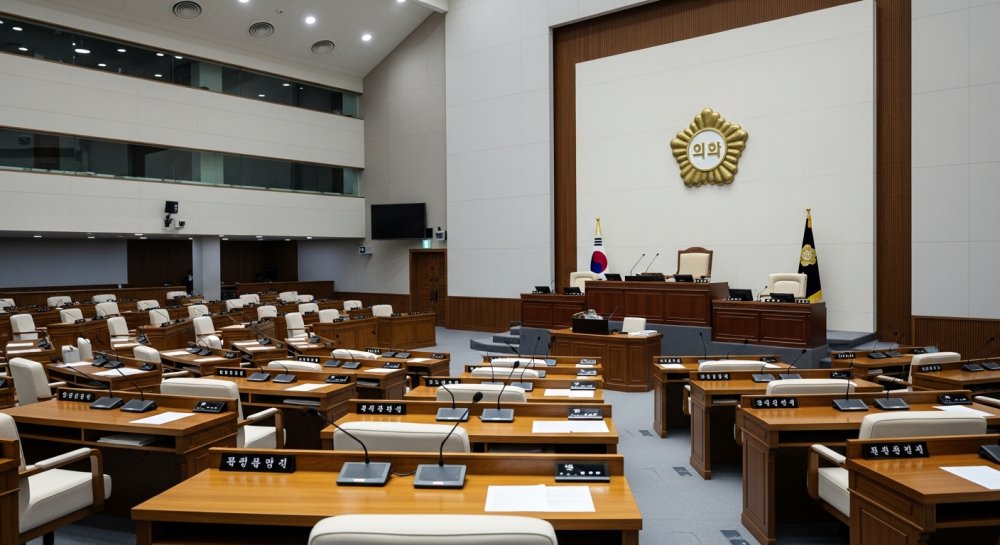
The World Evangelical Alliance (WEA) has issued a forceful statement against a controversial civil code amendment currently before South Korea’s National Assembly, standing in solidarity with Korean Christian bodies that have sounded the alarm over threats to religious liberty. The global evangelical organization joins the Christian Council of Korea (CCK) and the Communion of Churches in Korea (CCIK), who issued their own statements of opposition earlier this month.
The proposed amendment has raised serious concerns among Christian leaders who warn it could dramatically expand government authority over religious institutions. At the heart of the controversy is language that critics say would give administrative bodies unprecedented power to interfere in the internal affairs of churches and faith-based organizations.
The WEA’s intervention carries significant weight, as the alliance represents more than 600 million evangelical Christians across 129 nations. Their statement highlights concerns that the legislation conflicts with religious freedom protections enshrined in South Korea’s constitution.
Korean Christian leaders have been vocal in their opposition, warning that the bill represents a fundamental shift in the relationship between church and state. The Christian Council of Korea released its statement on February 3, followed by the Communion of Churches in Korea on February 5, both organizations representing millions of Korean believers.
The controversy reflects broader tensions over religious freedom in democratic societies, where governments must balance legitimate regulatory interests with constitutional protections for faith communities. Critics of the amendment argue that South Korea’s existing legal framework already provides sufficient oversight without compromising the autonomy of religious organizations.
The timing of the WEA’s statement underscores the urgency felt by Christian leaders as the bill advances through the legislative process. Religious freedom advocates are calling on Korean lawmakers to reconsider the measure and protect the independence of faith-based institutions.
South Korea has long been recognized as having one of Asia’s most vibrant Christian communities, with churches playing a central role in the nation’s social and cultural fabric. The proposed legislation has united diverse Christian denominations in opposition, demonstrating the breadth of concern across the Korean church.
The debate over this civil code amendment serves as a reminder of the constant vigilance required to protect religious freedom, even in established democracies. As governments worldwide grapple with questions of religious liberty and state authority, the Korean situation may offer important lessons for believers in other nations.
Let us know what you think, please share your thoughts in the comments below.


-

 Self-Reliance1 year ago
Trump’s Bold Move Uncovers Massive Social Security Fraud
-

 Faith1 year ago
New Clues Emerge in Noah’s Ark Mystery
-

 News1 year ago
Governor Walz’s Rhetoric Sparks National Controversy
-

 News1 year ago
Mel Gibson’s ‘The Passion of the Christ’ Sequel Title Announced
-

 Family1 year ago
Texas Lawmaker Targets Furries in Schools
-

 Freedom1 year ago
Maine Lawmaker Challenges Sports Fairness Controversy
-

 Family1 year ago
Canada’s Controversial Policy Sparks Ethical Debate
-
Faith8 months ago
Congress Hears Pleas for Nigerian Christians