
News
Nolan’s Homer Epic Already Sparking Fierce Debate Over Casting Choices

Faith Facts
- Christopher Nolan’s adaptation of Homer’s “The Odyssey” is scheduled for theatrical release on July 17
- The film’s casting decisions have triggered significant controversy among those who view the ancient Greek epic as foundational to Western civilization
- Critics argue the choices reflect a broader cultural trend that prioritizes modern ideological concerns over historical and literary authenticity
Director Christopher Nolan’s upcoming adaptation of Homer’s classical epic “The Odyssey” has ignited a cultural firestorm months before audiences will see it on screen. The controversy centers on casting decisions that many conservatives view as yet another example of Hollywood’s willingness to reshape Western civilization’s most treasured stories.
The film, set for U.S. release on July 17, has become a flashpoint in the ongoing debate about how modern entertainment handles historical and literary works that form the bedrock of Western culture. For many Christian conservatives, “The Odyssey” represents more than just an ancient story—it embodies timeless themes of faith, perseverance, homecoming, and the struggle between virtue and vice.
Elliot Page at The Odyssey World Premiere in London. Experience it only in cinemas July 17. pic.twitter.com/VDskvHKQWv
— The Odyssey Movie (@odysseymovie) July 7, 2026
“What 1 thing would you say to Homer?”
Lupita Nyong’o (Helen Of Troy): “How do you feel about the screen time given to women?”
— End Wokeness (@EndWokeness) July 6, 2026
Social media erupted with criticism from those who see the casting as symptomatic of a larger cultural agenda. Some commentators have characterized the approach as reflecting a “dying, immoral agenda” that seeks to deconstruct rather than honor the foundations of Western literary tradition.
The backlash highlights a growing divide between traditional Americans who value historical authenticity in adaptations of classical works and Hollywood’s apparent commitment to contemporary social priorities. Many conservative voices argue that respecting the cultural context of ancient texts doesn’t mean rejecting them, but rather understanding them as products of their time that still offer profound wisdom.
Homer’s “Odyssey,” composed nearly 3,000 years ago, tells the story of the Greek hero Odysseus’s decade-long journey home after the Trojan War. The epic has profoundly influenced Western literature, art, and thought for millennia, with its themes of loyalty, faith in divine providence, and the importance of home and family resonating across generations.
For Christian audiences, the work holds particular significance as a bridge between pagan antiquity and the Judeo-Christian tradition that would follow. Many church fathers and medieval Christian scholars engaged deeply with Homer’s works, finding in them pre-Christian wisdom that could be reconciled with Biblical truth.
The controversy surrounding Nolan’s adaptation arrives at a moment when many Americans feel their cultural heritage is under sustained assault. From curriculum debates in schools to museum exhibitions to entertainment adaptations, traditional Americans increasingly perceive a coordinated effort to diminish or distort the Western canon.
Supporters of more traditional approaches to classical adaptations argue that authenticity matters—not out of prejudice, but out of respect for historical truth and cultural inheritance. They contend that every civilization has the right to preserve and honor its foundational stories without apology.
Nolan, known for cerebral and ambitious films like “Inception,” “Interstellar,” and the “Dark Knight” trilogy, has not yet responded to the growing controversy. His previous works have generally avoided overt political messaging, focusing instead on complex narratives and philosophical themes.
The debate over “The Odyssey” adaptation reflects broader tensions in American culture about who gets to tell our stories and how they should be told. For many conservatives, the issue isn’t resistance to change itself, but concern that changing everything erases the particular heritage that made Western civilization distinctive and successful.
As the July release date approaches, the controversy shows no signs of abating. Whether the film itself will justify concerns or prove them overblown remains to be seen, but the passionate response demonstrates how deeply many Americans care about preserving the integrity of their cultural inheritance.
Let us know what you think, please share your thoughts in the comments below.

Faith Facts
- The World Evangelical Alliance addressed the United Nations Human Rights Council regarding violence in the West Bank.
- The group specifically highlighted Taybeh as the territory’s last predominantly Christian village.
- Evangelical leaders called for an end to settler attacks and settlement expansion in the region.
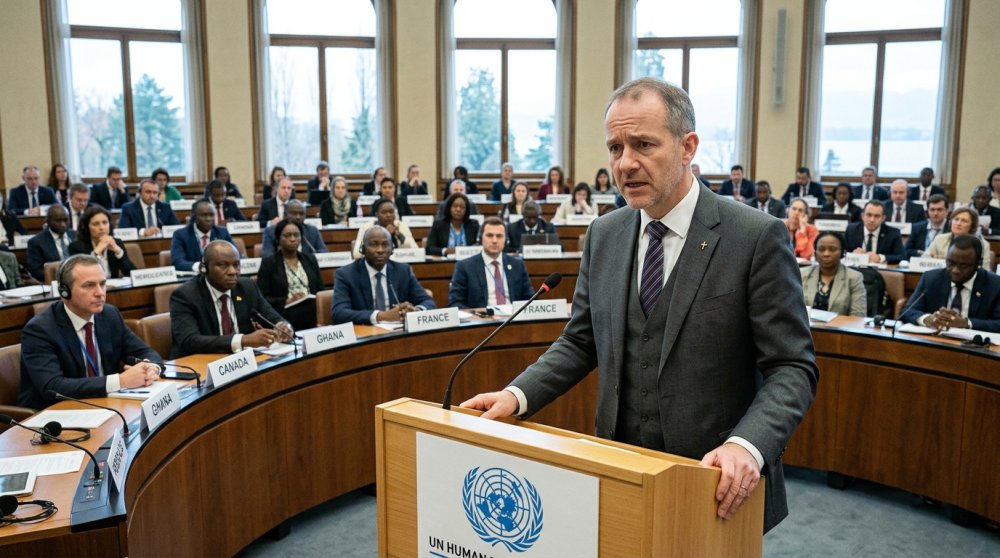
The World Evangelical Alliance issued a direct appeal to Israel on Tuesday during a session at the United Nations Human Rights Council.
The organization urged Israeli authorities to take immediate steps to halt settler violence and stop settlement expansion in the occupied West Bank.
Representatives from the alliance expressed particular concern for the village of Taybeh.
The group described Taybeh as the territory’s last predominantly Christian village and emphasized the need for its protection.
Let us know what you think, please share your thoughts in the comments below.
Faith Facts
- The grand jury in Mississippi concluded there was insufficient evidence to file charges in the death of 18-year-old Nolan Wells.
- District Attorney Angel Myers McIlrath affirmed the jury’s decision and called on Ben Crump to present evidence rather than make public accusations.
- McIlrath emphasized that justice in this case must be based on facts and the rule of law, not political pressure.
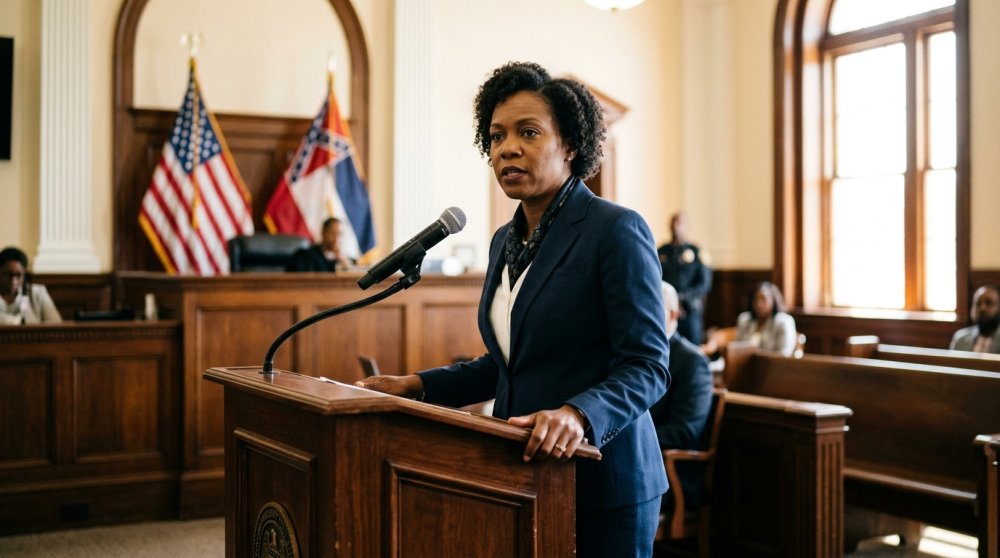
Mississippi District Attorney Angel Myers McIlrath is standing firm after a grand jury determined there was not enough evidence to bring charges in the death of 18-year-old Nolan Wells. The jury reviewed the case involving the young man’s death on Horn Island and concluded no one should face criminal prosecution.
McIlrath directly addressed civil rights attorney Ben Crump, who has publicly questioned the grand jury’s decision. She stated that Crump is “not worthy of our trust” if he continues to challenge the findings without presenting credible evidence.
The district attorney urged Crump to stop what she called political gamesmanship and instead focus on facts. She made clear that the justice system must rely on evidence rather than public pressure or media attention.
“The grand jury has spoken after careful review of the evidence,”
McIlrath said, defending the integrity of the legal process. She warned that undermining a jury’s decision without proof damages trust in the rule of law.
The case has drawn attention because of Crump’s involvement and his calls for further investigation. McIlrath stressed that her office has followed proper procedures and that justice will not be swayed by outside demands.
Let us know what you think, please share your thoughts in the comments below.
Faith Facts
- Quartz Mountain Christian Camp serves Churches of Christ families seeking to strengthen faith and fellowship.
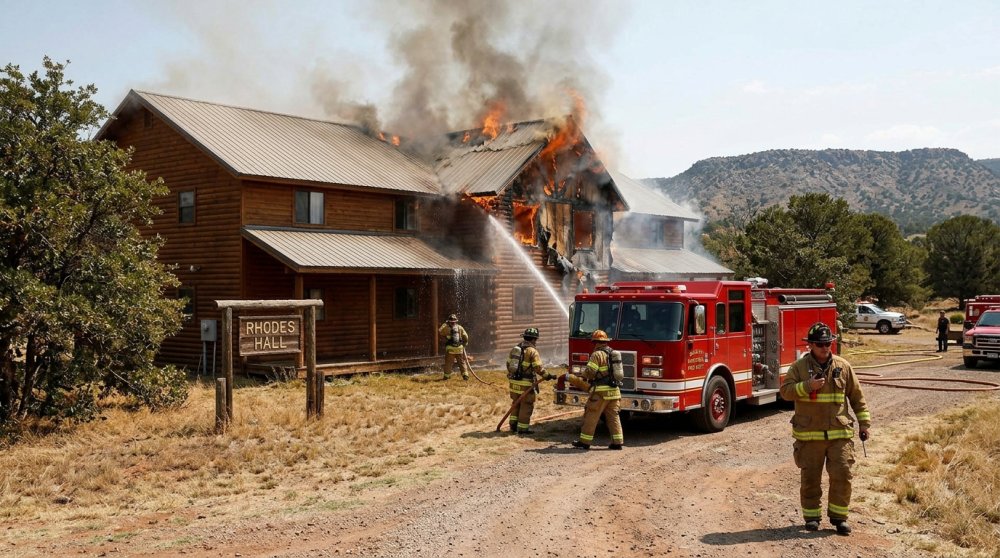
- No one was injured and no other structures were damaged when fire destroyed Rhodes Hall.
- Camp leaders are asking fellow believers to pray for wisdom as they assess physical and financial needs.
LONE WOLF, OKLA. — A devastating fire tore through Rhodes Hall, the central gathering place at Quartz Mountain Christian Camp, early Tuesday morning.
Board president Craig Dodgen confirmed that no campers or staff were harmed and that surrounding buildings remained untouched.
“No one was injured in the blaze and no other structures were affected,” Dodgen stated.
“I have already received questions about clean-up, reconstruction or donations. We need time to assess the damage and to consider our needs both physical and monetary.”
Camp leaders are turning first to prayer as they plan their next steps.
“Right now we covet your prayers for Quartz Mountain and for our caretaker, Dale Kastner, and his family.”
Christian Chronicle correspondent Scott Cassady visited the site to document the destruction and speak directly with Kastner and Dodgen about the road ahead.
Those moved to assist with rebuilding may contact Dodgen at [email protected] or (405) 919-7006.
Let us know what you think, please share your thoughts in the comments below.


-

 Self-Reliance1 year ago
Trump’s Bold Move Uncovers Massive Social Security Fraud
-

 Faith1 year ago
New Clues Emerge in Noah’s Ark Mystery
-

 News2 years ago
Governor Walz’s Rhetoric Sparks National Controversy
-

 News1 year ago
Mel Gibson’s ‘The Passion of the Christ’ Sequel Title Announced
-

 Family2 years ago
Texas Lawmaker Targets Furries in Schools
-

 Freedom2 years ago
Maine Lawmaker Challenges Sports Fairness Controversy
-

 Family1 year ago
Canada’s Controversial Policy Sparks Ethical Debate
-
Faith10 months ago
Congress Hears Pleas for Nigerian Christians