
Freedom
Maine Can Force Christian Schools to Accept LGBT Policies for Funding, Court Rules

Faith Facts
- A federal appeals court ruled that Maine can require private religious schools to adopt state LGBT policies in order to qualify for a tuition assistance program
- The 1st U.S. Circuit Court of Appeals upheld Maine’s Human Rights Act provisions, forcing schools to choose between their Christian beliefs and public funding
- Christian schools argue the requirement violates their religious freedom by compelling them to compromise biblical teachings on marriage and gender
A federal appeals court has delivered a blow to religious freedom, ruling that Maine has the authority to force private Christian schools to adopt the state’s LGBT policies as a condition for participating in a tuition assistance program. The decision places faithful institutions in an impossible position: compromise core biblical principles or forfeit access to public educational funding.
The 1st U.S. Circuit Court of Appeals upheld provisions of Maine’s Human Rights Act that require schools receiving state tuition assistance to comply with state non-discrimination policies covering sexual orientation and gender identity. This means Christian schools must either abandon their traditional teachings on marriage and biological sex or exclude themselves from programs that help families afford private education.
For Christian families in rural Maine communities without local public high schools, this ruling creates a serious dilemma. The state’s tuition assistance program was designed to help these families access education, but now it comes with strings attached that directly conflict with sincerely held religious beliefs.
Religious liberty advocates warn this decision sets a dangerous precedent. It suggests that government can use financial incentives to coerce religious institutions into abandoning their foundational beliefs. The ruling effectively creates a two-tiered system where only secular schools can fully participate in public programs without compromising their values.
The case highlights the growing tension between LGBT advocacy and religious freedom in American society. While proponents of the ruling argue it protects students from discrimination, critics maintain it discriminates against religious institutions and the families who choose them specifically because of their faith-based values.
Christian schools maintain that their admissions and employment policies flow directly from biblical teaching. They argue that being forced to hire staff or admit students in ways that contradict Scripture violates the First Amendment’s guarantee of religious exercise. These institutions don’t exist to exclude, but to create communities grounded in shared faith convictions.
The implications extend beyond Maine. Similar conflicts are emerging across the nation as states attempt to leverage funding mechanisms to compel religious organizations to conform to progressive social policies. The question at stake is whether religious Americans can participate fully in civic life without abandoning their beliefs.
This ruling may not be the final word. Religious liberty legal organizations are likely to appeal or pursue alternative legal strategies to protect Christian schools’ right to operate according to their beliefs while serving families who depend on tuition assistance programs.
The broader context reveals an intensifying cultural battle over whose values will shape American institutions. Will religious communities retain the freedom to organize education around their convictions, or will government use its regulatory and financial power to enforce ideological conformity?
For now, Christian schools in Maine face a difficult choice that no religious institution should have to make in a nation founded on religious liberty. The path forward will test whether America still honors its commitment to protecting the free exercise of faith, even when that faith conflicts with popular political movements.
Let us know what you think, please share your thoughts in the comments below.

Freedom
New Hampshire Parents Win Settlement After School District Bans Opposition to Males in Girls Sports

Faith Facts
- Scripture teaches that God created male and female, establishing biological reality as part of His divine order.
- Parents hold the God-given responsibility to protect their children from policies that undermine truth and safety.
- Christian teaching calls believers to speak truth in love while defending the dignity of young women created in God’s image.
Parents in New Hampshire have secured a settlement with their local school district after facing punishment for voicing concerns over a biological male competing in girls’ soccer.
The agreement comes two years after officials barred families from attending games or expressing opposition when a trans-identified male was allowed on the girls’ team.
One father was specifically prohibited from watching his own daughter play for the remainder of her senior season simply because he objected to the policy.
Christian parents across the country continue to stand for fairness in women’s sports while upholding the biblical understanding that God created two distinct sexes.
“We just wanted to protect our daughters and speak the truth about biology,” one parent stated after the settlement was reached.
The case highlights growing resistance among families who refuse to accept ideological policies that place girls at a physical disadvantage.
School districts that silence parents and enforce participation rules based on gender identity rather than biological sex are facing increasing legal pushback nationwide.
Advocates argue that allowing males in female categories undermines fair competition and erodes the purpose of separate girls’ sports established to ensure equal opportunity.
“Our girls deserve to compete on a level playing field without fear of losing scholarships or safety,” a mother involved in the dispute remarked.
The settlement marks another victory for parents defending truth and protecting their children from policies that contradict both science and Scripture.
Let us know what you think, please share your thoughts in the comments below.

Faith Facts
- The Alliance Defending Freedom is a legal ministry defending religious liberty and free speech for Christians and other people of faith.
- Christians have faced increasing debanking due to their biblical beliefs on marriage, gender, and life issues.
- PayPal’s policy change follows years of concerns from conservatives about viewpoint discrimination by financial institutions.
PayPal has removed the terms “hate” and “intolerance” from its acceptable use policy following an objection filed by the Alliance Defending Freedom before a federal banking regulator.
The change comes after ADF raised concerns that PayPal’s previous language could be used to target Christians and conservative organizations for their biblical beliefs.
PayPal’s updated policy now focuses on illegal activities rather than vague moral judgments that critics argued opened the door to viewpoint discrimination.
Conservative leaders have long warned that financial institutions were using subjective terms like “hate” and “intolerance” to justify debanking individuals and ministries that uphold traditional values.
“We are grateful that PayPal has removed this troubling language from its rules,” said an ADF spokesperson. “Vague terms like ‘hate’ and ‘intolerance’ have been weaponized against Christians who simply believe what the Bible teaches about marriage and human sexuality.”
The policy revision represents a win for religious liberty advocates who have argued that financial service companies should not serve as arbiters of moral or political speech.
Many Christian ministries and conservative organizations have reported being denied payment processing services or having accounts frozen over their stances on life, marriage, and gender issues.
ADF’s action before the federal regulator highlighted how such policies could chill free speech and religious exercise by giving private companies broad power to define acceptable beliefs.
The change signals growing pushback against corporate attempts to enforce ideological conformity through financial gatekeeping.
Let us know what you think, please share your thoughts in the comments below.
Faith Facts
- Colorado’s universal preschool program promises a free seat to every 4-year-old yet bars the state’s 34 Catholic preschools from participation.
- Justice Brett Kavanaugh pressed state officials for a “win/win” solution during oral arguments before the Supreme Court.
- The case raises fundamental questions about religious liberty and equal treatment under the law for faith-based educational providers.
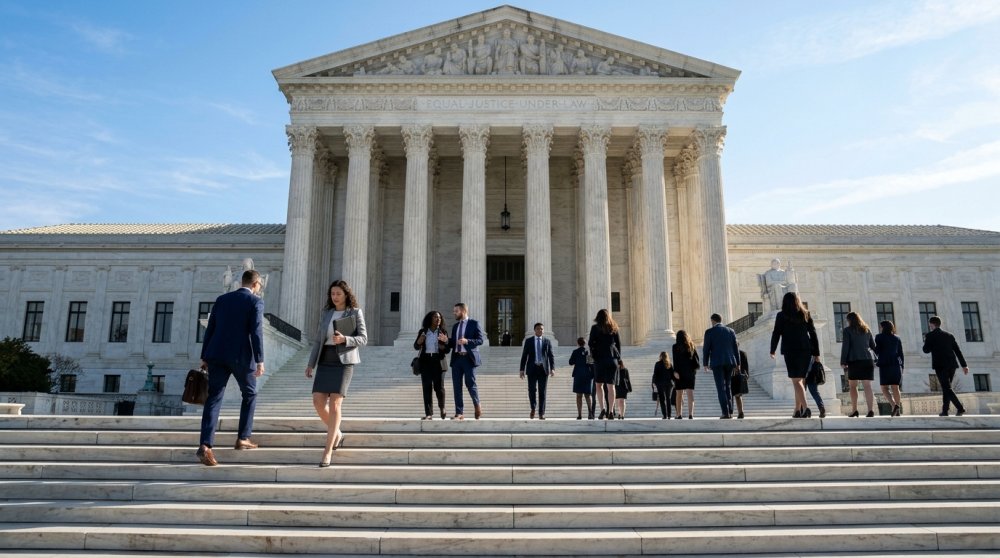
Colorado lawmakers crafted a universal preschool program that promises every four-year-old a free seat at taxpayer expense. The plan explicitly excludes the state’s 34 Catholic preschools, effectively forcing families who prefer faith-based education to forgo the benefit or leave their convictions at the door.
During oral arguments at the Supreme Court, Justice Brett Kavanaugh pressed Colorado’s attorneys to explain why the state could not accommodate religious providers. He asked whether a “win/win” arrangement was possible that would allow families to choose Catholic schools without losing the public subsidy. The state offered no answer.
Critics argue that the exclusion reflects an unconstitutional hostility toward religion that treats Catholic teaching as equivalent to racism. Supporters of the program maintain that public funds cannot flow to institutions that hold traditional beliefs on marriage, sexuality, and human life.
Christian leaders across the country see the case as another front in the ongoing struggle to preserve religious liberty in education. They note that Catholic schools have long served disadvantaged communities with strong academic and moral formation rooted in biblical principles.
Let us know what you think, please share your thoughts in the comments below.


-

 Self-Reliance2 years ago
Trump’s Bold Move Uncovers Massive Social Security Fraud
-

 Faith2 years ago
New Clues Emerge in Noah’s Ark Mystery
-

 News2 years ago
Governor Walz’s Rhetoric Sparks National Controversy
-

 News2 years ago
Mel Gibson’s ‘The Passion of the Christ’ Sequel Title Announced
-

 Family2 years ago
Texas Lawmaker Targets Furries in Schools
-

 Freedom2 years ago
Maine Lawmaker Challenges Sports Fairness Controversy
-

 Family1 year ago
Canada’s Controversial Policy Sparks Ethical Debate
-
Faith12 months ago
Congress Hears Pleas for Nigerian Christians