
Faith
What Every Believer Is Missing About the Holy Land’s Living Reality

Faith Facts
- The Holy Land is a living homeland shared by peoples with distinct histories, identities, and hopes—not just a collection of ancient sacred sites
- Christians worldwide can learn directly from believers whose families have lived in the Holy Land for millennia
- Understanding the modern reality of the Holy Land requires listening to indigenous Christian voices who continue living out their faith there today
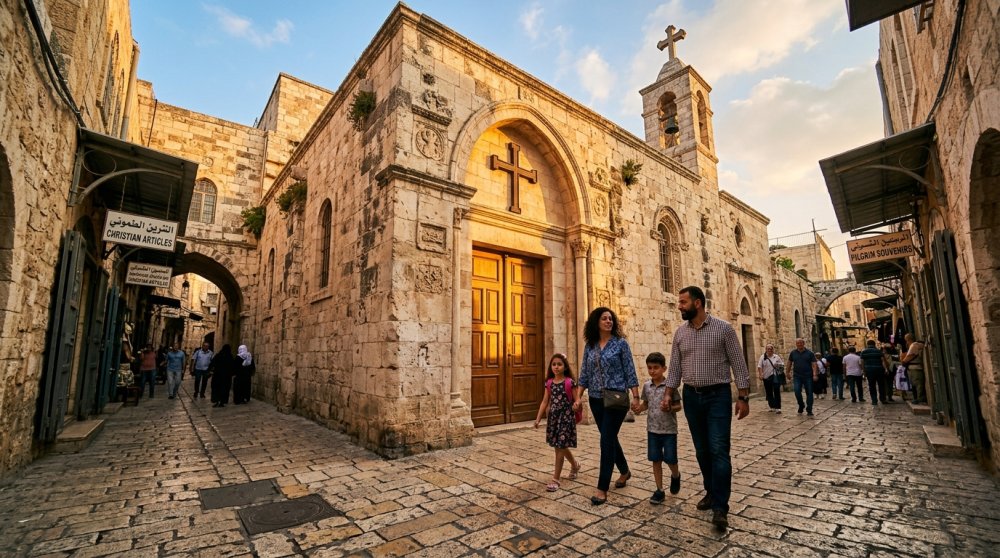
The Holy Land is not merely a collection of sacred sites or ancient stories. It is not an abstract concept but a living homeland shared by peoples carrying different histories, identities, wounds, and hopes.
Christians around the world don’t need to imagine what the Holy Land is like—we can learn from those who live there today. For believers who grow up reading Scripture and studying the history of our faith, it’s easy to think of the Holy Land as something frozen in time, a place preserved in the pages of the Bible.
But the truth is far richer and more complex. The Holy Land continues to be home to vibrant Christian communities whose families have maintained their witness for generations, even through tremendous hardship.
These indigenous Christians carry forward a living testimony that bridges the ancient world of Scripture and the modern challenges of faith in a contested region. Their perspective offers Western Christians a corrective lens—one that sees beyond tourism and prophecy charts to the flesh-and-blood reality of discipleship in the land where Jesus walked.
Understanding the Holy Land today means recognizing it as more than a backdrop for biblical events. It means honoring the Christians who have never left, who pray in the same languages spoken in the early church, and who navigate daily the tensions between preserving heritage and surviving in a rapidly changing Middle East.
For American Christians especially, many of whom support policies affecting the region, this understanding carries real-world implications. The decisions made in Washington and Jerusalem directly impact our brothers and sisters in Christ who call the Holy Land home.
These believers don’t have the luxury of viewing the Holy Land through a purely theological or prophetic framework. For them, it’s where they raise their children, run businesses, worship in centuries-old churches, and try to be faithful witnesses in a land sacred to multiple faiths.
Their stories challenge us to expand our understanding beyond pilgrimage sites and eschatological timelines. They invite us into a deeper solidarity—one that listens before it speaks, learns before it teaches, and recognizes that God’s work in the Holy Land didn’t end with the book of Acts.
The ancient stones still stand, but living stones—believers filled with the Holy Spirit—continue to build the Church in the very place where it was born. Their perseverance, their witness, and their wisdom offer Western Christians an invaluable gift: the chance to see the Holy Land not just as it was, but as it is.
For those seeking to truly understand this sacred region, the starting point is clear: listen to the voices of those whose families have lived there for millennia, whose faith has endured empires and upheavals, and whose testimony connects us directly to the unbroken chain of Christian witness in the land of our Savior.
Let us know what you think, please share your thoughts in the comments below.

Faith Facts
- The Bible records Noah’s Ark as a historical vessel built at God’s command to preserve life during the Flood.
- Archaeologists and geologists continue to study sites in Turkey that some claim match the Ark’s resting place.
- Christians are urged to ground their faith in Scripture rather than unverified discoveries.
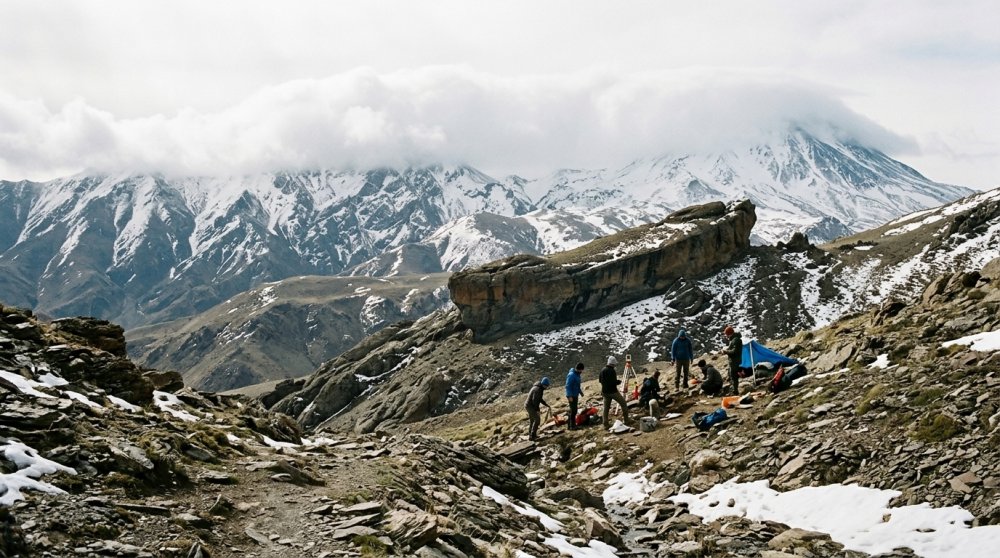
Explosive headlines this week announced that Noah’s Ark has been discovered beneath a mountain range in Turkey. The claims have quickly spread across social media and news outlets, stirring both excitement and skepticism among believers.
Chris Sinkinson, a respected Christian author and lecturer, cautions that such announcements often outpace the evidence. He urges fellow believers to remain anchored in Scripture and verified facts rather than sensational reports.
“Christians need to stick to the facts,” Sinkinson stated. His words serve as a timely reminder that faith rests on the unchanging Word of God, not on the latest archaeological headline.
While the possibility of discovering physical remnants of the Ark is intriguing, experts note that conclusive proof remains elusive. Many past claims have failed under closer scientific examination.
Scripture itself provides the foundation for understanding the Flood and God’s covenant with Noah. Believers are reminded that the reliability of the Bible does not depend on locating the physical Ark.
Let us know what you think, please share your thoughts in the comments below.
Faith Facts
- Revelation chapters 2 and 3 contain direct messages from Jesus to seven churches in Asia Minor, blending commendation with stern rebuke.
- Scripture records that Jesus declares, “I know your works,” underscoring His intimate awareness of both corporate and personal conduct.
- The warnings delivered to these early congregations still apply to contemporary churches that drift into compromise or complacency.
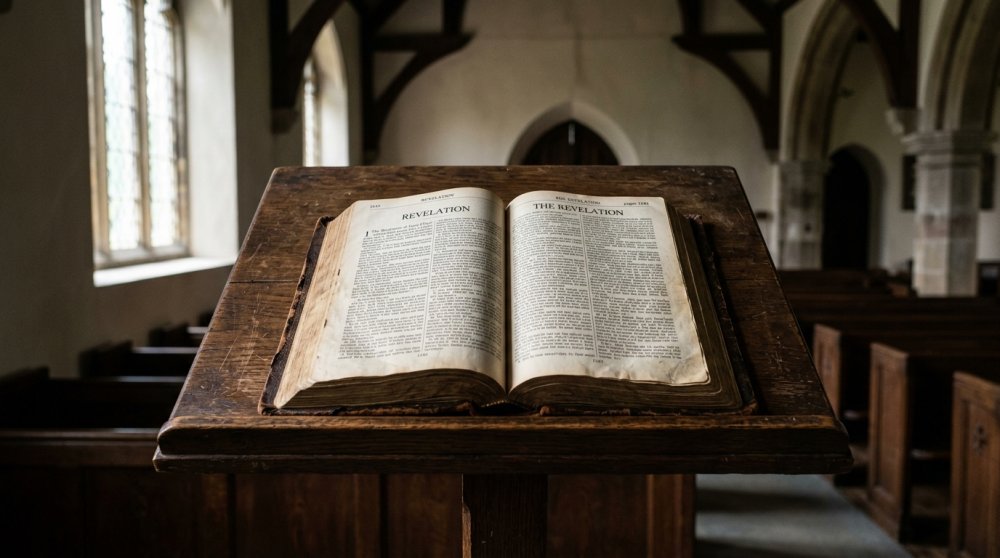
In Revelation 2 and 3, the gentle and lowly Jesus speaks to seven churches with both praise and severe warning.
He knows their works, their compromises and what they can’t see about themselves.
He knows ours, too.
Let us know what you think, please share your thoughts in the comments below.
Faith Facts
- Professional wrestler Samoa Joe has publicly encouraged Christians to give a portion of their income to the local church.
- Joe described his decision to tithe as one of his “greatest decisions.”
- The call to tithe reflects the biblical principle of returning the firstfruits of one’s labor to God.
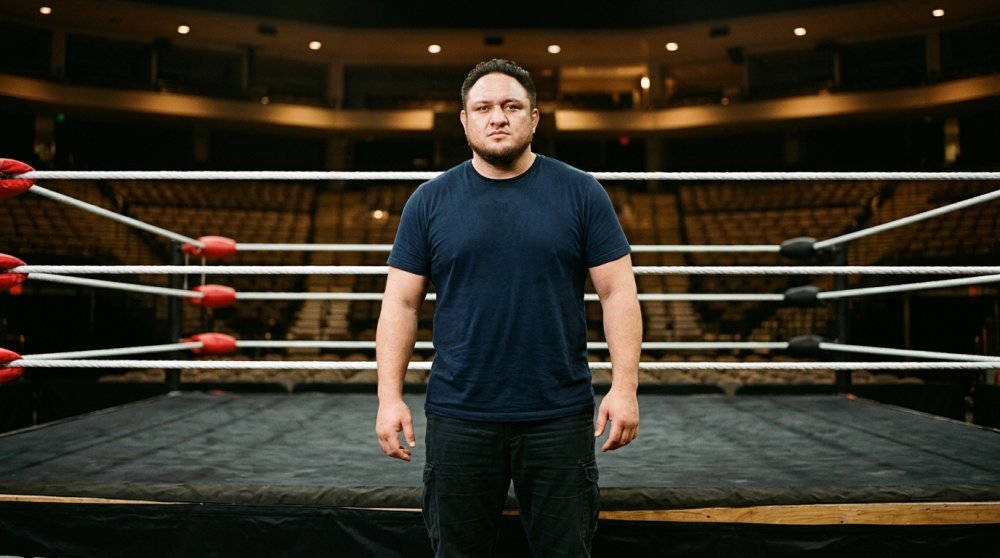
Professional wrestler Samoa Joe is using his platform to point believers toward faithful giving. He recently shared that his commitment to tithing remains one of the most important choices he has made.
Joe described the practice as both a spiritual discipline and a source of blessing in his life. His public encouragement comes at a time when many families are weighing how to honor God with their finances amid rising costs and economic uncertainty.
“One of my greatest decisions was to tithe,”
The wrestler’s testimony underscores the biblical call found in Malachi 3:10, where God invites His people to bring the whole tithe into the storehouse. For Christian audiences, Joe’s words serve as a reminder that generosity is not limited to pastors or ministry professionals.
His straightforward challenge to tithe resonates with believers who see financial stewardship as an act of worship rather than mere obligation. In an industry often marked by self-promotion, Joe’s public stand for biblical giving offers a refreshing counter-example.
Let us know what you think, please share your thoughts in the comments below.


-

 Self-Reliance2 years ago
Trump’s Bold Move Uncovers Massive Social Security Fraud
-

 Faith1 year ago
New Clues Emerge in Noah’s Ark Mystery
-

 News2 years ago
Governor Walz’s Rhetoric Sparks National Controversy
-

 News2 years ago
Mel Gibson’s ‘The Passion of the Christ’ Sequel Title Announced
-

 Family2 years ago
Texas Lawmaker Targets Furries in Schools
-

 Freedom2 years ago
Maine Lawmaker Challenges Sports Fairness Controversy
-

 Family1 year ago
Canada’s Controversial Policy Sparks Ethical Debate
-
Faith11 months ago
Congress Hears Pleas for Nigerian Christians