
Faith
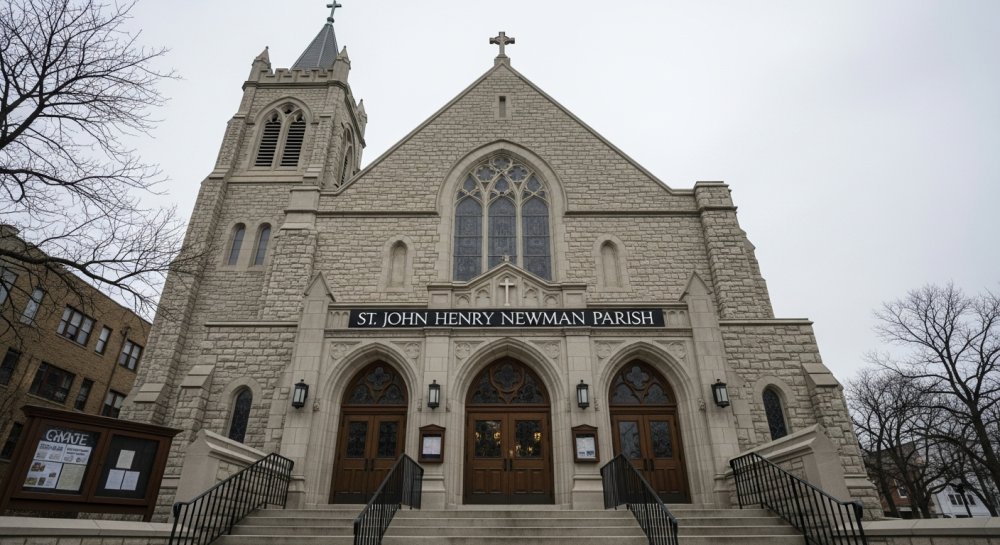
Illinois Parish Leader Steps Down Amid Financial Investigation

Faith Facts
- Father Kenneth Anderson resigned from St. John Henry Newman Parish in Evanston, Illinois, following a financial investigation
- Church officials determined parish funds were misappropriated for personal expenses
- The case highlights the importance of financial accountability and transparency in church leadership
A Catholic parish in Illinois is reeling after its spiritual leader resigned amid findings of financial impropriety. The incident serves as a sobering reminder that even those entrusted with shepherding God’s flock must be held accountable to biblical standards of stewardship and integrity.
Father Kenneth Anderson, who served as the leader of St. John Henry Newman Parish in Evanston, Illinois, has stepped down from his position. The resignation follows an internal investigation that uncovered evidence of financial misconduct involving church resources.
According to the findings, Anderson misappropriated parish funds for personal expenses. The nature and extent of these expenses have raised serious questions about oversight and accountability within the congregation. Church leaders moved swiftly once the allegations came to light, launching a thorough review of financial records.
For faithful parishioners who trusted their pastor to manage church resources with wisdom and honesty, the news has been deeply troubling. Many believers understand that Scripture calls leaders to a higher standard, particularly when it comes to handling finances and maintaining the trust of those they serve.
The Bible is clear about the expectations for church leaders. The Apostle Paul wrote that overseers must be “above reproach” and “not a lover of money.” When those standards are violated, it damages not only the individual congregation but the witness of the broader Christian community.
The St. John Henry Newman Parish community now faces the challenge of healing and restoration. Church members must work together to rebuild trust, strengthen financial controls, and ensure that proper safeguards are in place to prevent similar incidents in the future.
This case underscores the vital importance of transparency and accountability in all church operations. Congregations across America should take this opportunity to review their own financial policies and oversight mechanisms. Regular audits, multiple signatories on accounts, and clear reporting structures help protect both church leaders and the congregations they serve.
As Christians, we are called to forgive while also maintaining proper boundaries and accountability. While praying for Father Anderson’s repentance and restoration, the parish community must also take practical steps to ensure faithful stewardship of the resources God has entrusted to them.
The resignation serves as a reminder that no position or title exempts anyone from living according to biblical principles. Character, integrity, and faithful stewardship remain non-negotiable requirements for those who would lead God’s people.
Let us know what you think, please share your thoughts in the comments below.

Faith Facts
- A Mennonite pastor reveals how migration runs throughout the entire biblical narrative — from Eden to the incarnation of Jesus Christ
- The author transformed his own congregation into a sanctuary for immigrants, serving alongside them rather than debating policy from a distance
- This theological work challenges Christians to see migrants not as political issues, but as neighbors created in God’s image
God is a God who moves with his people. This is the central idea of Isaac Samuel Villegas’ book, “Migrant God: A Christian Vision for Immigrant Justice.”
Villegas, the son of immigrants and a Mennonite pastor in Durham, N.C., shows that migration is woven throughout the biblical story — from Adam and Eve leaving Eden to Abraham’s journey, Israel’s exile and ultimately the incarnation of Jesus. God moves, crosses boundaries and chooses to identify with the displaced.
God cares for those who migrate, knows the names of those who die in the attempt and hears the cries of the bullied, persecuted, detained and deported already inside American boundaries. Villegas writes from experience, close-at-hand encounters and the practice of presence; he has walked through the desert, frequented immigrant aid centers, visited prisons and transformed his own congregation into a sanctuary for immigrants.
For him, this topic is not political rhetoric. His concern for immigrant justice is born of his lived experience and hard theological work.
Villegas’ book resonated strongly with co-ministers in a multicultural, multiracial congregation in Chicago that welcomes native-born Americans and immigrants from four continents. He tells stories of people whom they recognize, sit with on Sundays and serve the Lord with throughout the week.
There is the church outside Dallas creating a pueblo of God by their communal meals, where “worship spills over into the kitchen” and everyone has a place at the table. There is Rosa, a Honduran refugee from domestic violence who lives and serves at Villegas’ church in order to have a chance at a new life with her children.
There is the church-run network of shelters in Mexico providing places for migrants to live and thrive. These are stories of peace, not violence: of human beings trying to live with their neighbors in faith, justice and dignity.
Villegas wants his readers to remember that God knows every name, every hair on the head of migrants, just as surely as he knows those who have lived in America for generations. To him, nationalist government policies are not a fight against migration, but rather a war against immigrants who cross borders equipped only with the hope of a more dignified life — a hope that dies with many of them in the desert.
Some will find Villegas’ book challenging, perhaps even occasionally offensive. He points out, for instance, laws that the federal government has passed since the 1950s to offload responsibility for border crossing deaths onto migrants themselves.
Villegas challenges all who identify with Christ to cease waving the banner of nationalist theology and offer places at our tables for immigrants. Ultimately, “Migrant God” is both theological reflection and call to action.
It reminds us of biblical commands to love and protect the foreigner. For Villegas, welcoming immigrants is central to faithful Christian living.
This book challenges and inspires readers to see migrants not as strangers, but as neighbors — and even as reflections of God himself. The work calls Christians back to Scripture’s consistent message about how God’s people should treat the sojourner among them.
Let us know what you think, please share your thoughts in the comments below.

Faith Facts
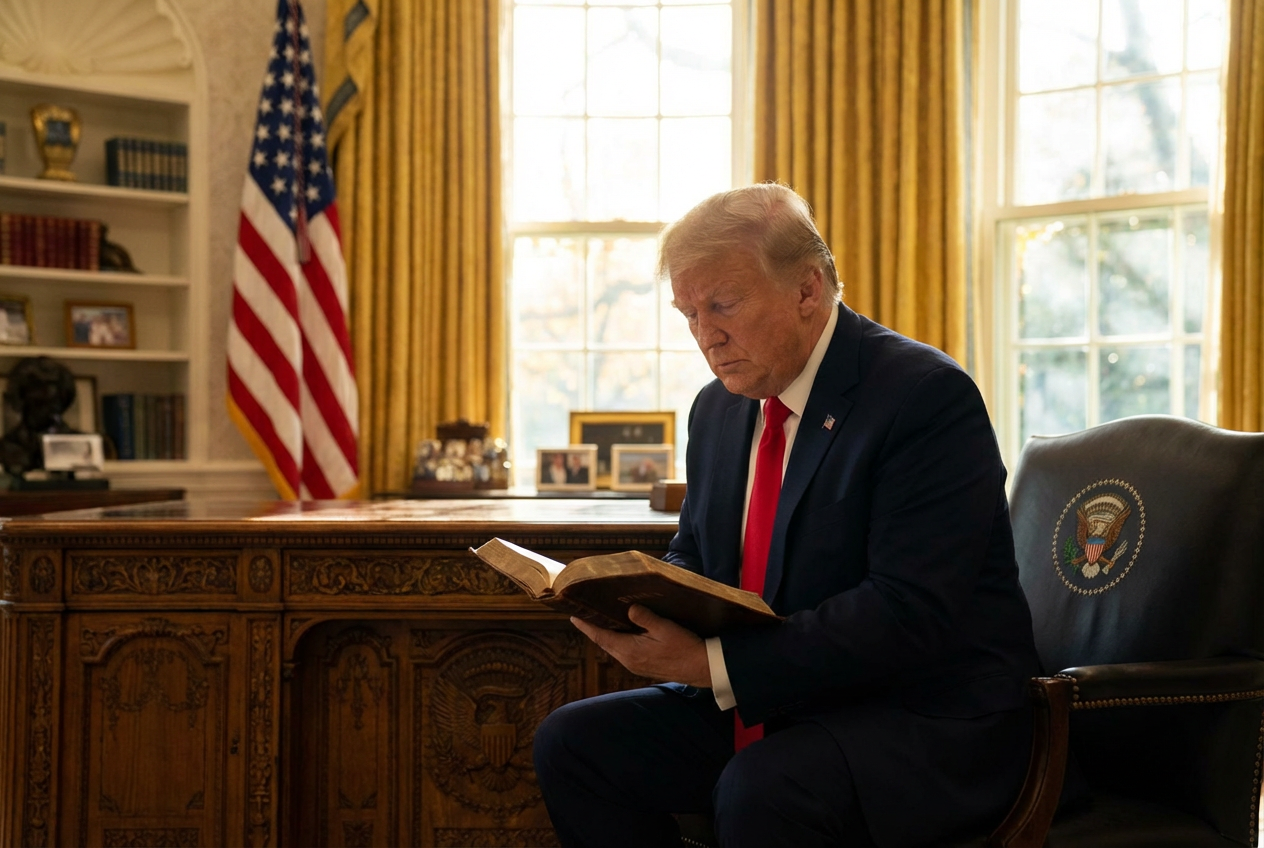
- President Donald Trump is scheduled to join the America Reads the Bible event from the Oval Office.
- The weeklong scripture reading marks the 250th anniversary of American independence.
- Organizers say the event is meant to highlight the spiritual foundations of the nation and encourage national renewal.
Trump is expected to read from 2 Chronicles 7:11-22, a passage about repentance and God’s promise to heal the land.
He will join nearly 500 leaders and 122 ministries gathered in Washington, D.C., for the continuous reading of the Holy Bible.
“If my people, which are called by my name, shall humble themselves, and pray, and seek my face, and turn from their wicked ways; then will I hear from Heaven, and will forgive their sin, and will heal their land.”
House Speaker Mike Johnson and several members of the Trump administration are also taking part in the scriptural relay.
The event aims to remind citizens of the moral and religious heritage that has shaped the American republic for centuries.
As we celebrate our independence, we must return to the eternal truths that first gave our founders the courage to build a free nation under God.
Faith Facts
- The Indian Supreme Court has stayed criminal proceedings against a Catholic priest.
- The case involved charges over declaring Christianity as the only true faith.
- Religious freedom advocates say the ruling protects preaching and open witness.
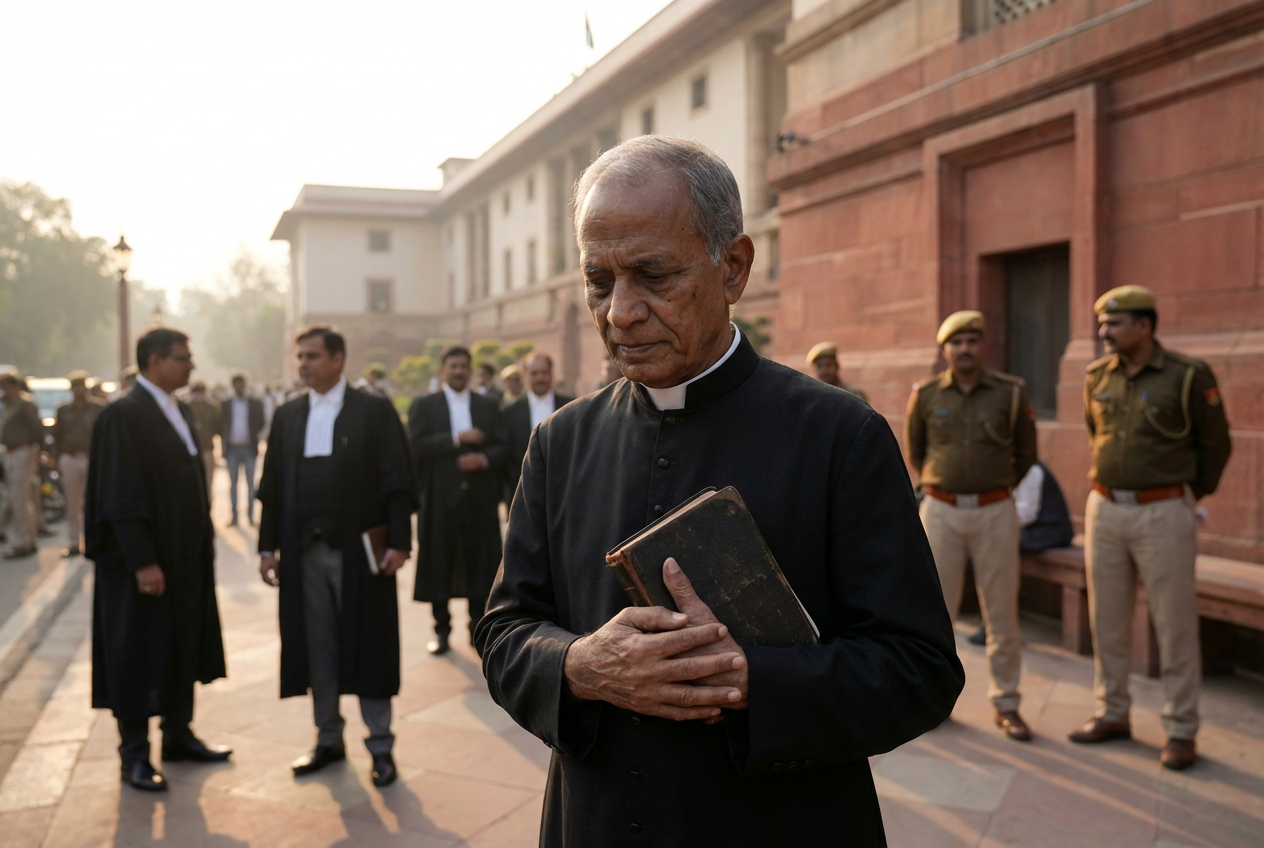
The Indian Supreme Court has intervened on behalf of a Catholic priest, staying criminal proceedings after he was charged for declaring Christianity as the only true faith.
This decision pauses a legal battle targeting Father Vincent Pereira under laws often used to silence religious expression.
Lower courts previously said that asserting exclusive religious truth was wrong in a secular nation.
For now, the ruling temporarily protects the right to preach and share deeply held convictions without fear of state retaliation.
As believers, we must stand firm in the biblical conviction that truth is not relative, even when faced with secular legal opposition.
Let us pray for our brothers and sisters abroad who face persecution for simply declaring the Gospel of Jesus Christ.


-

 Self-Reliance1 year ago
Trump’s Bold Move Uncovers Massive Social Security Fraud
-

 Faith1 year ago
New Clues Emerge in Noah’s Ark Mystery
-

 News1 year ago
Governor Walz’s Rhetoric Sparks National Controversy
-

 News1 year ago
Mel Gibson’s ‘The Passion of the Christ’ Sequel Title Announced
-

 Family1 year ago
Texas Lawmaker Targets Furries in Schools
-

 Freedom1 year ago
Maine Lawmaker Challenges Sports Fairness Controversy
-

 Family11 months ago
Canada’s Controversial Policy Sparks Ethical Debate
-
Faith5 months ago
Congress Hears Pleas for Nigerian Christians