
Faith
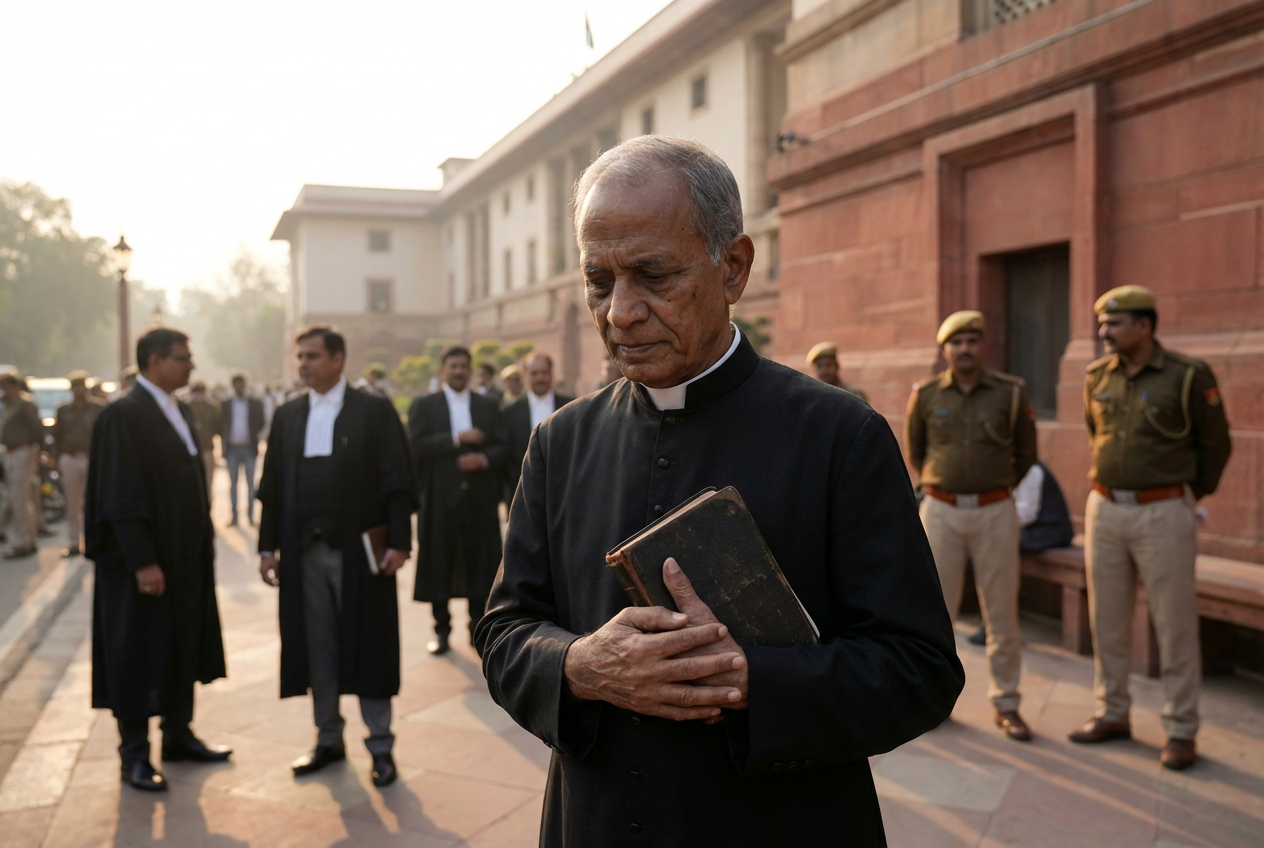
Religious Freedom Prevails as Court Halts Charges Against Faithful Preacher

Faith Facts
- The Indian Supreme Court has stayed criminal proceedings against a Catholic priest.
- The case involved charges over declaring Christianity as the only true faith.
- Religious freedom advocates say the ruling protects preaching and open witness.
The Indian Supreme Court has intervened on behalf of a Catholic priest, staying criminal proceedings after he was charged for declaring Christianity as the only true faith.
This decision pauses a legal battle targeting Father Vincent Pereira under laws often used to silence religious expression.
Lower courts previously said that asserting exclusive religious truth was wrong in a secular nation.
For now, the ruling temporarily protects the right to preach and share deeply held convictions without fear of state retaliation.
As believers, we must stand firm in the biblical conviction that truth is not relative, even when faced with secular legal opposition.
Let us pray for our brothers and sisters abroad who face persecution for simply declaring the Gospel of Jesus Christ.



Faith Facts
- Kori Pennypacker of Bible2School is helping Christian families understand that public school attendance does not require compromising faith in Jesus Christ.
- Pennypacker addresses widespread confusion among parents and educators about students’ constitutional religious freedom rights.
- The ministry equips children to live out their faith with confidence while attending public schools across America.
Christian parents across the nation face an increasingly difficult decision when it comes to their children’s education. Many wonder whether sending their sons and daughters to public schools will inevitably lead to the erosion of their faith. Kori Pennypacker, CEO of Bible2School, believes this false choice is robbing families of both educational opportunity and spiritual growth.
Pennypacker’s message centers on what she calls “God confidence” – the assurance that children can stand firm in their Christian beliefs even in secular environments. She argues that public schools remain one of the largest mission fields in America, filled with children who need to hear the Gospel.
“Christian parents don’t have to choose between sending their children to public school and teaching them to live openly for Jesus Christ,” Pennypacker states. She emphasizes that many families have been unnecessarily frightened away from public education due to misinformation about religious liberty protections.
The Bible2School ministry works to correct these misconceptions by training both parents and educators on students’ constitutional rights. Pennypacker notes that religious expression remains protected in public schools, including the right to pray, read Scripture, and share one’s faith with peers during appropriate times.
Through Bible2School’s programs, children learn how to articulate their beliefs with both courage and respect. The ministry provides practical tools that help young believers navigate classroom discussions, peer relationships, and school policies while maintaining their Christian witness.
Pennypacker believes that rather than retreating from public education, Christian families should prepare their children to engage the culture with truth and grace. This approach, she argues, produces stronger believers who understand how to live out their faith in any environment.
Let us know what you think, please share your thoughts in the comments below.
Faith Facts
- Vice President JD Vance credits his faith for guiding his political service and life decisions.
- Vance says he has not yet felt a divine call to pursue the presidency in 2028.
- He remains open to the possibility that God may lead him toward a future presidential campaign.
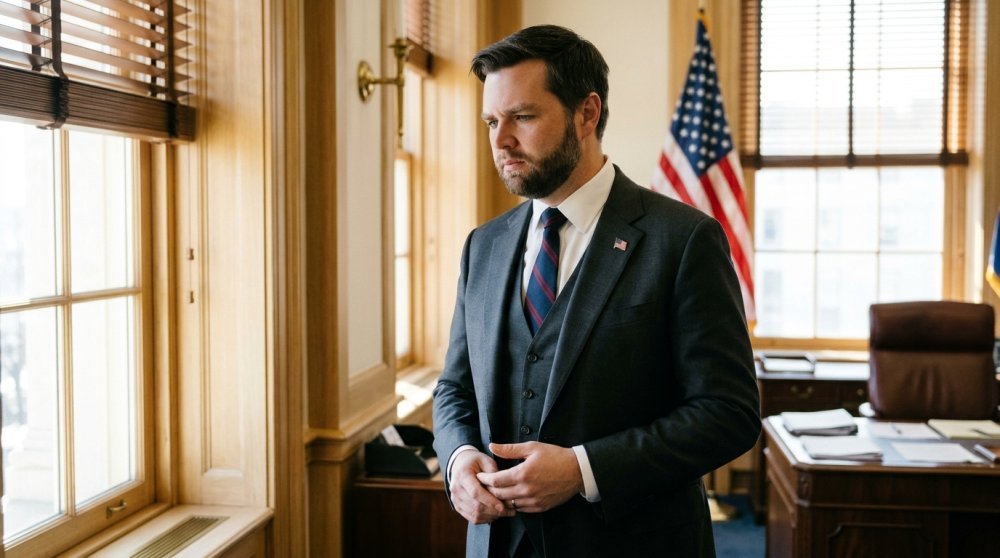
Vice President JD Vance has stated that his faith remains central to his decision-making as he weighs a potential 2028 presidential campaign. The Ohio senator-turned-vice president spoke candidly about how he continues to seek God’s direction before making major political moves.
Vance emphasized that he has not yet sensed a clear calling from God regarding a presidential run. He noted that this could change in time but stressed the importance of waiting for divine guidance.
“I haven’t yet felt God’s call for a presidential run in 2028,”
“Maybe that’ll change.”
Vance’s comments reflect a growing trend among conservative leaders who publicly acknowledge their dependence on prayer and Scripture when facing major career decisions. His approach resonates with many Americans who value leaders willing to submit their ambitions to God’s will.
The vice president also reflected on how his conversion to Christianity has shaped his worldview and public service. Vance has often spoken about the transformative power of faith in both his personal life and his political philosophy.
Let us know what you think, please share your thoughts in the comments below.
Faith Facts
- Vice President JD Vance led rally attendees in reciting the Lord’s Prayer when a woman collapsed nearby.
- The moment highlighted the continued presence of Christian faith in American public life and political gatherings.
- Vance personally left the stage to check on the woman after leading the prayer.
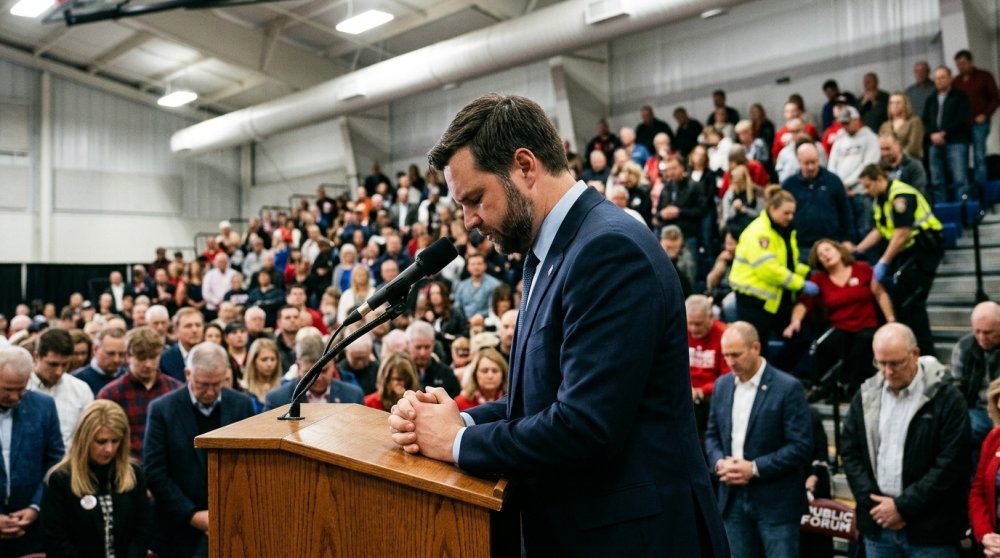
Vice President JD Vance paused a Nebraska campaign rally to lead the crowd in the Lord’s Prayer after a woman collapsed in the audience.
The incident took place during a live event where Vance addressed supporters and addressed policy issues.
“Pray as the Lord taught us to pray,” Vance said before leading the audience in the traditional prayer.
After finishing the prayer, Vance stepped down from the stage and made his way into the stands to personally check on the woman who had collapsed.
The spontaneous act of faith and compassion drew praise from attendees who witnessed the moment.
Let us know what you think, please share your thoughts in the comments below.


-

 Self-Reliance2 years ago
Trump’s Bold Move Uncovers Massive Social Security Fraud
-

 Faith2 years ago
New Clues Emerge in Noah’s Ark Mystery
-

 News2 years ago
Governor Walz’s Rhetoric Sparks National Controversy
-

 News2 years ago
Mel Gibson’s ‘The Passion of the Christ’ Sequel Title Announced
-

 Family2 years ago
Texas Lawmaker Targets Furries in Schools
-

 Freedom2 years ago
Maine Lawmaker Challenges Sports Fairness Controversy
-

 Family1 year ago
Canada’s Controversial Policy Sparks Ethical Debate
-
Faith11 months ago
Congress Hears Pleas for Nigerian Christians