
Faith
When Faith Leaders Challenge American Presidents

Faith Facts
- Pope Leo recently criticized President Trump’s border security policies, sparking debate about the proper role of religious leaders in political discourse
- The Pope’s comments represent a continuation of tension between Vatican pronouncements and American sovereignty on immigration matters
- Conservative Christians are divided on whether religious leaders should publicly condemn elected officials’ policy decisions
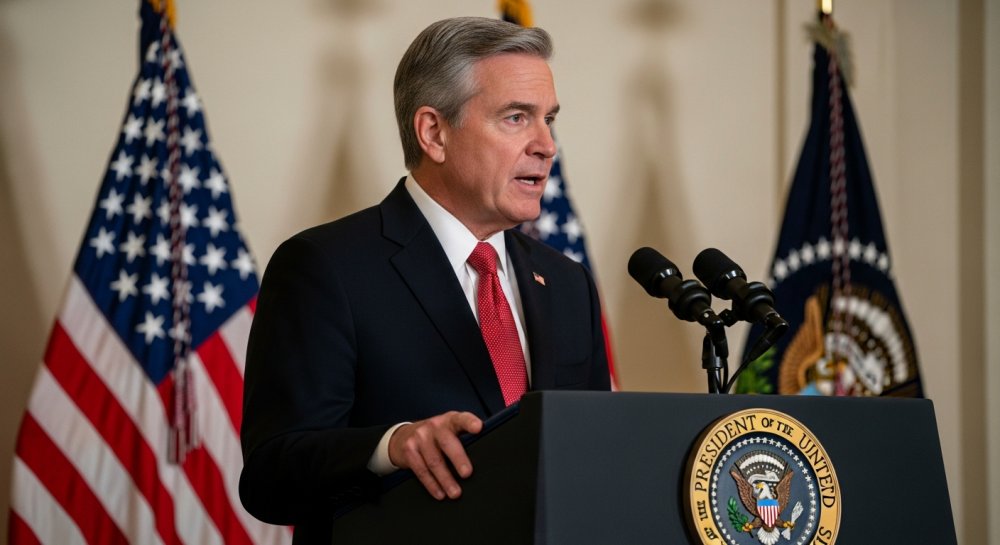
The recent public exchange between Pope Leo and President Donald Trump has ignited fresh debate about the intersection of faith, politics, and national sovereignty. When religious leaders speak out against the policies of democratically elected officials, Americans of faith must ask themselves: where does biblical peacemaking end and political partisanship begin?
The tension centers on America’s border security policies, which President Trump has championed as necessary protections for American citizens and legal immigrants. The Pope’s public criticism has raised questions about whether such pronouncements serve the cause of Christ or inadvertently advance a political agenda.
For many conservative Christians, the issue isn’t whether faith should inform politics—it absolutely should. The question is whether foreign religious authorities should publicly condemn American leaders who are implementing policies supported by millions of faithful voters. These believers see a distinction between speaking biblical truth and wading into specific policy disputes that belong to the American people and their elected representatives.
The clash also highlights a fundamental disagreement about the role of government. Traditional Christian teaching supports both compassion for those in need and the legitimate authority of civil government to maintain borders and enforce laws. President Trump’s supporters argue his policies seek to balance these principles, protecting American communities while maintaining legal pathways for immigration.
Scripture calls believers to pray for those in authority and to seek peace. Yet biblical peace isn’t achieved by abandoning the rule of law or ignoring the security concerns of citizens. Many American Christians believe their leaders can pursue both justice and mercy without compromising national sovereignty.
The debate extends beyond any single policy dispute. It touches on whether American Christians should defer to international religious figures on matters of governance, or whether they should exercise discernment based on their own reading of Scripture, understanding of their nation’s needs, and participation in democratic processes.
Conservative Christians recognize that loving one’s neighbor includes both generosity and wisdom. They understand that sustainable compassion requires secure borders, functioning legal systems, and communities where citizens can flourish. These aren’t competing values—they’re complementary responsibilities that elected leaders must balance.
As this public disagreement continues, faithful Americans face a choice: will they allow foreign authorities to define the boundaries of faithful citizenship, or will they trust their own capacity to integrate biblical principles with their civic duties? For many, the answer lies in respecting spiritual leadership while maintaining the independence necessary to govern their own nation according to constitutional principles and the will of the people.
Let us know what you think, please share your thoughts in the comments below.

Faith Facts
- Nearly 100 students at a Christian high school in Colorado have been baptized following athletic events this year.
- Five separate worship gatherings were organized after games, drawing students seeking faith commitments.
- The baptisms reflect a growing movement of young people responding to the Gospel in school settings.
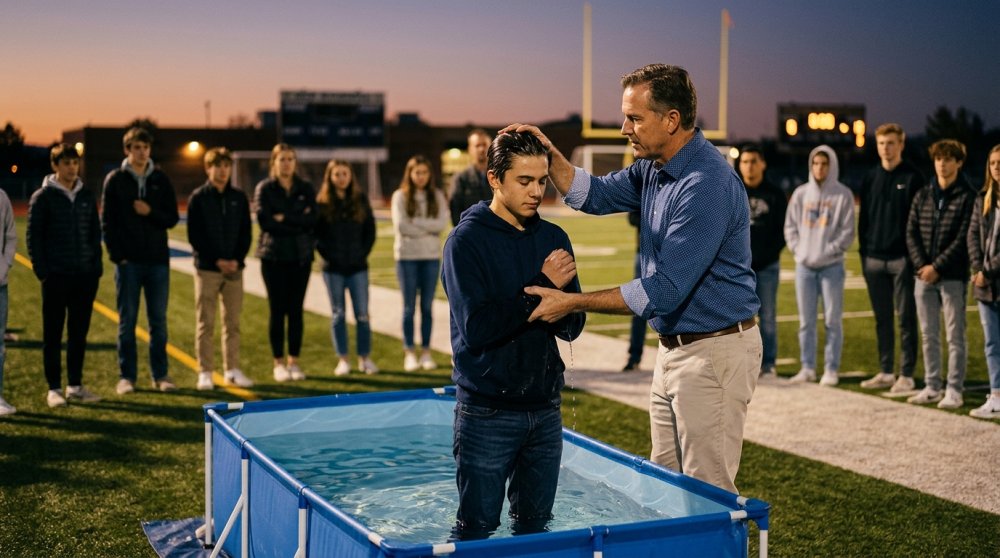
High school athletic events have long been community gatherings, but one Colorado Christian school is seeing those moments turn into something far more eternal.
After five post-game worship services, nearly 100 students stepped forward for baptism, marking a powerful season of spiritual renewal.
School leaders say the response has been both unexpected and deeply encouraging, as students publicly declare their faith in Christ.
“It has been incredible to watch these young people take this step,” one administrator shared.
The gatherings combine prayer, worship, and testimony, creating a space where students feel welcomed to respond to the message of salvation.
Parents and faculty have noted a renewed sense of purpose and unity among the student body as a result.
“We are seeing the Holy Spirit move in powerful ways,” a staff member added.
Christian education advocates view the events as evidence that faith-based environments can shape hearts as well as minds.
The school plans to continue the post-game worship gatherings in the coming seasons, hoping to build on the momentum of spiritual awakening.
Let us know what you think, please share your thoughts in the comments below.
Faith Facts
- Matthew West releases new album titled ‘Jesus Is King’
- Album emphasizes surrender, vulnerability, and Scripture after nearly 30 years in Christian music
- West challenges the culture of self-empowerment with a message of Christ-centered living
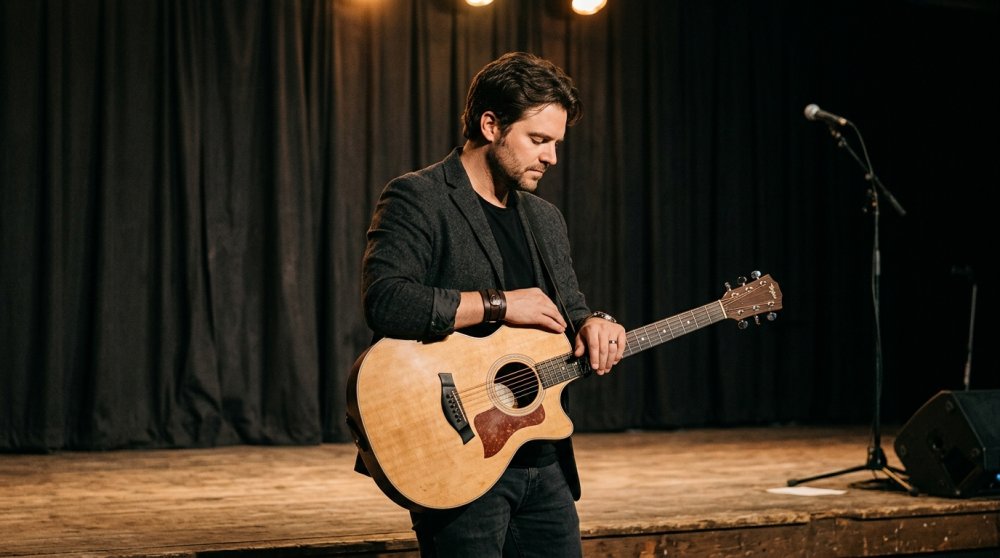
Christian music artist Matthew West is calling believers to place Jesus above self in his latest album, ‘Jesus Is King.’ The project comes after nearly three decades of ministry and reflects a deeper commitment to Scripture and surrender.
West says the album confronts a culture obsessed with self-empowerment by lifting up the lordship of Christ instead. He believes true strength comes from laying down personal control and trusting God’s Word.
"The message of this album is that Jesus is King, and that changes everything."
Through honest lyrics and personal testimony, West hopes listeners will rediscover the power of vulnerability before God. He points to Scripture as the foundation for every song and every season of life.
"After nearly 30 years in Christian music, I am more convinced than ever that surrender is the doorway to real freedom."
Let us know what you think, please share your thoughts in the comments below.

Faith Facts
- Jordan Shipley called on the Lord during a life-threatening accident that left over 20% of his body with third-degree burns.
- More than eight months later, the former NFL wide receiver described his recovery as a miracle.
- Shipley publicly credits his faith in God for sustaining him through the ordeal.
Former NFL wide receiver Jordan Shipley is sharing a powerful testimony of survival and faith. More than eight months ago, Shipley endured a devastating accident on his Texas ranch that left him with third-degree burns across more than 20 percent of his body.
In the midst of the crisis, Shipley says he turned to God with desperate prayers for help. He now describes his recovery as nothing short of miraculous.
“I desperately called on the Lord for help during the life-threatening ordeal and experienced a ‘miracle.'”
Let us know what you think, please share your thoughts in the comments below.


-

 Self-Reliance1 year ago
Trump’s Bold Move Uncovers Massive Social Security Fraud
-

 Faith1 year ago
New Clues Emerge in Noah’s Ark Mystery
-

 News2 years ago
Governor Walz’s Rhetoric Sparks National Controversy
-

 News1 year ago
Mel Gibson’s ‘The Passion of the Christ’ Sequel Title Announced
-

 Family2 years ago
Texas Lawmaker Targets Furries in Schools
-

 Freedom2 years ago
Maine Lawmaker Challenges Sports Fairness Controversy
-

 Family1 year ago
Canada’s Controversial Policy Sparks Ethical Debate
-
Faith10 months ago
Congress Hears Pleas for Nigerian Christians