
Faith
While Panic Spreads, Christian Churches Stand Firm Against Ebola in Congo

Faith Facts
- Anglican churches in Goma, Democratic Republic of Congo, are providing frontline medical care, combating deadly misinformation, and offering pastoral support during the ongoing Ebola outbreak
- The Church is uniquely positioned to reach communities where government and secular organizations struggle to gain trust
- Christian leaders are risking their lives to serve the sick and dying while sharing the hope of the Gospel in one of Africa’s most dangerous health crises
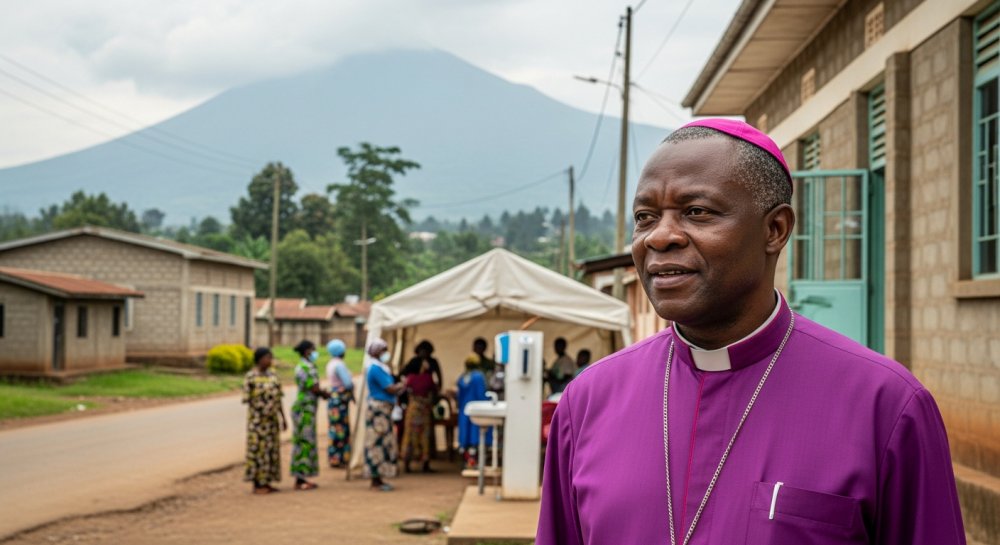
While the world watches in fear as Ebola continues its deadly march through the Democratic Republic of Congo, Christian believers are not retreating — they’re advancing. The Anglican bishop of Goma is reporting that churches across his diocese are standing at the forefront of the battle, providing practical aid, countering dangerous falsehoods, and ministering to souls in one of the world’s most challenging mission fields.
The Ebola outbreak in the DRC has claimed hundreds of lives and created widespread panic. But where secular organizations often struggle to establish trust in remote and conflict-affected regions, the Church has something they don’t: relationships built on faith, service, and a long history of sacrificial love.
The bishop explains that Christian workers are uniquely positioned to reach communities that are skeptical of outsiders. In areas where misinformation about Ebola spreads as quickly as the disease itself — with some believing it’s a government conspiracy or witchcraft — trusted church leaders are able to speak truth and save lives through education and example.
Beyond the medical response, churches are providing what no government program can: spiritual comfort to the dying and hope to the grieving. Pastors and lay believers are entering isolation wards, praying with patients, and demonstrating the love of Christ in the face of a terrifying disease.
This is not the first time Christians have led the charge against deadly epidemics in Africa. From the AIDS crisis to previous Ebola outbreaks, missionary hospitals, church-run clinics, and faith-based organizations have consistently been among the first responders and the last to leave.
The work is dangerous and the sacrifice is real. Christian healthcare workers and clergy have contracted Ebola while serving the sick. Yet they continue, motivated not by salary or recognition, but by the command to love their neighbors as themselves and the assurance that to live is Christ, and to die is gain.
While international media focuses on statistics and containment strategies, it’s worth remembering who is actually on the ground doing the work. Faith-driven believers, empowered by the Holy Spirit, are bringing light into darkness and life into places of death.
The bishop’s testimony is a powerful reminder that the Church is not an outdated institution or a social club — it is the hands and feet of Jesus, still active in the world’s hardest places. When disaster strikes and others flee, Christians stay. When fear paralyzes, faith mobilizes.
American Christians should be encouraged by this witness and challenged by it. Our brothers and sisters in Congo are facing physical death to minister in Jesus’ name. What risks are we willing to take to share the Gospel and serve the least of these in our own communities?
As we pray for an end to this outbreak, let us also pray for protection over these faithful servants and for the salvation of those they serve. And let us support mission organizations and church networks that make this vital work possible.
Let us know what you think, please share your thoughts in the comments below.


Faith Facts
- Well-meaning Christian responses like ‘just pray more’ can inadvertently harm believers struggling with depression and mental health challenges
- Faith leaders and mental health experts emphasize that prayer and professional treatment are not mutually exclusive but complementary approaches to healing
- The Church is called to respond with compassion, wisdom, and practical support when brothers and sisters in Christ struggle with mental illness
When a fellow believer finally musters the courage to say “I’m not OK,” our response carries profound weight. Yet too often, Christians struggling with depression encounter well-intentioned but potentially harmful advice that oversimplifies their suffering.
The phrase “just pray more” has become a common refrain in church communities when mental health issues arise. While prayer remains a vital spiritual discipline and source of comfort, reducing complex medical conditions to simple spiritual prescriptions can leave hurting believers feeling judged, isolated, and even spiritually inadequate.
Depression is a multifaceted condition that affects body, mind, and spirit. Research has consistently shown that clinical depression involves neurochemical imbalances, genetic factors, traumatic experiences, and environmental stressors—components that require comprehensive care approaches.
Christian mental health advocates emphasize that seeking professional treatment demonstrates the same wisdom as visiting a doctor for a broken bone or cancer diagnosis. God has given humanity medical knowledge and therapeutic tools as means of grace and healing.
Scripture itself models a nuanced approach to suffering. The Psalms are filled with raw expressions of anguish, doubt, and despair alongside declarations of faith. The prophet Elijah experienced what many modern experts would recognize as symptoms of depression, and God responded not with rebuke but with rest, nourishment, and compassionate presence.
When believers dismiss mental illness as merely a spiritual problem, they risk adding shame to already overwhelming pain. Those battling depression may begin to believe their faith is deficient or that God is disappointed in them for their struggle—compounding their suffering rather than alleviating it.
The Church has a sacred opportunity to demonstrate Christ’s compassion by creating spaces where honesty about mental health is welcomed rather than stigmatized. This means educating congregations about depression, connecting struggling members with qualified Christian counselors, and walking alongside them in their journey toward wholeness.
Prayer absolutely has a place in healing—a central place. But it works in concert with medical treatment, counseling, community support, healthy lifestyle changes, and time. God works through all these means to restore His children.
Biblical wisdom calls us to “bear one another’s burdens” and “weep with those who weep.” This requires listening without judgment, offering practical help, pointing people toward appropriate resources, and maintaining compassionate presence even when healing takes longer than we’d like.
Christian communities must recognize that telling someone to “just pray more” can communicate that their suffering isn’t real or serious enough to warrant additional help. It can shut down vulnerable conversations and leave people suffering in silence rather than seeking the comprehensive care they need.
The most Christ-like response to a struggling brother or sister combines spiritual support with practical wisdom. It acknowledges that we live in a fallen world where bodies and minds break, while trusting that God brings healing through multiple means—including the medical and therapeutic resources He has provided.
Churches that embrace mental health awareness demonstrate the full counsel of Scripture: honoring both the spiritual realities of our faith and the physical realities of our humanity. They create cultures where asking for help is seen as strength, not weakness.
As the body of Christ, we are called to be agents of hope and healing in a broken world. This means responding to mental illness with the same compassion Jesus showed to all who suffered—meeting people where they are, offering genuine support, and pointing them toward every resource available for their restoration.
Let us know what you think, please share your thoughts in the comments below.
Faith Facts
- The Episcopal Church is organizing a multi-day event this fall to mark 50 years since adopting a resolution affirming homosexual members
- The celebration highlights the denomination’s decades-long departure from traditional Christian teaching on marriage and sexuality
- The event underscores the continuing theological divide between liberal mainline Protestant denominations and Bible-believing Christians who uphold scriptural authority
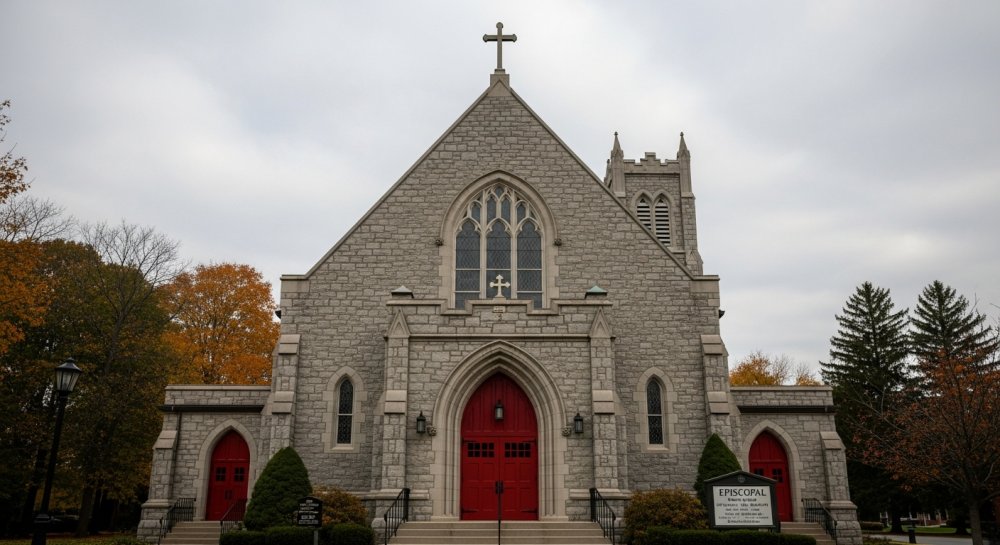
The Episcopal Church is preparing to host a multi-day commemorative event this fall, marking the 50th anniversary of a controversial resolution that affirmed homosexual members within the denomination. The celebration represents a half-century milestone in the church’s progressive shift away from orthodox Christian teaching on human sexuality.
The planned event will spotlight five decades of institutional change within one of America’s oldest Protestant denominations. What many traditional Christians view as a departure from biblical authority, the Episcopal Church frames as a journey toward greater inclusivity.
The anniversary observance comes as mainline Protestant denominations continue to experience membership decline, with many church observers linking the exodus to these bodies’ abandonment of scriptural standards on marriage and sexuality. Conservative Episcopalians and Anglicans have formed breakaway denominations such as the Anglican Church in North America to maintain traditional biblical teachings.
The theological divergence between progressive mainline churches and Bible-believing congregations has only widened in recent years. While denominations like the Episcopal Church celebrate redefinitions of marriage and sexuality, evangelical and traditional Catholic churches continue to uphold the historic Christian understanding that marriage is between one man and one woman, as defined in Scripture.
For Christians committed to biblical authority, the Episcopal Church’s anniversary celebration serves as a reminder of the importance of remaining faithful to God’s Word, even as cultural pressures mount. The event illustrates the ongoing cultural battle between progressive ideology and traditional Christian values that has reshaped the American religious landscape.
Many believers see such commemorations as evidence of the prophetic warnings throughout Scripture about churches that would depart from sound doctrine. The apostle Paul’s admonition to Timothy remains relevant: to hold fast to the pattern of sound teaching and guard the gospel truth.
Let us know what you think, please share your thoughts in the comments below.

Faith Facts
- Leading evangelical educators warn that artificial intelligence is already reshaping how seminary students learn and reason about Scripture
- Theological formation requires personal spiritual transformation that no technology can replace
- Seminary faculty worldwide urged to address AI’s growing influence while protecting the heart of Christian ministry training
Two prominent evangelical theological educators are sounding the alarm about artificial intelligence’s rapidly growing influence in seminary classrooms, warning that while the technology offers certain practical benefits, it poses serious risks to the genuine spiritual formation that lies at the core of pastoral preparation.
The experts addressed these concerns during an international webinar titled “AI Disruption and the Future of Theological Education,” where they examined both the opportunities and dangers that AI presents to institutions training the next generation of Christian leaders.
The central message from these theological education leaders was clear: seminary training is fundamentally about spiritual transformation and character development, not merely the acquisition of information or the completion of written assignments. No artificial intelligence system, regardless of how sophisticated it becomes, can replicate the work of the Holy Spirit in shaping a servant of Christ.
This warning comes at a critical moment when AI tools capable of writing sermons, generating theological essays, and answering complex doctrinal questions have become widely accessible to students. The concern is not simply about academic dishonesty, but about something far more profound—the possibility that future pastors and ministry leaders might bypass the difficult, often painful process of wrestling with Scripture and theology that forms Christian character.
The formation of a faithful minister requires more than mastery of biblical languages or systematic theology. It demands personal encounters with God’s Word, seasons of doubt and questioning, late nights of study and prayer, and the gradual shaping of a heart and mind conformed to Christ. These cannot be outsourced to a machine.
Seminary faculty members face a delicate balance. They must help students understand and appropriately use emerging technologies that will be part of ministry contexts, while simultaneously protecting the irreplaceable human and spiritual dimensions of theological education. The challenge is ensuring that convenience and efficiency don’t replace the transformative struggle that produces genuine ministers of the Gospel.
For Christian families sending their children to seminary, and for churches supporting future pastors, this discussion raises important questions about what kind of preparation we want for those who will shepherd God’s people. The stakes couldn’t be higher—the spiritual health of congregations depends on leaders who have been genuinely formed, not just technically trained.
The call from these educators is for discernment and intentionality. Technology should serve the mission of theological education, not redefine it. As seminaries navigate this new landscape, they must remember that their ultimate goal is not producing efficient content generators, but faithful servants who know God deeply and can lead others into that same relationship.
Let us know what you think, please share your thoughts in the comments below.


-

 Self-Reliance1 year ago
Trump’s Bold Move Uncovers Massive Social Security Fraud
-

 Faith1 year ago
New Clues Emerge in Noah’s Ark Mystery
-

 News1 year ago
Governor Walz’s Rhetoric Sparks National Controversy
-

 News1 year ago
Mel Gibson’s ‘The Passion of the Christ’ Sequel Title Announced
-

 Family1 year ago
Texas Lawmaker Targets Furries in Schools
-

 Freedom1 year ago
Maine Lawmaker Challenges Sports Fairness Controversy
-

 Family1 year ago
Canada’s Controversial Policy Sparks Ethical Debate
-
Faith6 months ago
Congress Hears Pleas for Nigerian Christians