
Faith
Seminary Professors Issue Urgent Warning About AI’s Threat to Biblical Formation


Faith Facts
- Leading evangelical educators warn that artificial intelligence is already reshaping how seminary students learn and reason about Scripture
- Theological formation requires personal spiritual transformation that no technology can replace
- Seminary faculty worldwide urged to address AI’s growing influence while protecting the heart of Christian ministry training
Two prominent evangelical theological educators are sounding the alarm about artificial intelligence’s rapidly growing influence in seminary classrooms, warning that while the technology offers certain practical benefits, it poses serious risks to the genuine spiritual formation that lies at the core of pastoral preparation.
The experts addressed these concerns during an international webinar titled “AI Disruption and the Future of Theological Education,” where they examined both the opportunities and dangers that AI presents to institutions training the next generation of Christian leaders.
The central message from these theological education leaders was clear: seminary training is fundamentally about spiritual transformation and character development, not merely the acquisition of information or the completion of written assignments. No artificial intelligence system, regardless of how sophisticated it becomes, can replicate the work of the Holy Spirit in shaping a servant of Christ.
This warning comes at a critical moment when AI tools capable of writing sermons, generating theological essays, and answering complex doctrinal questions have become widely accessible to students. The concern is not simply about academic dishonesty, but about something far more profound—the possibility that future pastors and ministry leaders might bypass the difficult, often painful process of wrestling with Scripture and theology that forms Christian character.
The formation of a faithful minister requires more than mastery of biblical languages or systematic theology. It demands personal encounters with God’s Word, seasons of doubt and questioning, late nights of study and prayer, and the gradual shaping of a heart and mind conformed to Christ. These cannot be outsourced to a machine.
Seminary faculty members face a delicate balance. They must help students understand and appropriately use emerging technologies that will be part of ministry contexts, while simultaneously protecting the irreplaceable human and spiritual dimensions of theological education. The challenge is ensuring that convenience and efficiency don’t replace the transformative struggle that produces genuine ministers of the Gospel.
For Christian families sending their children to seminary, and for churches supporting future pastors, this discussion raises important questions about what kind of preparation we want for those who will shepherd God’s people. The stakes couldn’t be higher—the spiritual health of congregations depends on leaders who have been genuinely formed, not just technically trained.
The call from these educators is for discernment and intentionality. Technology should serve the mission of theological education, not redefine it. As seminaries navigate this new landscape, they must remember that their ultimate goal is not producing efficient content generators, but faithful servants who know God deeply and can lead others into that same relationship.
Let us know what you think, please share your thoughts in the comments below.


Faith Facts
- A former Muslim who spent nearly ten years studying Christianity has publicly warned that artificial intelligence carries spiritual risks rooted in Scripture.
- The convert identifies AI’s promise of godlike power as the same temptation the serpent offered in the Garden of Eden.
- Christian teaching holds that true wisdom and authority come from God alone, not from human-made technology.
A man who left Islam for Christ after nearly a decade of searching says the rapid rise of artificial intelligence revives an ancient spiritual danger.
He argues that AI’s appeal to “become like God” directly echoes the serpent’s words in Genesis 3:5.
“The enticement to become God is the same lie that was in the garden,” the convert stated.
The former Muslim explained that after years of comparing Islam and Christianity he found the gospel alone offered both truth and grace.
Now he sees AI as a modern tool that can draw hearts away from dependence on the Lord.
He urged believers to test every new technology against the unchanging Word of God.
“We must remember that wisdom begins with the fear of the Lord, not with faster machines,” he said.
Let us know what you think, please share your thoughts in the comments below.

Faith Facts
- Christians are called to steward creation responsibly, including the environmental impact of new technologies.
- Scripture teaches that genuine human relationships reflect God’s design for community and love.
- Believers affirm that life and moral agency are gifts from God that must not be surrendered to machines.
Artificial intelligence promises remarkable advances, yet its rapid growth raises serious questions for people of faith.
Stephen Jenkins, a Christian AI engineer, has laid out three specific ethical concerns that he believes demand the church’s attention.
Energy demands for training large models already rival the yearly consumption of small nations, threatening the very creation believers are commanded to protect.
At the same time, increasingly human-like chatbots are being marketed as companions, risking the replacement of real relationships with digital simulations.
Artificial Intelligence is everywhere and has enormous potential for good. But how should Christians respond to concerns about its impact on the environment, human relationships and, ultimately, on the survival of the human race?
Jenkins warns that once systems gain the ability to improve themselves, humanity could lose meaningful control over its own future.
He urges fellow believers to bring biblical wisdom into every stage of AI development rather than leaving these decisions to secular engineers alone.
Let us know what you think, please share your thoughts in the comments below.
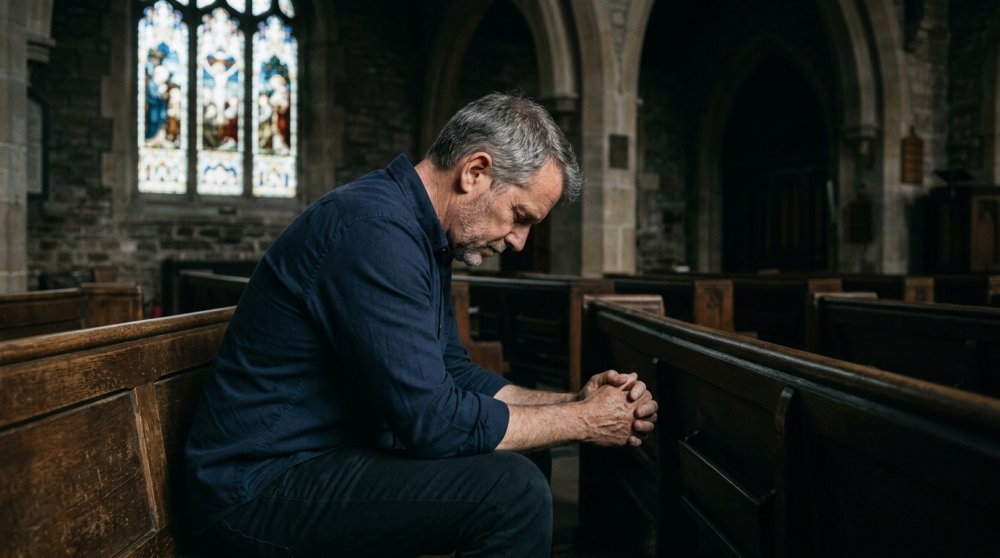
Faith Facts
- Pornography is not merely a personal moral failing but operates as a spiritual system that undermines faith and family.
- Traditional Christian teaching identifies pornography as both sin and spiritual bondage that requires deliverance through Christ.
- The Church must confront pornography as a cultural and spiritual threat rather than simply a private issue.
Two responses dominate the Church’s approach to pornography. One says it’s a sin to resist, and the other says it’s a compulsion to treat. Both describe something real, and both fall short, because neither can see what the Church is actually fighting.
Scripture teaches that believers wrestle not against flesh and blood but against principalities and powers in high places. This biblical framework reveals pornography as more than individual weakness or medical diagnosis. It operates as a coordinated spiritual assault on marriage, purity, and the image of God in humanity.
The traditional Christian understanding of sin recognizes that pornography violates God’s design for human sexuality within the covenant of marriage. This view maintains that individuals bear responsibility for their choices and can find freedom through repentance and the power of the Holy Spirit.
At the same time, many faithful Christians acknowledge that pornography creates patterns of bondage that require both spiritual deliverance and practical accountability. The Church has always recognized that some struggles require ongoing support and community, not merely one-time decisions.
Yet viewing pornography solely through the lens of personal sin or clinical addiction misses its broader spiritual dimensions. The proliferation of pornography represents a systematic attack on the foundations of family life that have sustained American society for generations.
Christian leaders have consistently warned that pornography distorts God’s gift of sexuality and leads to objectification rather than covenant love. This teaching remains as relevant today as when the apostles first addressed sexual immorality in the early Church.
The spiritual system behind pornography promotes values directly opposed to biblical truth about human dignity and the sanctity of marriage. It promises fulfillment while delivering isolation and shame that damage relationships with God and others.
Recovery from pornography’s influence requires both the forgiveness available through Christ and the renewing of the mind that Scripture describes. Churches that address this issue comprehensively offer hope to those caught in its grip while maintaining the truth that freedom is possible.
Let us know what you think, please share your thoughts in the comments below.


-

 Self-Reliance2 years ago
Trump’s Bold Move Uncovers Massive Social Security Fraud
-

 Faith1 year ago
New Clues Emerge in Noah’s Ark Mystery
-

 News2 years ago
Governor Walz’s Rhetoric Sparks National Controversy
-

 News2 years ago
Mel Gibson’s ‘The Passion of the Christ’ Sequel Title Announced
-

 Family2 years ago
Texas Lawmaker Targets Furries in Schools
-

 Freedom2 years ago
Maine Lawmaker Challenges Sports Fairness Controversy
-

 Family1 year ago
Canada’s Controversial Policy Sparks Ethical Debate
-
Faith11 months ago
Congress Hears Pleas for Nigerian Christians