
Faith
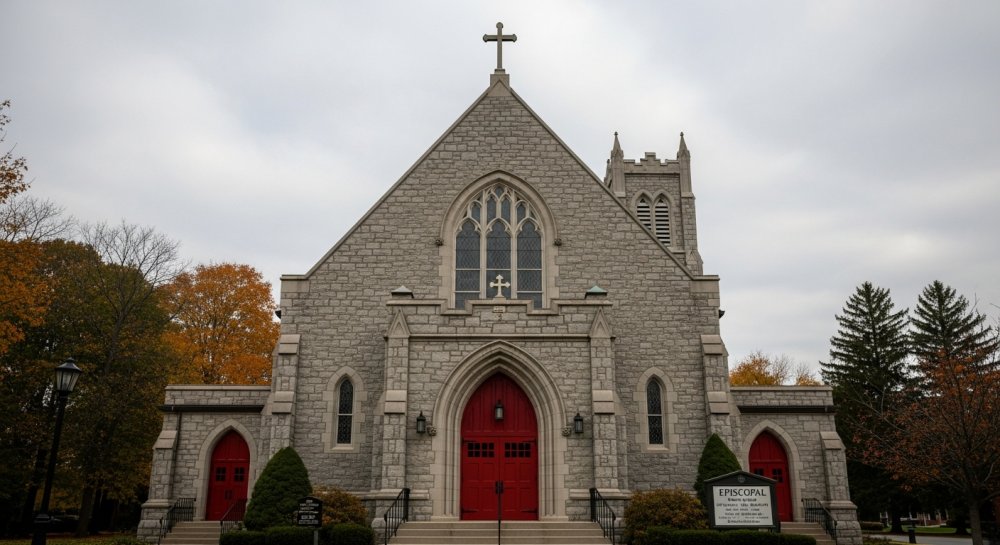
Episcopal Church Plans Multi-Day Celebration of Half-Century Shift on Sexual Ethics

Faith Facts
- The Episcopal Church is organizing a multi-day event this fall to mark 50 years since adopting a resolution affirming homosexual members
- The celebration highlights the denomination’s decades-long departure from traditional Christian teaching on marriage and sexuality
- The event underscores the continuing theological divide between liberal mainline Protestant denominations and Bible-believing Christians who uphold scriptural authority
The Episcopal Church is preparing to host a multi-day commemorative event this fall, marking the 50th anniversary of a controversial resolution that affirmed homosexual members within the denomination. The celebration represents a half-century milestone in the church’s progressive shift away from orthodox Christian teaching on human sexuality.
The planned event will spotlight five decades of institutional change within one of America’s oldest Protestant denominations. What many traditional Christians view as a departure from biblical authority, the Episcopal Church frames as a journey toward greater inclusivity.
The anniversary observance comes as mainline Protestant denominations continue to experience membership decline, with many church observers linking the exodus to these bodies’ abandonment of scriptural standards on marriage and sexuality. Conservative Episcopalians and Anglicans have formed breakaway denominations such as the Anglican Church in North America to maintain traditional biblical teachings.
The theological divergence between progressive mainline churches and Bible-believing congregations has only widened in recent years. While denominations like the Episcopal Church celebrate redefinitions of marriage and sexuality, evangelical and traditional Catholic churches continue to uphold the historic Christian understanding that marriage is between one man and one woman, as defined in Scripture.
For Christians committed to biblical authority, the Episcopal Church’s anniversary celebration serves as a reminder of the importance of remaining faithful to God’s Word, even as cultural pressures mount. The event illustrates the ongoing cultural battle between progressive ideology and traditional Christian values that has reshaped the American religious landscape.
Many believers see such commemorations as evidence of the prophetic warnings throughout Scripture about churches that would depart from sound doctrine. The apostle Paul’s admonition to Timothy remains relevant: to hold fast to the pattern of sound teaching and guard the gospel truth.
Let us know what you think, please share your thoughts in the comments below.


Faith Facts
- Nearly 100 students at a Christian high school in Colorado have been baptized following athletic events this year.
- Five separate worship gatherings were organized after games, drawing students seeking faith commitments.
- The baptisms reflect a growing movement of young people responding to the Gospel in school settings.
High school athletic events have long been community gatherings, but one Colorado Christian school is seeing those moments turn into something far more eternal.
After five post-game worship services, nearly 100 students stepped forward for baptism, marking a powerful season of spiritual renewal.
School leaders say the response has been both unexpected and deeply encouraging, as students publicly declare their faith in Christ.
“It has been incredible to watch these young people take this step,” one administrator shared.
The gatherings combine prayer, worship, and testimony, creating a space where students feel welcomed to respond to the message of salvation.
Parents and faculty have noted a renewed sense of purpose and unity among the student body as a result.
“We are seeing the Holy Spirit move in powerful ways,” a staff member added.
Christian education advocates view the events as evidence that faith-based environments can shape hearts as well as minds.
The school plans to continue the post-game worship gatherings in the coming seasons, hoping to build on the momentum of spiritual awakening.
Let us know what you think, please share your thoughts in the comments below.

Faith Facts
- Matthew West releases new album titled ‘Jesus Is King’
- Album emphasizes surrender, vulnerability, and Scripture after nearly 30 years in Christian music
- West challenges the culture of self-empowerment with a message of Christ-centered living
Christian music artist Matthew West is calling believers to place Jesus above self in his latest album, ‘Jesus Is King.’ The project comes after nearly three decades of ministry and reflects a deeper commitment to Scripture and surrender.
West says the album confronts a culture obsessed with self-empowerment by lifting up the lordship of Christ instead. He believes true strength comes from laying down personal control and trusting God’s Word.
"The message of this album is that Jesus is King, and that changes everything."
Through honest lyrics and personal testimony, West hopes listeners will rediscover the power of vulnerability before God. He points to Scripture as the foundation for every song and every season of life.
"After nearly 30 years in Christian music, I am more convinced than ever that surrender is the doorway to real freedom."
Let us know what you think, please share your thoughts in the comments below.

Faith Facts
- Jordan Shipley called on the Lord during a life-threatening accident that left over 20% of his body with third-degree burns.
- More than eight months later, the former NFL wide receiver described his recovery as a miracle.
- Shipley publicly credits his faith in God for sustaining him through the ordeal.
Former NFL wide receiver Jordan Shipley is sharing a powerful testimony of survival and faith. More than eight months ago, Shipley endured a devastating accident on his Texas ranch that left him with third-degree burns across more than 20 percent of his body.
In the midst of the crisis, Shipley says he turned to God with desperate prayers for help. He now describes his recovery as nothing short of miraculous.
“I desperately called on the Lord for help during the life-threatening ordeal and experienced a ‘miracle.'”
Let us know what you think, please share your thoughts in the comments below.


-

 Self-Reliance1 year ago
Trump’s Bold Move Uncovers Massive Social Security Fraud
-

 Faith1 year ago
New Clues Emerge in Noah’s Ark Mystery
-

 News2 years ago
Governor Walz’s Rhetoric Sparks National Controversy
-

 News1 year ago
Mel Gibson’s ‘The Passion of the Christ’ Sequel Title Announced
-

 Family2 years ago
Texas Lawmaker Targets Furries in Schools
-

 Freedom2 years ago
Maine Lawmaker Challenges Sports Fairness Controversy
-

 Family1 year ago
Canada’s Controversial Policy Sparks Ethical Debate
-
Faith10 months ago
Congress Hears Pleas for Nigerian Christians