
Faith
The Hidden Battle Christian Leaders Face Behind Closed Doors

Faith Facts
- Pornography temptation affects Christian leaders at rates comparable to the general population, exposing a crisis of accountability in modern church leadership
- Former Hillsong leader Brian Houston has publicly denied pornography use after content appeared on his social media channels, calling the material “vile”
- Ministry experts emphasize the need for greater transparency and accountability structures to protect both leaders and their congregations from moral failures
The American church is facing an uncomfortable truth that can no longer be ignored. While allegations swirl around former Hillsong leader Brian Houston, who has publicly denied watching pornography after questionable content appeared on his social media accounts, the broader conversation demands our immediate attention.
Houston called the content “vile” and rejected any connection to it. But regardless of the specifics of any individual case, the underlying issue cuts to the heart of spiritual warfare in our time.
Cat Etherington from Naked Truth Project has stepped forward to address what many believers whisper about but few dare to confront openly. Pornography represents a genuine temptation for Christian leaders—a reality that our faith communities must acknowledge with honesty and grace.
The statistics paint a sobering picture. Men and women who stand in pulpits, lead worship, and shepherd flocks are not immune to the pervasive digital temptations that assault American families daily. The question is not whether Christian leaders face these battles, but whether our churches have created environments where struggling leaders can find help before catastrophic failure occurs.
Traditional accountability structures in many congregations have proven insufficient for the digital age. The smartphone in every pocket represents both a tool for ministry and a potential gateway to moral compromise. Without robust systems of transparency and support, even the most committed believers can find themselves ensnared.
The Hillsong situation, whatever its ultimate resolution, serves as a wake-up call. American Christians must move beyond shame-based silence and toward redemptive honesty about sexual temptation. This doesn’t mean accepting sin or lowering biblical standards—it means acknowledging reality so we can address it effectively.
Church boards and denominational leaders bear special responsibility here. Creating cultures where leaders can confess struggles before they become scandals requires intentional effort. Anonymous accountability software, regular check-ins with trusted mentors, and clear consequences for deception all play important roles.
For congregations, this means resisting two equally dangerous extremes. We must neither excuse sin in our leaders nor adopt a spirit of judgmental suspicion that assumes the worst. The balance lies in recognizing our shared humanity while maintaining high standards for those who teach and lead.
The spiritual stakes could not be higher. Every fallen leader damages the witness of the gospel and wounds those they were called to serve. Every scandal gives ammunition to those who mock Christian faith and provides cover for predators who use ministry as camouflage.
Yet there is hope. Churches across America are pioneering new approaches to leadership accountability that combine grace with truth. Small groups where leaders can be vulnerable, professional counseling resources, and clear restoration processes all demonstrate that the body of Christ can address this crisis.
Parents and families also play a crucial role. Teaching children and teenagers about sexual purity in a pornography-saturated culture prepares the next generation of leaders to resist temptations their predecessors often faced without adequate preparation or support.
The path forward requires courage—courage to have difficult conversations, courage to implement accountability even when it feels uncomfortable, and courage to extend redemption to those who fall while maintaining consequences for their actions.
Whatever emerges from the Houston situation specifically, the church universal must seize this moment. Pornography’s grip on American culture will only tighten without intentional resistance rooted in biblical truth and practical wisdom.
Christian leaders deserve our prayers, not our naive assumption that their positions somehow insulate them from temptation. They need communities that combine high expectations with genuine support, churches that take both holiness and restoration seriously.
The conversation about pornography and Christian leadership is long overdue. May American believers rise to this challenge with the grace and truth that marked Jesus himself—calling sin what it is while offering hope to all who struggle and genuinely repent.
Let us know what you think, please share your thoughts in the comments below.

Faith Facts
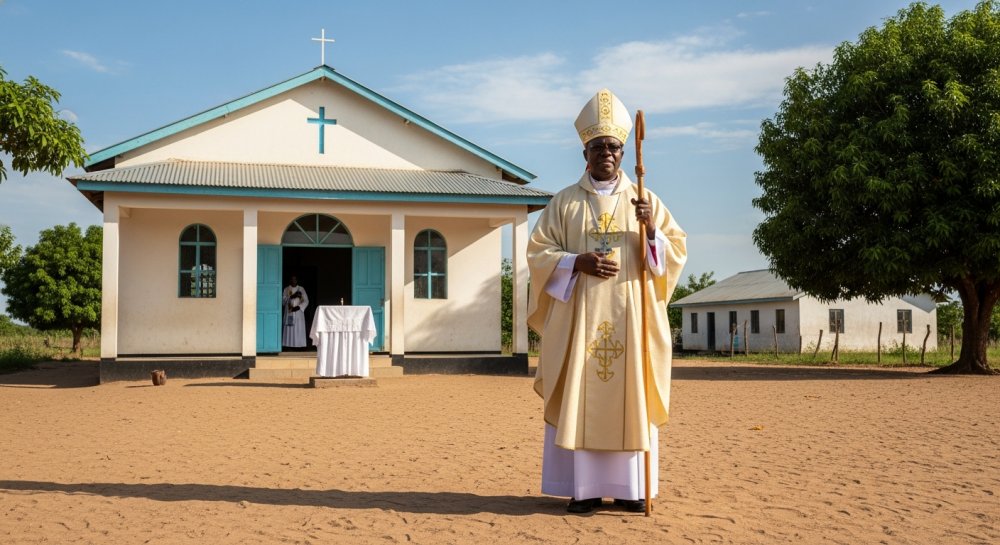
- A Mozambican bishop was fatally shot at his residence in a targeted killing that has shocked Christian communities across Africa.
- Christian leaders throughout the African continent are demanding a comprehensive investigation into the murder.
- The killing highlights growing security threats facing Christian clergy in the region.
Christian leaders across the African continent are united in their call for justice following the shocking murder of a Mozambican bishop who was shot dead at his own residence. The targeted killing has sent shockwaves through Christian communities and raised serious concerns about the safety of religious leaders serving in the region.
The bishop was killed in what witnesses describe as a deliberate attack at his home, striking at the heart of the Christian community he served. Church leaders are now pressing authorities for answers and accountability in this brazen act of violence against a man of God.
The tragedy underscores the mounting dangers faced by Christian clergy in parts of Africa, where religious persecution and violence have become increasingly common. Faith leaders are calling not only for justice in this specific case but for broader protections for those who dedicate their lives to serving Christ and their communities.
African Christian organizations are mobilizing to ensure this murder does not go unanswered. They are demanding that law enforcement agencies conduct a thorough and transparent investigation to identify the perpetrators and bring them to justice. The unified response from church leaders demonstrates the gravity of this attack on the Body of Christ.
The international Christian community is watching closely as this investigation unfolds. Many see this killing as part of a disturbing pattern of violence targeting Christian leaders and communities across Africa, requiring urgent attention and action from both civil authorities and the global Church.
As believers, we are called to pray for justice, for the family of this fallen shepherd, and for the protection of Christian leaders who continue to serve faithfully despite growing threats. This tragedy reminds us that religious freedom remains under assault in many parts of the world.
Let us know what you think, please share your thoughts in the comments below.
Faith Facts
- The Asia Conference on Church & Mission concluded with leaders from 25 nations committing to specific disciple-making efforts in their own congregations
- Speakers emphasized that church transformation must begin with senior leaders themselves, not with programs or strategies
- Conference organizers challenged attendees to name one congregation they will personally shepherd toward authentic disciple-making in the coming year
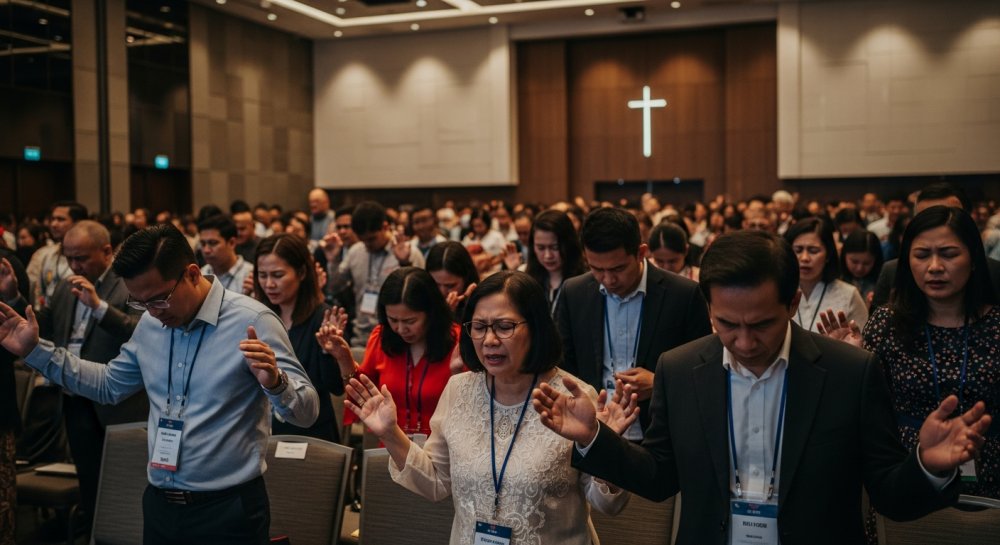
Christian leaders from across Asia gathered in Alabang, Metro Manila, for the Asia Conference on Church & Mission, which concluded Thursday evening with a powerful challenge: transformation must start from within. Delegates from 25 nations were pressed to leave not with vague good intentions, but with concrete commitments to shepherd specific congregations toward genuine disciple-making.
The conference’s closing message underscored a critical truth often overlooked in modern church growth strategies—real change begins at the top. Rather than focusing on programs, marketing, or organizational restructuring, speakers emphasized that senior leaders must first be transformed themselves before they can effectively lead their churches in making disciples.
This approach reflects a biblical pattern seen throughout Scripture, where God consistently calls leaders to personal repentance and renewal before using them to transform communities. From Moses at the burning bush to Peter’s restoration after denying Christ, the pattern is clear: God transforms leaders first, then uses them to transform others.
The emphasis on personal accountability marks a refreshing departure from conference culture that often sends attendees home inspired but unchanged. By requiring each delegate to name a specific congregation or community they will personally invest in over the next year, organizers built in concrete accountability for real-world impact.
This focus on disciple-making rather than mere church attendance or program participation aligns with Jesus’ Great Commission to “make disciples of all nations.” Too often, churches measure success by attendance numbers or budget size rather than by the spiritual maturity and missionary engagement of their members.
The gathering of leaders from 25 Asian nations also highlights the growing vitality of Christianity across the continent. While churches in Europe and North America face declining attendance and influence, Asian Christianity continues to grow rapidly, often under challenging circumstances including persecution and government restrictions.
The conference’s conclusion in Metro Manila is significant, as the Philippines remains the most Christian nation in Asia, with over 90% of its population identifying as Christian. The nation serves as a hub for missionary training and deployment throughout the region.
By challenging leaders to begin transformation within their own hearts and churches before attempting to change the broader culture, the conference embraced a model that has proven effective throughout church history. Revival movements from the First Great Awakening to the Azusa Street Revival began not with political engagement or social programs, but with leaders who first allowed God to transform their own hearts.
The call to name a specific congregation represents a practical application of the biblical principle that faith without works is dead. Rather than leaving inspired but unchanged, delegates were pressed to identify exactly where and how they will apply what they learned.
As Asian Christianity continues to grow and mature, conferences like this one play a crucial role in shaping the future direction of the global church. The emphasis on disciple-making and personal transformation suggests a healthy focus on spiritual depth rather than mere numerical growth.
The challenge issued to these 25 nations of leaders—to start from within and personally shepherd specific communities—may seem small compared to grand visions of transforming entire nations. Yet it reflects the kingdom principle Jesus taught: the mustard seed that starts small but grows into something far greater than its humble beginnings.
Let us know what you think, please share your thoughts in the comments below.

Faith Facts
- Christianity offers the only worldview that truly explains the existence and purpose of pleasure
- A culture fixated on immediate gratification consistently fails to provide lasting fulfillment
- Biblical wisdom reveals that true joy comes through honoring God’s design for human flourishing
The Christian worldview is not hostile to pleasure. In fact, Christianity is the only worldview that can truly explain why pleasure exists at all.
While our culture celebrates various forms of self-gratification, particularly during designated months of recognition, it consistently fails to deliver on its central promise: genuine happiness and fulfillment. This represents one of the great ironies of our time — a society obsessed with pleasure finds itself increasingly empty.
Scripture teaches that God created pleasure for our good, but within a framework of purpose and design. When we pursue pleasure as an end in itself, disconnected from the Creator who fashioned it, we find only temporary satisfaction that quickly fades.
The Christian understanding recognizes that human beings are made for something greater than momentary gratification. We are created in God’s image with eternal souls, designed for relationship with our Maker and with one another in ways that honor His design.
True pleasure — the kind that satisfies deeply and endures — comes not from rebellion against God’s standards but from aligning our lives with His purposes. This is the path to genuine joy that our culture, in its pursuit of autonomy, has abandoned.
When we reject God’s design for human sexuality, marriage, and family, we don’t liberate ourselves into greater pleasure. Instead, we cut ourselves off from the very source of lasting joy.
The answer to our culture’s emptiness isn’t more celebration of self-directed desire, but a return to the wisdom of our Creator. Only in Him do we find the abundant life He promises — a life where pleasure finds its proper place within His good design.
Let us know what you think, please share your thoughts in the comments below.


-

 Self-Reliance1 year ago
Trump’s Bold Move Uncovers Massive Social Security Fraud
-

 Faith1 year ago
New Clues Emerge in Noah’s Ark Mystery
-

 News1 year ago
Governor Walz’s Rhetoric Sparks National Controversy
-

 News1 year ago
Mel Gibson’s ‘The Passion of the Christ’ Sequel Title Announced
-

 Family1 year ago
Texas Lawmaker Targets Furries in Schools
-

 Freedom1 year ago
Maine Lawmaker Challenges Sports Fairness Controversy
-

 Family1 year ago
Canada’s Controversial Policy Sparks Ethical Debate
-
Faith7 months ago
Congress Hears Pleas for Nigerian Christians