
Faith
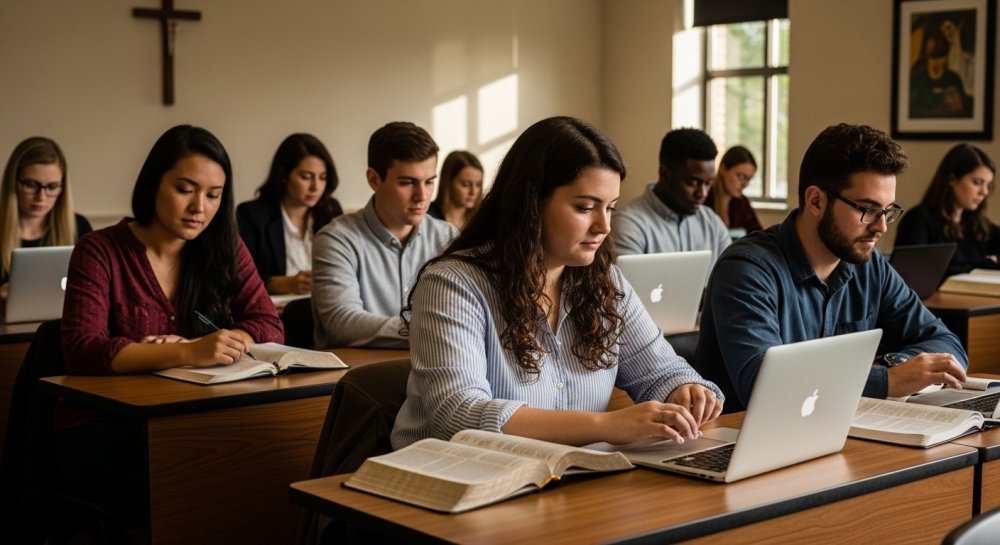
Seminary Professors Issue Urgent Warning About AI in Christian Education

Faith Facts
- Two prominent evangelical professors are urging seminary faculty worldwide to address artificial intelligence’s growing influence on theological education
- Experts warn that AI poses both unprecedented opportunities and serious risks to how Christian students learn, write, and develop critical thinking skills
- The call comes as AI tools rapidly transform traditional classroom dynamics and academic integrity standards across Christian higher education
As artificial intelligence continues its rapid integration into every corner of American life, two leading voices in evangelical theological education are sounding the alarm about its transformative impact on seminary classrooms. Their message is clear: Christian educators must engage with this technology now, understanding both its potential benefits and its serious limitations.
The professors are urging seminary faculty across the globe to take seriously the challenge AI presents to traditional Christian education. The technology is already reshaping fundamental aspects of how students approach their studies—from writing assignments to theological reasoning itself.
This isn’t simply about detecting plagiarism or monitoring academic dishonesty. The deeper concern involves how AI may fundamentally alter the way future pastors, missionaries, and Christian leaders develop their capacity for critical thinking and theological discernment. These skills have traditionally been honed through rigorous study, prayerful reflection, and intellectual struggle—processes that AI threatens to short-circuit.
The rapid adoption of AI tools by students has created an urgent need for Christian institutions to establish clear guidelines and theological frameworks. Without proper guardrails, there’s risk that seminarians may become overly dependent on technology that cannot replicate the spiritual dimension of theological study or the formation of godly character.
Yet the professors also recognize that AI isn’t going away. Rather than simply resisting the technology, they advocate for a balanced approach that acknowledges legitimate educational applications while maintaining the irreplaceable human and spiritual elements of preparing men and women for ministry.
The challenge for Christian educators is to discern how AI can serve theological education without supplanting the essential work of the Holy Spirit in forming faithful servants of Christ. This requires wisdom, discernment, and a commitment to upholding traditional Christian values even as technology evolves.
For conservative Christians who value both intellectual rigor and spiritual formation, this conversation couldn’t be more timely. The question isn’t whether AI will impact Christian education—it already has. The question is whether Christian institutions will lead in establishing faithful, biblically-grounded approaches to this technology, or simply react to changes imposed from secular culture.
As these professors make clear, the stakes are high. The next generation of Christian leaders is being trained today, and the methods and tools they use will shape the church for decades to come. Faithful stewardship demands that Christian educators engage thoughtfully with AI, neither embracing it uncritically nor rejecting it out of fear.
Let us know what you think, please share your thoughts in the comments below.


Faith Facts
- A British children’s book publisher faced backlash from Muslim communities for depicting a lesbian woman wearing a hijab
- The controversy highlights how progressive ideology is creating unexpected tensions within traditional left-wing political coalitions
- Christian conservatives find themselves politically isolated as both major parties embrace values contrary to Biblical teaching
The collision between Islamic cultural values and progressive gender ideology has sparked an unexpected controversy in Britain, one that reveals deeper truths about the political landscape facing Christians today. A children’s book publisher recently came under fire from Muslim communities for portraying a lesbian woman wearing a hijab, exposing fundamental contradictions within modern progressive coalitions.
Lois McLatchie Miller, a Christian conservative commentator, points to this incident as evidence of the dramatically shifting definitions of “left” and “right” in Western politics. What was once a relatively straightforward political divide has become fragmented as competing interest groups within progressive movements discover their values are not as aligned as previously assumed.
“This controversy speaks to the changing definitions of ‘left’ and ‘right’ in British politics,” McLatchie Miller observes.
For decades, the political left has positioned itself as the coalition of minority groups and marginalized communities. However, the aggressive promotion of LGBTQ ideology—particularly transgender activism and the sexualization of children through educational materials—has created friction with socially conservative Muslim immigrants who hold traditional views on marriage, family, and modesty. This tension was perhaps inevitable, but it has accelerated rapidly in recent years.
The hijab controversy is just one example of many. Muslim parents in Birmingham, England, previously protested outside schools teaching LGBTQ content to young children. Similar conflicts have erupted in Canada and the United States, where Islamic communities have pushed back against curriculum they view as contrary to their faith values.
Meanwhile, Christians observing these battles find themselves in an awkward position—agreeing with the concerns about sexualized content and gender ideology, yet receiving none of the cultural sympathy or media attention afforded to Muslim objectors. When Christian parents raise identical concerns, they are frequently dismissed as bigots or extremists. When Muslim parents object, the response is often more cautious, revealing a double standard in how religious objections are treated.
McLatchie Miller argues that this dynamic illustrates why Christians are increasingly politically homeless. The political right, while more aligned with traditional values on marriage and family, often prioritizes economic concerns or foreign policy over cultural and religious issues. The political left has become openly hostile to Biblical Christianity, dismissing Christian moral teaching as oppressive while simultaneously accommodating other faiths.
“No political coalition can fully represent Christian values,” McLatchie Miller warns, reminding believers that ultimate allegiance belongs to God’s kingdom, not any earthly political party.
This is a critical point for Christian conservatives to remember. While political engagement is important—and faithful Christians should absolutely participate in the democratic process—no party platform will ever perfectly align with Scripture. The danger comes when Christians compromise core Biblical truths for the sake of political expediency or party loyalty.
The current moment requires discernment. Christians should welcome allies wherever they arise, including Muslim parents concerned about inappropriate content in schools. Common cause can be made on specific issues without compromising on the Gospel or the exclusive claims of Christ. Protecting children from sexual indoctrination is a cause that transcends religious boundaries.
At the same time, Christians must not fall into the trap of thinking that cultural conservatism alone is sufficient. The goal is not merely to preserve traditional values in the public square, but to proclaim the transforming power of Jesus Christ. A society that rejects pornographic materials in children’s books but also rejects the Gospel is still lost.
The hijab controversy reveals that progressive ideology, when taken to its logical conclusion, begins to consume itself. Identity politics creates ever-smaller and more fragmented groups, each demanding accommodation for their particular concerns. Eventually, these demands conflict, and the coalition fractures. We are witnessing that fracturing in real time.
For Christians, this should serve as a reminder that political power is temporary and cultural influence is fleeting. What endures is the Word of God and the mission of the Church. While we work to shape our communities and protect our children, we must keep our eyes fixed on eternal truths, not political victories.
The path forward requires both courage and clarity—courage to speak truth even when it’s unpopular, and clarity about what truly matters. Christians cannot afford to be naive about the challenges facing the Church in the West, nor can we afford to place our ultimate hope in political solutions.
Let us know what you think, please share your thoughts in the comments below.
Faith Facts
- A Mozambican bishop was fatally shot at his residence in a targeted killing that has shocked Christian communities across Africa.
- Christian leaders throughout the African continent are demanding a comprehensive investigation into the murder.
- The killing highlights growing security threats facing Christian clergy in the region.
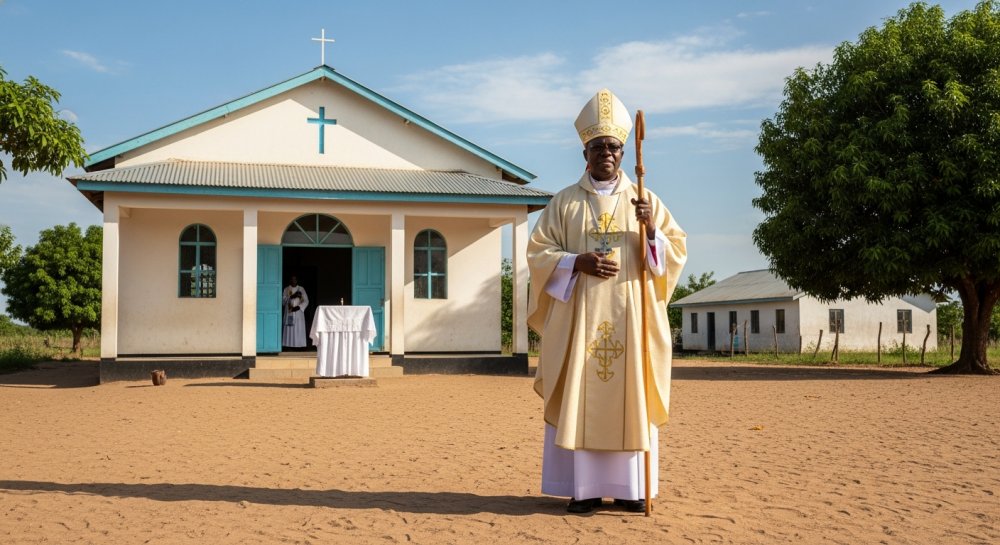
Christian leaders across the African continent are united in their call for justice following the shocking murder of a Mozambican bishop who was shot dead at his own residence. The targeted killing has sent shockwaves through Christian communities and raised serious concerns about the safety of religious leaders serving in the region.
The bishop was killed in what witnesses describe as a deliberate attack at his home, striking at the heart of the Christian community he served. Church leaders are now pressing authorities for answers and accountability in this brazen act of violence against a man of God.
The tragedy underscores the mounting dangers faced by Christian clergy in parts of Africa, where religious persecution and violence have become increasingly common. Faith leaders are calling not only for justice in this specific case but for broader protections for those who dedicate their lives to serving Christ and their communities.
African Christian organizations are mobilizing to ensure this murder does not go unanswered. They are demanding that law enforcement agencies conduct a thorough and transparent investigation to identify the perpetrators and bring them to justice. The unified response from church leaders demonstrates the gravity of this attack on the Body of Christ.
The international Christian community is watching closely as this investigation unfolds. Many see this killing as part of a disturbing pattern of violence targeting Christian leaders and communities across Africa, requiring urgent attention and action from both civil authorities and the global Church.
As believers, we are called to pray for justice, for the family of this fallen shepherd, and for the protection of Christian leaders who continue to serve faithfully despite growing threats. This tragedy reminds us that religious freedom remains under assault in many parts of the world.
Let us know what you think, please share your thoughts in the comments below.
Faith Facts
- The Asia Conference on Church & Mission concluded with leaders from 25 nations committing to specific disciple-making efforts in their own congregations
- Speakers emphasized that church transformation must begin with senior leaders themselves, not with programs or strategies
- Conference organizers challenged attendees to name one congregation they will personally shepherd toward authentic disciple-making in the coming year
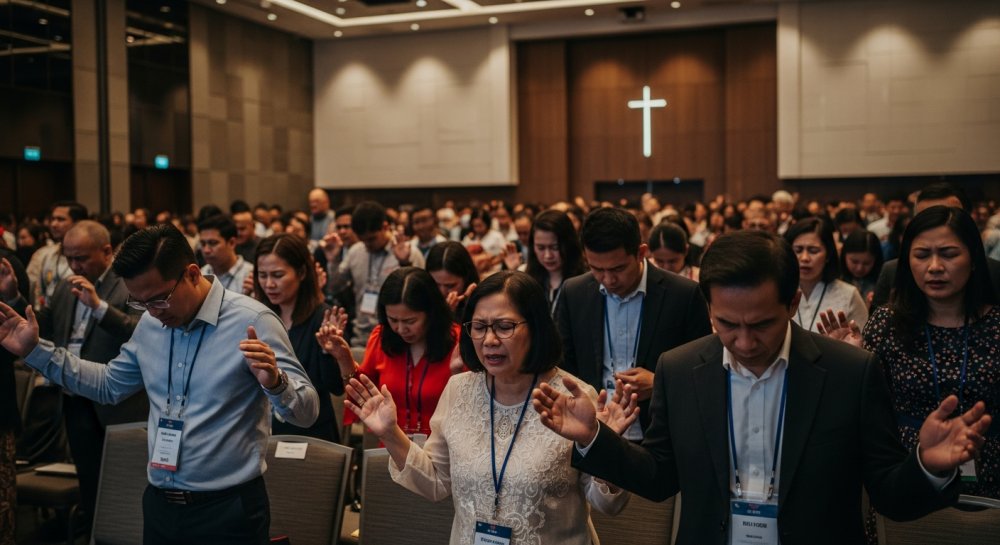
Christian leaders from across Asia gathered in Alabang, Metro Manila, for the Asia Conference on Church & Mission, which concluded Thursday evening with a powerful challenge: transformation must start from within. Delegates from 25 nations were pressed to leave not with vague good intentions, but with concrete commitments to shepherd specific congregations toward genuine disciple-making.
The conference’s closing message underscored a critical truth often overlooked in modern church growth strategies—real change begins at the top. Rather than focusing on programs, marketing, or organizational restructuring, speakers emphasized that senior leaders must first be transformed themselves before they can effectively lead their churches in making disciples.
This approach reflects a biblical pattern seen throughout Scripture, where God consistently calls leaders to personal repentance and renewal before using them to transform communities. From Moses at the burning bush to Peter’s restoration after denying Christ, the pattern is clear: God transforms leaders first, then uses them to transform others.
The emphasis on personal accountability marks a refreshing departure from conference culture that often sends attendees home inspired but unchanged. By requiring each delegate to name a specific congregation or community they will personally invest in over the next year, organizers built in concrete accountability for real-world impact.
This focus on disciple-making rather than mere church attendance or program participation aligns with Jesus’ Great Commission to “make disciples of all nations.” Too often, churches measure success by attendance numbers or budget size rather than by the spiritual maturity and missionary engagement of their members.
The gathering of leaders from 25 Asian nations also highlights the growing vitality of Christianity across the continent. While churches in Europe and North America face declining attendance and influence, Asian Christianity continues to grow rapidly, often under challenging circumstances including persecution and government restrictions.
The conference’s conclusion in Metro Manila is significant, as the Philippines remains the most Christian nation in Asia, with over 90% of its population identifying as Christian. The nation serves as a hub for missionary training and deployment throughout the region.
By challenging leaders to begin transformation within their own hearts and churches before attempting to change the broader culture, the conference embraced a model that has proven effective throughout church history. Revival movements from the First Great Awakening to the Azusa Street Revival began not with political engagement or social programs, but with leaders who first allowed God to transform their own hearts.
The call to name a specific congregation represents a practical application of the biblical principle that faith without works is dead. Rather than leaving inspired but unchanged, delegates were pressed to identify exactly where and how they will apply what they learned.
As Asian Christianity continues to grow and mature, conferences like this one play a crucial role in shaping the future direction of the global church. The emphasis on disciple-making and personal transformation suggests a healthy focus on spiritual depth rather than mere numerical growth.
The challenge issued to these 25 nations of leaders—to start from within and personally shepherd specific communities—may seem small compared to grand visions of transforming entire nations. Yet it reflects the kingdom principle Jesus taught: the mustard seed that starts small but grows into something far greater than its humble beginnings.
Let us know what you think, please share your thoughts in the comments below.


-

 Self-Reliance1 year ago
Trump’s Bold Move Uncovers Massive Social Security Fraud
-

 Faith1 year ago
New Clues Emerge in Noah’s Ark Mystery
-

 News1 year ago
Governor Walz’s Rhetoric Sparks National Controversy
-

 News1 year ago
Mel Gibson’s ‘The Passion of the Christ’ Sequel Title Announced
-

 Family1 year ago
Texas Lawmaker Targets Furries in Schools
-

 Freedom1 year ago
Maine Lawmaker Challenges Sports Fairness Controversy
-

 Family1 year ago
Canada’s Controversial Policy Sparks Ethical Debate
-
Faith7 months ago
Congress Hears Pleas for Nigerian Christians