
Faith
When Islam Meets Pride: The Political Shift Leaving Christians Without a Home


Faith Facts
- A British children’s book publisher faced backlash from Muslim communities for depicting a lesbian woman wearing a hijab
- The controversy highlights how progressive ideology is creating unexpected tensions within traditional left-wing political coalitions
- Christian conservatives find themselves politically isolated as both major parties embrace values contrary to Biblical teaching
The collision between Islamic cultural values and progressive gender ideology has sparked an unexpected controversy in Britain, one that reveals deeper truths about the political landscape facing Christians today. A children’s book publisher recently came under fire from Muslim communities for portraying a lesbian woman wearing a hijab, exposing fundamental contradictions within modern progressive coalitions.
Lois McLatchie Miller, a Christian conservative commentator, points to this incident as evidence of the dramatically shifting definitions of “left” and “right” in Western politics. What was once a relatively straightforward political divide has become fragmented as competing interest groups within progressive movements discover their values are not as aligned as previously assumed.
“This controversy speaks to the changing definitions of ‘left’ and ‘right’ in British politics,” McLatchie Miller observes.
For decades, the political left has positioned itself as the coalition of minority groups and marginalized communities. However, the aggressive promotion of LGBTQ ideology—particularly transgender activism and the sexualization of children through educational materials—has created friction with socially conservative Muslim immigrants who hold traditional views on marriage, family, and modesty. This tension was perhaps inevitable, but it has accelerated rapidly in recent years.
The hijab controversy is just one example of many. Muslim parents in Birmingham, England, previously protested outside schools teaching LGBTQ content to young children. Similar conflicts have erupted in Canada and the United States, where Islamic communities have pushed back against curriculum they view as contrary to their faith values.
Meanwhile, Christians observing these battles find themselves in an awkward position—agreeing with the concerns about sexualized content and gender ideology, yet receiving none of the cultural sympathy or media attention afforded to Muslim objectors. When Christian parents raise identical concerns, they are frequently dismissed as bigots or extremists. When Muslim parents object, the response is often more cautious, revealing a double standard in how religious objections are treated.
McLatchie Miller argues that this dynamic illustrates why Christians are increasingly politically homeless. The political right, while more aligned with traditional values on marriage and family, often prioritizes economic concerns or foreign policy over cultural and religious issues. The political left has become openly hostile to Biblical Christianity, dismissing Christian moral teaching as oppressive while simultaneously accommodating other faiths.
“No political coalition can fully represent Christian values,” McLatchie Miller warns, reminding believers that ultimate allegiance belongs to God’s kingdom, not any earthly political party.
This is a critical point for Christian conservatives to remember. While political engagement is important—and faithful Christians should absolutely participate in the democratic process—no party platform will ever perfectly align with Scripture. The danger comes when Christians compromise core Biblical truths for the sake of political expediency or party loyalty.
The current moment requires discernment. Christians should welcome allies wherever they arise, including Muslim parents concerned about inappropriate content in schools. Common cause can be made on specific issues without compromising on the Gospel or the exclusive claims of Christ. Protecting children from sexual indoctrination is a cause that transcends religious boundaries.
At the same time, Christians must not fall into the trap of thinking that cultural conservatism alone is sufficient. The goal is not merely to preserve traditional values in the public square, but to proclaim the transforming power of Jesus Christ. A society that rejects pornographic materials in children’s books but also rejects the Gospel is still lost.
The hijab controversy reveals that progressive ideology, when taken to its logical conclusion, begins to consume itself. Identity politics creates ever-smaller and more fragmented groups, each demanding accommodation for their particular concerns. Eventually, these demands conflict, and the coalition fractures. We are witnessing that fracturing in real time.
For Christians, this should serve as a reminder that political power is temporary and cultural influence is fleeting. What endures is the Word of God and the mission of the Church. While we work to shape our communities and protect our children, we must keep our eyes fixed on eternal truths, not political victories.
The path forward requires both courage and clarity—courage to speak truth even when it’s unpopular, and clarity about what truly matters. Christians cannot afford to be naive about the challenges facing the Church in the West, nor can we afford to place our ultimate hope in political solutions.
Let us know what you think, please share your thoughts in the comments below.

Faith Facts
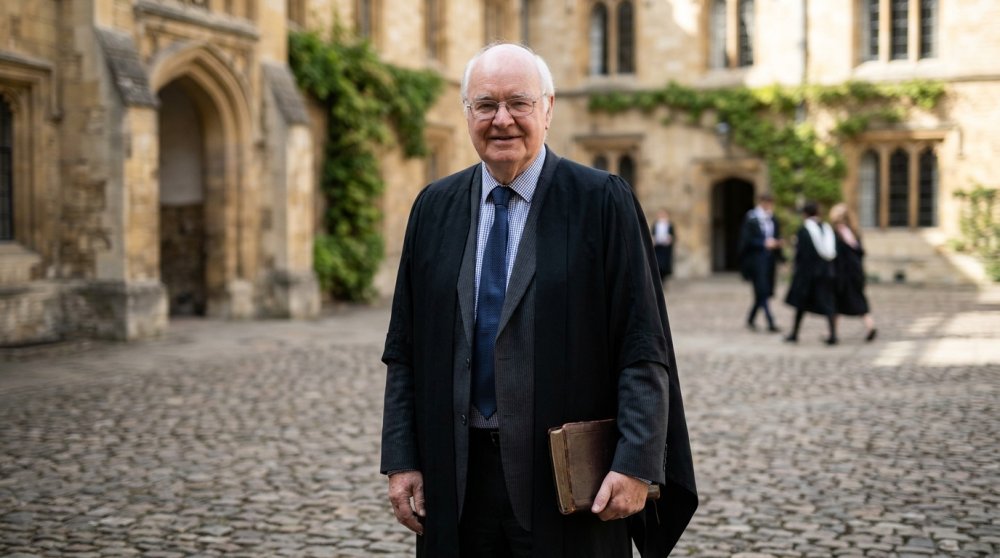
- Oxford mathematician and Christian apologist Professor John Lennox encourages believers to share their faith with confidence.
- Lennox stresses that evangelism is not reserved only for preachers, theologians, or those with extensive biblical knowledge.
- Every Christian is called to be a witness for Christ in daily life.
Oxford mathematician and Christian apologist Professor John Lennox is urging believers everywhere to share their faith with greater boldness and confidence. He reminds Christians that the call to witness is not limited to pastors or scholars but belongs to every follower of Christ.
“We’re all called to be witnesses,” Lennox declares. This simple truth challenges the idea that only trained experts can effectively share the gospel.
Professor Lennox emphasizes that evangelism is not about having every theological answer or delivering polished sermons. Instead, it is about living out and speaking the truth of Christ wherever God places His people.
His words come as a timely encouragement to Christians who may feel hesitant or unqualified to speak about their faith. Lennox points to the biblical calling that every believer is a witness, empowered by the Holy Spirit to share the hope within them.
Let us know what you think, please share your thoughts in the comments below.
Faith Facts
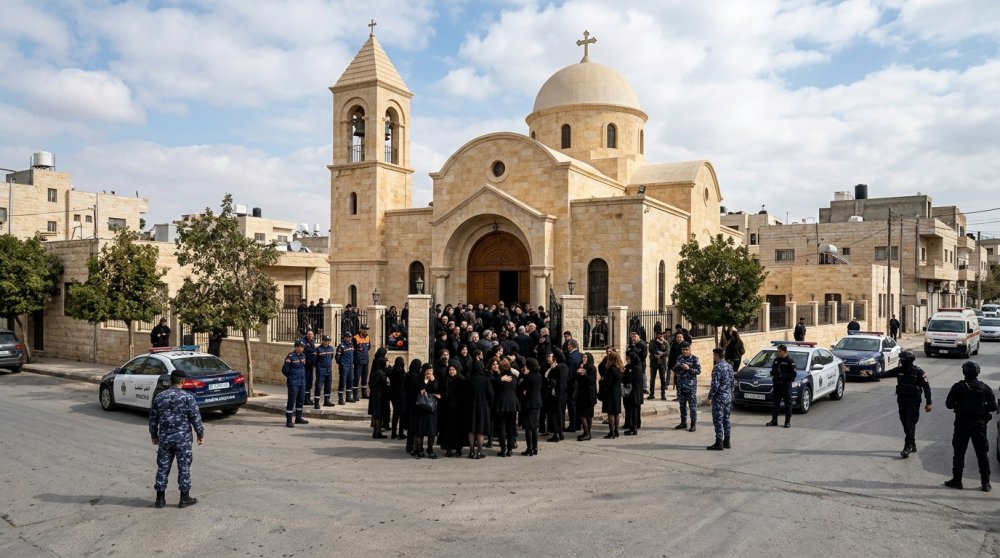
- At least seven Christians were killed in a targeted attack on a Greek Orthodox funeral service in Jordan.
- The assault occurred at a church known for peaceful worship and interfaith coexistence in the region.
- The attack highlights the ongoing threat of Islamic extremism to Christian communities worldwide.
In a rare attack in a country known for peaceful inter-faith coexistence, suspected Islamic extremists attacked a funeral at a Greek Orthodox church in Jordan on Friday (Oct. 23), shooting at least seven people to death and wounding 28 others, according to reports.
The violence interrupted a sacred time of mourning and remembrance, striking at the heart of a Christian community gathered in faith.
Let us know what you think, please share your thoughts in the comments below.
Faith Facts
- God examines the heart rather than outward gestures during worship.
- Scripture teaches that authentic faith is shown through obedience and love, not visible enthusiasm.
- Believers are called to honor every sincere heart that worships in spirit and truth.
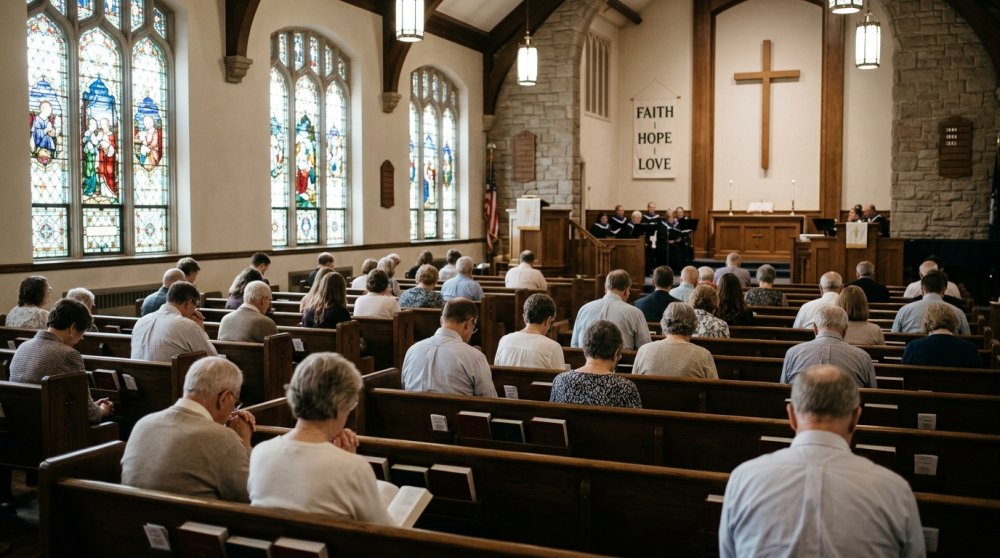
Too often, outward expressions of enthusiasm are mistaken for spiritual maturity. But God looks at the heart, not whether we’re standing, sitting or raising our hands, says Dawn Butler.
“God looks at the heart, not whether we’re standing, sitting or raising our hands,”
Churches across America have seen a growing emphasis on physical expressions during worship. This trend can unintentionally pressure believers who prefer quieter reverence. The result is that some faithful Christians feel judged for their personal style of worship.
“Too often, outward expressions of enthusiasm are mistaken for spiritual maturity.”
True worship flows from a surrendered heart that seeks to honor God in every area of life. Scripture consistently points to inward devotion rather than external performance. When congregations focus on visible actions, they risk overlooking the quiet strength of those who serve faithfully in the background.
Christian liberty allows room for both raised hands and bowed heads. The key is whether each believer approaches the Lord with reverence and sincerity. Families benefit when churches encourage unity over uniformity in worship practices.
“God looks at the heart, not whether we’re standing, sitting or raising our hands.”
Let us know what you think, please share your thoughts in the comments below.


-

 Self-Reliance2 years ago
Trump’s Bold Move Uncovers Massive Social Security Fraud
-

 Faith2 years ago
New Clues Emerge in Noah’s Ark Mystery
-

 News2 years ago
Governor Walz’s Rhetoric Sparks National Controversy
-

 News2 years ago
Mel Gibson’s ‘The Passion of the Christ’ Sequel Title Announced
-

 Family2 years ago
Texas Lawmaker Targets Furries in Schools
-

 Freedom2 years ago
Maine Lawmaker Challenges Sports Fairness Controversy
-

 Family1 year ago
Canada’s Controversial Policy Sparks Ethical Debate
-
Faith11 months ago
Congress Hears Pleas for Nigerian Christians