
Faith
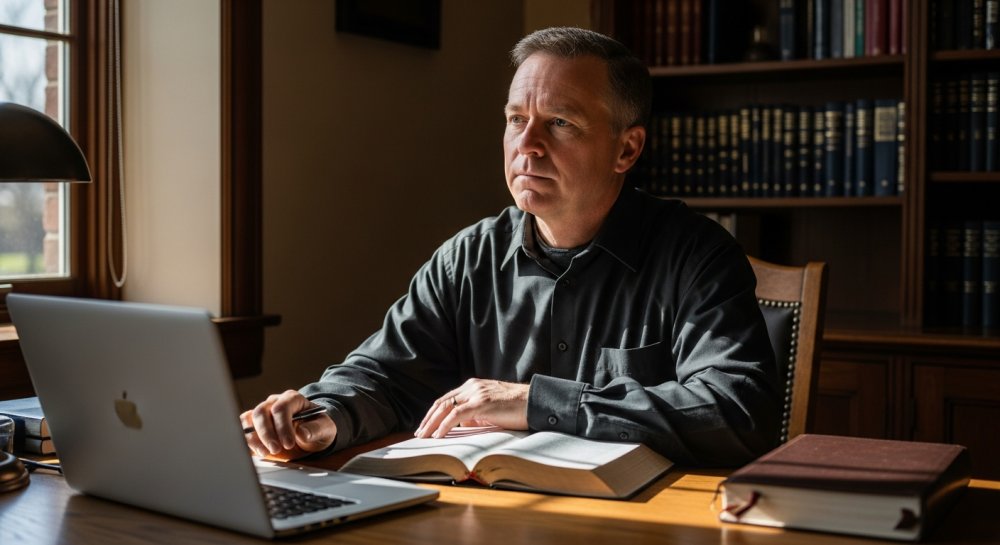
New Survey Reveals What Americans Really Think About AI in the Pulpit

Faith Facts
- A new study shows Americans are deeply divided on whether pastors should use AI technology to prepare sermons.
- Most Americans remain skeptical that artificial intelligence can help deepen understanding of Scripture and biblical truth.
- The research highlights growing concerns about the role of technology in matters of faith and spiritual leadership.
As artificial intelligence continues to reshape American life, a new study is shedding light on how believers feel about this technology entering the sacred space of the church. The findings reveal a nation uncertain about whether AI belongs in the pulpit or the pews.
According to recent research, Americans are split down the middle when it comes to pastors utilizing AI tools to help craft their Sunday sermons. The division reflects broader anxieties about whether machine-generated content can truly speak to matters of the soul and spiritual truth.
Even more telling, the majority of Americans express doubt that artificial intelligence can genuinely assist believers in understanding the Bible more deeply. This skepticism suggests that many still view Scripture study as an inherently human and spiritually-guided endeavor that requires divine wisdom rather than algorithmic processing.
The wariness around AI in faith contexts stands in contrast to its rapid adoption in business, education, and everyday communication. While Americans have embraced AI assistants for scheduling and shopping, they’re drawing a line when it comes to spiritual guidance and biblical interpretation.
This hesitation may stem from fundamental questions about the nature of preaching and teaching God’s Word. For generations, the sermon has been understood as more than information delivery—it’s a moment when a called and anointed shepherd speaks truth into the lives of the congregation, guided by prayer and the Holy Spirit.
The concerns raised by this research point to deeper theological questions about whether technology can truly supplement or replace the human element in spiritual leadership. Can an algorithm understand the movement of the Spirit or discern what a specific congregation needs to hear in a particular moment?
Many church leaders and theologians have long emphasized that effective preaching requires not just knowledge of Scripture, but also pastoral wisdom, personal relationship with God, and sensitivity to the spiritual needs of the flock. These are qualities that, at least for now, seem to lie beyond the reach of even the most sophisticated AI systems.
As churches navigate an increasingly digital age, these findings suggest that congregants want their pastors to remain authentically human in their approach to ministry. The research indicates that while technology may have a place in church operations, Americans aren’t ready to see it replace the traditional role of the pastor as a Spirit-led shepherd.
The study arrives at a critical moment when many industries are wrestling with how to integrate AI responsibly. For the church, the stakes feel particularly high—the spiritual formation of believers and the faithful transmission of biblical truth are not areas where most Americans are comfortable experimenting with untested technology.
This resistance to AI in spiritual contexts may actually represent a healthy instinct to preserve what is most sacred and irreplaceable about the Christian faith. While innovation has its place, some aspects of church life may be better served by maintaining traditional, human-centered approaches.
Let us know what you think, please share your thoughts in the comments below.


Faith Facts
- Hundreds of Evangelical Christians marched through Chiapas, Mexico in the Grand Citizens’ March for Values to oppose new gender identity legislation
- The Chiapas Congress approved amendments on June 30 allowing adults to change gender markers on official documents through administrative process
- The demonstration reflects growing Christian resistance in Latin America to policies that contradict biblical teaching on gender and creation
Evangelical Christians in the Mexican state of Chiapas demonstrated their commitment to biblical values by organizing a massive public march through the state capital. The Grand Citizens’ March for Values drew hundreds of participants on Saturday, July 25, united in opposition to recent legislative changes that undermine traditional understandings of gender.
The Chiapas Congress approved controversial amendments to the state’s Civil Code on June 30. These changes permit adults to change the gender marker on their official documents through a simple administrative process, without requiring medical or psychological evaluation.
The march represents a significant mobilization of the Christian community in defense of God’s design for humanity. Evangelical leaders organized the demonstration to give voice to concerns that such laws contradict biblical teaching and the natural order established at creation.
The response from Chiapas believers mirrors similar movements across Latin America, where Christians are increasingly standing firm against policies that conflict with scriptural truth. The willingness of hundreds to march publicly demonstrates that faith communities will not remain silent when core values are at stake.
Mexico’s Evangelical population has grown substantially in recent decades, with Christians now representing a significant voice in public discourse. The Chiapas demonstration shows this community is prepared to exercise its constitutional rights to advocate for laws that reflect traditional moral principles.
The administrative nature of the new law—allowing gender changes without medical oversight or objective criteria—troubles many Christians who see it as abandoning biological reality in favor of subjective feelings. Such policies, they argue, have profound implications for families, children, and society’s understanding of fundamental truth.
The march through the capital streets sent a clear message that Christian citizens expect their representatives to uphold laws consistent with the values that have sustained families and communities for generations. Religious freedom includes the right to speak prophetically to government on matters of moral consequence.
As similar legislation advances in various jurisdictions worldwide, the Chiapas march offers an example of peaceful, organized Christian witness. Believers are called not only to hold fast to truth in their personal lives but to be salt and light in the public square, advocating for policies that honor God’s created order.
Let us know what you think, please share your thoughts in the comments below.

Faith Facts
- Practicing Christians use artificial intelligence more frequently than the average American, both professionally and personally
- Nearly half of practicing Christians say they would trust AI technology to assist with their spiritual growth
- New Barna Group survey reveals how believers are integrating modern technology into their faith journey
A new survey from Barna Group has uncovered surprising insights about how practicing Christians are embracing artificial intelligence in their daily lives. The research reveals that faithful believers are not only keeping pace with technological advancement but are actually leading the way in AI adoption across multiple areas of life.
According to the study, practicing Christians are using artificial intelligence tools more than most Americans, integrating the technology into both their professional work and personal routines. This finding challenges common assumptions about the relationship between traditional religious practice and cutting-edge technology.
Perhaps most striking is the openness many Christians show toward AI’s potential role in their spiritual development. Nearly half of practicing Christians surveyed indicated they would trust artificial intelligence to support their spiritual growth, suggesting a willingness to explore how modern tools might complement traditional practices of prayer, Scripture study, and discipleship.
The Barna Group research highlights how the Christian community is navigating the intersection of timeless faith and rapidly evolving technology. Rather than viewing AI as a threat to authentic spirituality, many believers appear to see it as a potential resource that could enhance their walk with God when used wisely and discerningly.
This openness to technological innovation reflects a broader pattern among practicing Christians who seek to engage thoughtfully with cultural changes while maintaining their core values and biblical convictions. The findings suggest that faith and technology need not be at odds, but can potentially work together to support spiritual formation in the digital age.
As artificial intelligence continues to develop and become more integrated into everyday American life, the Christian community’s engagement with these tools will likely shape important conversations about ethics, discipleship, and the future of ministry in an increasingly technological society.
Let us know what you think, please share your thoughts in the comments below.

Faith Facts
- Theologian Wayne Grudem has published comprehensive public policy backgrounders rooted in biblical principles to guide Christian voters in upcoming elections
- The resources examine how Scripture speaks directly to contemporary political and governance issues facing America today
- Christian voters are being equipped with timeless biblical truths to navigate the increasingly complex political landscape with wisdom and discernment
As America approaches another crucial election season, Christian voters are being offered a powerful resource to help them navigate the complex intersection of faith and politics. Noted theologian Wayne Grudem has released comprehensive public policy backgrounders specifically designed to prepare believers for the decisions they’ll face at the ballot box.
The materials represent a significant effort to bridge the gap between eternal biblical principles and contemporary political realities. Rather than offering simplistic answers or partisan talking points, Grudem’s work seeks to ground political thinking in the unchanging truths of Scripture.
For many Christian Americans, the question of how faith should inform their political choices has become increasingly urgent. With cultural battles intensifying and traditional values under mounting pressure, believers are searching for guidance that honors both their citizenship in heaven and their responsibilities as American citizens.
Grudem’s backgrounders address this need by examining what the Bible actually says about government, justice, human dignity, and the proper role of civil authority. The approach recognizes that while Scripture doesn’t endorse specific parties or candidates, it does provide clear principles about righteousness, justice, and the protection of human life and freedom.
The timing of these resources is particularly significant as Christian voters face decisions that will shape the nation’s future on issues ranging from religious liberty to the sanctity of life, from educational freedom to economic stewardship. The biblical framework offered helps believers think through these issues with both conviction and wisdom.
Traditional Christian values have long formed the bedrock of American culture and governance. These new resources aim to help voters rediscover how those timeless truths can inform their participation in the democratic process without compromising their faith or reducing Christianity to mere partisan politics.
The materials serve as a reminder that Christian engagement in the public square isn’t optional—it’s part of the responsibility believers have to be salt and light in their communities. By grounding political participation in Scripture rather than cultural trends or party platforms, Christians can engage with both confidence and humility.
As the election season intensifies, resources like these provide an invaluable service to believers who want to vote their values while maintaining the primacy of their faith. The challenge for Christian voters isn’t choosing between faith and citizenship, but allowing biblical truth to inform every aspect of life—including how they engage with government and politics.
Let us know what you think, please share your thoughts in the comments below.


-

 Self-Reliance1 year ago
Trump’s Bold Move Uncovers Massive Social Security Fraud
-

 Faith1 year ago
New Clues Emerge in Noah’s Ark Mystery
-

 News1 year ago
Governor Walz’s Rhetoric Sparks National Controversy
-

 News1 year ago
Mel Gibson’s ‘The Passion of the Christ’ Sequel Title Announced
-

 Family1 year ago
Texas Lawmaker Targets Furries in Schools
-

 Freedom1 year ago
Maine Lawmaker Challenges Sports Fairness Controversy
-

 Family1 year ago
Canada’s Controversial Policy Sparks Ethical Debate
-
Faith8 months ago
Congress Hears Pleas for Nigerian Christians