Faith
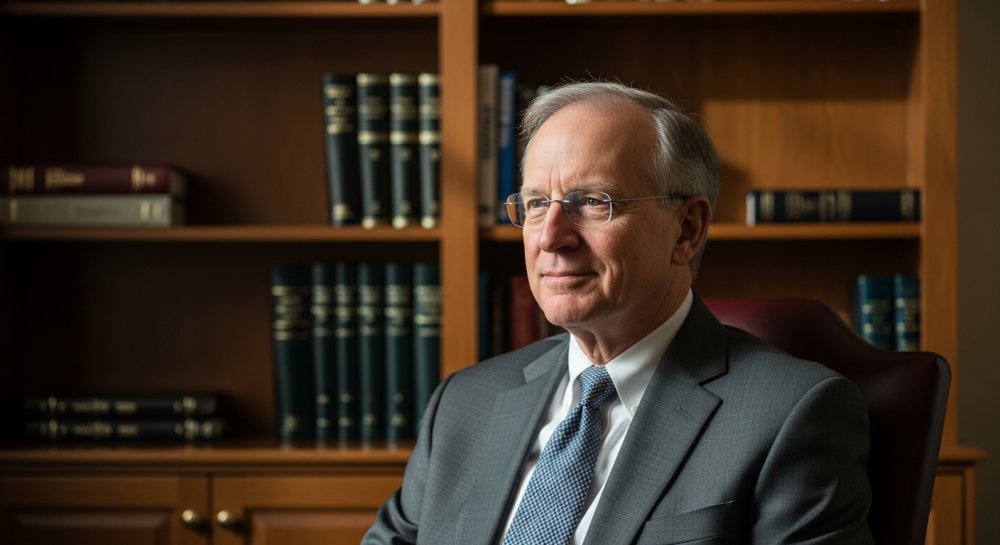
Seminary Leader Reveals Health Battle With Message of Faith
Faith Facts
- Al Mohler, president of Southern Baptist Theological Seminary, addresses health concerns following recent public appearances
- The influential Christian leader affirms medical episodes are not life-threatening while sharing spiritual perspective on trials
- Mohler frames his health challenges as an opportunity for sanctification and spiritual growth
Al Mohler, president of the Southern Baptist Theological Seminary, is addressing growing concerns about his health following recent public appearances that prompted questions from supporters and the broader Christian community.
The influential seminary leader, known for his theological scholarship and cultural commentary, has reassured his audience that while he has faced medical challenges, the episodes are not life-threatening. His candid response comes as concerned Christians reached out after noticing changes in recent public engagements.
Mohler’s perspective on his health struggles reflects a deeply Christian understanding of suffering and trials. Rather than viewing his medical issues as merely physical setbacks, he has framed them within the context of God’s sovereign purpose and sanctifying work.
“God means this for my sanctification,” Mohler stated, demonstrating the biblical perspective that trials serve to refine and strengthen believers’ faith.
This response echoes the teaching found throughout Scripture that God uses difficulties to shape His people’s character and draw them closer to Him. The apostle Paul wrote of his own physical affliction as a means of keeping him humble and dependent on God’s grace.
Mohler’s transparency about his health challenges while maintaining a focus on spiritual growth offers an example to Christians navigating their own difficulties. His willingness to address concerns publicly while pointing to God’s purposes demonstrates leadership rooted in biblical truth rather than image management.
The Southern Baptist Theological Seminary, one of the largest seminaries in the world, continues its mission under Mohler’s leadership. His influence extends beyond the seminary through “The Briefing,” his daily podcast analyzing news and culture from a Christian worldview, and his writing on theological and cultural issues.
The outpouring of concern from the Christian community reflects Mohler’s significant impact on evangelical thought and his role as a trusted voice on matters of faith, theology, and cultural engagement. His commitment to continuing his work while addressing health challenges demonstrates the perseverance that marks faithful Christian service.
For believers, Mohler’s situation serves as a reminder that even leaders face trials and that viewing difficulties through the lens of God’s sanctifying work transforms how Christians respond to adversity. His example encourages others to seek spiritual growth through their own challenges rather than simply asking for their removal.
Let us know what you think, please share your thoughts in the comments below.
Faith
Indian Pastor Still Barred From Home as Religious Law Targets Christians
Faith Facts
- A Christian pastor in Punjab, India remains unable to return home after being targeted under a law prohibiting ‘outraging religious feelings’
- The pastor’s church has been forcibly shut down as authorities continue to enforce the controversial statute
- Religious freedom advocates warn the law is being systematically misused to persecute Christian minorities in the region
In India’s Punjab state, a Christian pastor remains in exile from his own home while his church stands locked and empty. The cause of his displacement is not violence or natural disaster, but a law ostensibly designed to protect religious sentiments that has instead become a weapon against religious minorities.
The law in question prohibits actions that “outrage religious feelings,” a broad and subjective standard that has opened the door to abuse. For this pastor, merely practicing his Christian faith and ministering to his congregation has resulted in accusations that landed him on the wrong side of authorities.
The situation highlights a growing concern among Christian communities in India, where laws intended to maintain religious harmony are increasingly twisted to silence and intimidate believers. The pastor cannot safely return to his home, and his congregation has been scattered, their place of worship sealed by order of local officials.
Punjab, a state with a significant Sikh majority, has historically been more tolerant of religious diversity than some other Indian states. However, the misapplication of anti-blasphemy and religious sentiment laws has created an environment where Christians face legal jeopardy for the simple act of worship and evangelism.
Religious freedom advocates have long warned that vaguely worded laws protecting “religious feelings” create opportunities for discrimination. When any expression of faith can be construed as offensive to another religion’s adherents, minority faiths become vulnerable to the whims of local authorities and majority populations.
The pastor’s case is not isolated. Across India, Christians have faced increasing pressure under various legal pretexts, from anti-conversion laws to provisions against hurting religious sentiments. These laws, while facially neutral, are disproportionately enforced against Christian pastors and evangelists.
For American Christians who cherish religious liberty as a foundational right, the situation in Punjab serves as a sobering reminder of how easily freedom of worship can be eroded. What begins as a restriction on “offensive” speech can quickly become a tool for silencing unpopular or minority faiths entirely.
The Indian Constitution guarantees freedom of religion, including the right to profess, practice, and propagate one’s faith. Yet in practice, Christians in states like Punjab find these constitutional protections offer little shelter when local laws and enforcement mechanisms are used against them.
As this pastor remains separated from his home and his flock, his situation calls for international attention and prayer. The body of Christ worldwide must stand with persecuted believers who face legal harassment simply for following their calling to preach the Gospel and shepherd God’s people.
Let us know what you think, please share your thoughts in the comments below.
Faith
When Faith Meets the Machine: What Every Christian Should Know
Faith Facts
- More than 60 percent of practicing Christians say AI is improving their lives and making the world a better place, compared to 53 percent of U.S. adults overall.
- Church leaders are using AI for everything from sermon research to Bible trading cards, but warn against creating “a generation of lazy preachers” dependent on technology.
- Nearly half of millennials and 39 percent of Generation Z trust spiritual advice from AI as much as from a minister, raising concerns about artificial relationships replacing authentic faith.
From theological research to Scripture translation to Bible trading cards, Christians across America are embracing artificial intelligence in ways that would have seemed unimaginable just a few years ago. More than half of adults under 50 said they interacted with AI at least once per day in 2025, according to Pew Research.
Meanwhile, more than 60 percent of practicing Christians said in a recent Barna study that AI is improving their lives and making the world a better place — compared to 53 percent of U.S. adults overall. But as AI chatbots like ChatGPT, Claude and Gemini become ubiquitous in everyday life, what does the technology mean for the mission of the church?
“I believe tech will play a role in this great movement of Jesus around the world, because tech is simply a means for spreading the most powerful thing given to humans — and that’s the Gospel,” said Wes Woodell, a church planter and founder of Connect My Church.
Woodell explained that Christians have always been at the forefront of new technology, often innovating new means to share the Good News. He pointed to the church’s adoption of mediums like books, magazines, radio, movies, TV, websites, podcasts, phone apps and online livestreaming — all for the furtherance of the Gospel.
“The mediums change, but the mission doesn’t,” noted Woodell, whose company — besides offering church management software — is developing AI tools for Bible study and discipleship.
AI in the Pulpit
Mark Posey, minister for the Winfield Church of Christ in Alabama, likened using AI to presenting “Old Truths in New Robes.” That was the title of a pair of books by Franklin Camp, a prominent 20th century evangelist in the Yellowhammer State.
“The premise of those two books was, the principles never change, but there are times when we present them in new robes to make them relevant to the time — to stay, in essence, practically up to date,” Posey explained.
“I’m just trying to use it in a balanced fashion to continue to present the unchanging truths of God’s holy word,” the preacher said of AI.
Posey said he uses ChatGPT, Claude and Gemini as research tools for sermon outlines, vacation plans, financial advice and other topics — as well as to generate graphics for the sermon starters he posts to his Pulpit Preview Facebook group. He emphasized that he treats AI as a resource to draw ideas and concepts from — not to develop his theology.
“It goes without saying,” he said, “all theology comes from the Bible.”
But the Alabama minister — who’s made more than 40 mission trips to Ukraine — warned against creating “a generation of lazy preachers.” He recalled similar concerns about sermon outline books in years past.
“I do see a danger of preachers being aware of their own spiritual growth and not becoming dependent, or relying completely, on an outside source for all of their knowledge,” Posey said.
AI-Generated Media
At the Madison Church of Christ in Alabama, media outreach minister Jason Helton helped create a series of Bible character trading cards using AI-generated imagery. The church printed hundreds of cards every week to coincide with a study of Judges and Kings.
After each sermon, kids could go up to an elder and tell him something about the day’s lesson to receive a card.
“By the end of the sermon series, not only did they learn about characters and the folks in the Bible, but they also had this new relationship with every one of our elders, so the value was tremendous,” Helton said.
“I would much rather my Bible class teachers reward my kids with those (cards) that are constantly teaching them than with candy and little trinkets and stuff that break and don’t really have any value.”
That success later inspired Apologetics Press — a Montgomery, Alabama, publisher — to launch a full collection of Discovery Bible trading cards. Helton is also looking into the AI research tools of the Logos Bible study app and ways to use AI to analyze church attendance trends.
At the Renaissance Church of Christ in Atlanta, Coty Elder and his team use AI to generate images and videos to accompany sermons and worship songs as well as to create social media content.
“The goal is to take a single sermon or subject and then break it all out into different mediums,” the software developer said.
“I jump on Chat(GPT). I say the sermon title. We’ve already kind of prepped our Chat to know what it needs to look like, so I don’t have to prompt it multiple times. And then at that point, it generates the image.”
Elder’s company, Plotabl, also used AI tools to create Quest 4 The Kingdom, a video game-like digital experience that integrates Bible class lessons and study tools for Renaissance youth.
Avoiding Artificial Relationships
But Helton cautions Christians to use discernment when engaging with AI and to weigh the spiritual value of anything AI generated.
“To me, the greatest danger from a spiritual standpoint … is that it does blur our perspective of what is authentic and what is artificial,” he said.
“The idea of shortcuts is a really fine line that requires a lot of wisdom and discernment to know when you’re in pursuit of efficiency but also know when you’ve gone too far. … I think spiritually speaking, shortcuts are really dangerous. I think every sin could be looked at as a shortcut.”
The outreach minister is especially concerned about young people developing relationships with AI chatbots and characters — often unwittingly.
“Particularly with children, they don’t know the difference — they can’t discern because they don’t have the life experience, the wisdom and even the cognitive development,” Helton said.
“That’s what’s really, really dangerous to me about any kind of bot interaction among adolescents.”
Woodell, meanwhile, is pursuing an AI model that can be trained on good theology and self-contained on a small device to be sent into mission fields — similar to the solar-powered MP3 players with Bible translations and courses used by Sunset International.
“What if, instead of just being an MP3 player, you put the very best Bible professors in the world on here, where they could ask this thing a question and it’ll just talk to them conversationally?” Woodell posed.
But he stipulated that he’s not trying to replace the human element of the Great Commission.
“I am not trying to eliminate human connection,” added the Harding University graduate.
“I see this as a medium to enhance human connection and a way to build the kingdom of God — not to be a hindrance, but to magnify truth, not to magnify error.”
‘Digital Babylon’
Helton developed a workshop called “Analog Faith in Digital Babylon” to help churches and families navigate an increasingly digital culture without being consumed by it, just as God gave his people a purpose in Babylonian exile in Jeremiah 29.
“God says you’re going into this place that’s opposed to me, but I want you to create the culture that I’m ascribing to you and describing for you. I want you to create godly culture,” said the Faulkner University alum.
“And I think that’s the role of the church in any age but especially the digital age.”
As 44 percent of millennials and 39 percent of Generation Z trust spiritual advice from AI as much as from a minister, according to another Barna study, Posey advises Christians to always go back to the Bible.
“We must have a healthy balance within the Lord’s church of cross-generation encouragement to always be the people of the book,” the preacher said.
Likewise, Helton encourages Christians to simply approach AI mindfully — not ignorantly.
“We need to be cautiously skeptical of technology, but not innovation,” he said.
“I think we need to ask questions like, ‘What is my spiritual purpose for this?’ and ‘What is the spiritual value of this?’ And in doing so, I think that we can thrive in this digital Babylon age that we live in.”
Let us know what you think, please share your thoughts in the comments below.
Faith
Kyrgyzstan’s Secret Police Deport Tortured Christian Pastor After Traumatic Injury
Faith Facts
- A Christian pastor in Kyrgyzstan suffered a traumatic brain injury from torture while in custody of secret police
- The pastor has been deported and banned from the country by Kyrgyzstan authorities
- Religious freedom advocates are documenting ongoing persecution of Christians in the Central Asian nation
Secret police in Kyrgyzstan have deported and permanently banned a Christian pastor who endured severe torture resulting in a traumatic brain injury while in their custody, according to religious freedom watchdog Forum 18.
The disturbing case highlights the continued persecution of Christians in the Central Asian nation, where state security forces operate with little accountability. The pastor’s treatment represents a grave violation of basic human rights and religious liberty.
Kyrgyzstan’s secret police not only tortured the pastor but also ensured he could never return to minister to his congregation by imposing a permanent ban on his re-entry to the country. The deportation effectively exiles him from his own community of faith.
Forum 18, an organization dedicated to defending religious freedom worldwide, documented the case as part of their ongoing monitoring of persecution in former Soviet republics. The group has consistently reported on Kyrgyzstan’s troubling record of harassment, detention, and abuse of religious minorities.
This incident underscores the dangerous reality facing Christians in nations where authoritarian governments view religious faith as a threat to state control. The use of torture against a peaceful pastor reveals the lengths to which some regimes will go to suppress the spread of the Gospel.
American Christians must remain vigilant about the persecution of believers worldwide and support organizations working to defend religious freedom. Prayer and advocacy remain essential tools in standing with our brothers and sisters facing persecution for their faith.
The traumatic brain injury suffered by the pastor serves as a stark reminder of the physical dangers confronting Christian leaders in hostile territories. His courage in the face of such brutal treatment exemplifies the strength of faith under fire.
Let us know what you think, please share your thoughts in the comments below.
-
Self-Reliance1 year agoTrump’s Bold Move Uncovers Massive Social Security Fraud
-

Faith1 year agoNew Clues Emerge in Noah’s Ark Mystery
-

News1 year agoGovernor Walz’s Rhetoric Sparks National Controversy
-

News1 year agoMel Gibson’s ‘The Passion of the Christ’ Sequel Title Announced
-

Family1 year agoTexas Lawmaker Targets Furries in Schools
-

Freedom1 year agoMaine Lawmaker Challenges Sports Fairness Controversy
-

Family1 year agoCanada’s Controversial Policy Sparks Ethical Debate
-
Faith6 months ago
Congress Hears Pleas for Nigerian Christians