
Faith
Orthodox Priest Warns Nation’s Children Being Warped by Epidemic Afflicting Nearly Everyone

Faith Facts
- An Eastern Orthodox priest has warned that pornography is systematically warping the identities of young people across America
- The priest stated his ministry experience reveals the crisis affects “all men and most women” in society
- The warning was delivered during a recent interview with media commentator Tucker Carlson
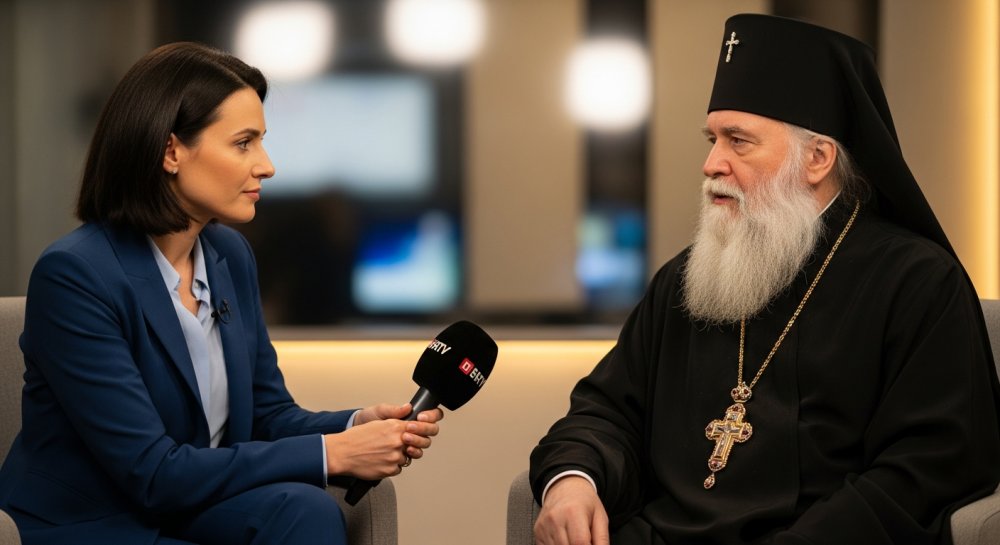
An Eastern Orthodox priest is sounding the alarm about a devastating moral crisis he says is reshaping the identity and development of an entire generation of American children. Speaking candidly during an interview with Tucker Carlson, the clergyman issued a stark warning based on his years of pastoral ministry experience.
The priest’s observations point to a pervasive problem that crosses all demographic boundaries. According to his ministry work, the epidemic affects “all men and most women” in contemporary society, suggesting the scope of the crisis extends far beyond what many families may realize.
Outside of any of the other controversies, this line from Father Stephen De Young to Tucker Carlson on the pornography problem is massive. “All men and most women.” pic.twitter.com/rmPCRPBukN
— Gabriel J. Benton ?????????? (@OrthodoxPole81) May 30, 2026
His comments arrive at a time when faith leaders and family advocates have grown increasingly concerned about the accessibility of explicit material to children through smartphones and internet-connected devices. Christian parents and communities have long warned that early exposure to pornographic content can fundamentally alter a child’s understanding of human relationships, sexuality, and God’s design for intimacy within marriage.
The interview with Carlson provided a platform for discussing what many Christian conservatives view as one of the most pressing moral challenges facing American families today. The priest’s willingness to speak plainly about the issue reflects a growing recognition among religious leaders that silence on difficult topics serves no one, especially not the children who need protection and guidance.
Traditional Christian teaching holds that pornography degrades the sacred nature of human sexuality and violates the biblical principle that intimate relations are reserved for the covenant of marriage between one man and one woman. Faith communities have emphasized that exposure to such material, particularly during formative years, can create distorted expectations and undermine the development of healthy, God-honoring relationships.
The priest’s assessment that the problem afflicts nearly all men and most women suggests the challenge extends beyond youth to encompass adults who may struggle with habits formed in earlier years. This reality underscores the need for churches and ministries to provide resources for healing and restoration rooted in scriptural truth.
For Christian families, the warning serves as a reminder of the importance of vigilance in protecting children from corrupting influences while also creating open lines of communication about God’s design for purity and holiness. Many faith-based organizations have developed resources to help parents navigate these difficult conversations with age-appropriate wisdom.
The interview highlights the ongoing cultural battle between traditional values and the normalization of explicit content in mainstream society. Christian conservatives have consistently argued that the widespread availability of pornography represents not just a personal vice but a societal poison that undermines marriage, family stability, and the proper formation of young people.
Let us know what you think, please share your thoughts in the comments below.

Faith Facts
- African missionary leader Joshua Bogunjoko addressed thousands at the Arise Asia 2026 Congress in Manila, challenging perceptions about Africa’s role in global evangelism
- Bogunjoko emphasized the biblical principle of perseverance through sacrifice, stating Christians always have something to give as long as they have life
- The message centered on Africa’s spiritual legacy and the call for Asian believers to embrace joyful perseverance in spreading the Gospel despite hardship
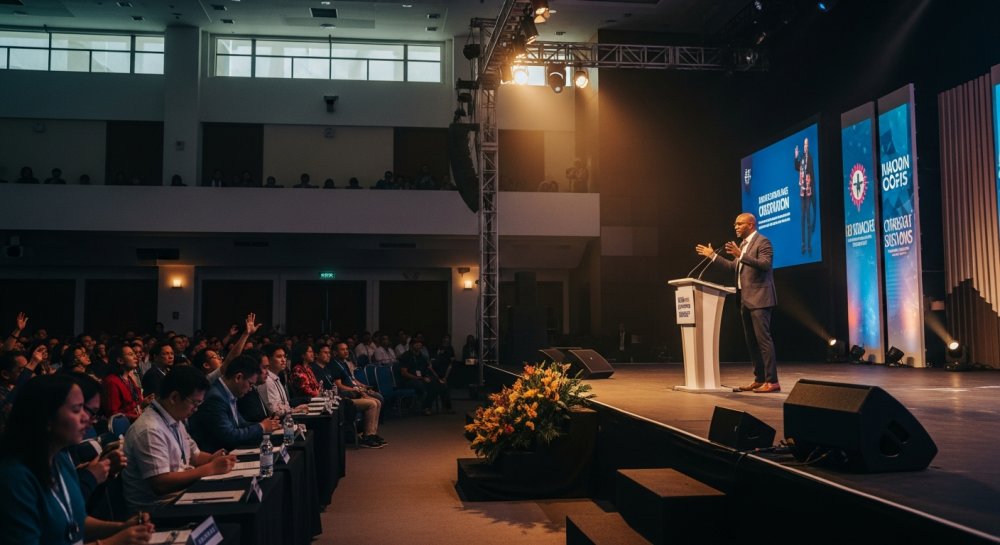
When Joshua Bogunjoko took the stage at the Arise Asia 2026 Congress in Manila on July 30, he didn’t begin with platitudes or comfortable greetings. Instead, he posed a direct challenge to the thousands gathered before him.
“When you hear the word Africa, what comes to your mind first?” Bogunjoko asked the participants.
The question hung in the air, forcing attendees to confront their preconceptions about a continent often defined by Western media through images of poverty and struggle. But Bogunjoko’s message would turn those assumptions on their head.
The African mission leader came bearing a counter-cultural truth that cuts against modern comfort Christianity. His declaration—”As long as we have blood, we have something to give”—echoed the sacrificial call that has defined faithful witnesses throughout church history.
This wasn’t abstract theology. Bogunjoko spoke from the lived experience of African Christians who understand persecution, deprivation, and the cost of discipleship in ways many Western believers cannot fathom.
The Arise Asia Congress represents a gathering of believers committed to advancing the Great Commission across the Asian continent. In a region where Christianity often exists under threat—from communist governments, radical Islamic persecution, and hostile Hindu nationalism—the call to joyful perseverance isn’t optional.
Bogunjoko’s message challenged Asian Christians to look beyond material resources and embrace the biblical truth that God equips those He calls. The reference to blood wasn’t merely metaphorical—it spoke to the reality that faithful witness may cost everything.
This perspective stands in stark contrast to the prosperity gospel that has infected too many churches worldwide. Instead of promising health and wealth, Bogunjoko called believers to the ancient path: taking up the cross daily, counting the cost, and finding joy in sacrifice for the Kingdom.
Africa’s explosive Christian growth over the past century demonstrates the power of this committed faith. While Europe’s churches empty and American Christianity battles compromise, African believers have multiplied through persecution and poverty, proving that the Gospel thrives when believers embrace sacrifice rather than comfort.
The timing of this message carries particular significance. As Asia becomes the focal point of 21st-century missions—with China’s underground church, India’s persecuted believers, and Southeast Asia’s unreached peoples—the call to perseverance through hardship resonates with urgent relevance.
Bogunjoko’s challenge to Asian Christians draws from deep biblical wells. From the prophets who faced rejection and death, to the apostles who counted suffering as joy, to the martyrs whose blood became the seed of the church—Scripture consistently elevates sacrifice over safety.
This message also carries prophetic weight for American believers comfortable in their freedoms. As cultural hostility toward biblical Christianity increases in the West, the example of African and Asian perseverance offers both warning and inspiration.
The “joy of perseverance” Bogunjoko proclaimed isn’t masochistic suffering—it’s the deep satisfaction of faithfulness, the peace that surpasses understanding, and the crown of life promised to those who endure. It’s the same joy that enabled early Christians to sing hymns in prison and face lions with confidence.
As the Arise Asia Congress continued, Bogunjoko’s words set a tone far removed from comfortable Western Christianity. His call echoed the words of missionary Jim Elliot: “He is no fool who gives what he cannot keep to gain what he cannot lose.”
For Asian believers facing uncertain futures under hostile regimes and cultures, this message provided both challenge and comfort: You have enough. As long as you have life, you have something to give for the Gospel. And that sacrifice brings joy that the world cannot understand or take away.
Let us know what you think, please share your thoughts in the comments below.

Faith Facts
- American missionary Andrew Brunson spent 23 years planting churches in Turkey before being arrested on false espionage and terrorism charges
- During two years of imprisonment in a Turkish prison, Brunson experienced God’s silence rather than His expected presence
- Speaking at Arise Asia 2026 Congress in Manila, Brunson testified that persevering through that silence became the greatest test of his Christian faith
For more than two decades, Andrew Brunson faithfully served the Lord by planting churches throughout Turkey, bringing the Gospel to a predominantly Muslim nation. His dedication to spreading Christianity in one of the world’s most challenging mission fields exemplifies the courage and commitment of modern Christian missionaries who answer God’s call to serve in difficult places.
In a stunning act of persecution, Turkish authorities arrested Brunson on fabricated charges of espionage and terrorism. The arrest marked the beginning of a dark chapter that would test every fiber of his faith.
Confined within the cold walls of a Turkish prison for two years, Brunson anticipated feeling God’s nearness during his trial. Instead, he encountered something far more challenging: divine silence. This unexpected spiritual wilderness became the crucible in which his faith would either be refined or broken.
Speaking before thousands of delegates gathered at the Arise Asia 2026 Congress in Manila, Brunson shared his powerful testimony of perseverance through spiritual desolation. His message resonated with Christians worldwide who have experienced seasons when heaven seems silent and God feels distant.
“Even if You’re silent, I still love You,” Brunson declared, revealing the heart-wrenching prayer that sustained him through his darkest hours.
His unwavering commitment to loving God regardless of feeling His presence demonstrates the mature faith that transcends circumstances and emotions. This kind of steadfast devotion reflects the biblical examples of Job, who declared his trust in God despite devastating loss, and Jesus Himself, who cried out from the cross yet remained obedient unto death.
Brunson’s imprisonment became international news, with American Christian leaders and government officials advocating tirelessly for his release. His case highlighted the ongoing persecution of Christians in Turkey and throughout the Middle East, where believers often face imprisonment, torture, and death for their faith.
The missionary’s testimony serves as a powerful reminder that authentic Christianity sometimes requires believers to trust God in the darkness, to love Him when He seems absent, and to remain faithful when the promised comfort doesn’t come as expected. His experience challenges comfortable Western Christianity and calls believers to a deeper, more resilient faith.
For Christians facing their own seasons of divine silence—whether through persecution, personal tragedy, or spiritual dryness—Brunson’s testimony offers hope. His willingness to choose love over bitterness, faith over despair, and perseverance over surrender demonstrates that the greatest victories often occur not when God feels close, but when we choose to trust Him anyway.
The Arise Asia 2026 Congress provided a platform for Brunson to encourage fellow believers throughout Asia, where Christian persecution remains widespread and intense. His message particularly resonates in nations where professing faith in Jesus Christ can result in imprisonment, family rejection, or martyrdom.
Let us know what you think, please share your thoughts in the comments below.
Faith Facts
- Political leaders and earthly systems will always disappoint because they are built on human frailty, not divine truth.
- Christians are called to be engaged citizens while recognizing that ultimate hope rests in Christ, not in political outcomes.
- Scripture consistently warns against placing our trust in princes and mortal men, pointing us instead to God’s unchanging kingdom.
An election takes place. A new leader emerges. Promises are made. Expectations rise. Supporters celebrate.
Critics complain. Commentators speculate. And for a brief moment, it appears that a new chapter has begun.
Then reality arrives.
The disappointment that follows political promises is not new to our generation. From the earliest days of human government, people have looked to leaders for deliverance, for prosperity, for security, for meaning. And time after time, those leaders—whether well-intentioned or corrupt—have proven incapable of satisfying the deepest longings of the human heart.
As Christians, we understand why. Because no political system, no matter how just, can fill the God-shaped void within us. No legislation can heal a broken soul. No executive order can restore what sin has fractured.
This is not an argument for political disengagement. Believers are called to be salt and light, to participate in the civic life of their communities, to advocate for righteousness and justice. We vote, we speak, we serve. But we do so with clear eyes and anchored hearts, knowing that our ultimate allegiance belongs to another kingdom—one not built by human hands.
Scripture is unambiguous on this point. Psalm 146:3 warns us plainly: “Do not put your trust in princes, in human beings, who cannot save.” The prophet Jeremiah wrote, “Cursed is the one who trusts in man, who draws strength from mere flesh and whose heart turns away from the Lord.”
These are not suggestions. They are guardrails for the soul, protecting us from the inevitable collapse that comes when we elevate the political above the eternal.
When politics disappoints—and it will—where do we turn? We turn to the One who never changes, who never lies, who never fails. We turn to the One whose promises are not contingent on polling numbers or legislative majorities. We turn to Jesus Christ, the same yesterday, today, and forever.
This redirection is not escapism. It is realism. It is acknowledging that the deepest problems of our society are spiritual, not merely structural. Poverty, violence, family breakdown, addiction—these are symptoms of hearts alienated from God. While good policy can mitigate harm and promote flourishing, only the gospel can truly transform.
The Christian conservative understands this tension. We work for good governance while refusing to worship at the altar of political power. We celebrate victories while recognizing their limitations. We mourn defeats while knowing that God’s purposes cannot be thwarted by ballots or bureaucrats.
In moments of political disappointment, we are reminded of what matters most. Our citizenship is in heaven. Our hope is in Christ. Our mission is the Great Commission, not merely the next election cycle.
This does not mean we grow passive or indifferent. It means we grow wise. We engage the political sphere as stewards, not saviors. We speak truth with conviction, but we do not confuse temporary political alignment with eternal spiritual communion.
When the promises fade and the reality sets in, we have a foundation that cannot be shaken. We have a King whose reign will never end. We have a hope that does not disappoint.
So let the elections come and go. Let the leaders rise and fall. Let the promises be made and broken. We will remain faithful, grounded in the Word of God, committed to the mission of Christ, and unshaken by the shifting sands of political fortune.
Because in the end, politics is not our savior. And perhaps disappointment is simply God’s way of reminding us where our true hope has always belonged.
Let us know what you think, please share your thoughts in the comments below.


-

 Self-Reliance1 year ago
Trump’s Bold Move Uncovers Massive Social Security Fraud
-

 Faith1 year ago
New Clues Emerge in Noah’s Ark Mystery
-

 News1 year ago
Governor Walz’s Rhetoric Sparks National Controversy
-

 News1 year ago
Mel Gibson’s ‘The Passion of the Christ’ Sequel Title Announced
-

 Family1 year ago
Texas Lawmaker Targets Furries in Schools
-

 Freedom1 year ago
Maine Lawmaker Challenges Sports Fairness Controversy
-

 Family1 year ago
Canada’s Controversial Policy Sparks Ethical Debate
-
Faith8 months ago
Congress Hears Pleas for Nigerian Christians