
Faith
When Hope in Politics Fades, Only One Foundation Remains

Faith Facts
- Political leaders and earthly systems will always disappoint because they are built on human frailty, not divine truth.
- Christians are called to be engaged citizens while recognizing that ultimate hope rests in Christ, not in political outcomes.
- Scripture consistently warns against placing our trust in princes and mortal men, pointing us instead to God’s unchanging kingdom.
An election takes place. A new leader emerges. Promises are made. Expectations rise. Supporters celebrate.
Critics complain. Commentators speculate. And for a brief moment, it appears that a new chapter has begun.
Then reality arrives.
The disappointment that follows political promises is not new to our generation. From the earliest days of human government, people have looked to leaders for deliverance, for prosperity, for security, for meaning. And time after time, those leaders—whether well-intentioned or corrupt—have proven incapable of satisfying the deepest longings of the human heart.
As Christians, we understand why. Because no political system, no matter how just, can fill the God-shaped void within us. No legislation can heal a broken soul. No executive order can restore what sin has fractured.
This is not an argument for political disengagement. Believers are called to be salt and light, to participate in the civic life of their communities, to advocate for righteousness and justice. We vote, we speak, we serve. But we do so with clear eyes and anchored hearts, knowing that our ultimate allegiance belongs to another kingdom—one not built by human hands.
Scripture is unambiguous on this point. Psalm 146:3 warns us plainly: “Do not put your trust in princes, in human beings, who cannot save.” The prophet Jeremiah wrote, “Cursed is the one who trusts in man, who draws strength from mere flesh and whose heart turns away from the Lord.”
These are not suggestions. They are guardrails for the soul, protecting us from the inevitable collapse that comes when we elevate the political above the eternal.
When politics disappoints—and it will—where do we turn? We turn to the One who never changes, who never lies, who never fails. We turn to the One whose promises are not contingent on polling numbers or legislative majorities. We turn to Jesus Christ, the same yesterday, today, and forever.
This redirection is not escapism. It is realism. It is acknowledging that the deepest problems of our society are spiritual, not merely structural. Poverty, violence, family breakdown, addiction—these are symptoms of hearts alienated from God. While good policy can mitigate harm and promote flourishing, only the gospel can truly transform.
The Christian conservative understands this tension. We work for good governance while refusing to worship at the altar of political power. We celebrate victories while recognizing their limitations. We mourn defeats while knowing that God’s purposes cannot be thwarted by ballots or bureaucrats.
In moments of political disappointment, we are reminded of what matters most. Our citizenship is in heaven. Our hope is in Christ. Our mission is the Great Commission, not merely the next election cycle.
This does not mean we grow passive or indifferent. It means we grow wise. We engage the political sphere as stewards, not saviors. We speak truth with conviction, but we do not confuse temporary political alignment with eternal spiritual communion.
When the promises fade and the reality sets in, we have a foundation that cannot be shaken. We have a King whose reign will never end. We have a hope that does not disappoint.
So let the elections come and go. Let the leaders rise and fall. Let the promises be made and broken. We will remain faithful, grounded in the Word of God, committed to the mission of Christ, and unshaken by the shifting sands of political fortune.
Because in the end, politics is not our savior. And perhaps disappointment is simply God’s way of reminding us where our true hope has always belonged.
Let us know what you think, please share your thoughts in the comments below.

Faith Facts
- A pastor and family members were abducted by rebel militia fighters from a breakaway faction of Sudan’s People Liberation Army-North (SPLA-N) on July 23 in North Kordofan state
- The kidnapping highlights the ongoing persecution and danger faced by Christian communities in Sudan’s conflict zones
- Family members confirmed the abduction as violence continues to plague the region
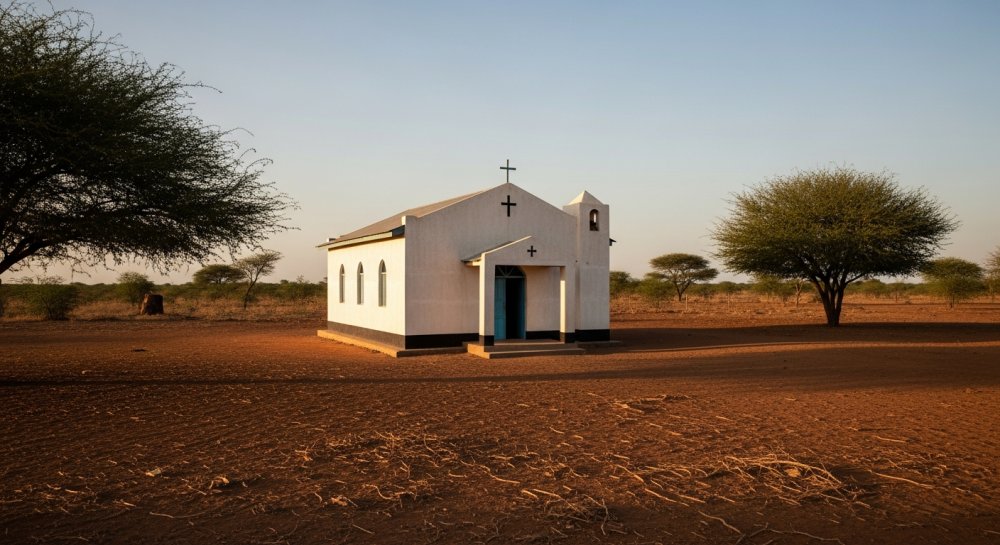
Christian communities in Sudan face mounting dangers as rebel forces target religious leaders and their families. A pastor and several family members were forcibly taken by armed militia fighters in North Kordofan state on July 23, according to the victim’s brother.
The abduction was carried out by members of a breakaway faction from the Sudan’s People Liberation Army-North (SPLA-N), a rebel group operating in the region. The incident underscores the precarious situation facing believers in areas controlled or contested by militant forces.
North Kordofan state has experienced ongoing instability and violence as various armed groups vie for control. Christian pastors and their congregations often find themselves caught in the crossfire or deliberately targeted for their faith.
The kidnapping represents yet another example of religious persecution that continues to plague Sudan despite international pressure for reform. Families of faith leaders face constant threats to their safety and security as they work to minister to their communities.
The situation demands attention from the international community and prayers from Christians worldwide. Believers in Sudan need support as they endure violence, displacement, and persecution for maintaining their faith in increasingly hostile environments.
This incident serves as a sobering reminder of the sacrifices made by Christian leaders who refuse to abandon their calling despite mortal danger. The pastor and his family members remain in captivity, their fate uncertain as concerned relatives seek their safe release.
Let us know what you think, please share your thoughts in the comments below.
Faith Facts
- A human rights advocacy group is calling on the United Nations to intervene in Iran’s latest wave of persecution against Protestant Christians
- The Islamic Republic of Iran has intensified its crackdown on Protestant believers, continuing a pattern of religious oppression
- International advocates are urging the UN to hold Iran accountable for its violations of religious freedom
Christians around the world are being called to pray for their brothers and sisters in Iran as reports emerge of an escalating crackdown on Protestant believers by the Islamic Republic. A human rights advocacy group has stepped forward to demand action from the United Nations in response to this latest wave of persecution.
The intensified targeting of Protestant Christians in Iran represents another troubling chapter in the nation’s long history of religious oppression. For decades, believers in Iran have faced imprisonment, harassment, and worse simply for practicing their faith.
This recent crackdown comes as no surprise to those who have been monitoring Iran’s human rights record. The Islamic Republic has consistently ranked among the world’s worst violators of religious freedom, particularly targeting Christian converts from Islam.
The advocacy group’s appeal to the United Nations highlights the international community’s responsibility to stand up for persecuted believers worldwide. Many Christian conservatives have long argued that global bodies must do more than issue statements—they must take concrete action to protect religious minorities.
Iran’s government views Protestant Christianity, especially house churches and converts from Islam, as a threat to the Islamic regime. Believers often meet in secret, risking arrest and imprisonment to worship freely.
The situation facing Iranian Christians should serve as a sobering reminder to American believers of the precious gift of religious liberty. While we enjoy constitutional protections for our faith, millions around the world face daily persecution for following Christ.
This latest crackdown also underscores the importance of supporting organizations that advocate for persecuted Christians and hold oppressive regimes accountable. Prayer, awareness, and advocacy all play crucial roles in supporting our suffering brothers and sisters.
As the United Nations considers its response, many faith leaders are calling for sustained international pressure on Iran to respect basic human rights and religious freedom. The global Christian community must not remain silent while believers face persecution.
Let us know what you think, please share your thoughts in the comments below.
Faith Facts
- Over 200 young Christians gathered in Sussex, England to discuss Israel and Middle East theology in a respectful, unified setting
- The event brought together Christians from opposing viewpoints on Israel to engage in biblical dialogue rather than political debate
- Organizer Chip Kendall believes the gathering demonstrates how faith-centered conversation can bridge deep divides in the Church
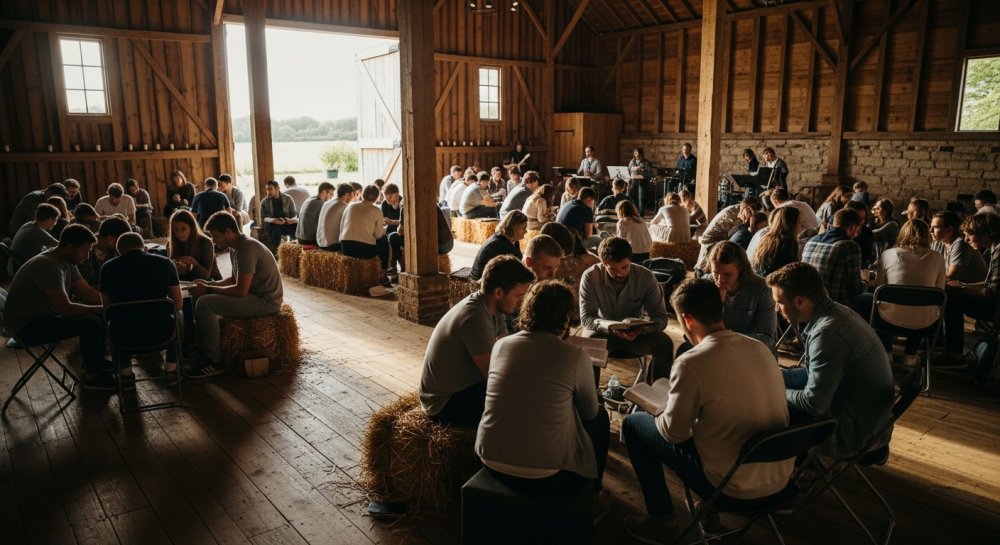
More than 200 young Christians recently traveled to the south coast of the United Kingdom for an extraordinary gathering that tackled one of the most divisive issues facing the modern Church. In a humble Sussex barn, believers from across the theological spectrum came together to discuss Israel, the Middle East, and what Scripture truly teaches about God’s promises to His chosen people.
The weekend event, organized by Chip Kendall and his team, sought to do something increasingly rare in today’s polarized religious landscape: bring Christians with fundamentally different views into the same room for honest, grace-filled dialogue. The topic of Israel has long divided evangelical and mainline Protestant communities, with disagreements over biblical prophecy, modern geopolitics, and the nature of God’s covenant with Abraham creating rifts that sometimes seem impossible to heal.
What made this gathering remarkable wasn’t that everyone agreed by the end. They didn’t. What made it beautiful was that they didn’t have to.
“We wanted to create space where young believers could ask hard questions without being shouted down or dismissed,” Kendall explained about the vision behind the event.
The Sussex gathering included worship, teaching sessions, small group discussions, and extended times of prayer. Attendees represented various denominational backgrounds and held views ranging from Christian Zionism to replacement theology, with many falling somewhere in between. Rather than staging a debate with winners and losers, organizers structured the weekend around Scripture study, historical context, and prayerful consideration of what it means to love both Jewish people and Palestinian Christians.
For many young Christians today, the question of Israel feels impossibly complex. They see images from Gaza and the West Bank that break their hearts. They also know the history of Jewish persecution and the miracle of Israel’s modern restoration. They read Romans 11 and wonder what Paul meant when he said “all Israel will be saved.” They hear their parents’ generation speak with certainty on both sides and wonder if there’s room for nuance, questions, and humble uncertainty.
The Sussex barn became that room.
“I came expecting to defend my position,” one attendee shared afterward. “Instead, I found myself listening to brothers and sisters who love Jesus just as much as I do, and realizing that my understanding of God’s heart might be smaller than I thought.”
Kendall believes this type of gathering represents something desperately needed in the broader Church. As political divisions increasingly infiltrate congregations and Christian communities fracture along ideological lines, the Sussex event offered a different model: unity in Christ doesn’t require uniformity of opinion on every complex geopolitical issue. What it does require is charity, humility, and a commitment to seeking God’s truth together rather than retreating into our separate camps.
The weekend wasn’t without tension. Conversations sometimes grew heated. Tears were shed. But so were walls. Attendees who arrived suspicious of those who disagreed with them left with new friendships and deeper respect for perspectives they’d previously dismissed.
“We didn’t solve the Israeli-Palestinian conflict in a Sussex barn,” Kendall acknowledged with a smile. “But we did prove that Christians can disagree about Israel without demonizing each other. In 2025, that feels almost revolutionary.”
The gathering also emphasized something often lost in online debates about Israel: the human cost of conflict and the Church’s responsibility to minister to suffering people regardless of their nationality. Palestinian Christians and Messianic Jews both face unique challenges, and the weekend included testimonies from believers in both communities who are living faithfully in difficult circumstances.
For American Christians watching from across the Atlantic, the Sussex gathering offers an important reminder. Our political opinions about Middle Eastern policy matter far less than our commitment to biblical truth, Christian charity, and the unity of Christ’s body. We can hold strong convictions about Israel’s role in God’s plan without treating fellow believers as enemies when they interpret Scripture differently.
The young Christians who gathered in that Sussex barn demonstrated something their elders would do well to emulate: the courage to engage difficult questions, the humility to listen to opposing viewpoints, and the faith to trust that God’s truth is big enough to handle our honest seeking. In an age of soundbites, social media pile-ons, and tribal loyalty tests, they chose a better way.
As these 200 young believers returned to their homes, churches, and communities across the UK, they carried with them something precious: proof that Christian unity doesn’t require ideological conformity. It requires Christ. And in a world desperately in need of witnesses to a different kind of kingdom, that’s a testimony worth preserving.
The Sussex barn gathering may have been a small event in the grand scheme of things, but its ripple effects could prove significant. When young Christians learn to navigate disagreement with grace, to prioritize relationship over being right, and to seek God’s truth together rather than apart, they’re building the kind of Church that can actually change the world.
Let us know what you think, please share your thoughts in the comments below.


-

 Self-Reliance1 year ago
Trump’s Bold Move Uncovers Massive Social Security Fraud
-

 Faith1 year ago
New Clues Emerge in Noah’s Ark Mystery
-

 News1 year ago
Governor Walz’s Rhetoric Sparks National Controversy
-

 News1 year ago
Mel Gibson’s ‘The Passion of the Christ’ Sequel Title Announced
-

 Family1 year ago
Texas Lawmaker Targets Furries in Schools
-

 Freedom1 year ago
Maine Lawmaker Challenges Sports Fairness Controversy
-

 Family1 year ago
Canada’s Controversial Policy Sparks Ethical Debate
-
Faith8 months ago
Congress Hears Pleas for Nigerian Christians