
Faith
Indian Pastor Still Barred From Home as Religious Law Targets Christians

Faith Facts
- A Christian pastor in Punjab, India remains unable to return home after being targeted under a law prohibiting ‘outraging religious feelings’
- The pastor’s church has been forcibly shut down as authorities continue to enforce the controversial statute
- Religious freedom advocates warn the law is being systematically misused to persecute Christian minorities in the region
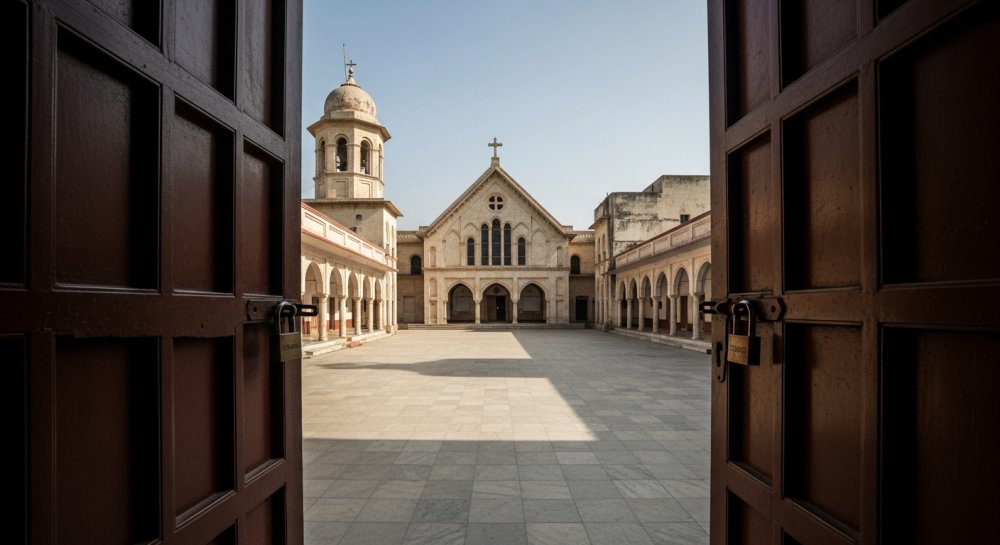
In India’s Punjab state, a Christian pastor remains in exile from his own home while his church stands locked and empty. The cause of his displacement is not violence or natural disaster, but a law ostensibly designed to protect religious sentiments that has instead become a weapon against religious minorities.
The law in question prohibits actions that “outrage religious feelings,” a broad and subjective standard that has opened the door to abuse. For this pastor, merely practicing his Christian faith and ministering to his congregation has resulted in accusations that landed him on the wrong side of authorities.
The situation highlights a growing concern among Christian communities in India, where laws intended to maintain religious harmony are increasingly twisted to silence and intimidate believers. The pastor cannot safely return to his home, and his congregation has been scattered, their place of worship sealed by order of local officials.
Punjab, a state with a significant Sikh majority, has historically been more tolerant of religious diversity than some other Indian states. However, the misapplication of anti-blasphemy and religious sentiment laws has created an environment where Christians face legal jeopardy for the simple act of worship and evangelism.
Religious freedom advocates have long warned that vaguely worded laws protecting “religious feelings” create opportunities for discrimination. When any expression of faith can be construed as offensive to another religion’s adherents, minority faiths become vulnerable to the whims of local authorities and majority populations.
The pastor’s case is not isolated. Across India, Christians have faced increasing pressure under various legal pretexts, from anti-conversion laws to provisions against hurting religious sentiments. These laws, while facially neutral, are disproportionately enforced against Christian pastors and evangelists.
For American Christians who cherish religious liberty as a foundational right, the situation in Punjab serves as a sobering reminder of how easily freedom of worship can be eroded. What begins as a restriction on “offensive” speech can quickly become a tool for silencing unpopular or minority faiths entirely.
The Indian Constitution guarantees freedom of religion, including the right to profess, practice, and propagate one’s faith. Yet in practice, Christians in states like Punjab find these constitutional protections offer little shelter when local laws and enforcement mechanisms are used against them.
As this pastor remains separated from his home and his flock, his situation calls for international attention and prayer. The body of Christ worldwide must stand with persecuted believers who face legal harassment simply for following their calling to preach the Gospel and shepherd God’s people.
Let us know what you think, please share your thoughts in the comments below.


Faith Facts
- Lawrence Tong, International Director Emeritus of OM International, addressed the Arise Asia 2026 Congress on barriers to global missions
- The greatest obstacle to world missions may be the spiritual condition of believers already within the church
- Tong emphasized the difference between living in the Father’s house and truly knowing the Father’s heart
A sobering message delivered at the Arise Asia 2026 Congress is challenging Christians to examine their own hearts before taking the Gospel to the ends of the earth. Lawrence Tong, International Director Emeritus of OM International, closed the third evening of the major missions gathering with a pointed observation that should give every believer pause.
According to Tong, the most formidable barrier to fulfilling the Great Commission isn’t found in remote villages, hostile governments, or dangerous terrain. Instead, it resides much closer to home—within the hearts of those already sitting in church pews every Sunday.
“The greatest obstacle to world mission may not be distance, difficulty, or danger, but the condition of the heart of those already gathered in the Father’s house.”
This powerful statement cuts to the core of a crisis facing the modern church. Many who claim the name of Christ and enjoy the blessings of fellowship may be, as Tong put it, living in the Father’s house without truly knowing the Father’s heart. It’s a distinction that carries eternal weight for both believers and the unreached peoples of the world.
The message comes at a crucial time when the church faces unprecedented opportunities to spread the Gospel globally. Technology has made communication across continents instantaneous. Travel has become more accessible than ever before in human history.
Yet despite these advantages, the missionary enterprise often struggles—not primarily due to external opposition, but because of internal spiritual deficiency. When believers lack an intimate, transformative relationship with God, their witness loses power and their commitment to the mission wavers.
Tong’s challenge to the Arise Asia 2026 Congress participants reflects a biblical pattern. Throughout Scripture, God has consistently called His people not merely to external religious observance, but to genuine heart transformation. The prophets repeatedly confronted Israel for going through religious motions while their hearts remained far from God.
This distinction between outward religious activity and inward spiritual reality remains critically relevant today. A person can attend every church service, volunteer for ministry programs, and maintain the appearance of faithfulness while never experiencing the deep, personal knowledge of God that should characterize every true disciple.
For the mission field, the implications are profound. Missionaries who don’t truly know the Father’s heart will struggle to represent Him accurately to those who have never heard. Support from home churches will remain tepid when congregations are populated by people whose faith is more cultural habit than passionate conviction.
The call to examine our hearts isn’t comfortable, but it’s necessary. As American Christians enjoy unprecedented religious freedom and resources, we must ask ourselves hard questions: Do we truly know God, or do we merely know about Him? Has our faith penetrated beyond the surface level of Sunday morning attendance?
These questions matter not only for our own spiritual health but for the billions who have yet to hear the name of Jesus. The harvest is plentiful, but the laborers must be more than just numerous—they must be genuine disciples who know and love the One who sends them.
The challenge from Lawrence Tong serves as a clarion call for self-examination and repentance where needed. Before we can effectively take the Gospel to those who have never heard, we must ensure that we ourselves have moved beyond merely residing in the Father’s house to truly knowing the Father’s heart.
Only then will the church fulfill its missionary calling with the power, passion, and perseverance that the task requires. Only then will we see the Great Commission advanced not just through programs and strategies, but through transformed lives that bear authentic witness to the transforming power of knowing God.
Let us know what you think, please share your thoughts in the comments below.
Faith Facts
- Patrick Fung, chair of the Global Board of Directors of Arise Asia, delivered a powerful message on the inseparable nature of joy and suffering in Christian life at the Arise Asia 2026 Congress in Manila.
- Fung emphasized that modern Christianity often avoids the biblical truth that faithful discipleship requires embracing both joy and suffering simultaneously.
- The address called delegates to surrender without reserve to Christ’s call, challenging comfortable Western notions of Christianity that promise blessings without sacrifice.
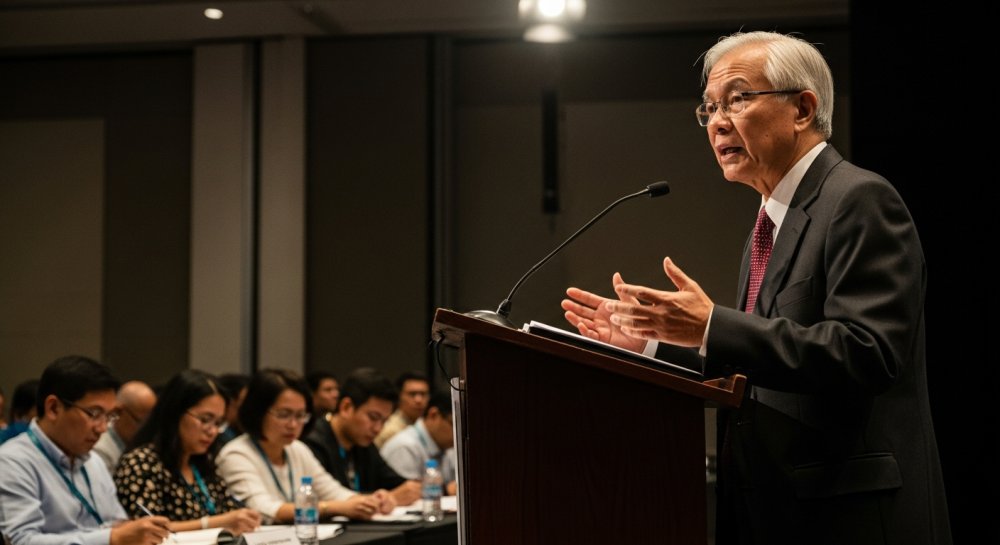
A veteran mission leader issued a sobering call to Christians gathered in Manila this week, urging them to embrace a faith that demands everything and promises hardship alongside hope. Patrick Fung, chair of the Global Board of Directors of Arise Asia and director emeritus of OMF International, addressed thousands of delegates at the Arise Asia 2026 Congress with a message that cut against the grain of prosperity-focused teaching.
Speaking on the third morning of the congress, Fung confronted what he described as a fundamental misunderstanding plaguing modern Christianity—the belief that joy and suffering occupy separate realms in the believer’s journey. His message challenged attendees to reconsider their commitment to Christ in light of Scripture’s consistent teaching on the cost of discipleship.
“Joy and suffering will always coexist,” Fung declared, pressing delegates to acknowledge this biblical reality that many contemporary churches have minimized or ignored entirely.
The seasoned missionary’s address comes at a crucial moment for the global church, as believers across Asia and the West face increasing pressure to water down biblical truth in favor of culturally palatable messages. Fung’s emphasis on unreserved surrender stands in stark contrast to therapeutic models of faith that prioritize personal comfort over sacrificial obedience.
His words echo the teaching of Jesus himself, who told would-be followers to count the cost before committing to discipleship. Christ never promised an easy road for those who bear His name—instead, He warned of persecution, rejection, and trials that would test the authenticity of faith.
The Arise Asia Congress brings together Christian leaders from across the continent to strengthen missionary efforts and encourage bold evangelism in regions where the gospel faces both cultural resistance and governmental opposition. Fung’s leadership with OMF International has spanned decades of service in areas where professing Christ can mean social ostracization, economic hardship, or worse.
For American Christians increasingly facing hostility in a post-Christian culture, Fung’s message offers both warning and encouragement. The call to surrender without reserve demands believers examine whether their faith can withstand opposition, or if it crumbles when discipleship requires genuine sacrifice.
The biblical pattern is clear: the apostles rejoiced even as they suffered for Christ’s name. Paul wrote some of his most joy-filled letters from prison cells. Early Christians sang hymns while facing martyrdom. This paradox—deep joy coexisting with profound suffering—has characterized authentic Christianity throughout history.
Fung’s address challenges believers to move beyond shallow faith that seeks God’s blessings while avoiding His call to costly obedience. True discipleship, he reminded the congress, requires holding nothing back—not comfort, not security, not even life itself.
As the American church faces mounting pressure to compromise biblical standards on marriage, gender, the sanctity of life, and religious freedom, Fung’s call to unreserved surrender takes on urgent relevance. Will Christians stand firm when faithfulness costs something, or will they accommodate culture to preserve comfort?
The veteran missionary’s message serves as a timely reminder that Christianity has never promised ease in this world. Instead, Scripture assures believers of trials that refine faith, persecution that proves devotion, and suffering that produces endurance—all accompanied by a joy the world cannot give or take away.
For those willing to embrace this costly discipleship, Fung’s words offer not discouragement but clarity about what following Christ truly requires. The gospel has always demanded everything and promised that in losing our lives for Christ’s sake, we find them.
Let us know what you think, please share your thoughts in the comments below.

Faith Facts
- Nashville churches are pioneering new senior ministries that transform older adults from passive recipients into active servants of God’s kingdom
- The Sunny Day Club at Harpeth Hills Church provides respite care for memory loss patients while giving senior volunteers renewed purpose in ministry
- Churches across denominations are collaborating through the Intentional Older Adult Ministry to share ideas and combat the epidemic of senior loneliness affecting 1 in 3 Americans over 50
NASHVILLE, TENN. — “I’m part of the irrelevance.”
Those words, from an older adult at the Harpeth Hills Church of Christ, stopped Robyn Arab in her tracks. As director of the church’s Resource Center on Aging, Arab had spent years promoting resources and working alongside seniors.
But it surprised her that a church member with a lifetime of faith and service could believe they no longer mattered.
With 57 million baby boomers in the U.S. as of 2024, churches are facing a new challenge: how to keep older adults active and valued in God’s work. “The spirit of God is just as actively at work in someone who’s 80 years old as someone who’s eight years old,” said Jason Thompson, executive minister for the Harpeth Hills church.
Across Nashville, churches are rethinking senior ministry by expanding beyond traditional care. Instead of viewing seniors solely as recipients, congregations are creating programs that enable seniors to serve others, build relationships and rediscover God’s purpose in their lives.
‘They’re just as needed as the youth’
At Harpeth Hills, the Resource Center for Aging has developed programs designed to meet seniors and their families where they are. The center originated in 2007, when former minister James Vandiver wanted to provide a space for seniors that was more meaningful than “loading up the van and seeing the leaves.”
Vandiver brought Arab on board as a contractor in 2011, and 12 years later, Arab took over the center. Today, the program offers a range of unique services, including education, family counseling, frozen meals and respite care.
Among the most attended programs is the Sunny Day Club, a weekly three-hour gathering designed for seniors experiencing the early stages of memory loss, including Alzheimer’s disease and various forms of dementia.
Each Thursday morning, volunteers arrive at the church around 10:30 a.m. for an overview of the day’s activities before participants’ arrival. The schedule includes many activities tailored for people managing memory loss, balancing faith-based elements with physical activities like a ring toss game.
As seniors and their caregivers walk through the door, volunteers greet them with smiles and hugs, reminding them they are not forgotten.
“I see God opening those doors,” Arab said.
“He is helping more people find a purpose and letting them know they’re just as needed as the youth.”
The caregivers who drop off attendees also receive something rare when caring for a loved one — time.
For families, the impact of the Sunny Day Club extends far beyond the handful of hours their loved ones spend at Harpeth Hills. Helper and retired nurse Inez Stubblefield recalled one family member who returned to the gym after months away because of the time the program freed up.
“You can’t imagine what three hours of free time means to their loved ones,” she said.
The church members serving at the Sunny Day Club are often the same people the ministry supports. Through leading devotions or being a “helper” who offers companionship, these volunteers are finding purpose by serving others.
“It’s very rewarding,” said Stubblefield.
“The volunteers that continue to show up — it’s in their heart.”
For Harpeth Hills, the ministry reflects a broader belief that older adults are not simply people to minister to. They are members of the church family who still have gifts to give.
“It’s a genius of a ministry because it’s a win, win, win,” Thompson said.
“The volunteers win. The recipients win. The caregivers win.”
‘There’s something for everybody to do’
At churches across Nashville, senior ministry is becoming about more than meeting basic needs. It is about helping older adults discover that God still has work for them.
Just 15 minutes from Harpeth Hills, Brentwood Hills Church of Christ has embraced an older-adult ministry of its own. Senior adult minister Terry Booker believes that God’s purpose for someone is often rediscovered through service to others, both inside and outside the church.
“Some older adults have always helped others,” he said.
“They’re not willing to be helped. When you ask them to serve you, you’re encouraging them.”
Booker said the goal of the senior ministry isn’t just to keep people busy, but to help them recognize that God is still calling them to serve.
“What we’re trying to find is not what you want your purpose to be,” he said.
“But, what God wants your purpose to be.”
A person’s sense of purpose can become increasingly important, especially later in life. In a 2024 University of Michigan study of Americans aged 50 to 80, 1 in 3 seniors reported feeling lonely.
Churches hope that meaningful opportunities to serve and build community within the church can help counter that isolation while reminding older adults that they remain a key part of the church’s mission alongside the next generation.
“There’s something for everybody to do,” Arab said.
“You can hold a baby, you can serve food, you can direct kids here and there.”
‘Church is a family’
As more congregations look to expand senior ministries, Christian leaders among numerous denominations in Nashville are looking beyond their own walls for fresh ideas.
One example that has spurred conversations among various churches in Music City is the Intentional Older Adult Ministry, a group of Christian leaders who meet monthly to discuss challenges facing senior ministries in the area. The meetings, which Arab used to lead, provide church leaders with a forum to discuss new program ideas and bring in experts to share information that can inform others.
“So people hear the information and can then take it to their congregation as needed. Presbyterians typically attend, Baptist people are there, Methodists,” Booker said.
“We do have some government people from here attend, on occasion, and both profit and nonprofit organizations.”
These exchanges of ideas and information have also allowed churches to see how ideas developed in one congregation can inspire new ministry in another.
At Brentwood Baptist Church, Ben Davis is adapting one of the church’s most familiar ministries for everyone, from the youngest to the oldest: Adult Vacation Bible School.
“We’re just taking a concept that’s made for kids, and now we’re going to have it for senior adults,” Davis said.
“It’s still Vacation Bible School. It’s just Vacation Bible School for seniors.”
With all of the hallmarks of the summer staple, including snacks, songs of praise and fun activities, efforts like a VBS for adults continue to bear fruit for church leaders across Nashville.
The success of programs within Middle Tennessee reflects a belief that older adults remain a generation called to serve God.
“I believe church is a family,” Booker said.
“The church believes that we are a family, so we need to step up and help them.”
Let us know what you think, please share your thoughts in the comments below.


-

 Self-Reliance1 year ago
Trump’s Bold Move Uncovers Massive Social Security Fraud
-

 Faith1 year ago
New Clues Emerge in Noah’s Ark Mystery
-

 News1 year ago
Governor Walz’s Rhetoric Sparks National Controversy
-

 News1 year ago
Mel Gibson’s ‘The Passion of the Christ’ Sequel Title Announced
-

 Family1 year ago
Texas Lawmaker Targets Furries in Schools
-

 Freedom1 year ago
Maine Lawmaker Challenges Sports Fairness Controversy
-

 Family1 year ago
Canada’s Controversial Policy Sparks Ethical Debate
-
Faith8 months ago
Congress Hears Pleas for Nigerian Christians