
Faith
Nepal’s Christians Face Uncertain Future After Youth-Led Government Shift

Faith Facts
- Nepal’s Christian minority represents only 2% of the population but faces increasing persecution from Hindu nationalist movements
- A new government backed by Gen Z protesters took power in 2025, raising questions about religious freedom protections
- Hindu nationalism has grown in influence across Nepal, targeting minority faith communities including Christians
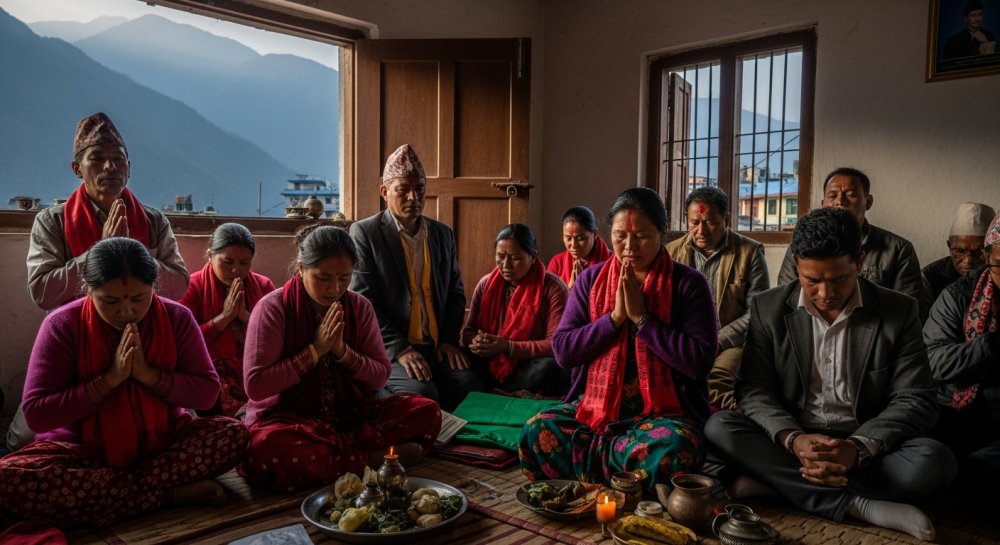
Nepal’s small but faithful Christian community is watching closely as a new government takes shape following widespread youth-led protests in 2025. The critical question facing believers is whether the incoming administration will stand firm against the rising tide of Hindu nationalism that has increasingly threatened religious liberty in the Himalayan nation.
Christians comprise just 2% of Nepal’s population, making them a vulnerable minority in a country where Hindu nationalist sentiment has gained significant ground in recent years. The faith community has endured mounting pressure and persecution as radical elements push for Nepal to be declared a Hindu state, rolling back the secular protections established in the nation’s 2015 constitution.
The Gen Z-backed government now holds the responsibility of determining whether religious minorities will receive meaningful protection or face continued marginalization. For Christian families and churches throughout Nepal, the stakes could not be higher as they seek the freedom to worship, evangelize, and raise their children in the faith without fear of reprisal.
Hindu nationalist groups have campaigned aggressively against Christian presence in Nepal, often portraying evangelism as a foreign threat to Nepali culture and identity. This rhetoric has created an atmosphere of suspicion and hostility that has emboldened harassment and violence against Christian communities, particularly in rural areas where believers are most isolated.
The 2015 constitution theoretically guarantees religious freedom while prohibiting conversion activities, a paradoxical stance that has been weaponized against Christians. Believers have faced arrest and prosecution simply for sharing their faith, with anti-conversion laws selectively enforced to silence Christian witness while ignoring Hindu proselytization efforts.
The youth movement that helped usher in the new government represents a potential opening for change. Young Nepalis have demonstrated concern for democratic values and human rights, principles that should encompass religious freedom for all citizens regardless of their faith tradition.
However, the influence of Hindu nationalism runs deep within Nepal’s political and social structures. Previous governments have proven unwilling or unable to resist pressure from Hindu supremacist organizations that view religious diversity as a threat rather than a strength.
Christian leaders in Nepal are calling for equal treatment under the law and an end to discriminatory enforcement of anti-conversion statutes. They emphasize that Christians are loyal Nepali citizens who contribute positively to their communities through education, healthcare, and social services, particularly among marginalized populations.
The international community is also monitoring the situation. Religious freedom advocates have documented increasing persecution of Nepali Christians and urged the government to uphold its constitutional commitments to liberty of conscience and belief.
As the new government consolidates power, its early decisions regarding religious minorities will signal whether Nepal moves toward greater pluralism or continues down a path of Hindu nationalist exclusion. For the nation’s Christians, who have maintained their faith despite significant obstacles, the hope is for a government that will protect rather than persecute them.
The coming months will reveal whether Gen Z’s vision for Nepal includes room for religious minorities to flourish or whether the forces of Hindu nationalism will continue to dictate the terms of religious expression. American Christians should remember their Nepali brothers and sisters in prayer during this critical time.
Let us know what you think, please share your thoughts in the comments below.


Faith Facts
- The York Revolution, a minor league baseball team in Pennsylvania, forfeited a game rather than compromise on Christian values regarding biological sex and women’s sports.
- The decision came after the opposing team fielded a biological male player on a women’s team, forcing York to choose between competing or standing firm on biblical principles.
- This incident highlights the growing tension between religious freedom and progressive gender ideology in American athletics and public life.
In an era when many institutions quickly bend to cultural pressure, a minor league baseball team in Pennsylvania has drawn a line in the sand. The York Revolution’s decision to forfeit a game rather than validate the participation of a biological male in women’s sports sends a powerful message about the cost of conviction.
The Revolution faced a choice that many Christians and conservatives encounter daily: comply with the prevailing cultural narrative or stand firm on biblical truth. They chose the latter, demonstrating that principles matter more than wins and losses.
This wasn’t merely about a single baseball game. It was about the integrity of women’s sports, the reality of biological sex, and the freedom to operate according to deeply held religious beliefs. When the opposing team included a player whose biological sex contradicted the team designation, York’s leadership recognized they faced a defining moment.
The forfeit represents more than a tactical decision. It exemplifies institutional courage—the willingness to absorb real consequences for maintaining biblical standards. In today’s climate, such stands often invite ridicule, financial penalty, and social ostracism.
For Christian Americans watching this unfold, the Revolution’s choice offers both encouragement and a challenge. It demonstrates that standing for truth remains possible, even when it’s costly. Organizations don’t have to surrender their values to participate in public life.
The broader implications extend far beyond the baseball diamond. This incident illuminates the collision between religious freedom and progressive ideology that defines much of contemporary American life. Schools, businesses, and civic organizations face similar pressure to affirm gender ideology that contradicts biological reality and biblical teaching.
York’s decision also protects the integrity of women’s athletics. Female athletes deserve competition that honors their biological reality. Allowing biological males to compete against women undermines fairness, safety, and the very purpose of sex-specific sports categories.
Critics will inevitably frame this as discrimination or bigotry. But Christians understand that affirming biological truth and protecting women’s spaces isn’t hateful—it’s loving. Real compassion doesn’t require us to deny reality or compromise biblical principles.
The Revolution’s stand reminds us that faith requires more than verbal assent. True belief manifests in action, especially when those actions carry cost. Jesus warned that following Him would bring opposition, not universal approval.
This situation also underscores the importance of leadership with moral clarity. The Revolution’s management could have quietly played the game, avoiding controversy. Instead, they led with conviction, modeling the kind of courage Christian organizations need in this cultural moment.
For families and churches, this incident provides a teaching opportunity. Young people need to see that standing for biblical truth sometimes means accepting tangible losses. Character formation happens when we choose principle over pragmatism.
The York Revolution forfeit matters because it shows what institutional integrity looks like in practice. It demonstrates that organizations can still function according to Christian principles, even as secular culture demands conformity to ideologies that contradict Scripture.
As pressure intensifies on Christian businesses, schools, and nonprofits to adopt progressive positions on sexuality and gender, York’s example offers both inspiration and instruction. Standing firm is possible, but it requires counting the cost and accepting the consequences.
This story ultimately isn’t about baseball—it’s about truth, courage, and the price of conviction. In a culture that increasingly demands we affirm what we know to be false, the York Revolution chose to forfeit a game rather than forfeit their integrity. That’s a win that transcends any scoreboard.
Let us know what you think, please share your thoughts in the comments below.

Faith Facts
- Florida church overseer Charles Barton Lucas arrested on digital voyeurism charges after illicit images from church bathroom found on his work computer
- Investigation revealed hidden camera filming church members and children in private areas; additional recordings found on device
- Church leadership responds with victim support, full cooperation with authorities, and commitment to preventing future abuse
A Florida church leader is behind bars following disturbing allegations that he secretly recorded congregants in church facilities. Charles Barton Lucas, who served as an overseer at a local congregation, now faces criminal charges after law enforcement discovered hidden camera footage on his work computer.
The investigation began when church officials were alerted to suspicious activity involving recording devices in private areas of the facility. What started as internal concerns quickly escalated into a full criminal probe by local authorities. Detectives uncovered illicit images captured from a church bathroom, along with recordings from at least one other location on the property.
Forensic examination of Lucas’s work computer revealed the scope of the alleged violations. The footage reportedly included church members and minors in situations where they had every reasonable expectation of privacy. The discovery has sent shockwaves through the congregation, where Lucas held a position of trust and spiritual authority.
Church leadership responded swiftly to the allegations, expressing deep concern for victims and vowing full cooperation with law enforcement. In a statement to the congregation, officials described the situation as heartbreaking and a betrayal of the sacred trust placed in those who serve in ministry positions.
“This is a tragic situation that has affected our entire church family,” representatives stated, acknowledging the pain and violation felt by those who may have been recorded without consent.
The charges against Lucas underscore an ongoing concern about abuse of authority in religious settings. Digital voyeurism laws exist specifically to protect individuals from this type of predatory behavior, particularly in spaces where privacy is expected and vulnerability is high. Houses of worship should be sanctuaries of safety, not venues for exploitation.
As the legal process unfolds, the affected church has implemented new security measures and is providing resources for those impacted by the alleged crimes. Church officials have encouraged anyone with information relevant to the investigation to contact local authorities immediately.
Lucas faces multiple charges related to digital voyeurism, a serious offense that carries significant penalties under Florida law. The case serves as a sobering reminder that vigilance and accountability must extend to all levels of church leadership, regardless of title or tenure.
The broader Christian community has condemned the alleged actions, emphasizing that such behavior stands in direct opposition to biblical standards of integrity, purity, and respect for the dignity of every person. True spiritual leadership requires transparency, moral excellence, and unwavering commitment to protecting the vulnerable—especially children.
This case highlights the critical importance of background checks, accountability structures, and safe church policies designed to prevent and detect abuse before it occurs. Churches across the nation are being called to examine their own safeguards and ensure that congregants can worship without fear of exploitation.
Let us know what you think, please share your thoughts in the comments below.
Faith Facts
- Nicki Minaj revealed in a recent interview that she was unprepared for the spiritual warfare she encountered in the music industry
- The rapper spoke openly about secret societies and demonic influences pervading the entertainment world
- Christians have long warned about the spiritual dangers in Hollywood and the music industry, citing scripture’s call to discern between light and darkness
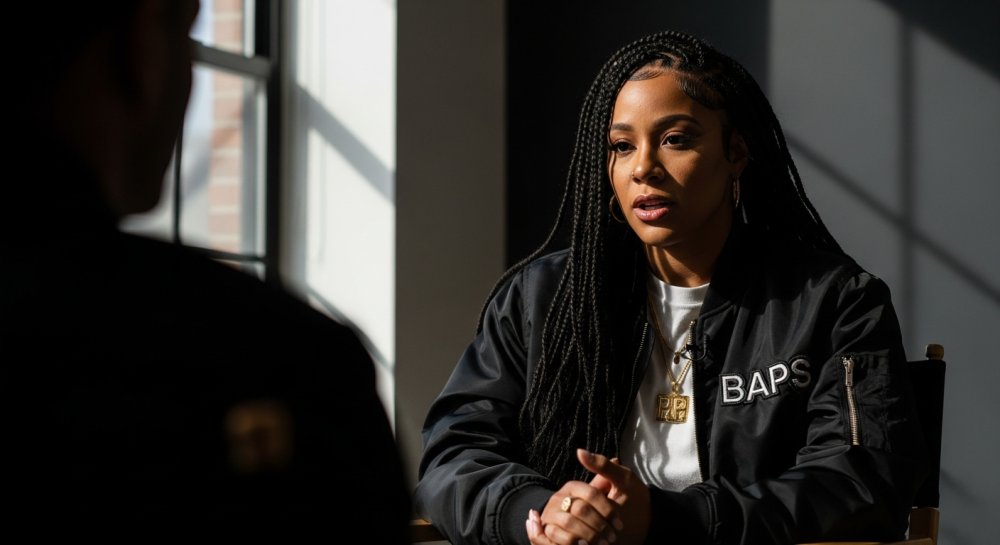
In a revealing conversation with Bryce Crawford, one of the world’s most successful rap artists opened up about the darker side of fame that most people never see. Nicki Minaj didn’t mince words when she described the spiritual battles she’s faced since entering the music industry.
The Grammy-nominated artist spoke candidly about being unprepared for what she called the demonic elements and secret societies that operate within the entertainment world. Her comments align with concerns that many Christians and conservatives have voiced for years about the moral and spiritual corruption in Hollywood.
“I was not prepared for the spiritual warfare,” Minaj stated during the interview.
The rapper’s admission raises important questions for Christian audiences who have long warned about the influence of dark spiritual forces in entertainment. For decades, faith leaders have cautioned believers about the values promoted through mainstream music and media, urging discernment and vigilance.
Minaj’s willingness to speak out about these issues is noteworthy, especially given the industry’s typical silence on such matters. While she has built her career within this system, her acknowledgment of its spiritual dangers resonates with biblical warnings about principalities and powers in high places.
The entertainment industry has increasingly pushed boundaries when it comes to traditional values, often celebrating lifestyles and messages that conflict with Christian teaching. From music videos to award show performances, many observers have noted imagery and symbolism that appears to mock faith or promote occult themes.
For Christian families, these revelations serve as a reminder to carefully monitor what influences enter their homes through music and entertainment. Scripture calls believers to test everything and hold fast to what is good, to think on things that are pure and honorable.
Minaj’s comments about secret societies within the industry also echo concerns raised by other artists over the years. While some dismiss such claims as conspiracy theories, the Bible itself warns that evil often operates in darkness and secrecy.
The rapper’s honest assessment of the spiritual landscape she encountered challenges the glamorous image often presented to young people aspiring to entertainment careers. Behind the fame and fortune lies a spiritual reality that demands discernment and spiritual protection.
Christians understand that our struggle is not against flesh and blood, but against spiritual forces of evil. The entertainment industry’s influence on culture and values makes it a significant battleground in this ongoing spiritual war.
Parents and church leaders can use Minaj’s testimony as an opportunity to discuss with young people the importance of guarding their hearts and minds. The allure of fame and success can blind individuals to the spiritual costs of compromise.
While Minaj herself continues to work within the industry, her acknowledgment of its demonic elements serves as a warning. It’s a rare moment of transparency from someone at the highest levels of commercial success.
The Christian response should be one of prayer—both for those trapped in spiritually dangerous environments and for a culture that desperately needs the light of truth. Believers are called to be salt and light, including in their engagement with popular culture.
As more voices from within the entertainment world begin to speak about these spiritual realities, it confirms what scripture has always taught: we live in a fallen world where spiritual forces battle for souls. The music industry is merely one front in this larger war.
Let us know what you think, please share your thoughts in the comments below.


-

 Self-Reliance1 year ago
Trump’s Bold Move Uncovers Massive Social Security Fraud
-

 Faith1 year ago
New Clues Emerge in Noah’s Ark Mystery
-

 News1 year ago
Governor Walz’s Rhetoric Sparks National Controversy
-

 News1 year ago
Mel Gibson’s ‘The Passion of the Christ’ Sequel Title Announced
-

 Family1 year ago
Texas Lawmaker Targets Furries in Schools
-

 Freedom1 year ago
Maine Lawmaker Challenges Sports Fairness Controversy
-

 Family1 year ago
Canada’s Controversial Policy Sparks Ethical Debate
-
Faith7 months ago
Congress Hears Pleas for Nigerian Christians