
News
Christian Woman Threatened With Death Unless She Converts and Marries Muslim Captor


Faith Facts
- A Muslim man in Pakistan allegedly held a Christian woman at gunpoint, demanding she convert to Islam and marry him or face death
- Police arrested the suspect following the woman’s escape and her family’s report to authorities
- Pakistan ranks among the world’s most dangerous countries for Christians, where forced conversions and abductions of Christian women remain a persistent crisis
A Christian woman in Pakistan narrowly escaped a terrifying ordeal after a Muslim man allegedly held her at gunpoint and demanded she convert to Islam and marry him or be killed. Police have arrested the suspect following the victim’s harrowing escape and her family’s swift action to report the crime.
The incident highlights the ongoing persecution of Christians in Pakistan, where forced conversions and targeted violence against religious minorities continue to plague the nation. For believers living in this Islamic republic, threats to their faith and physical safety remain a daily reality.
According to the victim’s family, the Muslim man used the threat of deadly force to coerce the young Christian woman into abandoning her faith and submitting to marriage. Such tactics are tragically common in Pakistan, where Christian women and girls face abduction, forced conversion, and coerced marriages with alarming frequency.
The woman managed to escape her captor and reach safety, where her family immediately contacted local authorities. Police responded to the family’s report and took the suspect into custody, though the outcome of any legal proceedings remains uncertain in a country where justice for Christian victims is often elusive.
Pakistan consistently ranks among the most dangerous countries in the world for Christians. Religious minorities, particularly Christians, face systematic discrimination, violence, and intimidation from both extremist individuals and sometimes from broader societal pressures rooted in the nation’s strict blasphemy laws and Islamic legal framework.
Forced conversions of Christian women and girls represent one of the most devastating forms of persecution in Pakistan. Human rights organizations estimate that hundreds of Christian and Hindu girls are abducted, forcibly converted, and married to Muslim men each year, often with little legal recourse for their families.
These forced conversions are not only attacks on individual victims but assaults on the Christian community as a whole. Families are torn apart, and the faithful are forced to watch as their loved ones are stripped of their religious identity under threat of violence or death.
The legal system in Pakistan often fails to protect Christian victims. Many families report that when they seek justice, they encounter indifference or outright hostility from authorities. Some cases are dismissed or ignored, while others result in marriages being deemed “legal” because the victim was allegedly converted to Islam before the marriage took place.
Christian advocacy groups have long called for international pressure on Pakistan to address the epidemic of forced conversions and religious persecution. They argue that without meaningful reform and enforcement of protections for religious minorities, Christians in Pakistan will continue to live in fear.
While this particular woman escaped and her attacker was arrested, countless others have not been so fortunate. The systemic nature of anti-Christian persecution in Pakistan demands continued attention from the global Christian community and from nations that value religious freedom.
For American Christians, the plight of our brothers and sisters in Pakistan serves as a sobering reminder of the precious gift of religious liberty we enjoy. It also calls us to prayer and advocacy on behalf of those who risk everything simply for professing faith in Jesus Christ.
Let us know what you think, please share your thoughts in the comments below.


Faith Facts
- The Federal Trade Commission and four states filed a lawsuit against the World Professional Association for Transgender Health for alleged deceptive practices in treating children with gender dysphoria
- WPATH is accused of making false claims about the safety and effectiveness of medical interventions for gender-confused minors
- The legal action represents a significant federal intervention in the ongoing debate over experimental medical treatments for children questioning their gender identity
The Federal Trade Commission has taken unprecedented action against one of the world’s most influential transgender medical organizations. On Wednesday, the federal agency joined forces with four states to file a lawsuit against the World Professional Association for Transgender Health, alleging the group engaged in deceptive practices regarding treatments for children experiencing gender dysphoria.
The lawsuit marks a turning point in the national conversation about medical interventions for gender-confused youth. WPATH has long positioned itself as the leading authority on transgender healthcare standards, but this legal challenge raises serious questions about the organization’s credibility and the safety of its recommendations.
Federal regulators are specifically targeting claims WPATH has made about the safety and effectiveness of controversial medical treatments for children. These interventions, which can include puberty blockers, cross-sex hormones, and surgical procedures, have become increasingly scrutinized by medical professionals, parents, and lawmakers across the country.
The involvement of the FTC signals that concerns about these treatments have moved beyond state legislatures and into the realm of consumer protection law. The agency’s decision to pursue this case suggests federal officials believe WPATH may have misled parents, medical professionals, and the public about the risks and benefits of gender-related medical interventions for minors.
This lawsuit comes at a time when more families are speaking out about the rapid medicalization of gender-questioning children. Many parents have reported feeling pressured by medical professionals to affirm their children’s gender confusion immediately, without adequate consideration of underlying mental health issues or the long-term consequences of irreversible treatments.
The coalition of states joining the FTC in this legal action demonstrates growing bipartisan concern about protecting children from experimental medical procedures. States across the nation have been grappling with how to balance compassionate care for struggling youth with the fundamental responsibility to protect minors from potentially harmful and irreversible medical decisions.
WPATH’s guidelines have been used to justify medical interventions in thousands of cases involving minors. Critics have long argued that these standards lack sufficient scientific evidence and fail to adequately account for the developmental vulnerabilities of children and adolescents.
The lawsuit represents a significant challenge to the medical establishment’s approach to childhood gender dysphoria. For years, concerned parents, medical professionals, and faith leaders have questioned whether rushing children into life-altering medical treatments truly serves their best interests or whether a more cautious, holistic approach would better protect vulnerable youth.
As this case moves forward, it will likely shed light on the evidence—or lack thereof—supporting the aggressive medicalization of gender-confused children. The discovery process could reveal internal communications and research that has previously been kept from public scrutiny.
The outcome of this lawsuit could have far-reaching implications for how gender dysphoria is treated in minors across the United States. It may also embolden other states and federal agencies to take a closer look at organizations promoting medical interventions for children struggling with gender identity questions.
Let us know what you think, please share your thoughts in the comments below.

Faith Facts
- Progressive spiritual leader Larry Reid called for a mass exodus of black Americans from the United States, sparking widespread controversy and debate
- Reid denies his statement was connected to the conviction of Karmelo Anthony for fatally stabbing Austin Metcalf at a high school track meet
- The incident raises questions about the role of faith leaders in addressing divisive social and political issues within their communities
Popular podcaster and progressive spiritual leader Larry Reid has found himself at the center of controversy after making a call for black Americans to leave the United States en masse. The statement has drawn sharp criticism from across the political and spiritual spectrum.
Reid has pushed back against claims circulating online that his controversial remarks were directly tied to the recent conviction of Karmelo Anthony. Anthony was found guilty of fatally stabbing Austin Metcalf at a high school track meet, a case that has drawn national attention and sparked intense debate about justice and accountability.
The progressive spiritual leader maintains that his call for a mass departure from America was not a reaction to any single event or court case. Instead, Reid appears to position his statement as part of a broader critique of American society and its treatment of black Americans.
The timing of Reid’s comments, however, has raised eyebrows among observers who note the proximity to Anthony’s conviction. Critics argue that such inflammatory rhetoric does little to promote healing, reconciliation, or the unity that faith leaders are called to foster.
For many Christian conservatives, Reid’s call for a mass exodus stands in stark contrast to biblical principles of perseverance, engagement, and being salt and light in society. Rather than abandoning the nation, traditional Christian teaching emphasizes working within communities to promote positive change, uphold justice, and live out faith publicly.
The case of Karmelo Anthony and the death of Austin Metcalf remains a tragic reminder of violence affecting young Americans. Many faith leaders have called for prayer, justice, and meaningful solutions to address the root causes of such violence rather than divisive rhetoric that further polarizes communities.
Reid’s platform as a podcaster and spiritual influencer gives him significant reach, particularly among progressive audiences. His statements highlight the growing divide between progressive spiritual movements and traditional Christian conservatism, which emphasizes patriotism, personal responsibility, and faith-based solutions to social challenges.
As the debate continues, many Americans of faith are calling for leaders who promote unity, accountability, and biblical truth rather than exodus and division. The role of spiritual leaders in shaping public discourse remains crucial, making it all the more important that their messages align with principles of love, truth, and national renewal.
Let us know what you think, please share your thoughts in the comments below.
Faith Facts
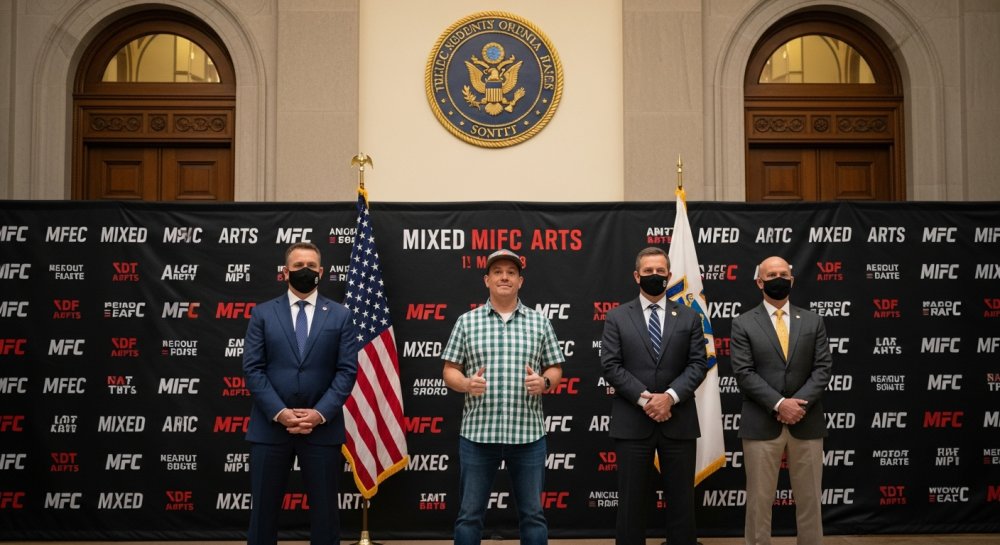
- Christian comedian Nate Bargatze attended UFC Freedom 250 at the White House honoring America’s 250th birthday and President Trump’s 80th birthday
- The nation’s highest-grossing comedian faced social media backlash for appearing alongside Vice President JD Vance and HHS Secretary RFK Jr.
- Bargatze, known for his clean comedy rooted in traditional values, has consistently maintained his commitment to faith and family-friendly entertainment
The highest-grossing comedian in America is experiencing a familiar phenomenon in today’s divided cultural landscape: backlash for simply attending a patriotic celebration. Nate Bargatze, a Christian comedian known for his clean, family-friendly material, attended UFC Freedom 250, a White House-hosted mixed martial arts event held Sunday in honor of America’s 250th birthday and President Donald Trump’s 80th birthday.
The event, which celebrated American achievement and presidential leadership, featured Vice President JD Vance and Health and Human Services Secretary Robert F. Kennedy Jr. among other distinguished guests. For many Americans, attending such a patriotic commemoration would be considered an honor and a display of respect for our nation’s history.
Yet in today’s polarized environment, even the most innocuous displays of patriotism or association with conservative leadership can trigger intense criticism from progressive voices on social media. Bargatze’s attendance has drawn negative attention from critics who appear more concerned with political allegiance than with celebrating American freedom.
The comedian has built his career on wholesome humor that appeals to families and faith-based audiences across the country. His commitment to clean comedy without vulgarity or inappropriate content has made him a refreshing voice in an industry often characterized by crude material.
This incident reflects a broader cultural moment where traditional values and patriotic expression are increasingly challenged. Christians and conservatives who simply wish to celebrate their country or show respect for elected leaders often find themselves subjected to public criticism from those who demand ideological conformity.
The White House event itself represented a remarkable milestone in American history, marking two and a half centuries since our nation’s founding on principles of liberty, faith, and self-governance. That such a celebration would become controversial speaks volumes about the current state of political discourse.
For many Americans of faith, the ability to gather in celebration of our national heritage without fear of retribution represents a fundamental freedom. The backlash against Bargatze serves as a reminder that cultural intolerance can flow from any direction, and that standing for traditional values sometimes requires courage in the face of criticism.
Let us know what you think, please share your thoughts in the comments below.


-

 Self-Reliance1 year ago
Trump’s Bold Move Uncovers Massive Social Security Fraud
-

 Faith1 year ago
New Clues Emerge in Noah’s Ark Mystery
-

 News1 year ago
Governor Walz’s Rhetoric Sparks National Controversy
-

 News1 year ago
Mel Gibson’s ‘The Passion of the Christ’ Sequel Title Announced
-

 Family1 year ago
Texas Lawmaker Targets Furries in Schools
-

 Freedom1 year ago
Maine Lawmaker Challenges Sports Fairness Controversy
-

 Family1 year ago
Canada’s Controversial Policy Sparks Ethical Debate
-
Faith7 months ago
Congress Hears Pleas for Nigerian Christians