
News
Border Czar Delivers Blunt Message to Vatican on Immigration Policy


Faith Facts
- White House border czar Tom Homan publicly criticized the Vatican’s stance on U.S. immigration enforcement
- Homan stated the Vatican lacks understanding of illegal immigration’s real-world consequences
- The rebuke highlights ongoing tension between church humanitarian advocacy and national security priorities
White House border czar Tom Homan delivered a pointed message to the Vatican, urging church officials to refrain from weighing in on American immigration policy. His remarks come amid heightened scrutiny of the nation’s border security and enforcement measures under the Trump administration.
Homan was unequivocal in his assessment of the Vatican’s immigration commentary.
“They should stay out of immigration. They don’t know what they’re talking about.”
The border czar’s statement reflects a growing frustration among conservative policymakers with religious institutions that advocate for more lenient immigration policies while, critics argue, remaining insulated from the real-world impacts of illegal border crossings. These impacts include drug trafficking, human smuggling, strain on public resources, and threats to community safety that American citizens and legal residents face daily.
The tension between Vatican humanitarian messaging and U.S. sovereignty concerns has been an ongoing issue. While Christian compassion toward the stranger is a biblical principle, conservatives maintain that such compassion must be balanced with the rule of law, national security, and the protection of American communities. Many faith leaders argue that a nation has both the right and responsibility to secure its borders and determine who may enter.
Homan’s border enforcement role has placed him at the center of the administration’s efforts to restore order and security along America’s southern border. His approach emphasizes enforcement of existing immigration law, deportation of criminal aliens, and deterring illegal entry—policies that enjoy strong support among Christian conservatives who believe lawful immigration processes honor both God’s design for national boundaries and respect for legitimate governmental authority.
The Vatican has historically advocated for welcoming migrants and refugees as a moral imperative. However, critics point out that Vatican City itself maintains strictly controlled borders and citizenship requirements, a seeming contradiction that hasn’t gone unnoticed by those who support stricter U.S. immigration enforcement.
For many Christian conservatives, the issue is not whether to show compassion but how to do so responsibly. They argue that true compassion includes protecting American families from crime and economic displacement, securing communities against cartel violence and drug trafficking, and maintaining a legal immigration system that welcomes those who follow proper channels while deterring those who don’t.
Homan’s straightforward rebuke of Vatican commentary signals the administration’s unwillingness to allow outside pressure—even from religious authorities—to dictate American border policy. The statement reinforces the position that elected officials answerable to American voters, not foreign institutions, should determine how the nation’s laws are enforced.
Let us know what you think, please share your thoughts in the comments below.

Faith Facts
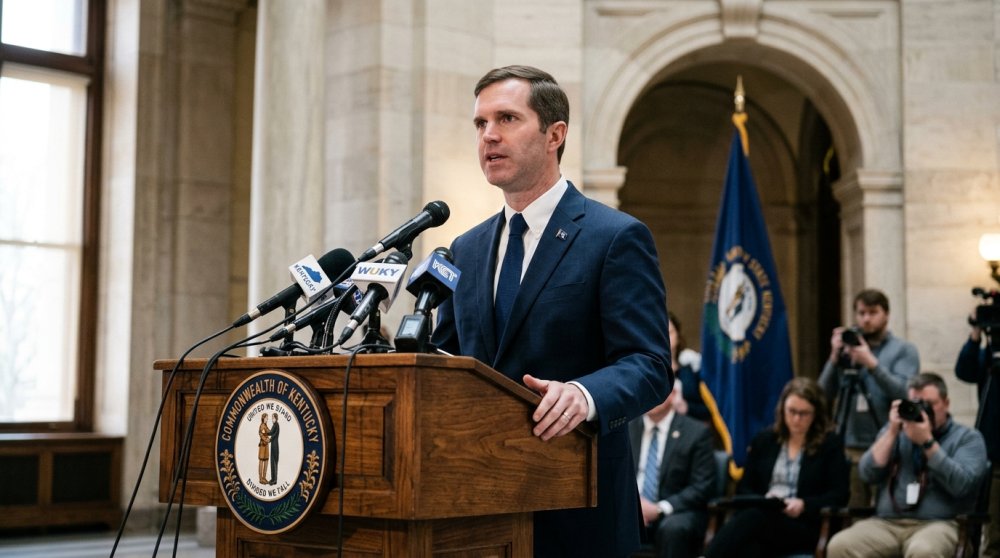
- Governor Andy Beshear defended his veto of legislation restricting taxpayer funding for transgender procedures on minors by invoking his Christian faith.
- Scripture teaches that God created male and female and calls His people to protect children from harm.
- Christian teaching emphasizes bodily integrity and the rejection of irreversible medical interventions on minors.
Kentucky Governor Andy Beshear has publicly tied his Christian faith to his decision to veto a bill that would have protected minors from irreversible medical procedures. The Democratic governor argued that opposition to taxpayer-funded transgender interventions on children is somehow contrary to Christianity.
The vetoed legislation would have prevented state dollars from supporting procedures that carry documented risks including infertility and permanent loss of sexual function. Beshear framed his opposition as a matter of compassion rooted in his understanding of the Christian faith.
“I believe as a person of faith that we are all created in the image of God and that we are called to love and care for one another.”
The governor also criticized Senator JD Vance’s profession of Christian faith, suggesting that Vance’s support for the bill was inconsistent with Christian values. Beshear positioned his stance as the truly compassionate and faith-informed position on the issue.
“I think it’s important that we remember that our faith calls us to be in relationship with one another and to care for the most vulnerable among us.”
Christian conservatives maintain that protecting children from experimental medical interventions aligns with both Scripture and sound medical ethics. They point to the growing number of European countries that have restricted or banned such procedures for minors due to lack of evidence and serious long-term risks.
Traditional Christian teaching holds that God created humanity as male and female and that medical interventions attempting to alter this created order contradict biblical anthropology. Many believers argue that true compassion involves addressing underlying mental health issues rather than affirming a child’s confusion through irreversible procedures.
Let us know what you think, please share your thoughts in the comments below.
Faith Facts
- Romans 16:16 calls believers to greet one another with a holy kiss while identifying congregations as churches of Christ.
- Acts 15:39 records the sharp disagreement between Paul and Barnabas that led them to part company over John Mark.
- 2 Timothy 4:11 shows that John Mark later earned Paul’s trust and respect by the end of his life.
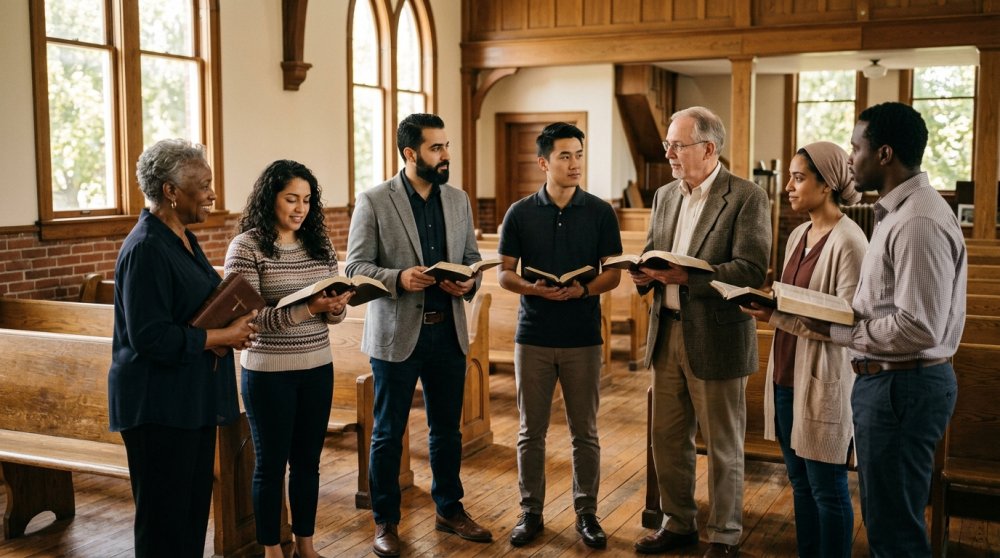
Churches of Christ carry many labels today. Conservative mainstream. Moderate mainstream. Non-institutional. Progressive. Instrumental. One cup. Little c. Big C. Doctrinally sound. Yet believers across these groups share one common sentiment.
They do not like labels. Most prefer simply to be called the church or the Lord’s church.
Congregations remain autonomous. They take their name from the second part of Romans 16:16, which states, “All the churches of Christ send greetings.”
Common beliefs exist. Differences remain over women’s roles, the number of communion cups, and hand clapping in worship. These divisions echo patterns seen throughout church history.
Social media now makes it easier for believers to stay inside smaller circles of like-minded Christians. Algorithms filter out opposing voices. This trend mirrors divisions in the wider culture.
Fellow believers can disagree. Scripture records the heated discussion between Paul and Barnabas about whether to take John Mark on their second missionary journey. “They had such a sharp disagreement that they parted company” (Acts 15:39).
John Mark had left early during the first journey. He was young. Barnabas believed in second chances. Paul later reconciled with Mark, as shown in 2 Timothy 4:11.
Both teams advanced the gospel. Paul and Silas demonstrated the Lord powerfully in Acts 16-18. Barnabas and John Mark did likewise.
“Can we disagree on such matters and find a way to move forward together? Or should we be content to labor separate and apart from each other?”
A disagreement over travel companions differs from disagreements over instruments in worship. Yet the principle remains the same.
Reporting for the “Who Are We?” series reveals a shared desire to proclaim the Kingdom. Brothers and sisters across the right, left, and center of the fellowship express the same hope.
“I wish we could get past all this and concentrate on seeking and saving the lost.”
Perhaps this shared mission offers a starting point for unity. The holy kiss may take more time.
Let us know what you think, please share your thoughts in the comments below.

Faith Facts
- Over 130,000 citizens have signed a petition calling on the United States to protect the biblical definition of gender as male and female in international law.
- The petition warns that a proposed United Nations convention could criminalize traditional pro-life and pro-family positions held by millions of American Christians.
- Supporters say the effort is rooted in the scriptural truth that God created humankind as male and female, a foundation of both faith and constitutional liberty.
A growing coalition of American believers is urging U.S. diplomats to stand firm against efforts to embed gender ideology into binding international agreements. The petition, which has now surpassed 130,000 signatures, calls on American negotiators to ensure that any clarification of the term “gender” in international law continues to reflect the biological reality of two sexes.
Organizers argue that removing this biological definition from treaties would open the door to punishing citizens who uphold the sanctity of life and the traditional family. They warn that such changes could criminalize speech, public policy, and even personal beliefs long protected by the First Amendment.
“The United Nations convention will be used to criminalize legitimate pro-life and pro-family beliefs, speech, or public policy.”
Christian leaders across the country are framing the petition drive as a defense of both religious liberty and national sovereignty. They point to Scripture’s clear teaching that God created male and female as the foundation for marriage, family, and human dignity.
The effort comes at a time when many conservative Americans see international bodies attempting to override domestic values on life, marriage, and parental rights. Petition supporters say the United States must reject any agreement that elevates ideological language above biological truth.
Let us know what you think, please share your thoughts in the comments below.


-

 Self-Reliance1 year ago
Trump’s Bold Move Uncovers Massive Social Security Fraud
-

 Faith1 year ago
New Clues Emerge in Noah’s Ark Mystery
-

 News2 years ago
Governor Walz’s Rhetoric Sparks National Controversy
-

 News1 year ago
Mel Gibson’s ‘The Passion of the Christ’ Sequel Title Announced
-

 Family2 years ago
Texas Lawmaker Targets Furries in Schools
-

 Freedom2 years ago
Maine Lawmaker Challenges Sports Fairness Controversy
-

 Family1 year ago
Canada’s Controversial Policy Sparks Ethical Debate
-
Faith10 months ago
Congress Hears Pleas for Nigerian Christians