
Faith
British Peer Reveals the True Purpose Behind His Business Empire

Faith Facts
- Lord Edmiston, a successful British businessman and member of the House of Lords, states that evangelism—not wealth accumulation—drives his business endeavors.
- He emphasizes the biblical principle of stewardship, viewing his business success as a tool for advancing Christian mission work globally.
- The peer’s testimony highlights how faith-based values can shape business practices and redirect financial resources toward spreading the Gospel.
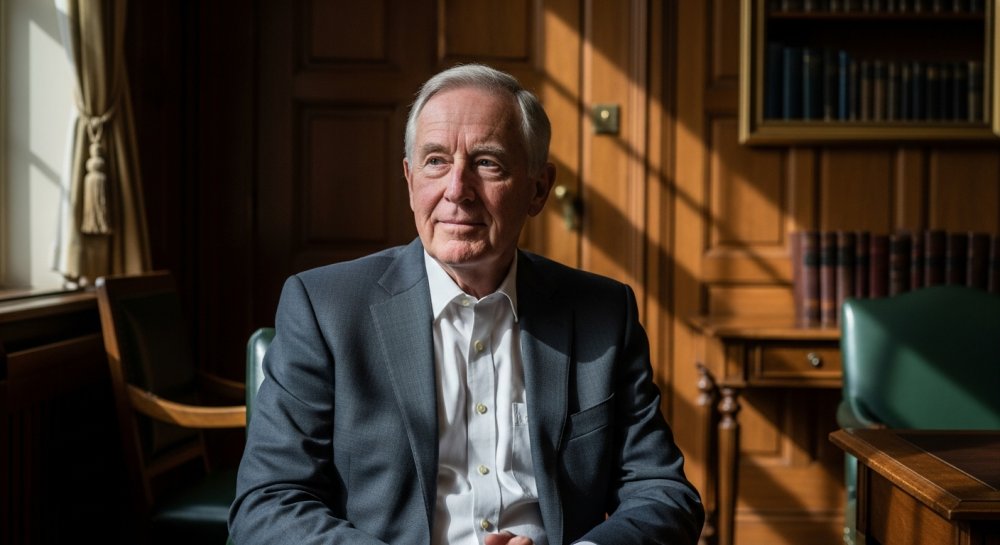
A prominent British businessman and member of the House of Lords has opened up about the deeper motivation behind his entrepreneurial success, pointing not to personal enrichment but to the Great Commission. Lord Edmiston’s candid reflections offer a powerful counter-narrative to the secular business world’s focus on profit maximization.
In his testimony, Lord Edmiston made clear that his approach to commerce has always been rooted in something far greater than building a financial empire. The peer explained that evangelism serves as the foundational driver of his work, with wealth creation functioning as a means rather than an end.
“I was driven by evangelism, not the creation of wealth for its own sake,” Lord Edmiston stated, articulating a philosophy that places Kingdom work at the center of business activity.
This perspective reflects a biblical understanding of stewardship—the idea that Christians are caretakers of God’s resources, responsible for using them wisely to advance His purposes. Rather than hoarding wealth or pursuing luxury, Lord Edmiston sees his business success as a divine trust, one that carries with it both opportunity and obligation.
His focus on global mission work demonstrates how business acumen and faithful stewardship can combine to support the spread of Christianity around the world. In an era when many corporations embrace progressive ideologies that conflict with traditional Christian values, Lord Edmiston’s testimony stands as a reminder that commerce can serve God’s kingdom.
The peer’s comments also speak to a growing movement among Christian entrepreneurs who reject the purely materialistic metrics of success. Instead of measuring achievement solely by stock prices or market share, these business leaders evaluate their work by its impact on eternal matters—souls saved, churches planted, and communities transformed by the Gospel.
For American Christians watching cultural battles unfold in the corporate sphere, Lord Edmiston’s example offers encouragement. It shows that believers in positions of influence can maintain their faith convictions while achieving professional success, and that business platforms can become launching pads for ministry.
His emphasis on evangelism over enrichment challenges the popular notion that faith and business must remain separate. Instead, it suggests that when properly understood, entrepreneurship can become an extension of Christian witness—a way to generate resources that fuel the Great Commission while modeling integrity and biblical values in the marketplace.
The British peer’s testimony arrives at a crucial moment when many wonder whether traditional Christian values can survive in modern commerce. His answer is clear: not only can they survive, but when faithfully applied, they can transform business into mission.
Let us know what you think, please share your thoughts in the comments below.


Faith Facts
- Eric Metaxas emphasizes the biblical foundation of American self-government.
- Nathan Hale, executed by the British at age 21, exemplifies early American faithfulness and courage.
- Remembering heroic figures like Hale strengthens national resolve rooted in biblical truth.
Author Eric Metaxas recently spoke with The Christian Post about the urgent need to recall the biblical principles that shaped American self-government.
Metaxas pointed to the story of Nathan Hale, the 21-year-old patriot who was hanged by British forces 250 years ago this week, as a powerful example of sacrificial courage.
“We need to remember these heroic figures who laid down their lives for the cause of liberty,” he said.
The author stressed that such stories are not mere historical footnotes but living reminders of the Christian virtues that once defined the American experiment.
“Without these examples, we lose the moral imagination required to sustain freedom,” Metaxas added.
He urged believers and citizens alike to recover the memory of those who stood firm in faith and principle during the nation’s founding era.
Let us know what you think, please share your thoughts in the comments below.
Faith Facts
- A North Carolina church baptized 458 people in one day.
- This event marks the largest single-day baptism in the congregation’s 137-year history.
- The congregation attributes the record turnout to God at work in their community.
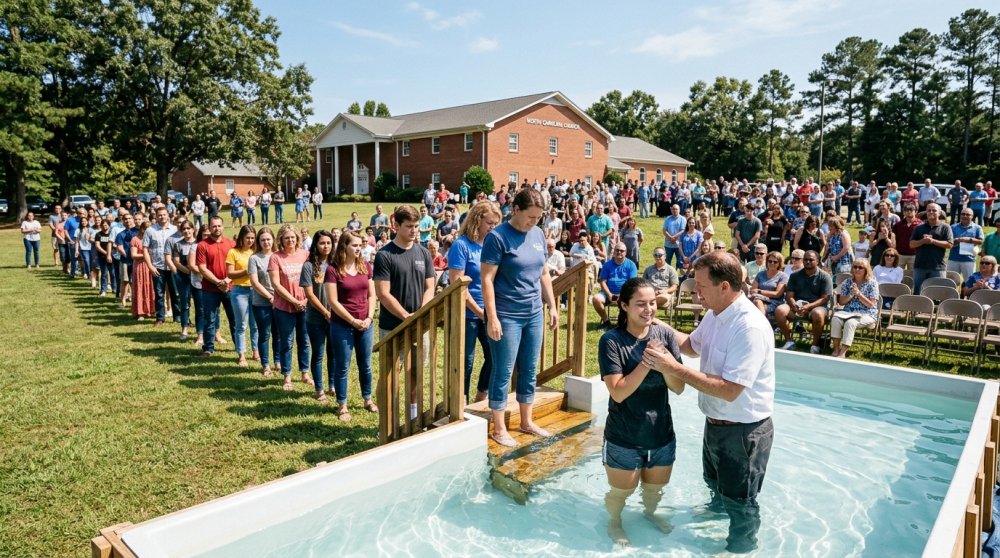
A multisite church in North Carolina baptized 458 people in a single day. This remarkable turnout set a new record for the congregation.
The milestone surpasses any previous single-day baptism in the church’s 137-year history. Church leaders say the outpouring reflects God’s active work among their members and surrounding communities.
Let us know what you think, please share your thoughts in the comments below.
Faith Facts
- Dylan Mandell, a Christian social media influencer, has received his fourth cancer diagnosis in four years.
- Mandell publicly declares he is standing on God’s promise of long life despite the repeated health trials.
- The influencer’s testimony highlights unwavering faith and reliance on Scripture amid suffering.
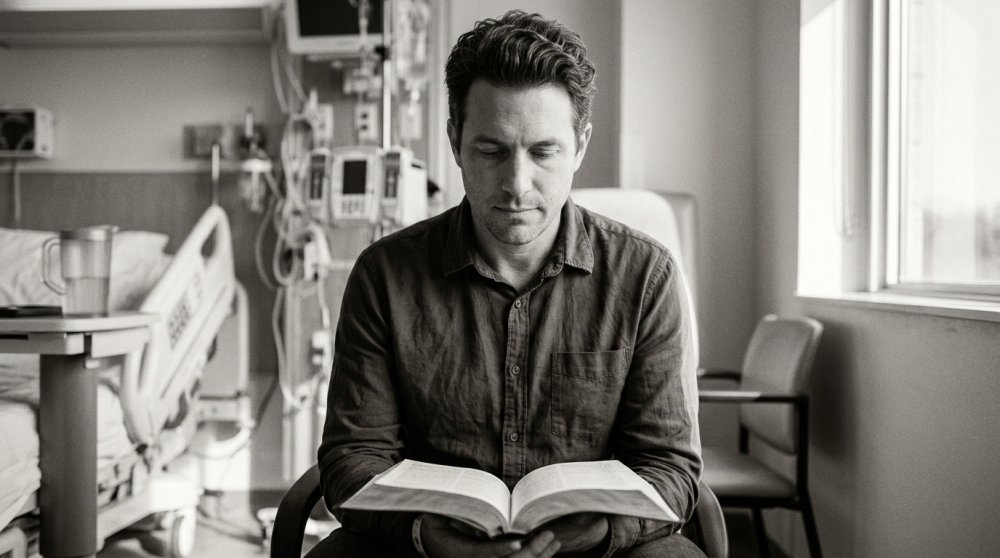
Christian social media influencer Dylan Mandell has been diagnosed with cancer for the fourth time in four years. Yet he refuses to let fear define his story. Instead, he is clinging to the biblical promise of long life.
“I am holding on to God’s promise of long life,” Mandell said. The statement reflects his determination to trust Scripture even when circumstances appear grim.
Family, friends, and followers have rallied around Mandell as he faces this latest battle. His transparency about his health has encouraged many believers to strengthen their own faith during trials.
Through every diagnosis, Mandell has pointed others back to the Word of God. He continues to share messages of hope grounded in Scripture rather than statistics.
Let us know what you think, please share your thoughts in the comments below.


-

 Self-Reliance1 year ago
Trump’s Bold Move Uncovers Massive Social Security Fraud
-

 Faith1 year ago
New Clues Emerge in Noah’s Ark Mystery
-

 News2 years ago
Governor Walz’s Rhetoric Sparks National Controversy
-

 News1 year ago
Mel Gibson’s ‘The Passion of the Christ’ Sequel Title Announced
-

 Family2 years ago
Texas Lawmaker Targets Furries in Schools
-

 Freedom2 years ago
Maine Lawmaker Challenges Sports Fairness Controversy
-

 Family1 year ago
Canada’s Controversial Policy Sparks Ethical Debate
-
Faith10 months ago
Congress Hears Pleas for Nigerian Christians