
Faith
Nigerian Leaders Launch Bold Initiative Against Deadly Christian Persecution

Faith Facts
- Nigeria ranks as the deadliest country in the world for Christians, facing systematic violence and persecution
- Faith leaders across denominational lines are launching an interfaith reconciliation initiative to combat the ongoing violence
- The effort seeks to bridge religious divides in a nation where Christian communities face existential threats
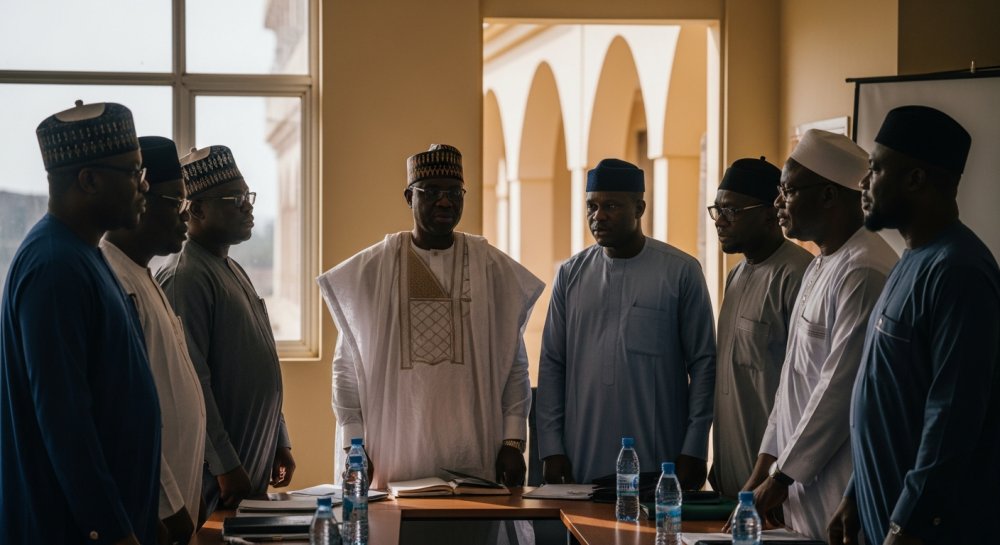
Faith leaders in Nigeria are taking unprecedented steps to address the violence that has made their nation the most dangerous place on earth for followers of Christ. In a bold move toward reconciliation, Christian and Muslim leaders are coming together to confront the systematic persecution threatening the very existence of Nigerian Christian communities.
Nigeria has earned the tragic distinction of being the deadliest country in the world for Christians. Thousands of believers have been killed, displaced, or forced to flee their ancestral homes in recent years as violence has escalated across the nation.
The interfaith initiative represents a critical moment for Nigeria’s future. Leaders recognize that without genuine reconciliation and a commitment to religious freedom, the violence will continue to tear the nation apart. The effort focuses on building bridges between communities while ensuring that the rights of all citizens to worship freely are protected and defended.
Christian communities in Nigeria have faced relentless attacks on their churches, villages, and way of life. The persecution has taken many forms, from terrorist violence to systematic discrimination, leaving families shattered and entire communities living in fear. Despite these challenges, Nigerian Christians have demonstrated remarkable faith and resilience.
The reconciliation initiative comes at a crucial time when international attention on Christian persecution in Nigeria has intensified. Advocates for religious freedom have long called for greater action to protect vulnerable communities and hold perpetrators of violence accountable. This grassroots effort by faith leaders demonstrates that Nigerians themselves are refusing to accept violence as inevitable.
For American Christians watching these developments, the situation in Nigeria serves as a sobering reminder of the precious nature of religious liberty. The courage of Nigerian believers who continue to stand firm in their faith despite deadly threats should inspire prayers and support from the global Christian community.
The success of this interfaith reconciliation effort will depend on genuine commitment from all parties to respect religious freedom and reject violence. Nigerian Christians deserve the same rights and protections that all people should enjoy — the freedom to worship, raise their families in their faith, and live without fear of persecution.
Let us know what you think, please share your thoughts in the comments below.

Faith Facts
- Lord Edmiston, a successful British businessman and member of the House of Lords, states that evangelism—not wealth accumulation—drives his business endeavors.
- He emphasizes the biblical principle of stewardship, viewing his business success as a tool for advancing Christian mission work globally.
- The peer’s testimony highlights how faith-based values can shape business practices and redirect financial resources toward spreading the Gospel.
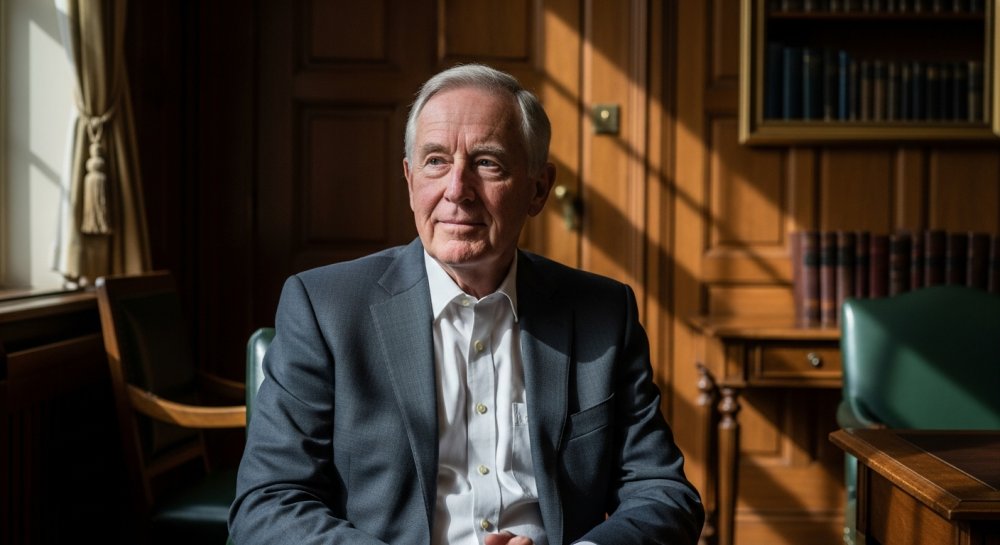
A prominent British businessman and member of the House of Lords has opened up about the deeper motivation behind his entrepreneurial success, pointing not to personal enrichment but to the Great Commission. Lord Edmiston’s candid reflections offer a powerful counter-narrative to the secular business world’s focus on profit maximization.
In his testimony, Lord Edmiston made clear that his approach to commerce has always been rooted in something far greater than building a financial empire. The peer explained that evangelism serves as the foundational driver of his work, with wealth creation functioning as a means rather than an end.
“I was driven by evangelism, not the creation of wealth for its own sake,” Lord Edmiston stated, articulating a philosophy that places Kingdom work at the center of business activity.
This perspective reflects a biblical understanding of stewardship—the idea that Christians are caretakers of God’s resources, responsible for using them wisely to advance His purposes. Rather than hoarding wealth or pursuing luxury, Lord Edmiston sees his business success as a divine trust, one that carries with it both opportunity and obligation.
His focus on global mission work demonstrates how business acumen and faithful stewardship can combine to support the spread of Christianity around the world. In an era when many corporations embrace progressive ideologies that conflict with traditional Christian values, Lord Edmiston’s testimony stands as a reminder that commerce can serve God’s kingdom.
The peer’s comments also speak to a growing movement among Christian entrepreneurs who reject the purely materialistic metrics of success. Instead of measuring achievement solely by stock prices or market share, these business leaders evaluate their work by its impact on eternal matters—souls saved, churches planted, and communities transformed by the Gospel.
For American Christians watching cultural battles unfold in the corporate sphere, Lord Edmiston’s example offers encouragement. It shows that believers in positions of influence can maintain their faith convictions while achieving professional success, and that business platforms can become launching pads for ministry.
His emphasis on evangelism over enrichment challenges the popular notion that faith and business must remain separate. Instead, it suggests that when properly understood, entrepreneurship can become an extension of Christian witness—a way to generate resources that fuel the Great Commission while modeling integrity and biblical values in the marketplace.
The British peer’s testimony arrives at a crucial moment when many wonder whether traditional Christian values can survive in modern commerce. His answer is clear: not only can they survive, but when faithfully applied, they can transform business into mission.
Let us know what you think, please share your thoughts in the comments below.
Faith Facts
- Fulani terrorists attacked two predominantly Christian villages in Nigeria’s Plateau state days before Easter
- Nigerian church leaders issued an urgent appeal for international help to protect persecuted Christians
- President of Nigeria pledged to curb escalating violence against Christian communities
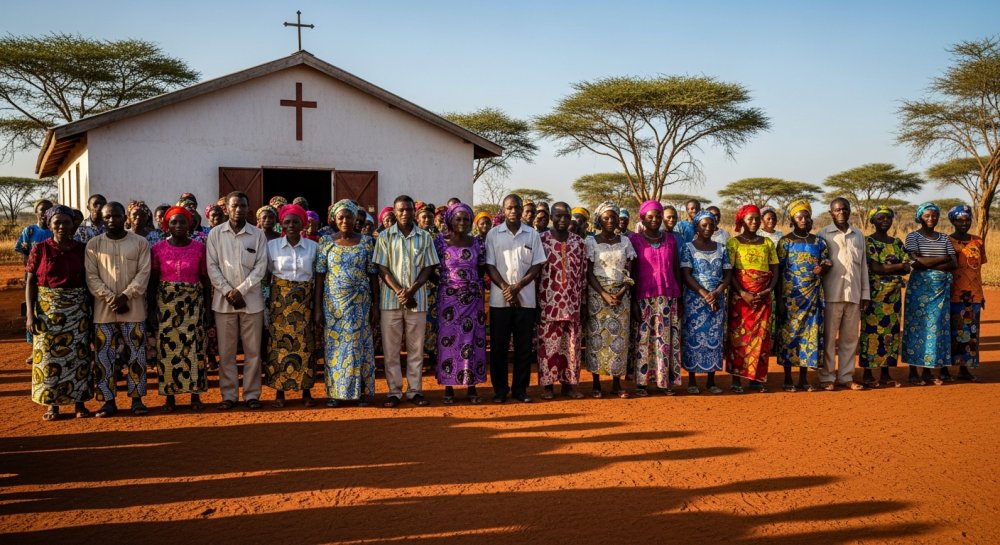
In the shadow of brutal attacks on Christian communities, church leaders in Nigeria are making an urgent Easter appeal for international assistance as persecution intensifies. The plea comes just days after Fulani terrorists launched deadly assaults on two predominantly Christian villages in Plateau state, a region that has become a focal point of religious violence.
The Nigerian president has pledged to take action against the escalating violence targeting Christian populations. However, church leaders remain concerned about the ongoing threats facing believers throughout the country.
Nigeria ranks among the most dangerous places in the world for Christians, with thousands killed in recent years. Fulani militants, often described as herdsmen, have carried out systematic attacks on Christian farming communities across the Middle Belt and northern regions of the country.
The timing of these latest attacks—occurring during the most sacred season of the Christian calendar—underscores the intentional targeting of believers. Church leaders are calling on the international community to recognize the severity of the crisis and provide tangible support for protection and humanitarian relief.
Christian advocacy organizations have long documented the pattern of violence against Nigerian believers, noting that many attacks go unreported or are mischaracterized as ethnic conflicts rather than religious persecution. The reality on the ground reveals a coordinated campaign against Christian communities that threatens their very existence in ancestral homelands.
The Easter appeal represents a desperate cry for help from a church under siege. Nigerian Christians continue to demonstrate remarkable faith and resilience despite facing existential threats, but they cannot stand alone against well-armed terrorist groups.
As American Christians celebrate Easter in safety and freedom, the plight of Nigerian believers serves as a sobering reminder of the cost of discipleship in many parts of the world. The call for help demands a response rooted in Christian solidarity and the defense of religious liberty as a fundamental human right.
Let us know what you think, please share your thoughts in the comments below.

Faith Facts
- Tucker Carlson’s network sparked theological controversy with claims about Islamic views of Jesus Christ that diverge from core Christian doctrine
- Islamic theology recognizes Jesus as a prophet but explicitly denies His divinity, death on the cross, and resurrection — the foundations of Christian faith
- Christian leaders and scholars swiftly corrected the theological confusion, emphasizing the fundamental differences between Christianity and Islam regarding Christ’s identity and saving work
The Tucker Carlson Network ignited a theological firestorm this week after posting claims on social media that Muslims “love and revere” Jesus Christ in a manner comparable to Christian belief. The post prompted immediate pushback from Christian scholars, pastors, and theologians who stressed the irreconcilable differences between Islamic and Christian teachings about the person and work of Jesus.
The controversial statement appeared on X (formerly Twitter) and quickly drew attention from believers concerned about theological accuracy. While Islam does mention Jesus — called Isa in Arabic — Islamic teaching fundamentally contradicts core Christian doctrine about Christ’s identity and mission.
Christian apologists and teachers were quick to clarify the crucial distinctions. Islamic theology teaches that Jesus was merely a prophet, denying His divinity, His death by crucifixion, His resurrection from the dead, and His role as the sole mediator between God and humanity. These denials strike at the heart of Christian faith, which confesses Jesus as fully God and fully man, crucified for our sins and raised for our justification.
The Quran explicitly states that Jesus was not crucified and did not die on the cross — a teaching that directly contradicts the biblical account and removes the foundation of Christian salvation. Without Christ’s atoning death and bodily resurrection, there is no gospel, no forgiveness of sins, and no hope of eternal life.
Scripture is clear about Jesus’s unique identity and saving work. The Apostle John wrote that anyone who denies the Son does not have the Father, and that Jesus Christ is the only name under heaven by which we must be saved. The theological gulf between Christianity and Islam on the person of Christ is not a minor disagreement but a fundamental divide that cannot be bridged by well-meaning but inaccurate statements.
The controversy highlights the importance of theological precision, especially in an era of religious pluralism and cultural confusion. While Christians are called to love all people, including Muslims, and to engage in respectful dialogue, truth and clarity about the gospel cannot be sacrificed in the name of interfaith harmony.
Many Christian leaders expressed concern that the imprecise language could confuse believers or create false common ground where none exists. The faith once delivered to the saints must be guarded carefully, and the uniqueness of Christ’s person and work must be proclaimed without compromise.
As America faces increasing religious diversity and cultural pressure to minimize theological differences, the church must remain steadfast in proclaiming the biblical truth about Jesus Christ. He is not merely one prophet among many, but the eternal Son of God, the way, the truth, and the life — and no one comes to the Father except through Him.
Let us know what you think, please share your thoughts in the comments below.


-

 Self-Reliance1 year ago
Trump’s Bold Move Uncovers Massive Social Security Fraud
-

 Faith1 year ago
New Clues Emerge in Noah’s Ark Mystery
-

 News1 year ago
Governor Walz’s Rhetoric Sparks National Controversy
-

 News1 year ago
Mel Gibson’s ‘The Passion of the Christ’ Sequel Title Announced
-

 Family1 year ago
Texas Lawmaker Targets Furries in Schools
-

 Freedom1 year ago
Maine Lawmaker Challenges Sports Fairness Controversy
-

 Family11 months ago
Canada’s Controversial Policy Sparks Ethical Debate
-
Faith5 months ago
Congress Hears Pleas for Nigerian Christians