
Faith
Government Launches £92 Million Faith Preservation Initiative

Faith Facts
- The UK government has pledged £92 million through a new Places of Worship Renewal Fund to help maintain church buildings and keep them accessible to communities
- Many churches across Britain are struggling with the financial burden of building maintenance while simultaneously serving as vital community service hubs
- Baroness Twycross emphasizes that this funding aims to preserve houses of worship while ensuring they remain open and active in serving their communities
Churches throughout the United Kingdom are facing a mounting crisis as the costs of maintaining historic buildings threaten their ability to serve their communities. The government has stepped in with a comprehensive solution designed to preserve these sacred spaces for future generations.
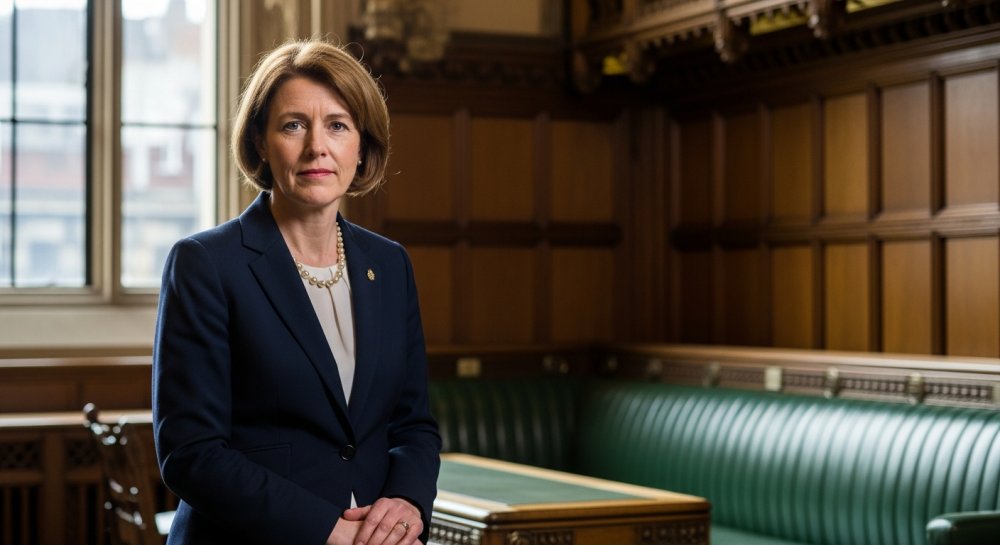
Baroness Twycross has announced a £92 million Places of Worship Renewal Fund aimed at keeping church roofs watertight and doors open to the public. The initiative recognizes the dual role these buildings play as both houses of worship and community service centers.
“Across the country, churches of all shapes and sizes are providing vital community services,” Baroness Twycross explained. “But for many, the financial burden of maintaining their buildings is creating a crisis.”
The funding addresses a critical need in communities where churches serve far beyond Sunday services. These sacred spaces often host food banks, youth programs, senior activities, and other essential community functions that support families and strengthen neighborhoods.
Many congregations have struggled to balance their mission of service with the escalating costs of structural repairs, heating, and general upkeep of buildings that are often centuries old. The maintenance requirements for historic church architecture can be particularly demanding, requiring specialized expertise and materials.
The Places of Worship Renewal Fund represents a recognition by government officials that preserving religious heritage serves the broader public interest. These buildings stand as testaments to faith and community resilience across generations.
Church leaders have welcomed the initiative as a lifeline for congregations that have been forced to choose between critical repairs and ministry programs. The funding is expected to help preserve not just the physical structures but the vital community services they enable.
The program aims to ensure that churches can continue their mission without the constant threat of closure due to building deterioration. By addressing maintenance needs, the fund allows congregations to focus on their primary calling of spiritual and community service.
This investment in places of worship reflects an understanding that these institutions form the backbone of many communities, providing stability, support, and moral guidance. The preservation of church buildings safeguards spaces where faith, tradition, and community service intersect.
Let us know what you think, please share your thoughts in the comments below.

Faith Facts
- The Coventry Hills Church of Christ and Chesmont Church of Christ merged to become Cornerstone Church of Christ in Pottstown, Pennsylvania, after decades of separation following an early 1990s split.
- Coventry Hills had a building but only 30 members, while Chesmont had 110 attendees, elders, and a full-time minister—creating complementary strengths for a unified congregation.
- Members describe the merger as “God’s timing,” emphasizing healing, humility, and a shared commitment to scriptural unity and evangelism in their community.
A match made in heaven. In God’s timing.
That’s how members and leaders alike characterize the merger of the Coventry Hills Church of Christ and the Chesmont Church of Christ. After decades apart, the congregations—halfway between the high-rises of Philadelphia and the horse-drawn buggies of Amish country—have joined together to become the Cornerstone Church of Christ.
“It feels like the work of the Lord,” said Christine Ober, 36, wife of Caleb and mother of 8-month-old Mabel May.
The Obers were among the few young families at Coventry Hills, which averaged Sunday attendance of roughly 30. Chesmont, which met at a Christian school 6.5 miles away, drew about 110 men, women and children on a typical Lord’s Day.
“The members that were here at Coventry Hills were willing to come under the leadership at Chesmont,” said Josh Dove, who was one of three elders at Chesmont and now serves in that role for Cornerstone.
“It just seemed like it was God leading us that way.”
The pieces fit. Coventry Hills had a church building.
Chesmont had a full-time preacher and elders. Both congregations had members eager to serve the Lord and reach the lost.
Together, members and leaders believe, the new intergenerational body offers a brighter future.
“When God’s people do God’s things in God’s ways, we let all the extra stuff go, and we can dwell in unity,” said minister Thomas Wise, pointing to the apostle Paul’s admonition in Philippians 2:3-4 to do nothing out of selfish ambition or vain conceit but in humility value others above yourselves.
‘Wounds Were Deep’
In the case of Coventry Hills and Chesmont, “all the extra stuff” included trauma, hurt feelings and lingering concerns about past differences that caused a church split in the early 1990s.
Elder Rick Elam came to the Chesmont church with his wife, Kathy, in 1996 after the split occurred, so he has no firsthand knowledge of what transpired. “But I know that those wounds were deep and painful for those involved,” Elam said.
“This has been a big healing process,” he said of the merger, which became official earlier this year.
“People have joy here.”
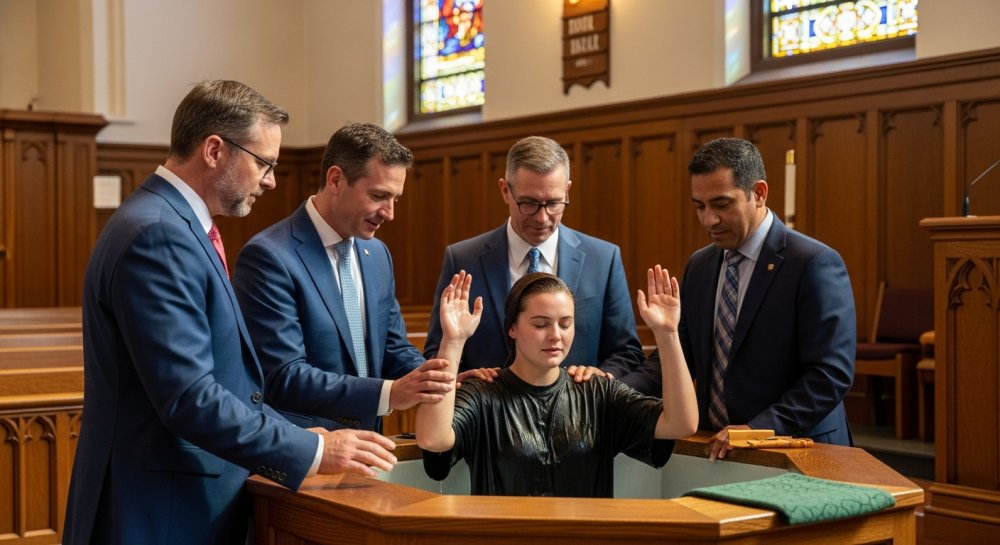
Over the years, the frosty relationship between the congregations in Pottstown—a town of 23,000 about 40 miles northwest of Philadelphia—had thawed. Chesmont had used the Coventry Hills baptistery from time to time since the school didn’t have one.
Members of both congregations had enjoyed hymn singings together.
“Coventry Hills was dying. That was true,” Wise said.
“At Chesmont, we had just grown stagnant in the environment we were in. The elders recognized it, and for (the merger) to work, each group of people needed to see who they are and where they’re at clearly,” the minister added.
“And I believe that starts with God’s authority … and will we choose to put others above ourself?”
Coventry Hills members had a knack for greeting visitors and making them feel welcome, Wise said. Chesmont members were known for engaging and teaching young people and for their volunteer spirit, he said.
That spirit has come in handy as the merged body works to refurbish the church building, which was constructed in 1973 and could use a few improvements, such as new carpeting. In becoming one, the previously separate congregations have brought those talents together.
‘God’s Timing’
Talk of the possible merger began organically—as Wise remembers it—with Chesmont elder Jeff Custer, who was preaching at Coventry Hills once a month.
“Jeff made some kind of comment in a sermon about not knowing why the churches weren’t together,” Wise said.
“And then one of the younger Coventry Hills members was inspired by it and made up a survey about merging and got the ball rolling.”
The merger possibility had prompted conversation in the past, but this time the idea gained traction.
“It definitely seems like God’s timing is always the right timing,” Wise said.
Emmitt Channell, 90, has preached for more than 70 years. Channell said he and other Coventry Hills members welcomed the latest overture.
“We were down to about 20 or 25 members at that point,” he said.
“We had a lot of deaths, and a lot of people moved back to the South, so we were very glad to have new life. So it’s been really great.”
Wise, 34, recalls that he was 12 years old when he was baptized—by Channell.
“It’s crazy how the circle goes,” said Wise, who later moved away from Pennsylvania before returning five years ago to serve as Chesmont’s preacher.
“It’s great to see old faces, like Emmitt, whom I’ve known my whole life.”
Channell emphasized that brothers and sisters in Christ “need to be working together and healing all kinds of personal problems that we’ve had.
“Christ is our focus, and that’s where we should put our efforts in working together for the Lord,” added the retired minister, whose late wife, Betty, once served as the secretary for Olan Hicks, who founded The Christian Chronicle in 1943.
‘Don’t Hold Grudges’
Nancy McGrady, who attended Coventry Hills in past decades, said she left the church for “a very long time” because she didn’t feel like she belonged. But the merger inspired her to return to worship.
“When Cornerstone came together, it was amazing for me,” said McGrady, 52.
“I just love being here. … It’s everything that I’ve ever dreamed for a church family to be.”
Ken Anderson, 71, was a part of the Coventry Hills congregation before the merger.
“I was always taught that you don’t hold grudges,” Anderson said.
“You just prayed that things will change. And I know it took a lot of years, but we prayed about it, and we’re all together as a family.”
A Building to Call Their Own
Coventry Hills served as the original home for Coventry Christian Schools, which has roots dating back to 1984 and has grown to more than 630 students in prekindergarten through 12th grade. By 1993, Coventry Christian moved to a new location, and the Chesmont church began meeting in a school auditorium.
Matt Richard—now a deacon at Cornerstone after serving in that role at Chesmont—attended Coventry Hills in the early 2000s.
“The funny thing was that originally, the church here would talk about that church being progressive over there,” Richard said.
But then Richard visited Chesmont when Coventry Hills canceled services during an ice storm. “We wound up going over there, and we were like, ‘There’s nothing crazy going on,'” he said.
“So then one of the ladies invited my wife, Meredith, to a Bible study, and we started visiting with Chesmont. And then we just decided to change churches.”
Now the deacon and his family—including two young children—are back worshiping in the Coventry Hills building.
“We were definitely excited about having our own space,” said Richard, who is also the facilities supervisor at nearby Camp Manatawany, which is associated with Churches of Christ. “It’s always hard when you’re a tenant in a building—we were renting from the Christian school—because nothing’s your own as a congregation,” Richard added.
“You always had to worry about what the kids were doing after church.”
Another deacon, Daniel Niehls, echoed Richard.
“If you’re a tenant anywhere, if you’re renting, you’re kind of limited with what you can do,” Niehls said.
“So it’s just nice, and it feels more like a church, when you have your own building. So that’s really been a benefit and blessing.
“Unfortunately, not all of my family decided to come join us here, so that’s been a little bit of a challenge at times,” he added.
“But we’re very happy here. We’re excited to be here.”
‘A Pleasant View’
About one-third of the previous Chesmont congregation did not make the move to Coventry Hills. Those members, including Mark Niehls, Daniel’s uncle and a founder of Coventry Christian Schools, formed the new Pleasantview Church of Christ, which meets at the school.
“Those of us that are still meeting on the school’s campus have felt that our initial vision and mission for the church to reach out and evangelize in our community is still very valid and needed,” said Mark Niehls, the school’s president emeritus.
Coventry Christian draws students from about 70 churches in and around Pottstown, he said. Only a handful of those congregations are Churches of Christ.
“The Pleasantview Church of Christ that’s meeting on the school’s campus sees that as an opportunity to reach those people who are maybe not really churched,” Mark Niehls said.
“They may be on an attendance or membership role somewhere, but they don’t regularly attend, or they’re dissatisfied with where they’re at.”
Mark Niehls declined to discuss the merger of Coventry Hills and Chesmont. “We’re still meeting on the school’s campus on Pleasantview Road,” he said, “and we’ve kind of adopted the motto that we’re going to have a pleasant view.”
Elam, one of Cornerstone’s three elders, said he doesn’t believe any hard feelings exist between Cornerstone and Pleasantview.
“Maybe at the outset, but those seem to have calmed down,” Elam said.
“We all feel like we’re wishing them well and godspeed, and they’re doing the same for us. We’re praying for each other.”
Let us know what you think, please share your thoughts in the comments below.
Faith Facts
- Pope Leo XIV released his first encyclical letter addressing the spiritual dangers of artificial intelligence replacing human relationships and dignity.
- The pontiff argues that Christianity offers a superior understanding of human existence that machines can never replicate.
- The encyclical emphasizes that authentic human connection and divine purpose cannot be substituted by technological advancement.
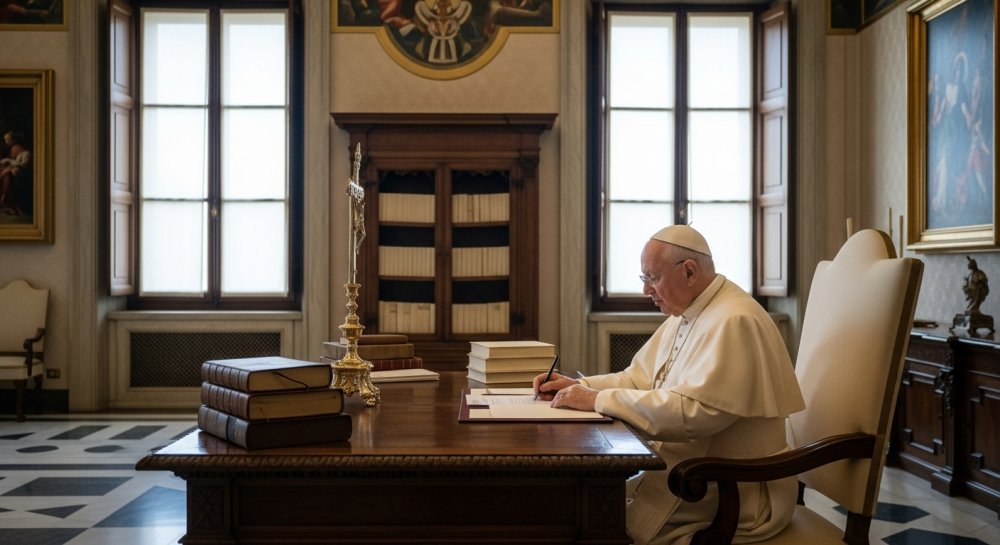
In his inaugural encyclical letter, Pope Leo XIV has issued a powerful warning about the spiritual and relational dangers posed by artificial intelligence. The Pope’s message comes at a critical time when technology increasingly dominates daily life and threatens to reshape fundamental aspects of human existence.
The Holy Father’s letter directly challenges the notion that AI can serve as an adequate substitute for genuine human relationships or the divine connection between God and His creation. His words serve as a timely reminder that no technological advancement, no matter how sophisticated, can replace the inherent dignity that comes from being made in the image of God.
According to the encyclical, artificial intelligence fundamentally undermines two pillars of human flourishing: authentic relationships and human dignity. These concerns reflect growing anxieties among faith communities about technology’s role in modern society and its potential to distance people from both their Creator and one another.
The Pope’s message resonates deeply with Christian conservatives who have long raised concerns about society’s increasing dependence on technology at the expense of traditional values and human connection. As families spend more time interacting with screens than with each other, and as AI systems are increasingly trusted with decisions that require wisdom and moral judgment, the Pope’s warnings take on added urgency.
Pope Leo XIV presents Christianity as offering a more complete and compelling understanding of human existence than any machine learning algorithm or artificial intelligence system could provide. This argument centers on the belief that humans possess souls, free will, and an eternal destiny—qualities that transcend mere computation and data processing.
The encyclical arrives amid rapid technological changes that are transforming society in unprecedented ways. From AI chatbots replacing human customer service representatives to algorithms making hiring decisions, the encroachment of artificial intelligence into traditionally human domains raises profound questions about the future of work, relationships, and human purpose.
For Christian Americans, the Pope’s message serves as an important call to maintain proper priorities in an increasingly digital age. While technology can serve as a useful tool, it must never become an idol that displaces God or diminishes the value of human life and relationships that He established.
The letter emphasizes that authentic human connection—rooted in love, empathy, and shared experiences—cannot be replicated by machines, no matter how advanced they become. This understanding aligns with biblical teaching that humans are created for relationship, first with God and then with one another, in ways that reflect the Triune nature of the Godhead itself.
Pope Leo XIV’s encyclical also addresses the matter of human dignity, which Christianity teaches is inherent and God-given rather than earned or assigned. This stands in stark contrast to utilitarian views that might assess human value based on productivity, capability, or usefulness—metrics that AI systems might optimize but can never truly understand.
The timing of this encyclical reflects the Church’s recognition that rapid technological advancement requires clear moral and spiritual guidance. As AI continues to develop capabilities that once seemed like science fiction, questions about the nature of consciousness, personhood, and purpose become increasingly urgent.
For believers who hold to traditional Christian values, the Pope’s message affirms what Scripture has always taught: that humans are fearfully and wonderfully made, created with purpose and dignity that no machine can possess. This truth remains constant regardless of technological progress.
The encyclical serves as a call to Christians to remain vigilant about protecting what makes us distinctly human—our capacity for love, moral reasoning, creativity, and relationship with the Divine. These qualities reflect our Creator and set us apart from even the most sophisticated artificial intelligence systems.
As American families navigate an increasingly digital world, Pope Leo XIV’s words offer important wisdom about maintaining proper boundaries with technology while preserving the relationships and values that truly matter. His message reminds us that some things—faith, family, and human dignity—must never be outsourced to machines.
Let us know what you think, please share your thoughts in the comments below.
Faith Facts
- Cancer diagnosis became a divine classroom, teaching profound lessons about God’s sovereignty and control over life’s circumstances
- Serious illness reveals the limitations of human control and the depth of trust required in God’s perfect plan
- Faith communities continue to discover that suffering can strengthen rather than weaken relationship with Christ
When faced with a life-threatening diagnosis, believers often discover truths about God’s character that years of comfortable faith never revealed. The journey through cancer treatment strips away illusions of control and forces a confrontation with eternal questions that many prefer to leave theoretical.
God’s sovereignty takes on new meaning when medical reports replace daily routines and treatment schedules override personal plans. The predictability we crave from our Creator often dissolves in hospital corridors, revealing instead a divine wisdom that transcends human understanding.
Cancer does not discriminate between the faithful and faithless, yet for those who walk with Christ, the disease becomes an unexpected teacher. The sovereignty of God—His complete authority and control over all circumstances—moves from theological concept to lived reality when faced with mortality.
Many Christians spend years studying Scripture, attending services, and building their faith on solid ground. But nothing compares to the education that comes through suffering. The Book of Job reminds us that God’s ways are higher than our ways, and His thoughts higher than our thoughts.
In the Christian walk, we often seek predictability from God—a formula that guarantees certain outcomes if we follow specific steps. Cancer shatters that misconception. It forces believers to acknowledge that divine sovereignty means God’s plans may not align with our preferences, yet remain perfectly good.
The American church sometimes promotes a prosperity theology that promises health and wealth to the faithful. Cancer exposes this as false teaching. True biblical faith acknowledges that God permits suffering for purposes we may never fully understand in this lifetime.
Through the valleys of chemotherapy, radiation, and uncertain prognoses, believers discover that God’s sovereignty is not about giving us what we want when we want it. Instead, it’s about trusting that He works all things together for good for those who love Him and are called according to His purpose.
Traditional Christian teaching has always affirmed that God uses trials to refine faith, much as fire refines gold. This ancient wisdom finds fresh validation in modern cancer wards where believers cling to eternal promises while facing temporal uncertainties.
The sovereignty revealed through serious illness teaches that God’s control extends beyond comfortable circumstances. He remains Lord in hospital rooms, during difficult treatments, and through outcomes that may not match our prayers. This reality either strengthens genuine faith or exposes faith that was merely transactional.
For those who emerge from cancer—whether healed or still fighting—the experience often reshapes their entire understanding of divine providence. They join the ranks of biblical saints who learned through hardship that God’s faithfulness does not depend on circumstance but remains constant through every storm.
The lessons cancer teaches about sovereignty challenge modern Christianity’s tendency toward shallow optimism. They call believers back to a robust faith that trusts God even when understanding fails, that worships even in pain, and that acknowledges His lordship regardless of outcomes.
Let us know what you think, please share your thoughts in the comments below.


-

 Self-Reliance1 year ago
Trump’s Bold Move Uncovers Massive Social Security Fraud
-

 Faith1 year ago
New Clues Emerge in Noah’s Ark Mystery
-

 News1 year ago
Governor Walz’s Rhetoric Sparks National Controversy
-

 News1 year ago
Mel Gibson’s ‘The Passion of the Christ’ Sequel Title Announced
-

 Family1 year ago
Texas Lawmaker Targets Furries in Schools
-

 Freedom1 year ago
Maine Lawmaker Challenges Sports Fairness Controversy
-

 Family1 year ago
Canada’s Controversial Policy Sparks Ethical Debate
-
Faith6 months ago
Congress Hears Pleas for Nigerian Christians