
Faith
Christian Pastor Remains in Exile as Religious Prosecution Intensifies in India

Faith Facts
- A Christian pastor in Punjab, India remains unable to return home due to abuse of blasphemy-style legislation targeting religious minorities
- The pastor’s church has been forcibly closed under the controversial ‘sacrilege law’ designed to prosecute those accused of ‘outraging religious feelings’
- Religious freedom advocates warn the legislation is being weaponized against Christians and other minority faith communities throughout the region
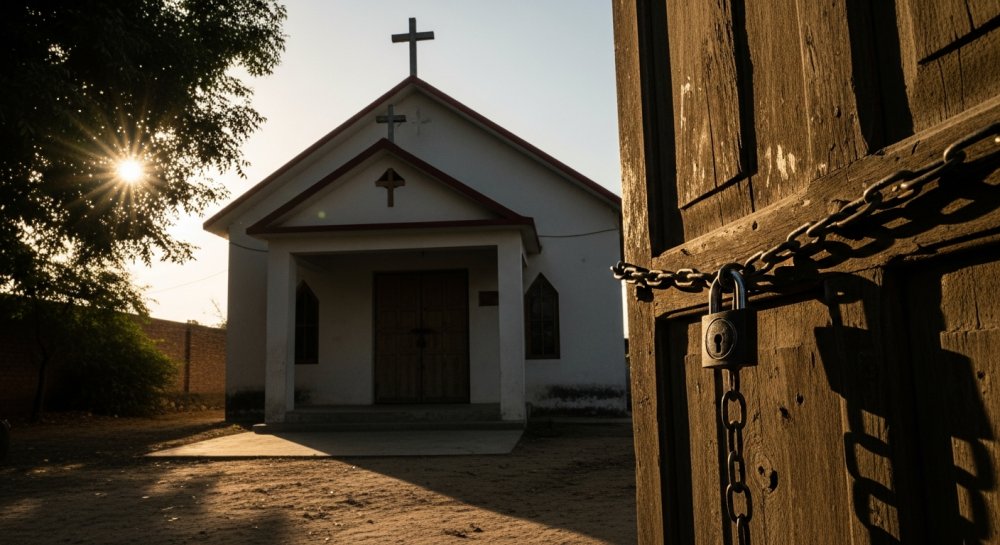
In Punjab state, India, a Christian pastor continues to live in forced exile, barred from returning to his home and congregation. His church remains shuttered, a victim of what religious freedom advocates are calling the deliberate misuse of India’s so-called “sacrilege law.”
The legislation, officially designed to prosecute individuals for “outraging religious feelings,” has become a tool of persecution against Christian communities. Pastors and believers across the region face false accusations under the statute, which carries severe penalties and social consequences.
The unnamed pastor’s case represents a growing pattern of religious discrimination in India, where Christians—who comprise roughly 2% of the population—increasingly face hostility from extremist elements. His inability to return home underscores the real-world impact of laws that, while neutral on their face, are applied selectively against minority faiths.
The forced closure of his church denies his congregation their fundamental right to worship freely. For believers in the region, such closures send a chilling message: practice your faith at your own risk.
India’s Constitution guarantees religious freedom, yet the implementation of laws like Punjab’s sacrilege statute reveals a troubling gap between legal protections on paper and the lived reality of Christians on the ground. When authorities can shut down houses of worship and exile pastors based on vague accusations of offending religious sensibilities, constitutional guarantees ring hollow.
Religious freedom organizations have repeatedly called attention to India’s deteriorating climate for Christians and other religious minorities. The misuse of blasphemy-style laws represents one of the most effective tactics employed to silence Christian witness and marginalize believing communities.
The pastor’s continued exile serves as a reminder that persecution of Christians is not confined to distant headlines—it affects real families, real congregations, and the real ability of believers to gather in Jesus’ name. His empty pulpit and locked church doors testify to the cost of faith in regions where religious liberty is under assault.
American Christians are called to remember and pray for brothers and sisters facing persecution worldwide. The Book of Hebrews instructs believers to “remember those in prison, as if you were there yourself. Remember also those being mistreated, as if you felt their pain in your own bodies.”
As India’s Christian community faces mounting pressure, the international faith community must raise its voice in defense of religious freedom. Silence in the face of persecution makes us complicit in the suffering of our fellow believers.
Let us know what you think, please share your thoughts in the comments below.


Faith Facts
- An Eastern Orthodox priest has warned that pornography is systematically warping the identities of young people across America
- The priest stated his ministry experience reveals the crisis affects “all men and most women” in society
- The warning was delivered during a recent interview with media commentator Tucker Carlson
An Eastern Orthodox priest is sounding the alarm about a devastating moral crisis he says is reshaping the identity and development of an entire generation of American children. Speaking candidly during an interview with Tucker Carlson, the clergyman issued a stark warning based on his years of pastoral ministry experience.
The priest’s observations point to a pervasive problem that crosses all demographic boundaries. According to his ministry work, the epidemic affects “all men and most women” in contemporary society, suggesting the scope of the crisis extends far beyond what many families may realize.
Outside of any of the other controversies, this line from Father Stephen De Young to Tucker Carlson on the pornography problem is massive. “All men and most women.” pic.twitter.com/rmPCRPBukN
— Gabriel J. Benton ?????????? (@OrthodoxPole81) May 30, 2026
His comments arrive at a time when faith leaders and family advocates have grown increasingly concerned about the accessibility of explicit material to children through smartphones and internet-connected devices. Christian parents and communities have long warned that early exposure to pornographic content can fundamentally alter a child’s understanding of human relationships, sexuality, and God’s design for intimacy within marriage.
The interview with Carlson provided a platform for discussing what many Christian conservatives view as one of the most pressing moral challenges facing American families today. The priest’s willingness to speak plainly about the issue reflects a growing recognition among religious leaders that silence on difficult topics serves no one, especially not the children who need protection and guidance.
Traditional Christian teaching holds that pornography degrades the sacred nature of human sexuality and violates the biblical principle that intimate relations are reserved for the covenant of marriage between one man and one woman. Faith communities have emphasized that exposure to such material, particularly during formative years, can create distorted expectations and undermine the development of healthy, God-honoring relationships.
The priest’s assessment that the problem afflicts nearly all men and most women suggests the challenge extends beyond youth to encompass adults who may struggle with habits formed in earlier years. This reality underscores the need for churches and ministries to provide resources for healing and restoration rooted in scriptural truth.
For Christian families, the warning serves as a reminder of the importance of vigilance in protecting children from corrupting influences while also creating open lines of communication about God’s design for purity and holiness. Many faith-based organizations have developed resources to help parents navigate these difficult conversations with age-appropriate wisdom.
The interview highlights the ongoing cultural battle between traditional values and the normalization of explicit content in mainstream society. Christian conservatives have consistently argued that the widespread availability of pornography represents not just a personal vice but a societal poison that undermines marriage, family stability, and the proper formation of young people.
Let us know what you think, please share your thoughts in the comments below.
Faith Facts
- Al Mohler, president of Southern Baptist Theological Seminary, addresses health concerns following recent public appearances
- The influential Christian leader affirms medical episodes are not life-threatening while sharing spiritual perspective on trials
- Mohler frames his health challenges as an opportunity for sanctification and spiritual growth
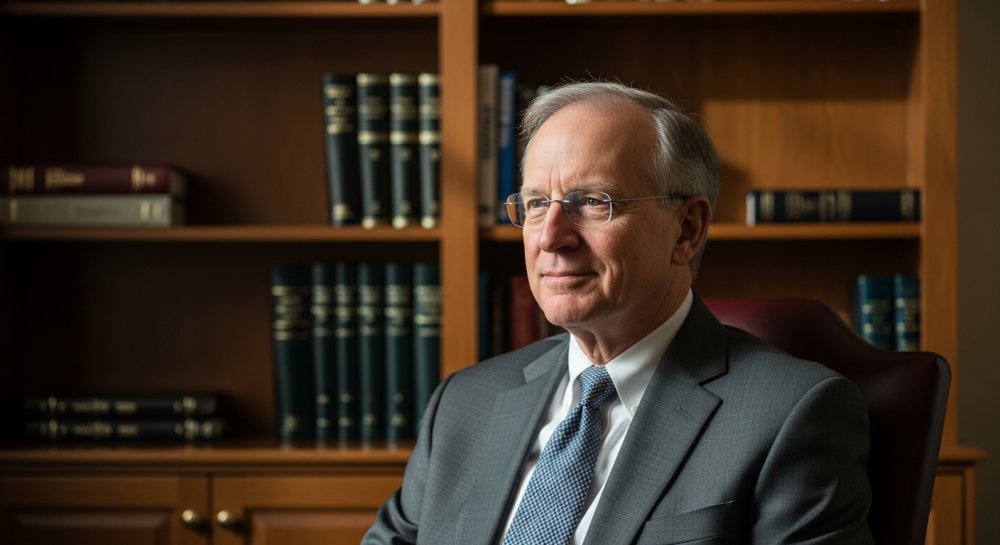
Al Mohler, president of the Southern Baptist Theological Seminary, is addressing growing concerns about his health following recent public appearances that prompted questions from supporters and the broader Christian community.
The influential seminary leader, known for his theological scholarship and cultural commentary, has reassured his audience that while he has faced medical challenges, the episodes are not life-threatening. His candid response comes as concerned Christians reached out after noticing changes in recent public engagements.
Mohler’s perspective on his health struggles reflects a deeply Christian understanding of suffering and trials. Rather than viewing his medical issues as merely physical setbacks, he has framed them within the context of God’s sovereign purpose and sanctifying work.
“God means this for my sanctification,” Mohler stated, demonstrating the biblical perspective that trials serve to refine and strengthen believers’ faith.
This response echoes the teaching found throughout Scripture that God uses difficulties to shape His people’s character and draw them closer to Him. The apostle Paul wrote of his own physical affliction as a means of keeping him humble and dependent on God’s grace.
Mohler’s transparency about his health challenges while maintaining a focus on spiritual growth offers an example to Christians navigating their own difficulties. His willingness to address concerns publicly while pointing to God’s purposes demonstrates leadership rooted in biblical truth rather than image management.
The Southern Baptist Theological Seminary, one of the largest seminaries in the world, continues its mission under Mohler’s leadership. His influence extends beyond the seminary through “The Briefing,” his daily podcast analyzing news and culture from a Christian worldview, and his writing on theological and cultural issues.
The outpouring of concern from the Christian community reflects Mohler’s significant impact on evangelical thought and his role as a trusted voice on matters of faith, theology, and cultural engagement. His commitment to continuing his work while addressing health challenges demonstrates the perseverance that marks faithful Christian service.
For believers, Mohler’s situation serves as a reminder that even leaders face trials and that viewing difficulties through the lens of God’s sanctifying work transforms how Christians respond to adversity. His example encourages others to seek spiritual growth through their own challenges rather than simply asking for their removal.
Let us know what you think, please share your thoughts in the comments below.
Faith Facts
- A Christian pastor in Punjab, India remains unable to return home after being targeted under a law prohibiting ‘outraging religious feelings’
- The pastor’s church has been forcibly shut down as authorities continue to enforce the controversial statute
- Religious freedom advocates warn the law is being systematically misused to persecute Christian minorities in the region
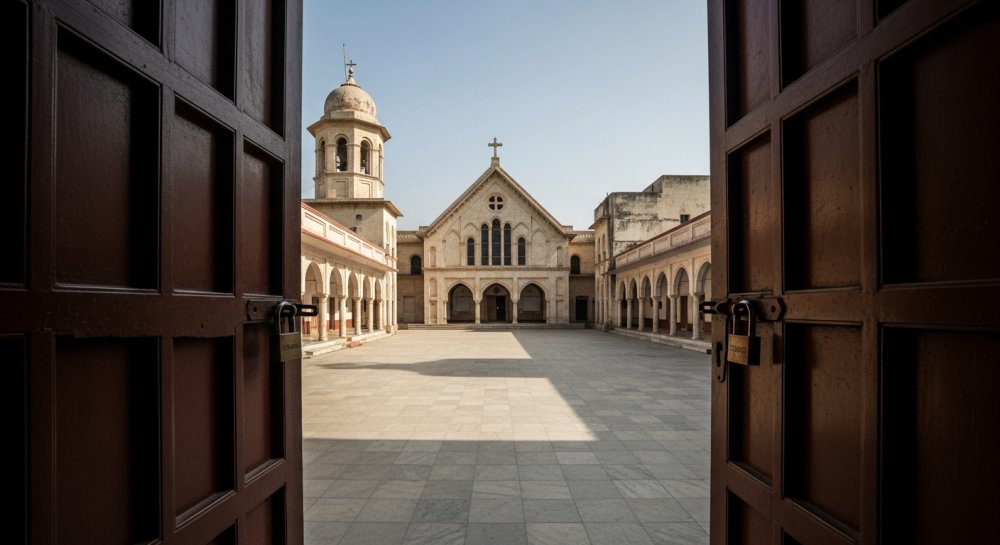
In India’s Punjab state, a Christian pastor remains in exile from his own home while his church stands locked and empty. The cause of his displacement is not violence or natural disaster, but a law ostensibly designed to protect religious sentiments that has instead become a weapon against religious minorities.
The law in question prohibits actions that “outrage religious feelings,” a broad and subjective standard that has opened the door to abuse. For this pastor, merely practicing his Christian faith and ministering to his congregation has resulted in accusations that landed him on the wrong side of authorities.
The situation highlights a growing concern among Christian communities in India, where laws intended to maintain religious harmony are increasingly twisted to silence and intimidate believers. The pastor cannot safely return to his home, and his congregation has been scattered, their place of worship sealed by order of local officials.
Punjab, a state with a significant Sikh majority, has historically been more tolerant of religious diversity than some other Indian states. However, the misapplication of anti-blasphemy and religious sentiment laws has created an environment where Christians face legal jeopardy for the simple act of worship and evangelism.
Religious freedom advocates have long warned that vaguely worded laws protecting “religious feelings” create opportunities for discrimination. When any expression of faith can be construed as offensive to another religion’s adherents, minority faiths become vulnerable to the whims of local authorities and majority populations.
The pastor’s case is not isolated. Across India, Christians have faced increasing pressure under various legal pretexts, from anti-conversion laws to provisions against hurting religious sentiments. These laws, while facially neutral, are disproportionately enforced against Christian pastors and evangelists.
For American Christians who cherish religious liberty as a foundational right, the situation in Punjab serves as a sobering reminder of how easily freedom of worship can be eroded. What begins as a restriction on “offensive” speech can quickly become a tool for silencing unpopular or minority faiths entirely.
The Indian Constitution guarantees freedom of religion, including the right to profess, practice, and propagate one’s faith. Yet in practice, Christians in states like Punjab find these constitutional protections offer little shelter when local laws and enforcement mechanisms are used against them.
As this pastor remains separated from his home and his flock, his situation calls for international attention and prayer. The body of Christ worldwide must stand with persecuted believers who face legal harassment simply for following their calling to preach the Gospel and shepherd God’s people.
Let us know what you think, please share your thoughts in the comments below.


-

 Self-Reliance1 year ago
Trump’s Bold Move Uncovers Massive Social Security Fraud
-

 Faith1 year ago
New Clues Emerge in Noah’s Ark Mystery
-

 News1 year ago
Governor Walz’s Rhetoric Sparks National Controversy
-

 News1 year ago
Mel Gibson’s ‘The Passion of the Christ’ Sequel Title Announced
-

 Family1 year ago
Texas Lawmaker Targets Furries in Schools
-

 Freedom1 year ago
Maine Lawmaker Challenges Sports Fairness Controversy
-

 Family1 year ago
Canada’s Controversial Policy Sparks Ethical Debate
-
Faith6 months ago
Congress Hears Pleas for Nigerian Christians