Connect with us

Faith

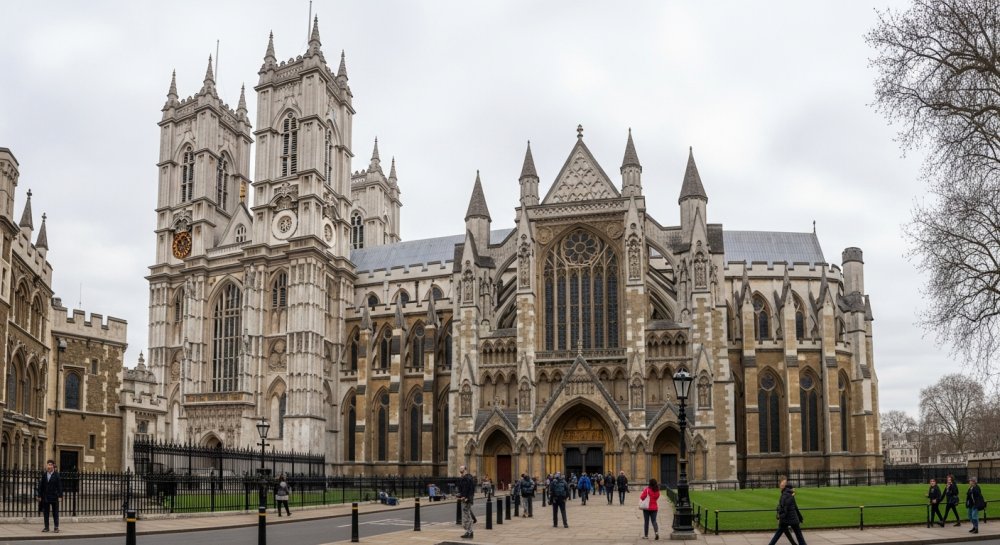
British Christian Leader Breaks with Church of England on Israel Stance

Published

on

Faith Facts

  • The Church of England’s General Synod endorsed the controversial Kairos Palestine II document, drawing sharp criticism from faithful Christians who stand with Israel
  • Dr. James Patrick of Love Never Fails Ministries is challenging the Archbishop of Canterbury’s position, declaring it does not represent all British Christians
  • The debate highlights a growing divide between traditional Christian support for Israel and institutional church positions influenced by Palestinian liberation theology

A prominent British Christian leader is speaking out against the Church of England’s recent stance on Israel, offering a message of solidarity to the Jewish community amid growing concern over institutional church positions on the Middle East conflict.

Dr. James Patrick of Love Never Fails Ministries issued a clear statement that the Archbishop of Canterbury’s views on the Israeli-Palestinian conflict do not represent all British Christians. His remarks come in response to the General Synod’s vote endorsing Kairos Palestine II and Bishop Sarah Mullally’s pastoral guidance on the matter.

The controversy centers on the Church of England’s embrace of a document that many pro-Israel advocates view as one-sided and theologically problematic. The Kairos Palestine movement has been criticized for promoting a narrative that downplays Israel’s legitimate security concerns and historic connection to the land.

Dr. Patrick’s intervention represents a significant pushback from within British Christianity against what some see as the institutional church’s drift away from traditional Christian Zionism and biblical support for the Jewish state. For generations, evangelical and conservative Christians have maintained that supporting Israel’s right to exist and defend itself is a moral and theological imperative rooted in Scripture.

The General Synod vote has raised alarm bells among British Jews and their Christian allies, who worry that mainline Protestant churches are increasingly adopting positions that effectively delegitimize Israel while offering uncritical support to Palestinian political demands. Critics argue this approach ignores the complex realities on the ground, including ongoing terrorism against Israeli civilians and the Palestinian Authority’s refusal to recognize Israel’s right to exist.

Bishop Mullally’s pastoral letter addressing the conflict has also drawn scrutiny for what observers describe as a failure to adequately acknowledge Israel’s security challenges or the antisemitism that often undergirds anti-Israel activism in church circles.

The divide reflects a broader tension within global Christianity between churches aligned with liberation theology movements and those who maintain traditional biblical interpretations regarding God’s covenant with the Jewish people and the significance of the modern State of Israel.

Conservative Christians and evangelicals have long been among Israel’s strongest supporters in the West, viewing the restoration of Jewish sovereignty in the land as fulfillment of biblical prophecy and a cause worth defending. This theological position stands in stark contrast to the increasingly critical stance taken by many mainline Protestant denominations.

Dr. Patrick’s public statement serves as an important reminder that institutional church positions do not always reflect the views of faithful believers in the pews. Many British Christians continue to stand firmly with Israel and reject attempts to paint the Jewish state as the primary obstacle to peace in the region.

The controversy also underscores the need for Christians to carefully examine the theological and political assumptions underlying church statements on complex international issues. When church leaders adopt positions that appear to single out Israel for condemnation while ignoring or minimizing the actions of terrorist groups and authoritarian regimes, they risk not only betraying biblical principles but also contributing to the climate of antisemitism.

As the Church of England continues to navigate these contentious waters, voices like Dr. Patrick’s provide an essential counterbalance, ensuring that the Jewish community knows they have allies among British Christians who refuse to abandon Israel in her hour of need.

Let us know what you think, please share your thoughts in the comments below.

Continue Reading
Click to comment

Leave a Reply

Your email address will not be published. Required fields are marked *

Faith

Are We the Only Christians Going to Heaven?

Published

on

Faith Facts

  • Early Restoration Movement Churches of Christ embraced the motto “Christians only, but not the only Christians,” seeking to follow Jesus alone while acknowledging sincere believers across denominations
  • A survey of 139 church leaders and members reveals a significant divide between those who maintain an exclusivist view and those who recognize Christians in other faith communities
  • Black Churches of Christ historically used the slogan to affirm spiritual legitimacy amid racial segregation, focusing on dignity rather than doctrinal boundaries

A familiar accusation echoes through many Churches of Christ today: “You think you’re the only ones going to heaven.”

Yet the early 19th century American Restoration Movement held a radically different vision. “Christians only, but not the only Christians” was their rallying cry—a commitment to follow Jesus alone without man-made creeds, while humbly acknowledging sincere disagreements within the Body of Christ.

An informal survey of 139 church leaders and members from 30 states reveals that while most are familiar with this historic saying, the church community remains deeply divided over its meaning and application today.

“I seek to be simply a Christian, wearing Christ’s name and submitting to His authority,” said Bill Robinson, minister for the Upper West Manhattan Church of Christ in New York.

Steve Cloer, director of the Harding School of Theology’s Center for Church and City Engagement in Memphis, Tenn., said the phrase “encapsulates the heart of the Restoration.” “We seek to be Christians — nothing more, nothing less. And yet, we acknowledge that we do not have everything figured out either.”

“We seek to be Christians — nothing more, nothing less. And yet, we acknowledge that we do not have everything figured out either.”

But not everyone remembers this inclusive vision. Some grew up in a more exclusionary tradition.

“Growing up, being a Church of Christ member was more of a very exclusive faith community — that we were the only ones who ever had a chance of being admitted to heaven,” recalled Bruce Robins, a deacon of the Laurel Church of Christ in Maryland who was raised in a family of Church of Christ preachers in Searcy, Ark.

Heath Cary, a deacon of the Maryland Heights Church of Christ in Missouri, also remembered a more exclusionary mindset growing up in Churches of Christ in Kansas, Oklahoma and Texas. Because of that, Cary said, he wants to distance himself from baggage that includes “a desire (at least stereotypically) to legalistically define … who is in and who is out.”

For Jay Plank, minister for the RiverWalk Church of Christ in Wichita, Kan., experience with other believers has supported the concept of being “not the only Christians.”

“I’ve met too many people not of the Restoration stripe who live and breathe the love of Christ,” Plank said. “If only Restoration folks are saved,” he added, “what about all who lived between A.D. 33 and the early 1800s? Are they all lost? … We have no exclusive claim to eternal life, and dare not be so presumptuous as to believe we can usurp God by saying who is and is not a child of God.”

Meanwhile, Black Churches of Christ have viewed the slogan through an entirely different lens, according to Aaron Sayles, a member of the Newport News Church of Christ in Virginia.

“The slogan was about survival and dignity, not doctrinal boundary drawing,” he said. “White Restoration leaders used the slogan to fight denominational creeds. Black Christians used it to fight exclusion, segregation and racial humiliation. So, for Black Churches of Christ, the slogan meant, ‘We are Christians, even if white Christians refuse to treat us like brothers and sisters.’ It was a declaration of spiritual legitimacy in a world that denied their humanity.”

Criticisms of the Slogan

While the idea of avoiding exclusivist attitudes resonates with many members of Churches of Christ, some also cautioned against endorsing error or denominationalism.

“I do not claim to be the final judge of every soul, because the Lord knows those who are His,” said Robinson, the Manhattan minister. “But I do not identify with any use of the phrase that either has an ecumenical intent to fellowship those who practice error or weakens the necessity of obeying the Gospel, abiding in Christ’s Word, or honoring the one body, one faith and one baptism revealed in Scripture.”

“I also think that ecumenism has crept in,” concurred Connie Stinnett, a member of the Grace Point Church of Christ in Jonesboro, Ark., who grew up in a Methodist church. “And I’m personally not comfortable saying that, basically, anything goes. I do believe that God has made it clear what He expects, particularly regarding salvation.”

Some respondents challenged part or all of the slogan entirely.

“Christians are only in the church of Christ,” argued Samuell Pounds, minister for the Hilltop Church of Christ in Winter Haven, Fla. “The Lord does not have children in another body. They are plants, which the Lord did not plant — unauthorized religious bodies or groups,” he said of denominations.

Mike Stress, a member of the River Road Church of Christ in New Port Richey, Fla., also disagreed with the “not the only Christians” aspect.

“Anytime someone identifies what ‘kind’ of Christian they are (Baptist, Methodist, Catholic, etc.), it indicates to me that they are not a true Christian because they are saying that they place their trust in what a person said over what Christ said,” Stress wrote. “I studied my way out of a denominational church,” he added.

J.D. Williams, a retired preacher in Kannapolis, N.C., was also raised in a denominational Missionary Baptist church. He warned against the phrase: “Basically, it says, ‘Although you are in a denomination, I believe you are a Christian like me!’ How can you teach anyone the truth when you are saying they don’t need it?”

“Basically, it says, ‘Although you are in a denomination, I believe you are a Christian like me!’ How can you teach anyone the truth when you are saying they don’t need it?”

Others had a very different objection to the slogan, concerned that it may inadvertently encourage division.

“I think the ‘Christians only’ part ends up being self-defeating,” said Dominic Venuso, minister for Rochelle Church of Christ in Illinois. “It essentially is a slogan for a group which is saying, ‘We are Christians only.’ But who are ‘we’? As a slogan, it ends up reinforcing a sectarian group identity.”

“I don’t think it’s possible to be a ‘Christian only’ in the strictest sense,” opined Clay McFerrin, a member of the Chisholm Hills Church of Christ in Florence, Ala. “Even without doctrinal differences, an individual’s Christian identity and practice are almost inevitably influenced by their gender, nationality, ethnicity, language, socioeconomic status and/or politics.”

The slogan “has become the very thing it tried to fight against,” added Rich Gould, who preaches for the Riverside Church of Christ in North Augusta, S.C. “It is now used especially by some in the Churches of Christ to say that if you have a denominational name on the sign of your building then you are not a Christian in the first place. … We must understand that if we are asking for everyone to believe everything the exact same way, then we are asking for uniformity, not unity.”

For James Koenig, an elder of the Northside Church of Christ in Temple, Texas, the slogan is effectively a creed itself.

“Our guiding principle is the Gospel, not a man-made cliche or mantra,” the elder said. “If this phrase is the church’s guiding principle, then the bigger message of Christ’s salvation is being missed.”

Cooperation or Condemnation?

Most of the respondents believed the average church member is unfamiliar with the slogan — and with Restoration Movement history generally. When it comes to the idea behind the phrase, Churches of Christ seem to be split.

“We have in place a divide between what I call the Conservative Mainstream Churches of Christ and the Moderate Mainstream Churches of Christ,” said Leonard Allen, dean of the Bible college at Lipscomb University in Nashville, Tenn. “The Conservative stream … tends to hold that there are not ‘Christians in the sects’ (denominations). The Moderate stream tends to hold that there are.”

The more exclusivist view, he added, became dominant among Churches of Christ as they separated from the Disciples of Christ in the late 19th century.

“I have seen tension in two ways,” said Steve Cloer. “One is that the movement at times has crystallized, and we have thought that ‘we have figured things out’ and we ‘are the only ones’ faithful. On the other side, we have become denominational in our thinking, where we are simply ‘Church of Christ,’ and we acknowledge that we are simply another brand among others. I think it is important to navigate both of these cautiously.”

At the same time, several felt the acceptance of Christians among other groups has increased in recent years.

“My generation may be the last one that still remembers the sectarian attitude that church of Christ members were the only ‘true’ Christians,” said Kyle Heffley, an elder of the Southside Church of Christ in Rogers, Ark. “However, I also think that attitude was already dying then and has almost completely died today. As it should.”

The Greenville Oaks Church of Christ in Allen, Texas, teaches that belonging to a Church of Christ “is not a test for faithfulness to God, dependence on Jesus and living with the Holy Spirit,” said member Mike Stoniecki.

Many respondents also expressed an openness to cooperation with groups outside Churches of Christ — particularly for benevolence and community activities.

At the Walled Lake Church of Christ in Michigan, “our benevolence program collaborates with Jewish, Catholic, Lutheran and community organizations to serve the community,” said elder Roger Woods. “Let the Bible speak and do so with love, and bridges will be built that will ultimately plant seeds that will grow,” he added.

Tim Tripp, senior minister for the West Side Church of Christ in Russellville, Ark., offered an especially conciliatory approach.

“If they believe that Jesus is the son of God and have faith in his name, I generally consider them to be brothers/sisters in Christ and on the mission of Christ,” Tripp wrote. “I seek to build relationships with them and partner with them in activities where we both can participate in good conscience.”

But most respondents were equally wary of cooperating with denominations in a way that could be seen as supportive of doctrines they disagree with.

Martin Pyle, who ministers for the Riverwood Church of Christ in Nashville, Tenn., said his congregation will “gladly engage” with denominational churches in activities that don’t involve worship — such as a homeless ministry or an Easter egg hunt.

“We cooperate to the extent possible without compromising our core identity/doctrines,” Pyle said. “Would we join with a Muslim congregation for shared prayer? No. Would we cooperate in picking up trash in our community? Yes. Would we cooperate with a local Baptist church in a prayer service? Yes.”

“I don’t believe we can cooperate in areas in which we would be teaching the Bible,” echoed Kenneth Mills, a member of the College Church of Christ in Searcy, Ark. “I believe we need to be respectful and cautious.”

“There are doctrinal differences within our congregation. … If getting everything right were the basis of our fellowship, there would be none.”

For Rob Sparks, minister for the Fernvale Church of Christ in Tennessee, being “not the only Christians” is more about having the humility to recognize that no one is a perfect follower of Christ.

“I mean, there are doctrinal differences within our congregation, and we cooperate internally. Why would that stop at the doors of our church?” he asked. “When we disagree, we disagree as sisters and brothers in Christ, not as Christians and non-Christians. … If getting everything right were the basis of our fellowship, there would be none. Hence, the importance of the Restoration Movement’s call to move toward Jesus wherever we start from.”

Let us know what you think, please share your thoughts in the comments below.
Continue Reading

Faith

When Secular Music Moves Your Soul: Is God Still There?

Published

on

Faith Facts

  • Theologian Michael Tang explores whether God can work through secular music and non-Christian artistic expressions
  • The debate centers on common grace versus sacred worship and how Christians should engage with popular culture
  • Understanding God’s presence in all creation may reshape how believers experience art, music, and cultural participation

For generations, Christians have grappled with a fundamental question about music and worship: Does a song need explicit Christian content for God to use it in our lives? Theologian Michael Tang tackles this challenging question, offering insights that may reshape how believers think about the music they encounter daily.

The question strikes at the heart of how Christians engage with culture. Many believers have wondered whether the emotional response they feel at a secular concert or while listening to classical music is somehow less spiritual than what they experience during Sunday worship. This distinction has created unnecessary divisions in how Christians understand God’s work in the world.

Tang’s perspective centers on the theological concept of common grace—the idea that God bestows blessings on all humanity, not just believers. This doctrine, rooted in Reformed theology, suggests that truth, beauty, and goodness can be found throughout creation, even in works produced by those who don’t acknowledge Christ. The rain falls on the just and unjust alike, and so too might divine inspiration touch artists across the spectrum of faith.

The implications are significant for Christian families navigating modern culture. If God can work through secular music, it doesn’t mean all music is equally beneficial or that discernment becomes unnecessary. Rather, it calls believers to develop mature wisdom in recognizing truth and beauty wherever they appear, while still maintaining clear boundaries about what edifies the soul and what corrupts it.

This framework helps explain why even non-Christians can create music that moves us toward higher things—love, sacrifice, justice, beauty. These universal themes resonate because they reflect God’s imprint on creation itself. A symphony that evokes wonder at the universe’s complexity, a folk song about sacrificial love, or even a pop anthem about perseverance can all point beyond themselves to transcendent realities.

The distinction between worship and cultural engagement remains important. Music specifically created for corporate worship serves a unique function in the life of the church—it’s designed to direct our hearts explicitly toward God, to teach doctrine, and to unite believers in common praise. This doesn’t diminish other music’s value; it simply recognizes different purposes for different contexts.

For Christian parents, this understanding provides helpful guidance. Rather than creating a completely segregated musical world for their children, they can teach discernment—helping young people recognize beauty and truth while also identifying messages that contradict biblical values. This approach prepares believers to be salt and light in culture rather than completely withdrawn from it.

The challenge lies in maintaining this balance. Some Christians err toward cultural isolation, fearful that any engagement with secular art will compromise their faith. Others embrace culture so completely that they lose the ability to critique it from a biblical perspective. Tang’s framework offers a middle path—engaging thoughtfully while maintaining clear convictions.

Music’s power to move us emotionally isn’t inherently spiritual or unspiritual—it’s part of how God designed humans. We’re created to respond to melody, harmony, rhythm, and lyric. These responses become spiritual when they turn our hearts toward truth, beauty, and ultimately toward God himself, whether that happens in a sanctuary or a concert hall.

This perspective also reminds Christians that God is bigger than our categories. He works through unexpected means, speaking truth through unlikely sources, and pursuing humanity with relentless creativity. Recognizing His common grace in culture doesn’t diminish the special grace found in Christ—it magnifies God’s sovereignty over all creation.

The conversation ultimately calls believers back to Scripture’s teaching about God’s nature. He is the source of all truth and beauty. Every good gift comes from above. When we encounter excellence in art, music, or any human endeavor, we’re witnessing the reflection of our Creator, even when the artist doesn’t acknowledge Him.

Let us know what you think, please share your thoughts in the comments below.
Continue Reading

Faith

UFC Star Makes Powerful Faith Declaration After Devastating Loss

Published

on

Faith Facts

  • Conor McGregor publicly declared complete confidence in God following his UFC defeat
  • The professional fighter vowed to attend church after the weekend loss
  • McGregor’s spiritual response contrasts with typical reactions to athletic defeat

Professional fighter Conor McGregor turned to faith following a bruising defeat over the weekend, making a public declaration that has resonated with believers around the world. The UFC star’s spiritual response offers a powerful reminder that even in moments of physical defeat, victories of the soul matter most.

After suffering the loss, McGregor took to social media to share his heart with fans. His words reflected a humble acknowledgment of God’s sovereignty over all aspects of life, including the ups and downs of athletic competition.

“I have complete confidence in God,” McGregor declared, demonstrating the kind of unwavering faith that transcends circumstances.

The fighter also made a specific commitment that many Christians will find encouraging. McGregor vowed to attend church, recognizing the importance of corporate worship and spiritual community during difficult seasons.

This public profession of faith stands in stark contrast to the typical responses seen in professional sports, where defeat often leads to anger, excuses, or despair. Instead, McGregor’s words point to a deeper understanding that our ultimate identity and worth come not from victories in the ring, but from our relationship with the Almighty.

For Christian fans of mixed martial arts, McGregor’s statement provides an opportunity to pray for the fighter’s continued spiritual journey. Whether this represents a renewed commitment to faith or a turning point in his spiritual walk, believers can take encouragement from seeing a public figure acknowledge God’s authority in both triumph and defeat.

The response also highlights an important biblical principle: that God can use all circumstances, including defeats and setbacks, to draw people closer to Him. As Romans 8:28 reminds us, God works all things together for good for those who love Him and are called according to His purpose.

McGregor’s willingness to be vulnerable about his faith in a public arena known for bravado and self-promotion demonstrates a different kind of courage—one that many Christian athletes navigate daily. His declaration may inspire other athletes to speak more openly about their own faith journeys.

As believers, we can appreciate when anyone, regardless of their background or profession, turns their eyes toward God. Prayer, church attendance, and public declarations of faith are all steps in the right direction for anyone seeking to know the Lord more deeply.

Let us know what you think, please share your thoughts in the comments below.

Continue Reading

Trending