
Faith
When Secular Music Moves Your Soul: Is God Still There?

Faith Facts
- Theologian Michael Tang explores whether God can work through secular music and non-Christian artistic expressions
- The debate centers on common grace versus sacred worship and how Christians should engage with popular culture
- Understanding God’s presence in all creation may reshape how believers experience art, music, and cultural participation
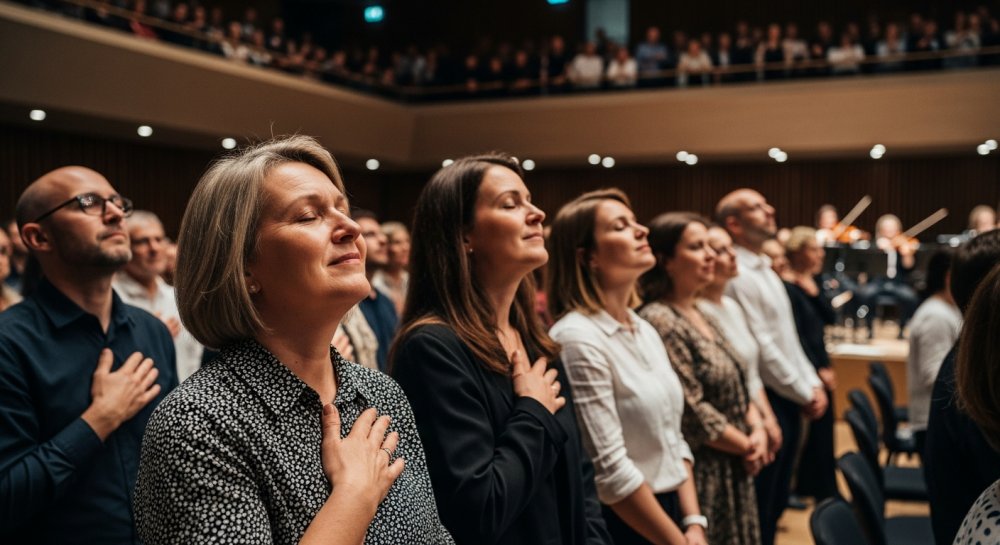
For generations, Christians have grappled with a fundamental question about music and worship: Does a song need explicit Christian content for God to use it in our lives? Theologian Michael Tang tackles this challenging question, offering insights that may reshape how believers think about the music they encounter daily.
The question strikes at the heart of how Christians engage with culture. Many believers have wondered whether the emotional response they feel at a secular concert or while listening to classical music is somehow less spiritual than what they experience during Sunday worship. This distinction has created unnecessary divisions in how Christians understand God’s work in the world.
Tang’s perspective centers on the theological concept of common grace—the idea that God bestows blessings on all humanity, not just believers. This doctrine, rooted in Reformed theology, suggests that truth, beauty, and goodness can be found throughout creation, even in works produced by those who don’t acknowledge Christ. The rain falls on the just and unjust alike, and so too might divine inspiration touch artists across the spectrum of faith.
The implications are significant for Christian families navigating modern culture. If God can work through secular music, it doesn’t mean all music is equally beneficial or that discernment becomes unnecessary. Rather, it calls believers to develop mature wisdom in recognizing truth and beauty wherever they appear, while still maintaining clear boundaries about what edifies the soul and what corrupts it.
This framework helps explain why even non-Christians can create music that moves us toward higher things—love, sacrifice, justice, beauty. These universal themes resonate because they reflect God’s imprint on creation itself. A symphony that evokes wonder at the universe’s complexity, a folk song about sacrificial love, or even a pop anthem about perseverance can all point beyond themselves to transcendent realities.
The distinction between worship and cultural engagement remains important. Music specifically created for corporate worship serves a unique function in the life of the church—it’s designed to direct our hearts explicitly toward God, to teach doctrine, and to unite believers in common praise. This doesn’t diminish other music’s value; it simply recognizes different purposes for different contexts.
For Christian parents, this understanding provides helpful guidance. Rather than creating a completely segregated musical world for their children, they can teach discernment—helping young people recognize beauty and truth while also identifying messages that contradict biblical values. This approach prepares believers to be salt and light in culture rather than completely withdrawn from it.
The challenge lies in maintaining this balance. Some Christians err toward cultural isolation, fearful that any engagement with secular art will compromise their faith. Others embrace culture so completely that they lose the ability to critique it from a biblical perspective. Tang’s framework offers a middle path—engaging thoughtfully while maintaining clear convictions.
Music’s power to move us emotionally isn’t inherently spiritual or unspiritual—it’s part of how God designed humans. We’re created to respond to melody, harmony, rhythm, and lyric. These responses become spiritual when they turn our hearts toward truth, beauty, and ultimately toward God himself, whether that happens in a sanctuary or a concert hall.
This perspective also reminds Christians that God is bigger than our categories. He works through unexpected means, speaking truth through unlikely sources, and pursuing humanity with relentless creativity. Recognizing His common grace in culture doesn’t diminish the special grace found in Christ—it magnifies God’s sovereignty over all creation.
The conversation ultimately calls believers back to Scripture’s teaching about God’s nature. He is the source of all truth and beauty. Every good gift comes from above. When we encounter excellence in art, music, or any human endeavor, we’re witnessing the reflection of our Creator, even when the artist doesn’t acknowledge Him.
Let us know what you think, please share your thoughts in the comments below.


Faith Facts
- Fourteen-year-old Christian artist Tate Butts has released his debut EP “Something To Believe In” with a mission to point young people to Christ.
- The young singer is using his rapidly growing platform to share the Gospel with his generation through contemporary Christian music.
- Butts represents a new wave of young believers committed to reaching their peers with a message of faith and hope.
A rising voice in Christian music is capturing attention not just for his talent, but for his unwavering commitment to sharing the Gospel. At just 14 years old, Tate Butts has released his debut EP “Something To Believe In,” and his mission is clear: use every opportunity to point his generation toward Jesus Christ.
In an era when many young people are walking away from faith, Butts is swimming against the cultural tide. His approach represents a refreshing dedication to using entertainment and artistry as vehicles for eternal truth rather than fleeting popularity.
The teenager’s debut project arrives at a crucial moment for American youth, who face unprecedented challenges to their spiritual formation. From social media pressures to secular indoctrination in schools, young believers need encouragement and role models who aren’t afraid to stand firm in their convictions.
Butts embodies the kind of boldness that built this nation—a willingness to speak truth regardless of cultural pushback. His commitment to his faith platform demonstrates the kind of character parents pray their children will develop: conviction coupled with purpose.
Christian music has long served as a powerful tool for evangelism and discipleship, particularly among younger audiences. Artists who use their gifts to glorify God rather than themselves provide an alternative to the moral confusion prevalent in mainstream entertainment.
The young singer’s approach reflects biblical principles about stewarding talents and opportunities for Kingdom purposes. Rather than chasing fame for its own sake, he has anchored his growing platform in a mission larger than himself.
His emergence also speaks to a hunger among many young Americans for authentic faith expression. Despite narratives suggesting younger generations have abandoned Christianity, countless teens and young adults are seeking genuine spiritual connection and biblical truth.
The debut EP’s title, “Something To Believe In,” resonates with a generation searching for meaning beyond materialism and relativism. In a culture that often leaves young people adrift without moral anchors, the message of Christ offers the stability and purpose they desperately need.
Butts’ commitment to his faith mission at such a young age reflects strong spiritual formation, likely rooted in faithful parenting and church community. His example demonstrates what’s possible when families prioritize discipleship and encourage children to use their gifts for God’s glory.
As the young artist’s platform continues to grow, his steadfast focus on pointing others to Christ serves as an encouraging reminder that God can use anyone willing to surrender their talents to His purposes. Age is no barrier to effective ministry when heart and calling align.
Let us know what you think, please share your thoughts in the comments below.

Faith Facts
- Christian Zionists often cite Old Testament passages out of context to justify modern military actions in Gaza
- The coming of Jesus Christ fundamentally transformed how believers should interpret Hebrew scriptures and apply them to current events
- A proper understanding of Scripture calls Christians to examine whether Old Testament warfare passages should guide modern foreign policy
As conflict continues in the Middle East, many American Christians find themselves grappling with difficult questions about how their faith should inform their views on Israel and Gaza. At the heart of this struggle lies a fundamental question of biblical interpretation: How should followers of Jesus Christ understand Old Testament passages in light of the New Covenant?
The Hebrew scriptures contain numerous accounts of warfare and divine judgment. When these passages are isolated from the complete narrative of the Christian Bible, they can be misapplied to contemporary geopolitical situations. This raises serious concerns for Bible-believing Christians who seek to honor God’s Word while maintaining theological integrity.
The life, death, and resurrection of Jesus Christ represent a pivotal turning point in God’s redemptive plan for humanity. This New Covenant reality fundamentally reshapes how Christians should read and apply the entire biblical narrative, including passages about ancient Israel’s military campaigns.
Christian Zionism—a theological and political movement that sees modern Israel as the direct fulfillment of biblical prophecy—frequently points to Old Testament texts to support contemporary Israeli military actions. This interpretive approach, however, raises important theological questions that deserve careful consideration from faithful believers.
The concept of “holy war” found in certain Old Testament passages must be understood within their specific historical and theological context. These accounts describe unique moments in Israel’s ancient history when God commanded specific actions for specific purposes related to establishing His covenant people in the Promised Land.
Jesus’s teachings present a markedly different ethic. His call to love enemies, turn the other cheek, and pursue peacemaking stands in tension with simplistic applications of Old Testament warfare passages to modern conflicts. Christians must wrestle with how Christ’s example and teachings inform their understanding of contemporary military actions.
This does not mean God’s promises to Israel are nullified or that Christians should be indifferent to the Jewish people. Rather, it calls for a more nuanced understanding of how Old and New Testament passages work together to reveal God’s character and His redemptive purposes.
The apostle Paul, himself a devout Jew, taught that in Christ there is neither Jew nor Gentile—all are one in Him. This theological reality challenges believers to examine whether modern nation-states can claim the same covenant status that ancient Israel held under the Mosaic Law.
Many evangelical Christians feel caught between their respect for the Jewish people and God’s historical promises to Israel on one hand, and their commitment to Christ’s teachings on peace, justice, and compassion on the other. This tension deserves thoughtful engagement rather than reflexive partisan responses.
The suffering of innocent civilians—whether Israeli or Palestinian—should grieve the hearts of all who follow the Prince of Peace. Christians are called to mourn with those who mourn, regardless of their ethnicity or nationality. Human life, created in God’s image, possesses inherent dignity and worth.
A faithful Christian response to the Israel-Gaza conflict requires more than proof-texting isolated Old Testament verses. It demands careful theological reflection on the entire biblical witness, centered on the person and work of Jesus Christ.
Believers should be wary of theological systems that baptize modern political agendas with biblical language. God’s Word deserves better than being reduced to a weapon in contemporary culture wars or geopolitical debates.
The church’s calling is to proclaim the gospel of Jesus Christ—a message of reconciliation, redemption, and hope. This mission transcends earthly kingdoms and political allegiances, pointing instead to the eternal Kingdom of God where Christ reigns as King of Kings.
Christians can honor the Jewish people, acknowledge God’s faithfulness to His promises, and support Israel’s right to security without endorsing every military action or embracing an interpretive framework that ignores the New Testament’s transformative message.
The Middle East conflict presents no easy answers. But followers of Jesus are called to seek wisdom, pursue justice tempered with mercy, and maintain their primary allegiance to Christ’s Kingdom above all earthly nations and political movements.
Let us know what you think, please share your thoughts in the comments below.

Faith Facts
- Christians are called to examine whether their political engagement reflects Christ-like character or worldly anger that can damage Gospel witness
- Scripture warns believers that unchecked rage and divisive speech can harden hearts against the message of salvation
- The question facing American Christians today is whether their words and actions in the political sphere adorn or obscure the Gospel they profess
In an era of unprecedented political division, American Christians face a critical question that goes far deeper than policy debates or party allegiances. The issue at hand is spiritual, not merely political: Are believers allowing righteous conviction to cross the line into sinful rage that undermines their witness for Christ?
The Bible is clear about the destructive power of uncontrolled anger. While righteous indignation has its place—Jesus Himself overturned tables in the temple—Scripture repeatedly warns against the kind of consuming rage that poisons the soul and damages relationships.
James 1:20 reminds us that “human anger does not produce the righteousness that God desires.” Ephesians 4:31 commands believers to “get rid of all bitterness, rage and anger, brawling and slander, along with every form of malice.”
The challenge for Christians engaged in the political arena is distinguishing between standing firm on biblical principles and descending into the kind of hostile rhetoric that characterizes our fallen world. When believers adopt the harsh, contemptuous tone prevalent in contemporary political discourse, they risk becoming indistinguishable from those who don’t claim Christ.
This isn’t a call to silence or political disengagement. Christians have both a right and a responsibility to participate in civic life, to advocate for policies that reflect biblical values, and to defend the vulnerable. The issue is how we engage—whether our methods honor God and draw others to Him, or whether they create barriers to the Gospel.
Consider the impact on the watching world. When unbelievers see Christians consumed by political fury, attacking opponents with the same venom as secular activists, what message does that send about the transforming power of the Gospel? Does it demonstrate the peace that passes understanding, the love that covers a multitude of sins, or the gentleness that can win over even the hostile?
The apostle Peter instructed believers to “always be prepared to give an answer to everyone who asks you to give the reason for the hope that you have. But do this with gentleness and respect” (1 Peter 3:15). This standard doesn’t change when the conversation turns to politics.
American Christians must recognize that our ultimate citizenship is in heaven, not in any political party or earthly nation. While we work to influence our society for good, we must never allow political identity to overshadow our identity in Christ. When political allegiance becomes an idol, it distorts our priorities and corrupts our witness.
The solution begins with honest self-examination. Believers must regularly ask themselves whether their political engagement is characterized by the fruit of the Spirit—love, joy, peace, patience, kindness, goodness, faithfulness, gentleness, and self-control—or by the works of the flesh, which include “hatred, discord, jealousy, fits of rage, selfish ambition, dissensions, factions” (Galatians 5:19-23).
This doesn’t mean abandoning strongly held convictions or failing to call out evil when we see it. It means doing so in a manner that reflects Christ’s character rather than the world’s combativeness. It means checking our motives, moderating our tone, and remembering that our primary mission is making disciples, not winning political arguments.
The stakes couldn’t be higher. Every harsh word spoken in the name of political truth but absent Christian love potentially pushes someone further from the Gospel. Every social media post dripping with contempt for political opponents may confirm an unbeliever’s assumption that Christianity is just another tribal identity rather than a transforming relationship with the living God.
Our nation desperately needs Christians who can engage politically while maintaining spiritual integrity—believers who advocate passionately for truth and justice without sacrificing the gentleness and humility that mark authentic faith. The question each Christian must answer is whether their political engagement adorns the Gospel or obscures it, whether their words and actions draw people to Christ or drive them away.
Political issues matter, and Christians should care deeply about the direction of their country. But nothing—not even the most important political battle—is worth compromising our witness or hardening hearts against the Gospel message. The watching world needs to see Christians whose political engagement flows from spiritual conviction rather than worldly rage, whose hope rests in God rather than in political outcomes, and whose love for enemies is as real as their passion for justice.
Let us know what you think, please share your thoughts in the comments below.


-

 Self-Reliance1 year ago
Trump’s Bold Move Uncovers Massive Social Security Fraud
-

 Faith1 year ago
New Clues Emerge in Noah’s Ark Mystery
-

 News1 year ago
Governor Walz’s Rhetoric Sparks National Controversy
-

 News1 year ago
Mel Gibson’s ‘The Passion of the Christ’ Sequel Title Announced
-

 Family1 year ago
Texas Lawmaker Targets Furries in Schools
-

 Freedom1 year ago
Maine Lawmaker Challenges Sports Fairness Controversy
-

 Family1 year ago
Canada’s Controversial Policy Sparks Ethical Debate
-
Faith8 months ago
Congress Hears Pleas for Nigerian Christians