
Faith
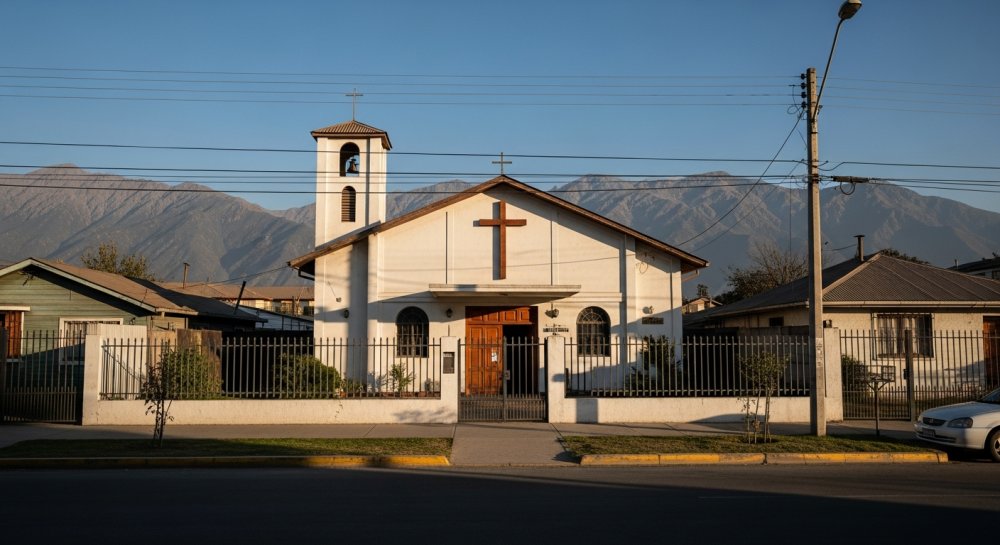
Chile Takes Bold Step to Restore Property Rights to Churches After Decades

Faith Facts
- Chile’s government has launched an inter-ministerial initiative to resolve decades-old legal disputes affecting church properties
- Many evangelical congregations have been unable to secure legal status for churches built on state-owned and private land
- The coordinated effort across multiple ministries represents a significant shift toward recognizing religious property rights
The government of Chile has initiated a comprehensive coordination effort involving multiple ministries to address a problem that has plagued religious communities for generations. The initiative aims to regularize the legal status of churches situated on both state-owned and privately owned land—a predicament that has left numerous evangelical congregations in legal limbo for decades.
For many Christian communities in Chile, the inability to secure proper legal recognition for their places of worship has created ongoing uncertainty and vulnerability. These congregations have faithfully gathered for worship, built facilities, and served their communities, yet have lacked the legal protections that come with formal property rights.
The inter-ministerial approach signals a recognition by Chilean authorities that religious freedom includes not just the right to worship, but also the right to own and maintain houses of worship without bureaucratic obstacles. By coordinating across government agencies, the Chilean government is working to streamline what has historically been a complex and often frustrating process for faith communities.
The situation has particularly affected evangelical churches, many of which were established by missionaries and local believers who prioritized ministry over navigating complicated legal frameworks. In some cases, these congregations have occupied their facilities for so long that they have become integral parts of their neighborhoods, yet still lack formal legal standing.
This initiative represents an important step toward protecting religious liberty and property rights. For conservatives who value both freedom of religion and the rule of law, this development demonstrates how government can work to remove barriers that hinder faith communities rather than create them.
The effort also highlights the importance of resolving longstanding injustices. When churches cannot secure legal recognition, they remain vulnerable to displacement and cannot fully invest in their facilities or plan for the future with confidence.
Let us know what you think, please share your thoughts in the comments below.


Faith Facts
- God’s design for human sexuality is rooted in marriage between one man and one woman.
- Scripture teaches that our bodies are temples of the Holy Spirit and should be honored accordingly.
- Christian teaching holds that sexual expression outside of biblical marriage leads to spiritual harm.
New legislation targeting extreme violent pornography marks a step toward protecting families from harmful content.
James Mildred, a Christian commentator, welcomes the criminalization of violent pornographic material while calling for broader restrictions.
“New legislation will criminalise some of the most extreme forms of violent pornography.”
Mildred argues that partial restrictions fail to address the deeper moral concerns surrounding all pornography.
The Christian perspective emphasizes that pornography in any form contradicts God’s intended purpose for human sexuality.
“James Mildred welcomes the change, but argues that God’s design for sex means porn should be banned altogether.”
This position reflects traditional Christian teaching that sexual intimacy belongs exclusively within the covenant of marriage.
Let us know what you think, please share your thoughts in the comments below.
Faith Facts
- The Bible affirms the sanctity of human life from conception, grounding the pro-life position in Scripture.
- James Talarico’s claim that Scripture is silent on abortion overlooks multiple passages that protect the unborn.
- Christian teaching on life is rooted in the unchanging Word of God rather than shifting cultural arguments.
While the Bible does not use the modern term abortion, the absence of contemporary terminology does not mean the absence of biblical teaching. Scripture consistently affirms the value of life in the womb and condemns the shedding of innocent blood.
Old Testament law explicitly protects the unborn child, establishing a moral framework that transcends modern political debates.
Psalm 139 declares that God forms each person in the womb, knitting them together with purpose and intention.
“For you created my inmost being; you knit me together in my mother’s womb.”
This divine craftsmanship leaves no room for treating the unborn as disposable.
The prophetic witness in Jeremiah reinforces this truth, showing that God knows and calls individuals before birth.
“Before I formed you in the womb I knew you, before you were born I set you apart.”
Such language underscores the personhood and destiny of the child from the earliest moments of existence.
New Testament teaching on love and justice further strengthens the case for defending the defenseless.
Proverbs 24 warns against failing to rescue those being led away to death, a command that applies directly to the unborn.
Christian voters and lawmakers who uphold these biblical principles stand in continuity with generations of believers who treasured life as a gift from God.
Let us know what you think, please share your thoughts in the comments below.

Faith Facts
- Actress Danica McKellar credits Candace Cameron Bure with leading her to a personal relationship with Jesus Christ.
- McKellar is best known for her childhood role as Winnie Cooper on the beloved family series “The Wonder Years.”
- Bure, a committed believer, has consistently used her platform to point others toward faith and traditional values.
Danica McKellar opened up about the meaningful influence of her longtime friend Candace Cameron Bure in her journey toward faith. The two former child stars developed a friendship that extended far beyond their early careers in Hollywood.
McKellar explained that Bure was the one who introduced her to Jesus in a personal way. Their shared history in the entertainment industry gave McKellar a trusted voice to hear when spiritual matters came up.
“Wonder Years” actress Danica McKellar shares how fellow child star Candace Cameron Bure helped bring her to Jesus.
McKellar has spoken openly about her growing faith and the importance of surrounding herself with fellow believers. She has described how that friendship helped anchor her during seasons of change and uncertainty.
The story reflects a pattern seen among many in Hollywood who quietly seek truth and community outside the spotlight. For McKellar, that path led her straight to the feet of Jesus through the faithful witness of a friend.
Let us know what you think, please share your thoughts in the comments below.


-

 Self-Reliance2 years ago
Trump’s Bold Move Uncovers Massive Social Security Fraud
-

 Faith2 years ago
New Clues Emerge in Noah’s Ark Mystery
-

 News2 years ago
Governor Walz’s Rhetoric Sparks National Controversy
-

 News2 years ago
Mel Gibson’s ‘The Passion of the Christ’ Sequel Title Announced
-

 Family2 years ago
Texas Lawmaker Targets Furries in Schools
-

 Freedom2 years ago
Maine Lawmaker Challenges Sports Fairness Controversy
-

 Family1 year ago
Canada’s Controversial Policy Sparks Ethical Debate
-
Faith11 months ago
Congress Hears Pleas for Nigerian Christians