
Faith
AI Could Trigger ‘Spiritual Starvation,’ Oxford Scholar Warns

Faith Facts
- Oxford mathematician and apologist John Lennox warns AI could disconnect a generation from Scripture
- Lennox cautions technology meant to serve humanity can become ‘a very dangerous master’
- The warning highlights growing concerns about technology’s impact on spiritual formation and biblical literacy
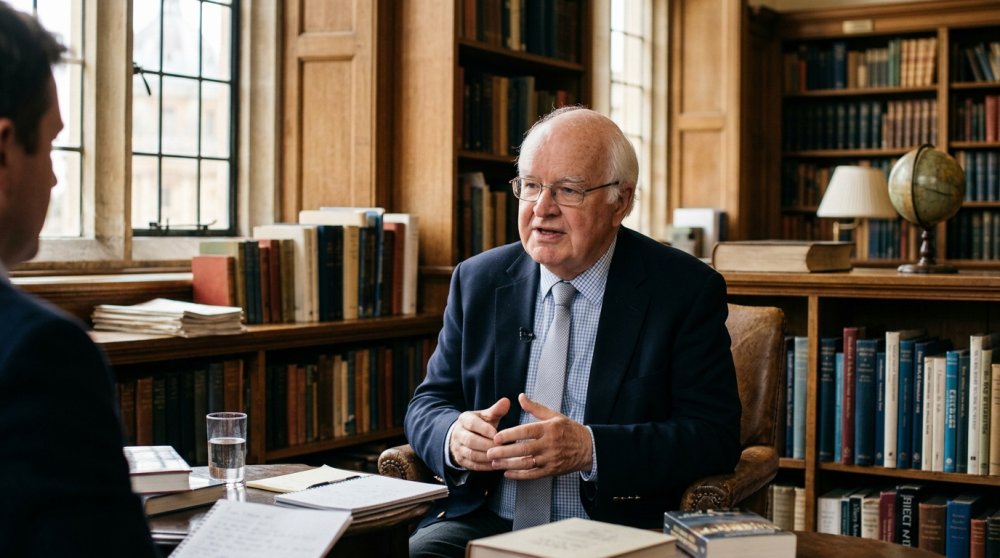
In a sobering conversation that should give every Christian pause, one of the world’s leading Christian thinkers is sounding an alarm about artificial intelligence and its potential to undermine the spiritual health of believers. Oxford mathematician and renowned apologist John Lennox shared his concerns about how AI could contribute to what he calls “spiritual starvation” among Christians, particularly younger generations who are growing up immersed in digital technology.
Speaking with Wes Huff, Lennox didn’t mince words about the dangers facing the Church in this technological age. His warning comes at a critical time when AI tools are becoming ubiquitous in daily life, from smartphones to search engines to chatbots that can answer questions about virtually any topic—including theology and Scripture.
“A dangerous master,” Lennox said, describing what technology can become when humans place too much trust in it or allow it to replace essential spiritual disciplines.
The Oxford scholar’s concern centers on a troubling trend: as people increasingly turn to AI for quick answers and information, they may drift away from the deeper, more personal engagement with God’s Word that has sustained believers for millennia. This shift could lead to a generation that knows facts about the Bible but lacks the transformative relationship with Scripture that comes from prayerful study and meditation.
Lennox’s expertise in mathematics and science gives his warning particular weight. He understands technology intimately and recognizes both its potential benefits and its inherent limitations. Unlike some critics who dismiss all technological advancement, Lennox approaches the subject with nuance, acknowledging that tools themselves are morally neutral—it’s how we use them that matters.
The danger of spiritual starvation that Lennox identifies goes beyond simple biblical illiteracy. It touches on the very nature of faith formation and discipleship. When believers outsource their thinking to algorithms and rely on AI-generated summaries instead of wrestling with Scripture themselves, they miss out on the Holy Spirit’s work in their lives through God’s Word.
This concern resonates with what many pastors and ministry leaders are already observing: a generation that can access more biblical resources than ever before, yet seems to have less depth in their faith. The convenience of technology, while offering unprecedented access to information, may actually be creating barriers to genuine spiritual growth.
For families and churches, Lennox’s warning serves as a crucial reminder to prioritize authentic engagement with Scripture over technological convenience. While AI tools can assist with research and provide helpful information, they cannot replace the personal relationship with God that develops through regular Bible reading, prayer, and meditation on His Word.
The mathematician’s insights challenge Christians to think carefully about how they integrate technology into their spiritual lives. Are we using these tools as servants that enhance our faith, or are we allowing them to become masters that dictate how we learn and grow spiritually?
As artificial intelligence continues to advance and become more sophisticated, the Church must remain vigilant about protecting the spiritual formation of its members, especially young people who have never known life without smartphones and instant digital answers. The solution isn’t necessarily to reject technology entirely, but to ensure it serves our relationship with God rather than replacing it.
Let us know what you think, please share your thoughts in the comments below.

Faith Facts
- Christian communicators gathered in Mexico for Creativoz 2026 to address digital media and technology challenges facing churches and ministries.
- The conference focused on helping faith-based organizations respond to opportunities and risks in social media and artificial intelligence.
- Christian communicators emphasized the need to uphold biblical truth in an increasingly digital culture.
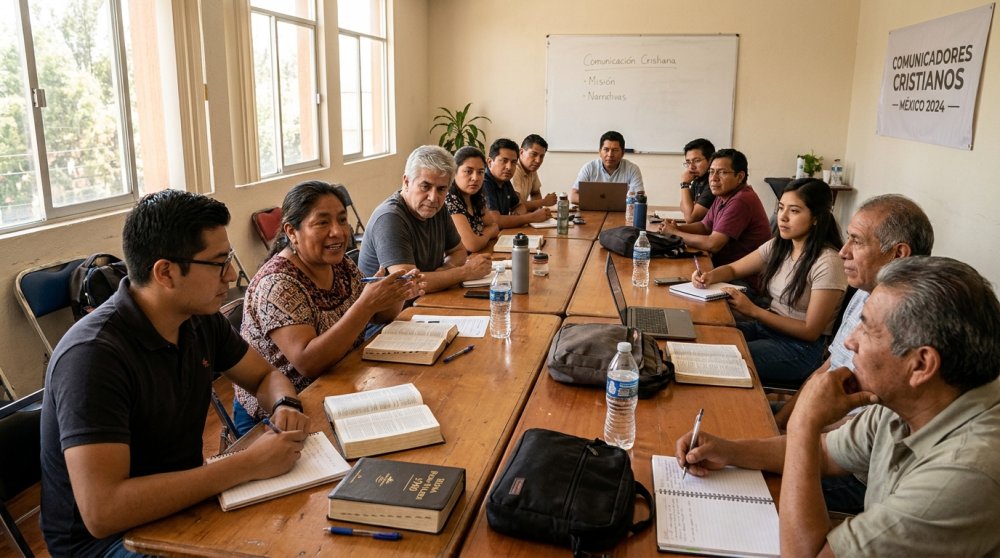
Christian communicators from across Mexico gathered October 30-31 for Creativoz 2026, a conference centered on how churches, ministries, and faith-based organizations can navigate the growing influence of digital media, social media platforms, and emerging technologies, including artificial intelligence.
The event provided a forum for leaders to discuss strategies that strengthen the witness of the gospel in a rapidly changing digital environment.
Participants explored ways to maintain biblical integrity while engaging new technologies that are reshaping communication and culture.
“The digital age presents both opportunities and challenges for the church,” one speaker noted during the conference.
“We must equip ourselves with wisdom and discernment to use these tools effectively while remaining faithful to Scripture.”
Attendees were encouraged to approach technology not as an end in itself but as a means to advance the Kingdom and strengthen the body of Christ.
Let us know what you think, please share your thoughts in the comments below.

Faith Facts
- Mount Holyoke Female Seminary opened its doors in 1837 as America’s first four-year college for women, grounding its mission in biblical principles and Christian service.
- Missionary Amy Carmichael reached India in 1895, where she devoted her life to rescuing children from temple slavery and establishing the Dohnavur Fellowship.
- French Catholic missionary Anne-Marie Javouhey was born in 1779 and later founded the Sisters of St. Joseph of Cluny, sending sisters across continents to serve the poor and enslaved.
This week marks three milestones that remind believers of the enduring power of Christian women who answered God’s call to education, missions, and service.
Mount Holyoke Female Seminary was established by Mary Lyon in South Hadley, Massachusetts, with the conviction that women deserved rigorous academic training rooted in Scripture.
Its curriculum required every student to perform domestic work, fostering both intellectual growth and humble service in keeping with Proverbs 31 values.
Over the decades the school trained thousands of women who became teachers, missionaries, and mothers who shaped families and communities across the young nation.
“The Lord has done great things for us, and we are filled with joy.”
That same week in 1895, twenty-eight-year-old Amy Carmichael stepped onto Indian soil, beginning a forty-five-year ministry that would rescue more than a thousand children from forced temple prostitution.
She refused to soften the gospel or compromise with local customs, insisting that only the light of Christ could set the captives free.
Her Dohnavur Fellowship still operates today, a living testimony that one life fully surrendered to the Savior can change generations.
“You can give without loving, but you cannot love without giving.”
Meanwhile, the birth of Anne-Marie Javouhey in 1779 set in motion a French Catholic movement that would send sisters around the world to educate and liberate the enslaved.
Her order established schools, hospitals, and orphanages from Africa to the Americas, embodying the Great Commission in both word and deed.
These three stories converge this week to show how Christian women, empowered by Scripture and sustained by prayer, have shaped education, rescued the oppressed, and carried the gospel to the ends of the earth.
Let us know what you think, please share your thoughts in the comments below.

Faith Facts
- Actor P.J. Byrne credits Sylvester Stallone’s success to unwavering faith and the belief of others.
- Stallone’s journey from near-poverty to Hollywood fame reflects the biblical principle of perseverance through trials.
- Byrne highlights how faith can open doors when human effort alone seems insufficient.
Actor P.J. Byrne says the story of Sylvester Stallone’s climb from a struggling, nearly penniless actor to one of Hollywood’s biggest stars proves the power of faith.
Byrne points to the Rocky creator’s determination and the encouragement of those who believed in him when few others did.
“Amazing things can happen when you have faith,” Byrne stated.
The actor’s remarks underscore how Stallone’s refusal to quit mirrors the biblical call to endure hardship with trust in God’s plan.
Byrne’s comments arrive as a new documentary revisits the early struggles and eventual breakthrough that turned Stallone into a household name.
“I Play Rocky” revisits Stallone’s extraordinary rise: ‘Amazing things can happen when you have faith’
Let us know what you think, please share your thoughts in the comments below.


-

 Self-Reliance2 years ago
Trump’s Bold Move Uncovers Massive Social Security Fraud
-

 Faith2 years ago
New Clues Emerge in Noah’s Ark Mystery
-

 News2 years ago
Governor Walz’s Rhetoric Sparks National Controversy
-

 News2 years ago
Mel Gibson’s ‘The Passion of the Christ’ Sequel Title Announced
-

 Family2 years ago
Texas Lawmaker Targets Furries in Schools
-

 Freedom2 years ago
Maine Lawmaker Challenges Sports Fairness Controversy
-

 Family1 year ago
Canada’s Controversial Policy Sparks Ethical Debate
-
Faith12 months ago
Congress Hears Pleas for Nigerian Christians