
Faith
Three Moments That Changed Christianity Forever


Faith Facts
- Reformed theologian John Calvin returned to Geneva on September 13, 1541, after three years of exile, establishing a Christian governance model that influenced Western civilization
- Christian apologist Nabeel Qureshi, a Muslim convert who defended the faith through powerful testimony, passed away from stomach cancer on September 16, 2017, at age 34
- George Leslie Mackay was ordained as a Presbyterian minister on September 17, 1870, before becoming a pioneering missionary to Taiwan
This week marks the anniversaries of three pivotal moments in Christian history that demonstrate God’s providence in advancing His kingdom through faithful servants across different centuries and continents.
On September 13, 1541, French theologian John Calvin made his historic return to Geneva, Switzerland, after spending three years in exile in Strasbourg. Calvin had initially been expelled from the city in 1538 due to conflicts with civic authorities over church governance and discipline.
During his time away, Geneva descended into religious and moral chaos, prompting city leaders to invite Calvin back to restore order and provide spiritual leadership. Upon his return, Calvin established a comprehensive system of church governance and discipline that became a model for Reformed churches worldwide.
His teachings on God’s sovereignty, biblical authority, and Christian living profoundly shaped Protestant theology and influenced the development of representative government in Western nations. Calvin’s Geneva became a refuge for persecuted Christians from across Europe and a training ground for missionaries who spread Reformed theology throughout the world.
Fast forward to September 16, 2017, when the Christian community mourned the loss of Nabeel Qureshi, a brilliant apologist and former devout Muslim who converted to Christianity after years of intensive study and prayer. Qureshi passed away at the young age of 34 after a courageous battle with advanced stomach cancer.
Born into a loving Muslim family, Qureshi’s journey to Christ began during his college years when he befriended Christian students who challenged him to examine the historical evidence for Christianity. His subsequent conversion cost him deeply, as it meant estrangement from his beloved family and community.
Despite the personal cost, Qureshi dedicated his life to sharing the gospel with Muslims and equipping Christians to engage in loving, truth-filled dialogue with their Muslim neighbors. His books, including “Seeking Allah, Finding Jesus,” have touched millions of lives and continue to bear fruit for the kingdom.
The third anniversary this week commemorates September 17, 1870, when George Leslie Mackay was ordained as a Presbyterian minister in Ontario, Canada. Shortly after his ordination, Mackay felt called to missionary service and set sail for Taiwan (then known as Formosa) in 1871.
For nearly three decades, Mackay served the Taiwanese people with extraordinary devotion, establishing churches, schools, and Taiwan’s first medical clinic. He learned the local languages, married a Taiwanese woman, and fully immersed himself in the culture he served.
Mackay’s holistic approach to missions—combining evangelism with education and medical care—resulted in the establishment of over 60 churches and the training of numerous native pastors. His legacy continues today through Oxford College (now Aletheia University) and MacKay Memorial Hospital, institutions that still serve Taiwan’s people.
These three events, though separated by centuries and continents, share a common thread: faithful servants who answered God’s call despite opposition, exile, illness, and cultural barriers. Calvin’s theological reforms, Qureshi’s courageous testimony, and Mackay’s sacrificial service all demonstrate how God uses willing vessels to advance His purposes in every generation.
Their stories remind us that God’s work in history continues through ordinary believers who trust Him with extraordinary faith. Each left an enduring legacy that continues to bear fruit for God’s kingdom today.
Let us know what you think, please share your thoughts in the comments below.

Faith Facts
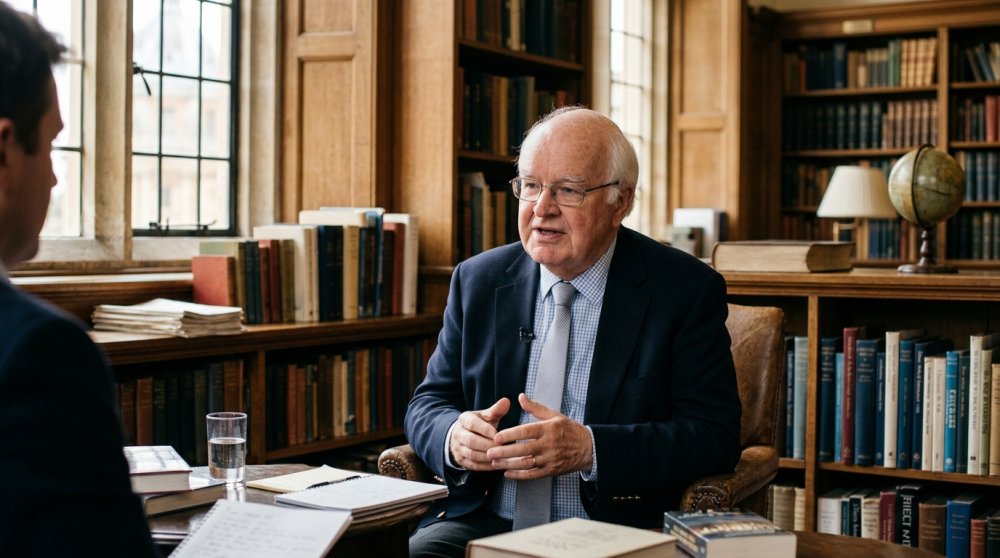
- Oxford mathematician and apologist John Lennox warns AI could disconnect a generation from Scripture
- Lennox cautions technology meant to serve humanity can become ‘a very dangerous master’
- The warning highlights growing concerns about technology’s impact on spiritual formation and biblical literacy
In a sobering conversation that should give every Christian pause, one of the world’s leading Christian thinkers is sounding an alarm about artificial intelligence and its potential to undermine the spiritual health of believers. Oxford mathematician and renowned apologist John Lennox shared his concerns about how AI could contribute to what he calls “spiritual starvation” among Christians, particularly younger generations who are growing up immersed in digital technology.
Speaking with Wes Huff, Lennox didn’t mince words about the dangers facing the Church in this technological age. His warning comes at a critical time when AI tools are becoming ubiquitous in daily life, from smartphones to search engines to chatbots that can answer questions about virtually any topic—including theology and Scripture.
“A dangerous master,” Lennox said, describing what technology can become when humans place too much trust in it or allow it to replace essential spiritual disciplines.
The Oxford scholar’s concern centers on a troubling trend: as people increasingly turn to AI for quick answers and information, they may drift away from the deeper, more personal engagement with God’s Word that has sustained believers for millennia. This shift could lead to a generation that knows facts about the Bible but lacks the transformative relationship with Scripture that comes from prayerful study and meditation.
Lennox’s expertise in mathematics and science gives his warning particular weight. He understands technology intimately and recognizes both its potential benefits and its inherent limitations. Unlike some critics who dismiss all technological advancement, Lennox approaches the subject with nuance, acknowledging that tools themselves are morally neutral—it’s how we use them that matters.
The danger of spiritual starvation that Lennox identifies goes beyond simple biblical illiteracy. It touches on the very nature of faith formation and discipleship. When believers outsource their thinking to algorithms and rely on AI-generated summaries instead of wrestling with Scripture themselves, they miss out on the Holy Spirit’s work in their lives through God’s Word.
This concern resonates with what many pastors and ministry leaders are already observing: a generation that can access more biblical resources than ever before, yet seems to have less depth in their faith. The convenience of technology, while offering unprecedented access to information, may actually be creating barriers to genuine spiritual growth.
For families and churches, Lennox’s warning serves as a crucial reminder to prioritize authentic engagement with Scripture over technological convenience. While AI tools can assist with research and provide helpful information, they cannot replace the personal relationship with God that develops through regular Bible reading, prayer, and meditation on His Word.
The mathematician’s insights challenge Christians to think carefully about how they integrate technology into their spiritual lives. Are we using these tools as servants that enhance our faith, or are we allowing them to become masters that dictate how we learn and grow spiritually?
As artificial intelligence continues to advance and become more sophisticated, the Church must remain vigilant about protecting the spiritual formation of its members, especially young people who have never known life without smartphones and instant digital answers. The solution isn’t necessarily to reject technology entirely, but to ensure it serves our relationship with God rather than replacing it.
Let us know what you think, please share your thoughts in the comments below.

Faith Facts
- A new study reveals youth worldwide are reluctant to discuss their personal identity with pastors and religious leaders
- Many young people report not feeling a sense of belonging in their faith communities
- The findings highlight a growing disconnect between youth and church leadership that demands attention from Christian communities
A concerning new study has uncovered a troubling trend among young people across the globe: they are increasingly hesitant to open up to their pastors and religious leaders about matters of personal identity. The research reveals a widening gap between youth and their spiritual mentors that should alarm every Christian parent and church leader in America.
According to the study, significant numbers of young people feel disconnected from their faith communities, reporting that they don’t experience a true sense of belonging. This spiritual isolation represents a critical challenge for churches committed to discipling the next generation in biblical truth and traditional Christian values.
The findings suggest that Christian leaders and parents must redouble their efforts to create environments where young people feel safe to discuss their struggles while being grounded in Scripture. Rather than conforming to cultural pressures that often contradict biblical teaching, churches must strike a balance between compassionate engagement and faithful adherence to God’s Word.
This disconnect between youth and religious leadership comes at a time when young Americans face unprecedented cultural confusion about identity, purpose, and values. The data underscores the urgent need for churches to strengthen their youth ministries and for parents to take primary responsibility for their children’s spiritual formation.
Christian communities must address this challenge head-on, creating spaces where biblical truth is taught with clarity and love, where questions are welcomed, and where young people are discipled in the timeless truths of Scripture rather than the shifting sands of contemporary culture.
Let us know what you think, please share your thoughts in the comments below.

Faith Facts
- Recent Himalayan floods devastated Nepal and India, prompting worldwide relief efforts through social media awareness
- The Nepali government collected substantial financial aid, but relief distribution was notably delayed
- Local churches and NGOs competed for donor funding while grieving families waited for assistance
A devastating flood sweeping from the Himalayas through Nepal to India has exposed serious questions about disaster relief coordination and the stewardship of charitable funds. Images shared across social media platforms brought global attention to the crisis, triggering an outpouring of concern and financial support from Christians and humanitarian organizations worldwide.
Relief organizations quickly mobilized in response to the disaster, seeking to capitalize on the heightened public awareness. The Nepali government succeeded in collecting significant financial aid intended to help affected communities rebuild and recover.
However, the actual delivery of relief to those in need moved at a troublingly slow pace. While bureaucratic processes delayed official government aid, non-governmental organizations and local churches found themselves competing for the same donor dollars that could have been directed more efficiently toward immediate relief efforts.
This situation highlights a persistent challenge in international disaster response: the disconnect between fundraising success and effective aid distribution. For Christian donors who give sacrificially to help their neighbors in crisis, such delays raise important questions about accountability and stewardship.
The competition among relief organizations, while perhaps inevitable in a crowded charitable marketplace, diverted attention and resources away from coordinated relief efforts. Meanwhile, grieving families who lost homes, livelihoods, and loved ones waited for the help that donors around the world believed they were providing.
This tragedy serves as a reminder that Christian compassion must be coupled with wisdom and discernment. Believers called to help those in need have a responsibility to ensure their gifts reach those suffering, not simply to give and assume the job is done.
The situation in Nepal demonstrates why supporting established, trustworthy ministry partners with proven track records on the ground remains crucial. Local churches often prove most effective at rapid response because they understand their communities and have existing relationships of trust.
As Americans of faith consider how to respond to international disasters, this case study offers valuable lessons about the importance of accountability, coordination, and ensuring that charitable giving translates into tangible help for those who need it most.
Let us know what you think, please share your thoughts in the comments below.


-

 Self-Reliance1 year ago
Trump’s Bold Move Uncovers Massive Social Security Fraud
-

 Faith1 year ago
New Clues Emerge in Noah’s Ark Mystery
-

 News2 years ago
Governor Walz’s Rhetoric Sparks National Controversy
-

 News1 year ago
Mel Gibson’s ‘The Passion of the Christ’ Sequel Title Announced
-

 Family1 year ago
Texas Lawmaker Targets Furries in Schools
-

 Freedom1 year ago
Maine Lawmaker Challenges Sports Fairness Controversy
-

 Family1 year ago
Canada’s Controversial Policy Sparks Ethical Debate
-
Faith10 months ago
Congress Hears Pleas for Nigerian Christians