
Faith
Global Youth Disconnected From Church Leaders, Study Reveals

Faith Facts
- A new study reveals youth worldwide are reluctant to discuss their personal identity with pastors and religious leaders
- Many young people report not feeling a sense of belonging in their faith communities
- The findings highlight a growing disconnect between youth and church leadership that demands attention from Christian communities
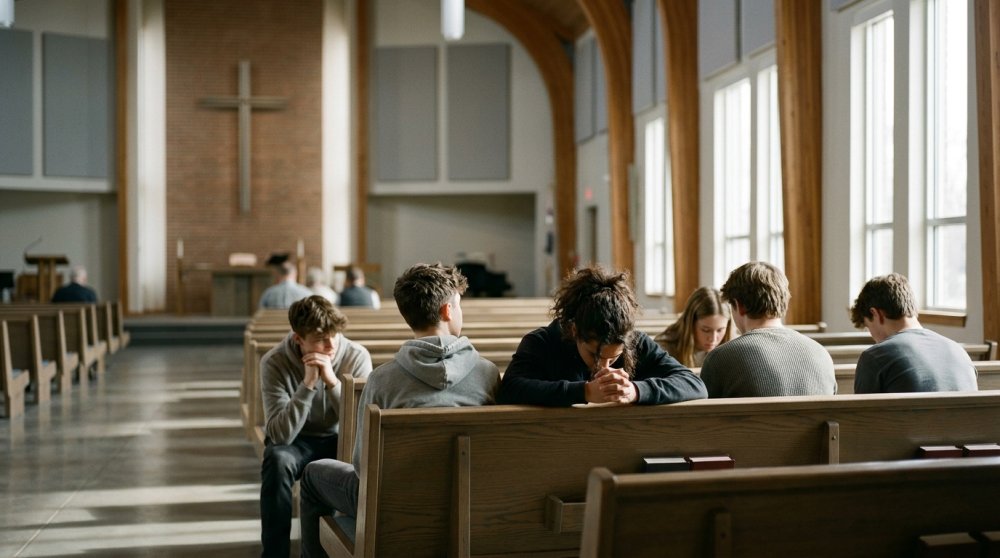
A concerning new study has uncovered a troubling trend among young people across the globe: they are increasingly hesitant to open up to their pastors and religious leaders about matters of personal identity. The research reveals a widening gap between youth and their spiritual mentors that should alarm every Christian parent and church leader in America.
According to the study, significant numbers of young people feel disconnected from their faith communities, reporting that they don’t experience a true sense of belonging. This spiritual isolation represents a critical challenge for churches committed to discipling the next generation in biblical truth and traditional Christian values.
The findings suggest that Christian leaders and parents must redouble their efforts to create environments where young people feel safe to discuss their struggles while being grounded in Scripture. Rather than conforming to cultural pressures that often contradict biblical teaching, churches must strike a balance between compassionate engagement and faithful adherence to God’s Word.
This disconnect between youth and religious leadership comes at a time when young Americans face unprecedented cultural confusion about identity, purpose, and values. The data underscores the urgent need for churches to strengthen their youth ministries and for parents to take primary responsibility for their children’s spiritual formation.
Christian communities must address this challenge head-on, creating spaces where biblical truth is taught with clarity and love, where questions are welcomed, and where young people are discipled in the timeless truths of Scripture rather than the shifting sands of contemporary culture.
Let us know what you think, please share your thoughts in the comments below.

Faith Facts
- Recent Himalayan floods devastated Nepal and India, prompting worldwide relief efforts through social media awareness
- The Nepali government collected substantial financial aid, but relief distribution was notably delayed
- Local churches and NGOs competed for donor funding while grieving families waited for assistance
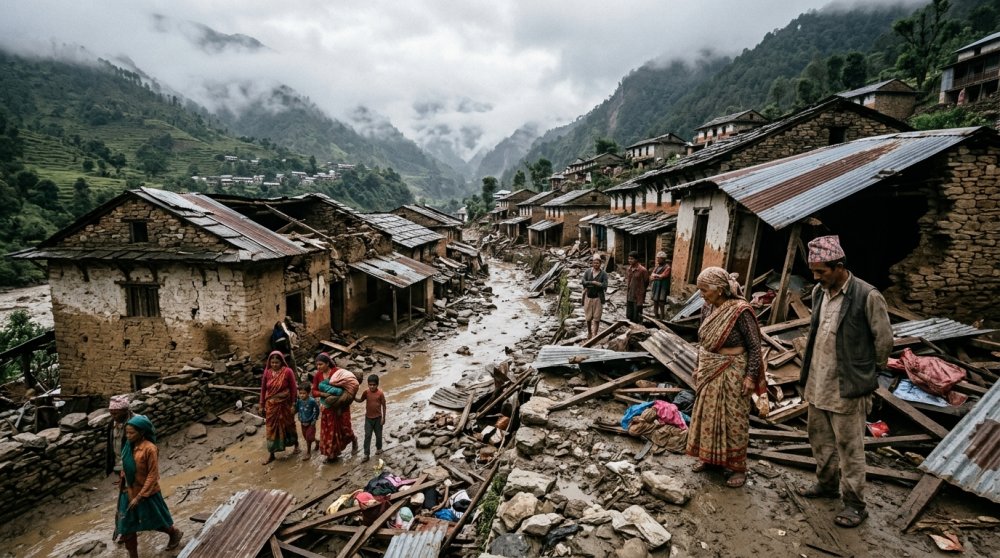
A devastating flood sweeping from the Himalayas through Nepal to India has exposed serious questions about disaster relief coordination and the stewardship of charitable funds. Images shared across social media platforms brought global attention to the crisis, triggering an outpouring of concern and financial support from Christians and humanitarian organizations worldwide.
Relief organizations quickly mobilized in response to the disaster, seeking to capitalize on the heightened public awareness. The Nepali government succeeded in collecting significant financial aid intended to help affected communities rebuild and recover.
However, the actual delivery of relief to those in need moved at a troublingly slow pace. While bureaucratic processes delayed official government aid, non-governmental organizations and local churches found themselves competing for the same donor dollars that could have been directed more efficiently toward immediate relief efforts.
This situation highlights a persistent challenge in international disaster response: the disconnect between fundraising success and effective aid distribution. For Christian donors who give sacrificially to help their neighbors in crisis, such delays raise important questions about accountability and stewardship.
The competition among relief organizations, while perhaps inevitable in a crowded charitable marketplace, diverted attention and resources away from coordinated relief efforts. Meanwhile, grieving families who lost homes, livelihoods, and loved ones waited for the help that donors around the world believed they were providing.
This tragedy serves as a reminder that Christian compassion must be coupled with wisdom and discernment. Believers called to help those in need have a responsibility to ensure their gifts reach those suffering, not simply to give and assume the job is done.
The situation in Nepal demonstrates why supporting established, trustworthy ministry partners with proven track records on the ground remains crucial. Local churches often prove most effective at rapid response because they understand their communities and have existing relationships of trust.
As Americans of faith consider how to respond to international disasters, this case study offers valuable lessons about the importance of accountability, coordination, and ensuring that charitable giving translates into tangible help for those who need it most.
Let us know what you think, please share your thoughts in the comments below.
Faith Facts
- Rising killings and abductions are systematically eroding Christian communities in northern and north-central Nigeria, according to new research from Open Doors
- Prolonged displacement and ongoing insecurity have forced many Christians to flee ancestral lands, threatening the survival of their communities
- The violence represents a growing threat to religious freedom and Christian presence throughout the region
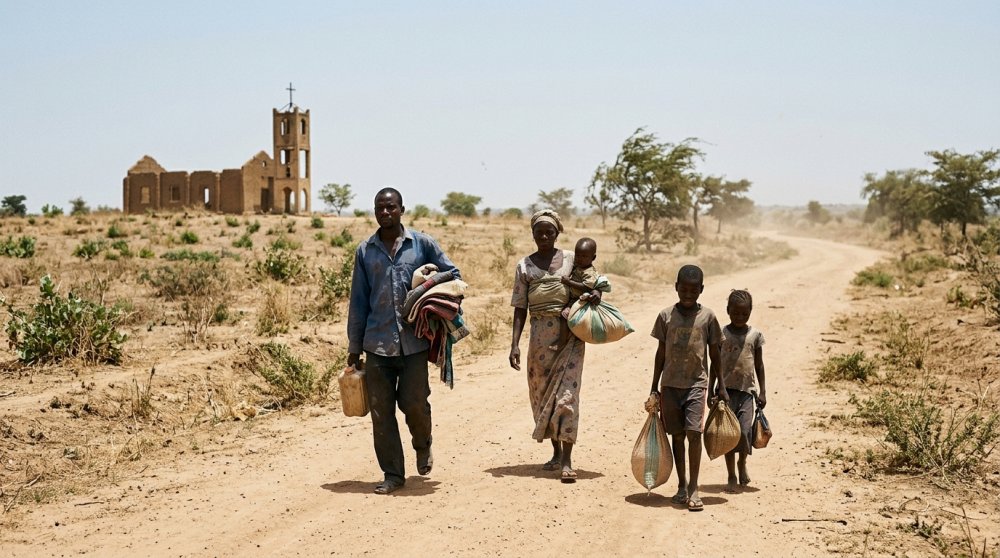
Christians in northern Nigeria are facing an unprecedented crisis as violence and displacement threaten to erase their presence from ancestral lands. A new research brief released by Open Doors highlights the systematic erosion of Christian communities through killings, abductions, and forced relocation.
The report documents a disturbing pattern of violence that has created a humanitarian emergency for Nigeria’s Christian population. Believers in northern and north-central regions are experiencing sustained attacks that have made it impossible for many families to remain in their homes.
Open Doors, a global ministry that monitors persecution of Christians, has documented how prolonged displacement is destroying the fabric of Christian communities that have existed in these regions for generations. The insecurity has created a climate of fear that makes normal life impossible for many believers.
The situation in Nigeria represents one of the gravest threats to Christian life anywhere in the world today. Families are being torn apart, churches are being abandoned, and entire communities are being scattered as violence continues unabated.
For Christian Americans who value religious freedom as a foundational right, the plight of Nigerian believers serves as a stark reminder of the blessings we enjoy and the persecution our brothers and sisters face globally. The systematic targeting of Christians in northern Nigeria demands international attention and support.
The erosion of Christian presence in these regions doesn’t just represent a humanitarian crisis—it represents an assault on religious liberty itself. As communities that have worshipped freely for generations are forced to flee, the very concept of freedom of conscience is under attack.
This ongoing violence underscores the urgent need for the global Christian community to stand in solidarity with persecuted believers. Prayer, advocacy, and support for displaced families remain critical as Nigerian Christians face an uncertain future in regions where their faith has deep historical roots.
Let us know what you think, please share your thoughts in the comments below.

Faith Facts
- Gen Z evangelist Bryce Crawford reports experiencing heavier spiritual oppression at Burning Man festival than at The Satanic Temple headquarters
- Crawford actively evangelizes at spiritually dark locations to share the Gospel with those far from God
- The young minister’s testimony highlights the spiritual warfare present in modern secular gatherings
A bold young evangelist is speaking out about his encounters with spiritual darkness at two vastly different locations — and his assessment may surprise many believers.
Bryce Crawford, a Gen Z minister known for taking the Gospel to spiritually challenging environments, recently shared his discernment about the atmosphere at Nevada’s Burning Man festival. According to Crawford, the spiritual oppression he encountered while evangelizing at the annual desert gathering was even more intense than what he experienced at The Satanic Temple’s headquarters.
Evangelist Bryce Crawford spent a week at Burning Man. Not to party — to preach.
He told Shawn Ryan it was the darkest place he’s ever stood. Worse than the Satanic Temple, which he’d also evangelized in Salem.
Seventy thousand people in the Nevada desert for a week straight.… pic.twitter.com/R1CY0UIpGp
— Jake (@JakeTbird) September 5, 2026
The comparison offers a sobering reminder that spiritual darkness doesn’t always appear where we expect it. While The Satanic Temple openly embraces anti-Christian symbolism and ideology, Crawford found the seemingly secular Burning Man festival to carry an even heavier spiritual weight.
Crawford’s ministry approach demonstrates remarkable courage as he intentionally seeks out locations where the Gospel is desperately needed but rarely heard. By venturing into these spiritually hostile environments, he follows the biblical model of going into all the world to make disciples.
The Burning Man festival, held annually in Nevada’s Black Rock Desert, attracts tens of thousands of participants who gather for a week-long event centered on self-expression, art, and communal living. While organizers describe it as a celebration of creativity and community, many Christian leaders have raised concerns about the festival’s spiritual underpinnings and the activities that take place there.
Crawford’s testimony serves as a wake-up call for believers about the spiritual realities underlying popular cultural events. What may appear to mainstream society as harmless artistic expression or communal celebration can mask deeper spiritual issues that only discernment reveals.
The young evangelist’s willingness to confront spiritual darkness head-on reflects a generation of believers who are not content to stay within the comfortable confines of church walls. Instead, they’re taking the light of Christ into the darkest corners of modern culture.
His experience also underscores the importance of spiritual preparation and covering when engaging in frontline ministry. Evangelizing in spiritually oppressive environments requires not only courage but also prayer support and a firm foundation in biblical truth.
For Christians concerned about the state of American culture, Crawford’s ministry offers both a challenge and an encouragement. While spiritual darkness may be pervasive in certain spaces, the Gospel remains powerful enough to penetrate even the most oppressive atmospheres.
The comparison between Burning Man and The Satanic Temple headquarters raises important questions about how spiritual darkness manifests in contemporary society. Overt opposition to Christianity may be less dangerous than the subtle deception that wraps itself in the guise of freedom, art, and self-expression.
Let us know what you think, please share your thoughts in the comments below.


-

 Self-Reliance1 year ago
Trump’s Bold Move Uncovers Massive Social Security Fraud
-

 Faith1 year ago
New Clues Emerge in Noah’s Ark Mystery
-

 News2 years ago
Governor Walz’s Rhetoric Sparks National Controversy
-

 News1 year ago
Mel Gibson’s ‘The Passion of the Christ’ Sequel Title Announced
-

 Family1 year ago
Texas Lawmaker Targets Furries in Schools
-

 Freedom1 year ago
Maine Lawmaker Challenges Sports Fairness Controversy
-

 Family1 year ago
Canada’s Controversial Policy Sparks Ethical Debate
-
Faith10 months ago
Congress Hears Pleas for Nigerian Christians