
Faith
Young Adults Flock to Catholicism for Spiritual Clarity

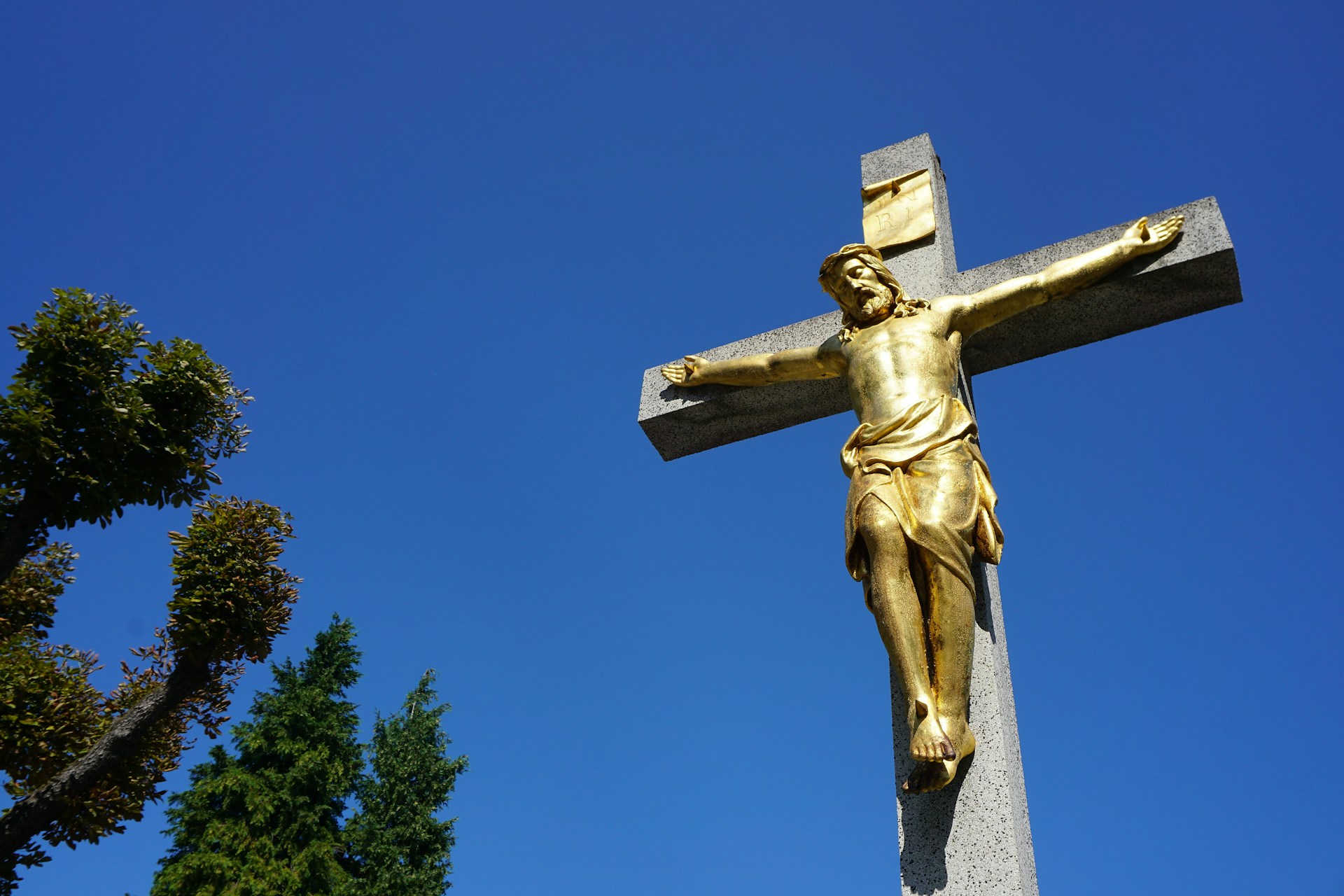
In a remarkable testament to the enduring power of faith and tradition, young adults across America are embracing the Roman Catholic Church in unprecedented numbers. This surge in conversions is a clear indication of a generation seeking moral clarity and spiritual authenticity in a world that often seems adrift in chaos.
The Easter season, a time of renewal and rebirth, has witnessed a significant increase in conversions, with some dioceses reporting spikes of up to 70%. In Fort Worth, Texas, for instance, the number of converts rose dramatically from 896 in Easter 2023 to 1,544 in Easter 2024. This remarkable growth highlights a yearning for a faith that is deeply rooted in history and tradition.
Father Will Straten of St. Mary’s Catholic Center at Texas A&M University observes that many young adults are “hungry and are looking for something” that offers authenticity and realness. He notes, “They’re looking for something that’s grounded and seems to make sense.” This search for truth and stability is drawing many to the Catholic faith, a beacon of hope in turbulent times.
Father Raymond Maria La Grange of St. Vincent Ferrer in Manhattan echoes this sentiment, describing the influx of young converts as a response to a world that “cannot provide them with any moral order, or reasons for living in any particular way.” The pandemic years left many feeling unmoored, and the Catholic Church offers a steadfast anchor amidst the storm.
Sydney Johnston, a young woman from Manhattan, shares her journey from a nondenominational Christian upbringing to the Catholic Church. After a period of spiritual exploration, she found herself drawn to the “ancient history” and “reverence” of the Catholic Mass. She explains, “There’s just something so beautiful and transcendent about the rituals and the ancient history in the Catholic Mass that’s been preserved.”
Similarly, Taylor New from Cincinnati recounts how a simple YouTube video on the history of Catholicism set her on a path of discovery. “I joke that that video ruined my life in the best way,” she says, highlighting the profound impact of accessible online resources in guiding her toward the faith.
Adrian Lawson, a former atheist from Southern California, found his way to Catholicism through online debates and discussions. Despite initial resistance from his family, Lawson embraced the faith and experienced a profound transformation. “I had anxiety, depression, and panic attacks, but since I’ve started praying the rosary regularly, I haven’t had any of those issues,” he shares.
These stories of conversion underscore the timeless appeal of the Catholic Church, a bastion of tradition and moral clarity in an ever-changing world. As young adults seek meaning and purpose, the Church stands ready to welcome them with open arms, offering a path grounded in faith, family, and freedom. In these challenging times, the resurgence of interest in Catholicism is a powerful reminder of the enduring strength of biblical principles in shaping a values-driven society.
Let us know what you think, please share your thoughts in the comments below.



Faith Facts
- An estimated 80,000 believers gathered for prayer and worship at AT&T Stadium in Arlington, Texas.
- Pastor Philip Anthony Mitchell and 2819 Church hosted the event with several high-profile pastors in attendance.
- Attendees reported a powerful sense of God’s presence that continued long after the service concluded.
An estimated 80,000 believers gathered at AT&T Stadium in Arlington, Texas, for a powerful night of prayer and worship. The event was led by Pastor Philip Anthony Mitchell and his 2819 Church. Several high-profile pastors joined the crowd, creating a unified atmosphere of faith and reverence.
The stadium, usually filled with the roar of sports fans, became a sanctuary for worship and intercession. Many in attendance described a tangible sense of God’s presence that lingered long after the final amen.
“It felt like heaven came down,” one attendee shared.
“You could sense the Holy Spirit moving throughout the entire stadium.”
“This was more than an event—it was a divine appointment.”
The massive turnout reflects a growing hunger among believers for corporate worship and prayer in a time of cultural and spiritual uncertainty. Families, church groups, and individuals from across the nation came together in one place, setting aside denominational differences for the sake of unity in Christ.
Let us know what you think, please share your thoughts in the comments below.

Faith Facts
- Greta Gerwig credits C.S. Lewis’s Chronicles of Narnia with shaping her faith and creative vision.
- The new Netflix film Narnia: The Magician’s Nephew aims to introduce Lewis’s stories of faith and wonder to a new generation.
- Gerwig expressed a deep sense of responsibility in preserving the Christian themes and legacy of Lewis’s classic tales.
An emotional Greta Gerwig reflected on the influence of C.S. Lewis, the role of faith in her filmmaking and the daunting responsibility of bringing the beloved Chronicles of Narnia to a new generation during an exclusive IMAX sneak peek event for her upcoming Netflix film, Narnia: The Magician’s Nephew.
Gerwig shared how the stories of faith, courage, and redemption found in Lewis’s work have deeply impacted her personal and professional life.
She spoke candidly about the challenge of honoring the author’s Christian worldview while presenting the tale to modern audiences.
“These books created me”
Gerwig’s comments come at a time when many in Hollywood distance themselves from traditional faith-based storytelling.
Her willingness to publicly acknowledge the spiritual roots of her inspiration stands as a refreshing contrast to prevailing cultural trends.
The director’s remarks underscore the enduring power of Lewis’s narratives to inspire faith and imagination across generations.
Let us know what you think, please share your thoughts in the comments below.

Faith Facts
- Scripture warns believers to be sober-minded and watchful because the adversary prowls like a roaring lion seeking someone to devour.
- Jesus Christ is presented in the Gospels as the light that overcomes darkness and the answer to humanity’s deepest questions about evil.
- Traditional Christian teaching holds that true celebration flows from recognizing Christ’s victory over sin rather than glorifying darkness.
Halloween raises some of life’s biggest questions and then gives us some very poor answers.
It gives evil a grotesque costume, but some of the greatest evils in history have arrived looking respectable, attractive and persuasive.
Either way, Jesus provides us with a solution to the problem of evil.
We should celebrate that.
Let us know what you think, please share your thoughts in the comments below.


-

 Self-Reliance2 years ago
Trump’s Bold Move Uncovers Massive Social Security Fraud
-

 Faith2 years ago
New Clues Emerge in Noah’s Ark Mystery
-

 News2 years ago
Governor Walz’s Rhetoric Sparks National Controversy
-

 News2 years ago
Mel Gibson’s ‘The Passion of the Christ’ Sequel Title Announced
-

 Family2 years ago
Texas Lawmaker Targets Furries in Schools
-

 Freedom2 years ago
Maine Lawmaker Challenges Sports Fairness Controversy
-

 Family1 year ago
Canada’s Controversial Policy Sparks Ethical Debate
-
Faith11 months ago
Congress Hears Pleas for Nigerian Christians