
Faith
Prayer Restrictions Highlight Fragility of Religious Freedoms in Europe


In recent years, a troubling trend has emerged across Europe, where certain governments have taken steps to restrict the fundamental right to pray. This is a stark reminder of how fragile our religious freedoms can be when subjected to government overreach. For Christians, prayer is a sacred communication with God, a cornerstone of faith that should never be compromised or regulated by any earthly authority.
The incidents occurring in Europe serve as a cautionary tale for Americans who cherish their religious liberties. These examples highlight how quickly freedoms can be eroded when governments begin to impose restrictions on speech and religious expression. It is imperative that we remain vigilant in defending our God-given rights to ensure that such infringements do not take root on our soil.
“No one should ever be punished by the government for praying.” This statement encapsulates the essence of religious freedom, a principle that is foundational to the American way of life. Our nation was built on the belief that individuals have the right to worship freely, without fear of government interference or punishment.
As Christians, we understand that prayer is not just a ritual but a vital part of our relationship with God. It is through prayer that we seek guidance, find solace, and express gratitude. Any attempt to limit this divine interaction is not only an attack on religious freedom but also an affront to the moral fabric that binds our communities together.
These European cases should serve as a wake-up call to all who value faith, family, and freedom. We must stand firm in our commitment to uphold traditional values and protect our rights to practice our faith openly. By doing so, we honor the legacy of those who fought for the freedoms we enjoy today and ensure that future generations can continue to live in a society where faith and freedom flourish.
In these challenging times, let us draw strength from our shared beliefs and remain steadfast in our resolve to defend our religious liberties. Through faith and unity, we can preserve the values that make our nation great and ensure that the light of freedom continues to shine brightly for all.
Let us know what you think, please share your thoughts in the comments below.



Faith Facts
- An estimated 80,000 believers gathered for prayer and worship at AT&T Stadium in Arlington, Texas.
- Pastor Philip Anthony Mitchell and 2819 Church hosted the event with several high-profile pastors in attendance.
- Attendees reported a powerful sense of God’s presence that continued long after the service concluded.
An estimated 80,000 believers gathered at AT&T Stadium in Arlington, Texas, for a powerful night of prayer and worship. The event was led by Pastor Philip Anthony Mitchell and his 2819 Church. Several high-profile pastors joined the crowd, creating a unified atmosphere of faith and reverence.
The stadium, usually filled with the roar of sports fans, became a sanctuary for worship and intercession. Many in attendance described a tangible sense of God’s presence that lingered long after the final amen.
“It felt like heaven came down,” one attendee shared.
“You could sense the Holy Spirit moving throughout the entire stadium.”
“This was more than an event—it was a divine appointment.”
The massive turnout reflects a growing hunger among believers for corporate worship and prayer in a time of cultural and spiritual uncertainty. Families, church groups, and individuals from across the nation came together in one place, setting aside denominational differences for the sake of unity in Christ.
Let us know what you think, please share your thoughts in the comments below.
Faith Facts
- Greta Gerwig credits C.S. Lewis’s Chronicles of Narnia with shaping her faith and creative vision.
- The new Netflix film Narnia: The Magician’s Nephew aims to introduce Lewis’s stories of faith and wonder to a new generation.
- Gerwig expressed a deep sense of responsibility in preserving the Christian themes and legacy of Lewis’s classic tales.
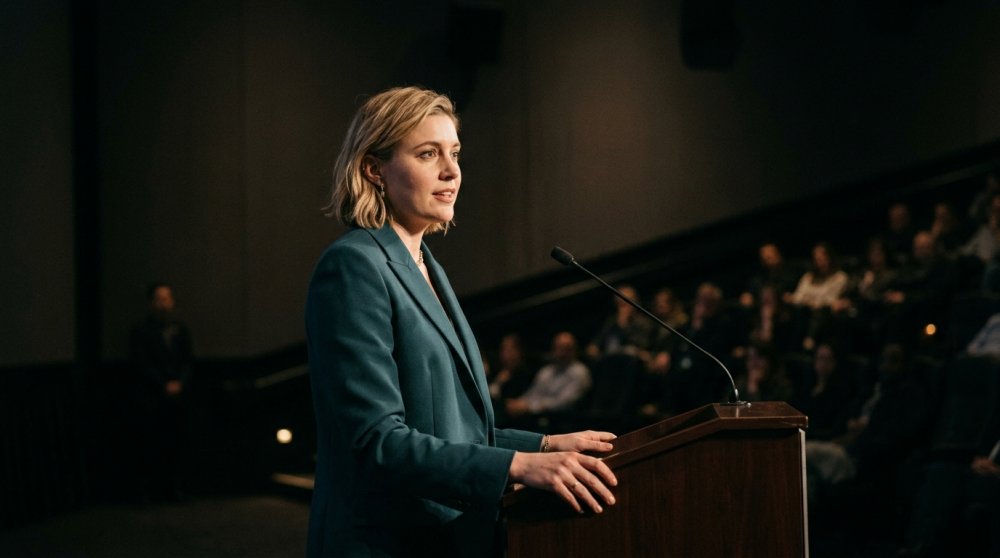
An emotional Greta Gerwig reflected on the influence of C.S. Lewis, the role of faith in her filmmaking and the daunting responsibility of bringing the beloved Chronicles of Narnia to a new generation during an exclusive IMAX sneak peek event for her upcoming Netflix film, Narnia: The Magician’s Nephew.
Gerwig shared how the stories of faith, courage, and redemption found in Lewis’s work have deeply impacted her personal and professional life.
She spoke candidly about the challenge of honoring the author’s Christian worldview while presenting the tale to modern audiences.
“These books created me”
Gerwig’s comments come at a time when many in Hollywood distance themselves from traditional faith-based storytelling.
Her willingness to publicly acknowledge the spiritual roots of her inspiration stands as a refreshing contrast to prevailing cultural trends.
The director’s remarks underscore the enduring power of Lewis’s narratives to inspire faith and imagination across generations.
Let us know what you think, please share your thoughts in the comments below.

Faith Facts
- Scripture warns believers to be sober-minded and watchful because the adversary prowls like a roaring lion seeking someone to devour.
- Jesus Christ is presented in the Gospels as the light that overcomes darkness and the answer to humanity’s deepest questions about evil.
- Traditional Christian teaching holds that true celebration flows from recognizing Christ’s victory over sin rather than glorifying darkness.
Halloween raises some of life’s biggest questions and then gives us some very poor answers.
It gives evil a grotesque costume, but some of the greatest evils in history have arrived looking respectable, attractive and persuasive.
Either way, Jesus provides us with a solution to the problem of evil.
We should celebrate that.
Let us know what you think, please share your thoughts in the comments below.


-

 Self-Reliance2 years ago
Trump’s Bold Move Uncovers Massive Social Security Fraud
-

 Faith2 years ago
New Clues Emerge in Noah’s Ark Mystery
-

 News2 years ago
Governor Walz’s Rhetoric Sparks National Controversy
-

 News2 years ago
Mel Gibson’s ‘The Passion of the Christ’ Sequel Title Announced
-

 Family2 years ago
Texas Lawmaker Targets Furries in Schools
-

 Freedom2 years ago
Maine Lawmaker Challenges Sports Fairness Controversy
-

 Family1 year ago
Canada’s Controversial Policy Sparks Ethical Debate
-
Faith11 months ago
Congress Hears Pleas for Nigerian Christians