
Faith
Wisconsin Church Takes Bold Step to Serve Aging Community


Faith Facts
- A Wisconsin church is planning to build 181 senior housing units on its property, demonstrating practical Christian compassion for the elderly.
- The development will include affordable housing options, reflecting the biblical mandate to care for the vulnerable in our communities.
- Church leaders view the project as a ministry opportunity to reach souls and serve seniors in their golden years.
A church in Wisconsin is embarking on an ambitious ministry project that combines faith with practical action. The congregation is planning to construct 181 senior housing units on its property, with a portion designated as affordable housing for those on fixed incomes.
This development represents more than just construction—it’s a mission field. Church leaders see the project as an opportunity to minister to seniors in a tangible way, providing not only safe and dignified housing but also spiritual community and care.
The initiative addresses a growing need in American communities where seniors often struggle to find affordable, quality housing. Many elderly Americans living on Social Security and modest retirement savings face difficult choices between adequate housing and other necessities.
By incorporating affordable units into the development, the church is living out the biblical call to care for the vulnerable. This project stands as a testament to how faith communities can address real-world needs while maintaining their core mission of reaching souls.
The senior housing complex will be built on church property, allowing for easy integration between the residential community and church activities. This proximity creates natural opportunities for ministry, fellowship, and spiritual support for residents who desire it.
As America’s population ages, creative solutions like this church-led development offer a faith-based alternative to secular senior living options. It demonstrates how churches can be at the forefront of meeting community needs while preserving traditional values of family, dignity, and spiritual purpose in the later years of life.
Projects like this also strengthen the church’s role as a pillar of the community, showing that faith institutions remain relevant and essential in addressing contemporary challenges. The development represents an investment not just in buildings, but in the lives and souls of those who will call it home.
Let us know what you think, please share your thoughts in the comments below.


Faith Facts
- A Christian man remains hospitalized after being attacked following evangelistic outreach in eastern Uganda on June 14
- The believer and his wife had participated in sharing the Gospel before the violent assault occurred
- The attack highlights the growing dangers Christians face for evangelism in certain regions of Uganda
A Christian evangelist in eastern Uganda continues to receive medical treatment after suffering a violent attack for sharing his faith. The believer was targeted following an evangelistic outreach event on June 14, where he and his wife had been ministering to their community.
The incident underscores the increasing persecution Christians face in parts of Uganda simply for proclaiming the Gospel. While Uganda has historically been considered more tolerant of Christianity compared to other East African nations, certain regions have seen rising hostility toward open evangelism and Christian witness.
The injured believer remains under medical care as he recovers from injuries sustained in the attack. His wife was not physically harmed during the incident, according to sources familiar with the situation.
This attack serves as a sobering reminder of the sacrifice many Christians worldwide make to share the Good News of Jesus Christ. In an era where religious freedom is increasingly threatened globally, believers in America must remember to pray for their persecuted brothers and sisters who risk their lives to advance God’s kingdom.
The courage displayed by this couple—continuing to evangelize despite known risks—exemplifies the commitment to the Great Commission that Christ called all believers to uphold. Their willingness to face danger for the sake of the Gospel stands as both an inspiration and a call to action for Christians living in nations where religious liberty remains protected.
Let us know what you think, please share your thoughts in the comments below.
Faith Facts
- Housing and Urban Development Secretary Scott Turner accuses the Biden administration of deliberately sidelining Christian organizations from federal programs.
- The Trump administration is pledging to restore partnerships with faith-based groups to address homelessness, addiction, and social challenges across America.
- Turner’s comments signal a major shift in how the federal government will work with religious organizations under President Trump’s leadership.
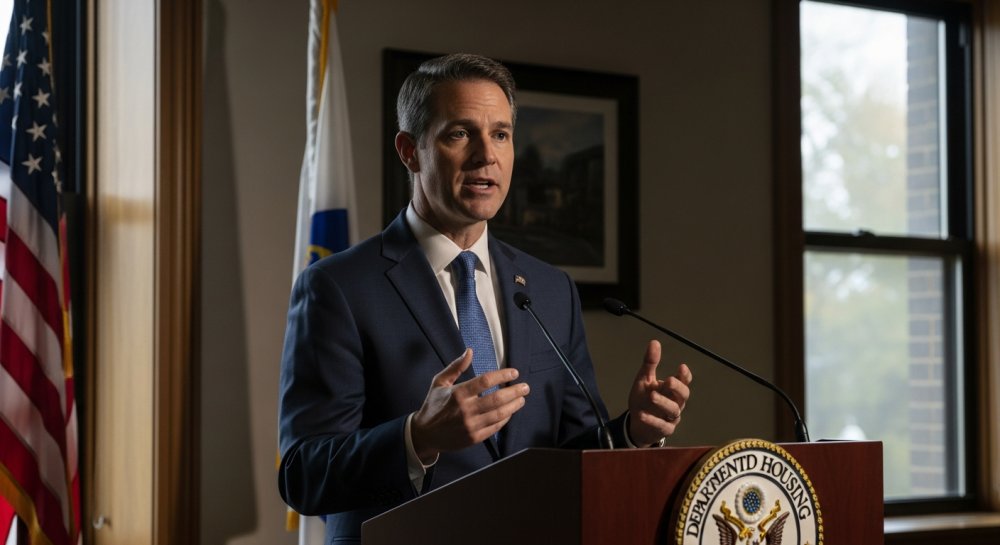
Housing and Urban Development Secretary Scott Turner is making waves with a bold accusation against the previous administration. According to Turner, the Biden administration actively pushed Christian organizations to the sidelines, excluding them from crucial work on some of America’s most pressing social issues.
The allegation comes as the Trump administration charts a dramatically different course. Turner has pledged that under President Trump’s leadership, the Department of Housing and Urban Development will actively partner with faith-based groups to tackle homelessness, addiction, and other challenges facing American communities.
This represents a fundamental shift in federal policy toward religious organizations. For four years under President Biden, many faith leaders complained that their groups faced new barriers to accessing federal programs and partnerships that had previously been open to them.
Turner’s commitment signals that the Trump administration views churches and Christian organizations not as problems to be managed, but as solutions to be embraced. This approach recognizes what conservatives have long understood: faith-based groups are often the most effective at reaching people struggling with homelessness, addiction, and poverty.
The secretary’s announcement aligns with President Trump’s broader agenda of protecting religious freedom and ensuring that people of faith have a seat at the table in addressing America’s social challenges. Rather than treating religion as something to be kept out of public life, this administration is acknowledging the vital role that Christian organizations play in serving vulnerable populations.
For millions of Americans who have watched faith-based initiatives face increasing hostility from government bureaucrats, Turner’s pledge represents a welcome return to common sense. Churches, ministries, and Christian nonprofits have centuries of experience in caring for the poor, feeding the hungry, and helping people overcome addiction—expertise that should be utilized, not sidelined.
This policy shift could have far-reaching implications for how America addresses homelessness and addiction. Rather than relying solely on government programs that often fail to address the spiritual dimensions of these crises, HUD will now work alongside organizations that understand that lasting change requires transformation of the heart as well as material assistance.
Let us know what you think, please share your thoughts in the comments below.
Faith Facts
- Over 1,000 people gathered at Bournemouth beach for mass baptisms, marking the second consecutive year of this powerful witness
- Five churches from different denominations collaborated in unity to celebrate new believers entering the faith
- Rev Tim Matthews attributes the spiritual breakthrough to ten years of church leaders learning to love one another as Jesus commanded
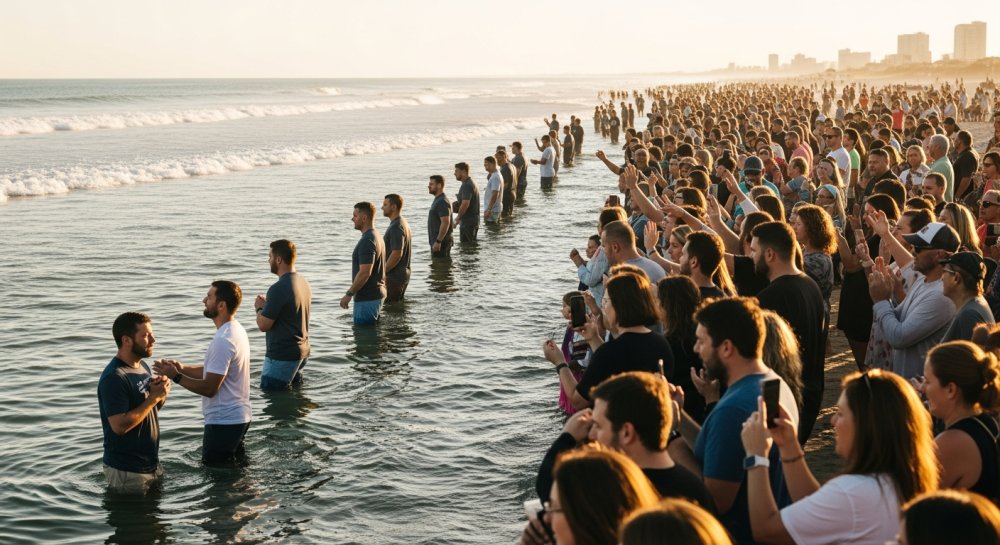
A remarkable scene unfolded on the shores of Bournemouth beach as more than 1,000 believers gathered to witness mass baptisms for the second year running. The event brought together five churches in a powerful display of Christian unity and evangelistic fruitfulness that speaks to what’s possible when God’s people set aside denominational differences.
According to Rev Tim Matthews, the catalyst behind this spiritual breakthrough isn’t a complex church growth strategy or cutting-edge ministry program. Instead, it’s something far more fundamental to the Christian faith: genuine love among believers.
“There’s no special secret to the growth we’re seeing,” Matthews explained. “Just ten years of church leaders learning to love one another as Jesus commanded.”
The mass baptisms represent the visible fruit of a decade-long commitment to unity among pastors and congregations in the Bournemouth area. In an era when churches often compete rather than collaborate, these five congregations chose a different path—one rooted in the prayer of Jesus in John 17 that His followers “may be one.”
This kind of cooperation across denominational lines reflects the early church’s witness in Acts, where believers devoted themselves to fellowship and the apostles’ teaching. The result wasn’t just internal harmony but external growth, as “the Lord added to their number daily those who were being saved.”
The beach baptisms serve as a public testimony to the transforming power of the Gospel in individual lives. Baptism, a command given by Christ Himself, symbolizes death to the old life and resurrection to new life in Him. When conducted en masse in a public setting, these baptisms become a powerful witness to the broader community.
For traditional Christians and conservatives who value both doctrinal integrity and practical unity, this story offers encouragement. It demonstrates that churches can maintain their distinctive beliefs while working together for the kingdom of God. The emphasis on loving one another as Jesus commanded (John 13:34-35) reminds us that our witness to a watching world depends significantly on how we treat fellow believers.
The decade-long journey to this point underscores an important truth: genuine spiritual fruit often requires patient cultivation. Church leaders didn’t rush into collaboration or force artificial unity. Instead, they invested years in building authentic relationships founded on mutual respect and shared mission.
As American churches face increasing cultural pressure and declining attendance in many regions, the Bournemouth example provides a potential roadmap. Rather than viewing neighboring churches as competition, congregations might consider how strategic partnerships could advance the Gospel more effectively than isolated efforts.
The success of these mass baptisms also challenges the prevailing narrative that Christianity is in inevitable decline. While secularization continues in many Western nations, pockets of vibrant faith remain and even flourish where believers commit to biblical principles of unity and evangelism.
For families seeking a church home, events like these demonstrate the kind of spiritual vitality worth pursuing—congregations more interested in reaching the lost and celebrating new believers than in building their own kingdoms. The focus on baptism, a non-negotiable ordinance of the faith, signals these churches’ commitment to biblical Christianity rather than watered-down cultural accommodation.
The visual impact of mass baptisms in a public space like a beach cannot be overstated. In an age when many Christians hesitate to publicly identify with their faith, these believers made an unmistakable declaration of allegiance to Christ. Their willingness to be baptized before crowds serves as both inspiration and challenge to American Christians who sometimes practice their faith only in private.
Rev Matthews’ emphasis on love among church leaders points to a principle often overlooked in discussions of church growth: the spiritual health of leadership directly impacts congregational fruitfulness. When pastors genuinely care for one another across denominational lines, it creates a culture that values people over programs and mission over institutional preservation.
The story also highlights the importance of patience in ministry. Ten years represents a significant investment of time and energy with no guarantee of spectacular results. Yet the leaders persevered in building relationships, and now they’re witnessing a harvest that exceeds what any single congregation could have produced alone.
As these churches look toward continuing this work, the foundation they’ve laid through years of unity positions them well for sustained impact. The baptisms aren’t merely an annual event but the visible expression of ongoing evangelistic efforts supported by multiple congregations working in harmony.
For American Christians concerned about the future of faith in our nation, this account from across the Atlantic offers both inspiration and instruction. Unity grounded in biblical truth, sustained commitment to relationship-building among leaders, and faithful proclamation of the Gospel remain as effective today as in the early church.
Let us know what you think, please share your thoughts in the comments below.


-

 Self-Reliance1 year ago
Trump’s Bold Move Uncovers Massive Social Security Fraud
-

 Faith1 year ago
New Clues Emerge in Noah’s Ark Mystery
-

 News1 year ago
Governor Walz’s Rhetoric Sparks National Controversy
-

 News1 year ago
Mel Gibson’s ‘The Passion of the Christ’ Sequel Title Announced
-

 Family1 year ago
Texas Lawmaker Targets Furries in Schools
-

 Freedom1 year ago
Maine Lawmaker Challenges Sports Fairness Controversy
-

 Family1 year ago
Canada’s Controversial Policy Sparks Ethical Debate
-
Faith7 months ago
Congress Hears Pleas for Nigerian Christians