
Faith
When Revival Comes to Everyone But You

Faith Facts
- A Christian leader openly shares his struggle with envy after witnessing widespread church renewal in other congregations while his own ministry remained steady but unchanged
- The reflection challenges popular metrics of church success, questioning whether numerical growth truly measures spiritual health and faithfulness
- A powerful moment in a small group setting reminded the pastor that genuine transformation in individual lives may be the truest marker of ministry effectiveness
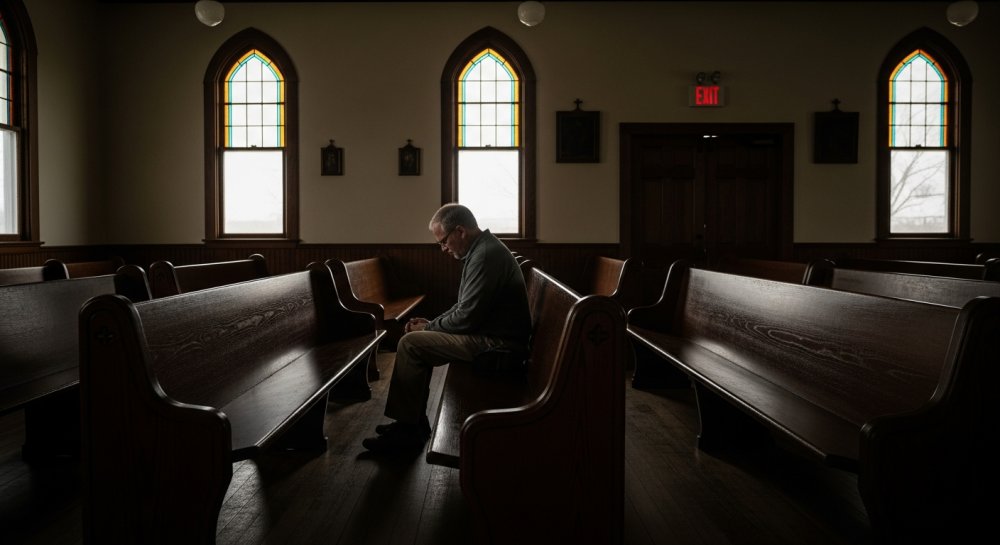
In an era when American churches often measure success by attendance numbers and baptism statistics, one pastor’s honest confession is striking a chord with ministry leaders across the nation. Surrounded by testimonies of explosive growth and revival, he found himself confronting an uncomfortable truth that few church leaders dare to discuss publicly: the gnawing ache of spiritual comparison.
Derek Hughes, writing with unusual transparency, describes the emotional tension of celebrating others’ blessings while privately wrestling with questions about his own ministry. The contrast was stark—churches everywhere seemed to be experiencing unprecedented moves of God, while his own congregation continued faithfully but without dramatic transformation.
“I found myself genuinely happy for other churches while quietly wrestling with comparison, envy and the unsettling question: am I doing something wrong?” Hughes admitted.
This kind of vulnerability is rare in Christian leadership circles, where the pressure to project confidence and success can be overwhelming. Yet Hughes’s willingness to name his struggle may resonate with countless pastors and ministry workers who feel the weight of comparison in an age of social media highlight reels and viral revival stories.
The backdrop to this personal crisis was what’s being called “The Quiet Revival”—a season of spiritual awakening reported in churches across America. While others shared stories of packed sanctuaries and life-changing encounters with God, Hughes found himself evaluating his own ministry through an increasingly critical lens.
Traditional American Christianity has always valued both faithfulness and fruitfulness, but the balance between these two virtues can be difficult to maintain. When the culture around us measures everything in numbers—followers, views, attendees—even the most grounded believers can find themselves questioning whether their steady obedience is enough.
Then came a moment of clarity. In the intimacy of his small group, Hughes witnessed something that recalibrated his entire perspective on ministry success. Rather than the spectacular or the numerous, he encountered the profound reality of individual transformation—the kind of change that happens slowly, quietly, in the soil of authentic relationship and consistent faithfulness.
This revelation challenges the prevailing metrics that dominate contemporary church culture. Perhaps the truest measure of ministry effectiveness isn’t found in weekend attendance or social media reach, but in the patient work of discipleship that bears fruit over time, often away from public view.
Hughes’s story offers a corrective to the comparison trap that ensnares so many Christian leaders. In a culture that constantly ranks, rates, and measures, the call to faithfulness over fame becomes countercultural—even within the church.
The Bible itself is filled with examples of faithful servants whose ministries didn’t look impressive by worldly standards. Jeremiah preached for decades with few converts. Noah built an ark for a century before seeing results. Many of Jesus’s own disciples spent years in obscurity, faithfully serving without fanfare.
For Christian conservatives who value both tradition and genuine spiritual transformation, Hughes’s confession serves as an important reminder. The metrics of Madison Avenue and Silicon Valley—growth at all costs, viral moments, and mass appeal—need not define the success of God’s work.
Instead, the measure of a faithful ministry might be found in smaller, harder-to-quantify realities: lives genuinely changed by the gospel, families strengthened through biblical teaching, communities quietly transformed by the presence of salt and light believers.
Hughes’s willingness to expose his struggle with envy also highlights the spiritual danger of the comparison trap. Envy, after all, is listed among the works of the flesh in Galatians 5, standing alongside obvious sins like sexual immorality and idolatry. Yet in ministry contexts, it often goes unexamined and unconfessed.
The antidote to comparison culture isn’t indifference to results or a rejection of growth. Rather, it’s a deeper trust in God’s sovereignty and timing, combined with a renewed commitment to faithfulness regardless of measurable outcomes. It’s the recognition that the Lord’s approval matters more than human accolades.
This perspective aligns with the historic Christian understanding that God calls His people to obedience, not necessarily to observable success. The Puritan pastors of early America often labored for years in small congregations, measuring their effectiveness not by numerical growth but by the depth of biblical understanding and godly character in their flocks.
For American Christians watching revival reports and church growth statistics, Hughes’s story offers both comfort and challenge. The comfort: God is working even when the results aren’t spectacular or visible. The challenge: examining our own hearts for the subtle pride that wants recognition or the envy that resents others’ blessings.
In an age of instant gratification and viral fame, the call to quiet faithfulness remains as countercultural as ever. Hughes’s honest reflection reminds us that the most important work of the Kingdom often happens away from spotlights and social media feeds, in living rooms and coffee shops, through years of patient investment in individual souls.
The question for every believer becomes not “Am I as successful as others?” but rather “Am I faithful to what God has called me to do?” That shift in perspective, while simple to articulate, requires constant vigilance in a culture addicted to comparison.
Hughes’s small group moment—the intimate glimpse of genuine transformation in one person’s life—offers a powerful counter-narrative to our obsession with scale and spectacle. Perhaps revival isn’t always loud, viral, or numerically impressive. Perhaps sometimes it’s simply the quiet work of God’s Spirit changing hearts, one life at a time, through the faithful ministry of His servants.
Let us know what you think, please share your thoughts in the comments below.

Faith Facts
- Dinesh D’Souza has written a new book titled The Stones Cry Out examining biblical archaeology and end times prophecy.
- The author asserts that archaeological evidence supports the historical accuracy of Scripture.
- D’Souza connects these discoveries to biblical prophecies concerning the last days.
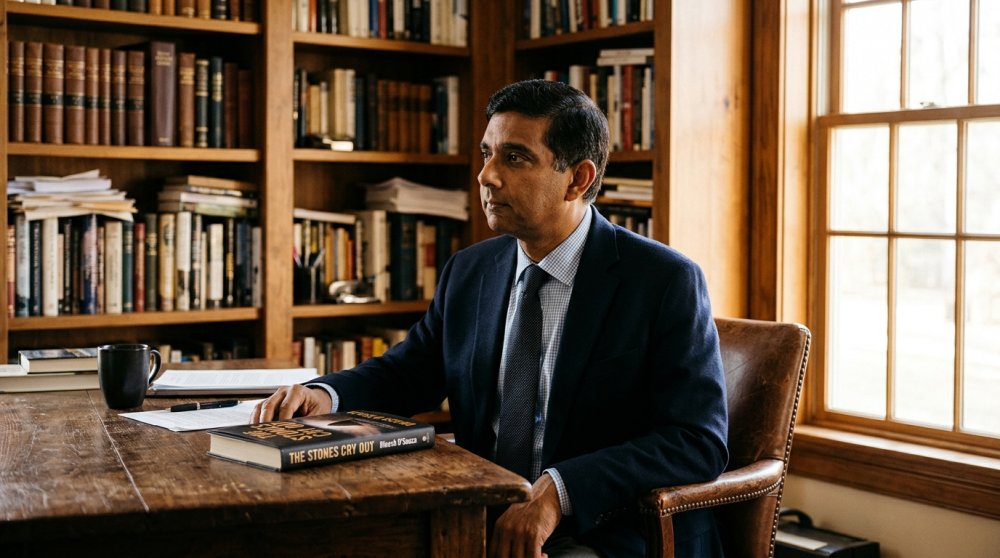
Author and filmmaker Dinesh D’Souza has joined Christian Post to discuss his latest work, The Stones Cry Out: Biblical Archaeology, Prophecy, and the Last Days.
The book examines how recent archaeological findings confirm the reliability of biblical accounts. D’Souza argues that these discoveries strengthen the case for the literal fulfillment of prophecy in our time.
“The Stones Cry Out is about how the ground itself testifies to the truth of Scripture and the nearness of the last days,”
he explained during the interview.
D’Souza highlights specific sites and artifacts that align with Scripture’s historical claims. He presents these findings as evidence that the Bible is not merely spiritual literature but a trustworthy historical record.
“When archaeology confirms what the prophets foretold, it becomes harder for skeptics to dismiss the Word of God,”
he stated.
The author also explores how current events appear to line up with prophetic patterns described in Scripture. He encourages believers to study both the physical evidence and the biblical text with renewed attention.
“God is not silent, and the stones continue to speak,”
D’Souza concluded.
Let us know what you think, please share your thoughts in the comments below.

Faith Facts
- Kori Pennypacker of Bible2School is helping Christian families understand that public school attendance does not require compromising faith in Jesus Christ.
- Pennypacker addresses widespread confusion among parents and educators about students’ constitutional religious freedom rights.
- The ministry equips children to live out their faith with confidence while attending public schools across America.
Christian parents across the nation face an increasingly difficult decision when it comes to their children’s education. Many wonder whether sending their sons and daughters to public schools will inevitably lead to the erosion of their faith. Kori Pennypacker, CEO of Bible2School, believes this false choice is robbing families of both educational opportunity and spiritual growth.
Pennypacker’s message centers on what she calls “God confidence” – the assurance that children can stand firm in their Christian beliefs even in secular environments. She argues that public schools remain one of the largest mission fields in America, filled with children who need to hear the Gospel.
“Christian parents don’t have to choose between sending their children to public school and teaching them to live openly for Jesus Christ,” Pennypacker states. She emphasizes that many families have been unnecessarily frightened away from public education due to misinformation about religious liberty protections.
The Bible2School ministry works to correct these misconceptions by training both parents and educators on students’ constitutional rights. Pennypacker notes that religious expression remains protected in public schools, including the right to pray, read Scripture, and share one’s faith with peers during appropriate times.
Through Bible2School’s programs, children learn how to articulate their beliefs with both courage and respect. The ministry provides practical tools that help young believers navigate classroom discussions, peer relationships, and school policies while maintaining their Christian witness.
Pennypacker believes that rather than retreating from public education, Christian families should prepare their children to engage the culture with truth and grace. This approach, she argues, produces stronger believers who understand how to live out their faith in any environment.
Let us know what you think, please share your thoughts in the comments below.
Faith Facts
- Vice President JD Vance credits his faith for guiding his political service and life decisions.
- Vance says he has not yet felt a divine call to pursue the presidency in 2028.
- He remains open to the possibility that God may lead him toward a future presidential campaign.
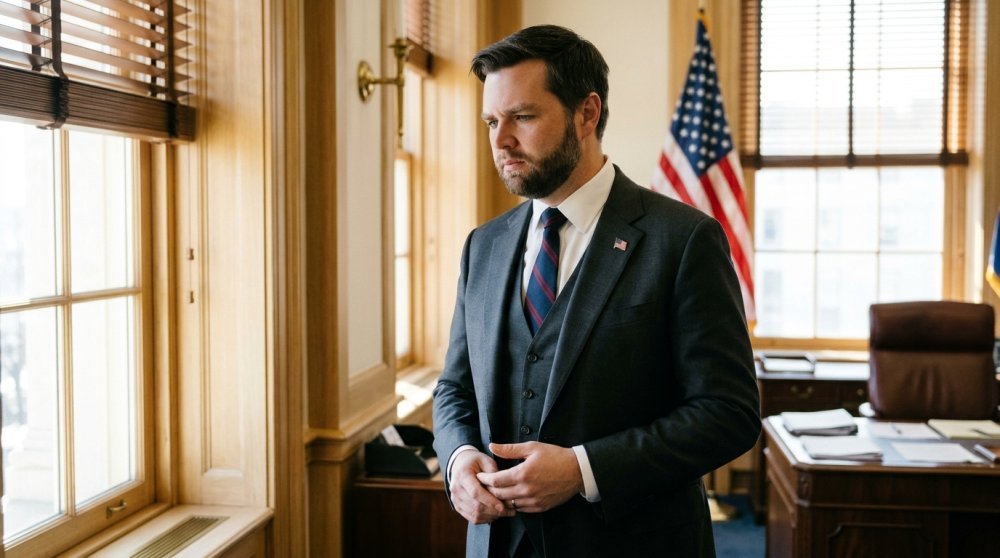
Vice President JD Vance has stated that his faith remains central to his decision-making as he weighs a potential 2028 presidential campaign. The Ohio senator-turned-vice president spoke candidly about how he continues to seek God’s direction before making major political moves.
Vance emphasized that he has not yet sensed a clear calling from God regarding a presidential run. He noted that this could change in time but stressed the importance of waiting for divine guidance.
“I haven’t yet felt God’s call for a presidential run in 2028,”
“Maybe that’ll change.”
Vance’s comments reflect a growing trend among conservative leaders who publicly acknowledge their dependence on prayer and Scripture when facing major career decisions. His approach resonates with many Americans who value leaders willing to submit their ambitions to God’s will.
The vice president also reflected on how his conversion to Christianity has shaped his worldview and public service. Vance has often spoken about the transformative power of faith in both his personal life and his political philosophy.
Let us know what you think, please share your thoughts in the comments below.


-

 Self-Reliance2 years ago
Trump’s Bold Move Uncovers Massive Social Security Fraud
-

 Faith2 years ago
New Clues Emerge in Noah’s Ark Mystery
-

 News2 years ago
Governor Walz’s Rhetoric Sparks National Controversy
-

 News2 years ago
Mel Gibson’s ‘The Passion of the Christ’ Sequel Title Announced
-

 Family2 years ago
Texas Lawmaker Targets Furries in Schools
-

 Freedom2 years ago
Maine Lawmaker Challenges Sports Fairness Controversy
-

 Family1 year ago
Canada’s Controversial Policy Sparks Ethical Debate
-
Faith11 months ago
Congress Hears Pleas for Nigerian Christians