
News
Why This Christian Paper Refuses to Go Fully Digital Despite Rising Costs

Faith Facts
- The Christian Chronicle is maintaining its print edition despite $56,000 monthly printing and mailing costs after overwhelming reader support
- Readers emphasized the irreplaceable value of physical newspapers for faith-based news, with many saying they read cover-to-cover when holding the paper
- The publication exceeded its $168,000 fundraising goal for transition costs and now has a $100,000 matching gift available for spring donations
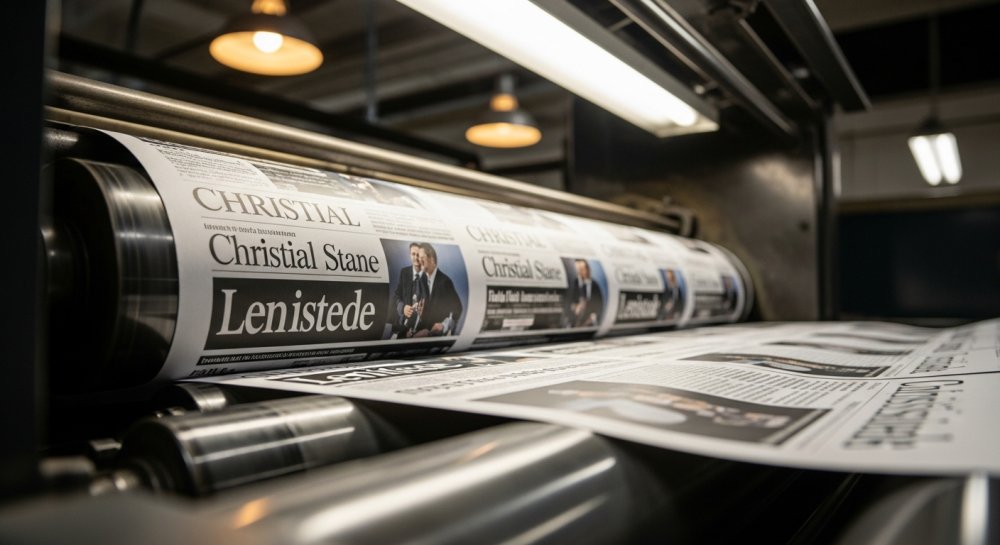
In an era when many publications have abandoned print entirely, The Christian Chronicle is charting a different course. Despite facing substantial financial pressures, the faith-focused newspaper is listening to its readers and keeping the presses running.
The publication’s move to independent nonprofit status has brought multiple challenges, including printing and mailing costs that now total approximately $56,000 per month for 12 annual issues. That’s more than half a million dollars per year just to produce the physical newspaper.
President and CEO Erik Tryggestad posed a direct question to readers in January: Should the Chronicle stop printing? The response was clear and passionate.
“I believe I am more likely to read it cover-to-cover, as I do now,” one reader responded. “I usually keep it out on the counter and read it over the course of a few days. With digital, it wouldn’t be in plain sight for me to keep going back to.”
The feedback revealed something publishers across America are rediscovering: physical newspapers create reading habits that digital formats often can’t replicate. Readers spoke about the tangible nature of holding news in their hands, the ability to read at their own pace and place, and even their appreciation for features like the crossword puzzle.
The Chronicle has invested significantly in its digital presence, offering downloadable PDFs of the print edition, expanded online coverage with video content, and active social media engagement on Facebook, Instagram, X, and TikTok. An award-winning podcast is also being enhanced.
Yet none of these digital offerings could substitute for what readers value most about the printed page. Many suggested they would accept bimonthly or even quarterly print editions rather than lose the physical newspaper entirely.
“Having a central location of news for the church helps (to) keep the community feeling part of the larger Christian family,” one reader explained.
The publication is adapting to financial realities while honoring reader preferences. This year, the Chronicle is experimenting with 10 issues instead of 12 to help manage costs while maintaining the print presence readers cherish.
The transition to independence has brought some growing pains. A database migration resulted in some subscribers receiving duplicate copies. The publication is asking affected readers to contact Sawmi Sektak at [email protected] or call (405) 425-5070 to resolve the issue.
Readers should also note a new mailing address. The Chronicle has separated from Oklahoma Christian University’s postal box and now receives mail at PO Box 5240, Edmond, OK 73083-5240. Correspondence can also be sent directly to the office at 2801 E Memorial Rd. Ste 102, Edmond, OK 73013.
Despite the challenges, there’s good news on the financial front. The Chronicle set an ambitious goal of raising $168,000 for one-time transition and equipment costs. Thanks to reader support, that goal was not only met but exceeded.
Currently, a $100,000 matching gift has been secured for the spring appeal. Funds raised will support the publication’s ongoing coverage, including the “Who Are We?” series. Contributions can be made by mailing checks to the address above or through the donate button at christianchronicle.org.
The story of The Christian Chronicle illustrates a broader truth: when publications serve their audiences well and maintain their core mission, readers respond. In a media landscape increasingly dominated by digital-only operations, this faith-focused newspaper is proving that print still has a vital role in connecting Christian communities.
The publication’s commitment to continuing its print edition reflects both financial stewardship and servant leadership. By listening to readers and adapting thoughtfully rather than abandoning what works, the Chronicle is charting a sustainable path forward that honors both its mission and its audience.
Let us know what you think, please share your thoughts in the comments below.

Faith Facts
- The Pentagon released its first batch of files on unidentified anomalous phenomena (UAPs) to the public, following promises from Trump administration officials
- Officials are encouraging Americans to examine the evidence and form their own conclusions about the mysterious aerial phenomena
- The disclosure comes after weeks of anticipation and represents a significant step toward government transparency on the long-classified subject
The Pentagon has officially released its first collection of files concerning unidentified anomalous phenomena—commonly known as UFOs—inviting Americans to review the evidence and reach their own conclusions. The disclosure fulfills recent promises made by top officials in the Trump administration regarding government transparency on this controversial subject.
The release marks a notable shift in how federal agencies approach the UAP topic, moving away from decades of secrecy toward public accountability. After weeks of growing anticipation, citizens now have access to previously classified information about aerial phenomena that have puzzled military personnel and civilians alike.
8-pointed star UFO. ????
One of the strangest clips from the UFO files so far shows a 8-pointed star UFO floating in the sky. pic.twitter.com/jzyvEaOO6l
— Astral???? (@The_Astral_) May 8, 2026
Trump administration officials had pledged greater openness regarding unexplained aerial sightings, particularly those encountered by military pilots and personnel. This initial document release represents the administration’s commitment to keeping the American people informed about matters that have long been shrouded in government secrecy.
The Pentagon’s decision to allow public examination of these files reflects a broader push for transparency in government operations. Rather than offering definitive explanations, officials are trusting Americans to analyze the data independently—a refreshing departure from the typical approach of government agencies dictating conclusions.
For many Americans of faith, questions about unexplained phenomena intersect with broader theological considerations about creation, the universe, and humanity’s place within it. The release of these files allows for informed discussion grounded in actual evidence rather than speculation and conspiracy theories.
The disclosure also raises important questions about what else the federal government may have withheld from public knowledge over the years. Advocates for government accountability have long argued that American citizens deserve access to information their tax dollars fund, particularly when that information doesn’t genuinely threaten national security.
As these files become available for public review, Americans from all backgrounds can examine the evidence for themselves. This approach respects the intelligence and judgment of everyday citizens rather than maintaining a posture of secrecy that often breeds distrust in government institutions.
Let us know what you think, please share your thoughts in the comments below.
Faith Facts
- The Virginia Supreme Court struck down a congressional map that was designed to favor Democrats, upholding principles of fair representation.
- Multiple states are redrawing U.S. House districts ahead of the 2026 midterm elections, with partisan gerrymandering concerns at the forefront.
- The decision represents a significant check on attempts to manipulate electoral boundaries for political advantage.
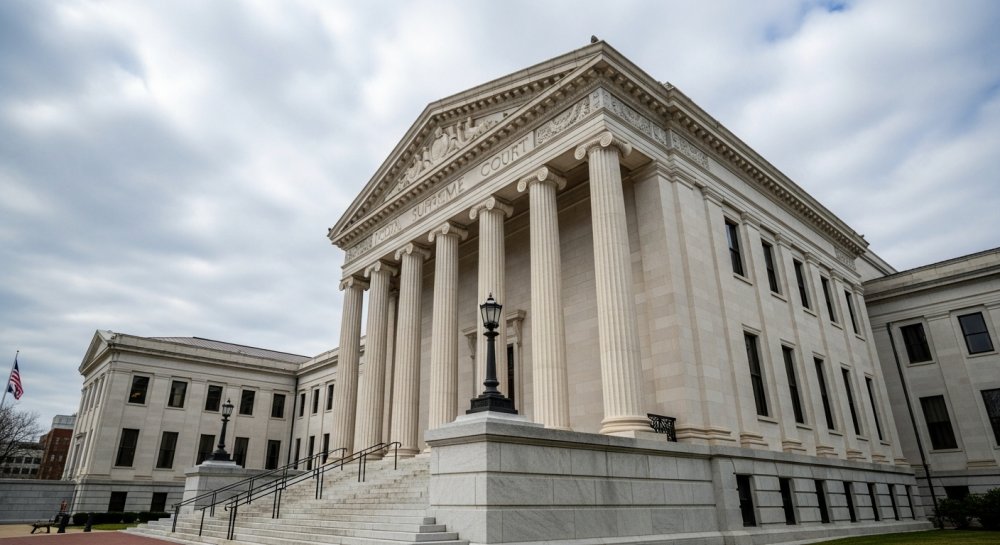
In a major victory for electoral fairness, the Virginia Supreme Court has rejected a congressional map that was engineered to benefit Democrats, dealing a significant blow to partisan redistricting efforts in the Commonwealth.
The ruling comes as states across the nation are engaged in the complex process of redrawing U.S. House districts in preparation for the 2026 midterm elections. Virginia’s rejected map had been crafted with the clear intent of tilting representation in favor of Democratic candidates, a practice that undermines the foundational principle of equal representation.
This decision by Virginia’s highest court serves as an important reminder that the judiciary can and should act as a check against partisan manipulation of electoral districts. Gerrymandering—whether practiced by Democrats or Republicans—distorts the will of the people and erodes public trust in our democratic institutions.
The Supreme Court’s action affirms that electoral maps must be drawn according to fair, constitutional standards rather than political expediency. For voters who value integrity in the electoral process, this ruling represents a meaningful step toward ensuring that elections reflect the genuine will of citizens rather than the strategic calculations of political operatives.
As the 2026 midterms approach, redistricting battles are intensifying nationwide. The outcome of these map-drawing processes will have profound implications for representation in Congress and the balance of power in Washington. The Virginia decision may set an important precedent for other states grappling with similar challenges.
Fair and transparent redistricting processes are essential to preserving government of, by, and for the people. When courts hold the line against partisan gerrymandering, they protect the foundational American principle that power flows from the people to their representatives—not the other way around.
Let us know what you think, please share your thoughts in the comments below.
Faith Facts
- J.K. Rowling publicly compared assisted suicide to choosing salted caramel, sparking controversy over the trivialization of life-and-death decisions
- The Christian perspective affirms that human life is sacred and created in God’s image, making it a gift to be treasured, not a consumer choice
- The assisted suicide debate continues to challenge America’s foundation of Judeo-Christian values that recognize the inherent dignity and worth of every person
The beloved author of the Harry Potter series has waded into dangerous waters with a recent social media post that has left many Americans — particularly those who cherish the sanctity of human life — deeply troubled.
J.K. Rowling recently took to social media platform X to share her thoughts on assisted suicide, making a comparison that has sparked outrage among faith communities and pro-life advocates across the nation. In her post, she appeared to frame the decision to end one’s life through assisted suicide as simply another personal choice, likening it to selecting a flavor at an ice cream shop.
This casual approach to matters of life and death stands in stark contrast to the foundational Christian belief that every human life bears the image of God and possesses inherent, immeasurable worth from conception to natural death. The comparison trivializes what should be recognized as a profound moral and spiritual decision with eternal consequences.
For Christians, the issue of assisted suicide isn’t about personal autonomy or individual preference. It’s about recognizing that our lives are not ultimately our own — they are gifts from our Creator, entrusted to us for His purposes and glory.
Scripture is clear on this matter. Psalm 139 tells us that God knit us together in our mother’s womb and ordained all our days before one of them came to be. Job declared that “the Lord gave, and the Lord has taken away.” These aren’t merely poetic phrases — they’re theological truths that define how believers understand the value and purpose of human existence.
The assisted suicide movement, which has gained troubling momentum in several states and countries, fundamentally rejects this biblical worldview. It replaces God’s sovereignty over life and death with human autonomy, elevating personal choice above divine design.
What makes Rowling’s comments particularly concerning is the cultural influence she wields. With millions of followers and a platform that reaches across generations, her words carry weight. When prominent figures frame ending one’s life as casually as choosing dessert, they normalize what should remain morally unthinkable.
The implications extend beyond individual decisions. As assisted suicide becomes more socially acceptable, vulnerable populations — the elderly, disabled, and chronically ill — face increasing pressure to end their lives rather than be perceived as burdens. This utilitarian calculus is antithetical to the Christian call to protect the weak and value every person regardless of their productivity or perceived quality of life.
Medical professionals who hold to traditional Hippocratic values find themselves increasingly marginalized in a culture that demands they participate in ending life rather than preserving it. The healing profession becomes the killing profession, and doctors trained to do no harm are compelled to become agents of death.
This cultural shift didn’t happen overnight. It’s the logical outworking of decades of secularization, where transcendent moral truths have been replaced by subjective personal preferences. When society abandons the Judeo-Christian foundation that once anchored Western civilization, human dignity becomes negotiable and life itself becomes just another commodity.
Christians must respond to this challenge not with silence but with compassionate conviction. We must stand firmly for the sanctity of human life while extending Christ’s love to those who are suffering. The answer to pain and despair isn’t death — it’s hope, community, quality palliative care, and the reminder that even in our darkest valleys, we are never alone.
The contrast couldn’t be clearer. One worldview sees human beings as autonomous individuals whose lives are theirs to dispose of as they see fit. The other sees human beings as beloved children of God, precious beyond measure, whose lives have purpose and meaning even in suffering.
As believers, we’re called to choose life — not because life is always easy or pain-free, but because every person reflects the image of their Creator and every day is an opportunity to experience His grace and bring Him glory. That’s not a message of cruelty or indifference to suffering; it’s a message of hope grounded in eternal truth.
The debate over assisted suicide will continue to intensify in the coming years. As it does, Christians must remain steadfast in proclaiming that human life is sacred from beginning to end, not because we say so, but because God does.
Let us know what you think, please share your thoughts in the comments below.


-

 Self-Reliance1 year ago
Trump’s Bold Move Uncovers Massive Social Security Fraud
-

 Faith1 year ago
New Clues Emerge in Noah’s Ark Mystery
-

 News1 year ago
Governor Walz’s Rhetoric Sparks National Controversy
-

 News1 year ago
Mel Gibson’s ‘The Passion of the Christ’ Sequel Title Announced
-

 Family1 year ago
Texas Lawmaker Targets Furries in Schools
-

 Freedom1 year ago
Maine Lawmaker Challenges Sports Fairness Controversy
-

 Family12 months ago
Canada’s Controversial Policy Sparks Ethical Debate
-
Faith6 months ago
Congress Hears Pleas for Nigerian Christians