
News
Virginia Supreme Court Delivers Major Redistricting Victory for Fair Elections

Faith Facts
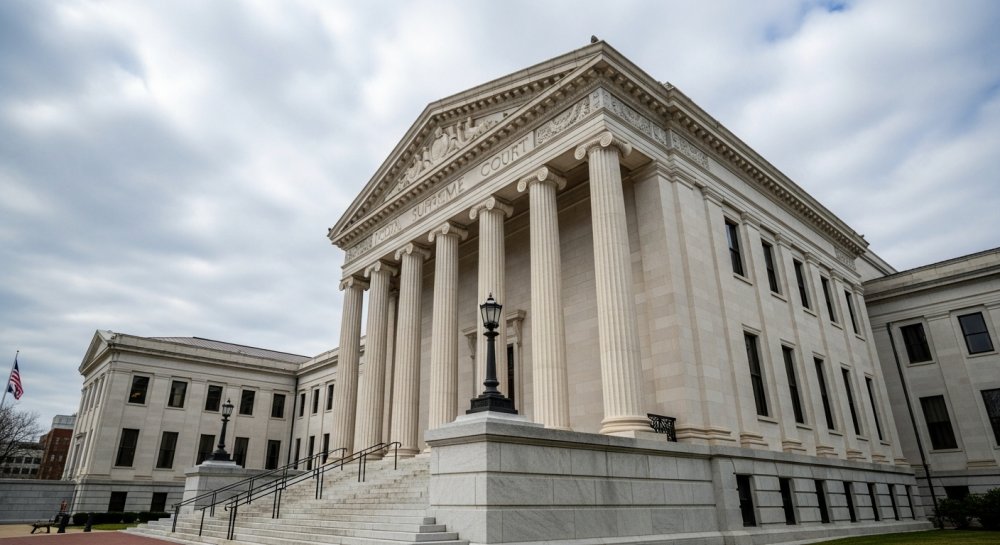
- The Virginia Supreme Court struck down a congressional map that was designed to favor Democrats, upholding principles of fair representation.
- Multiple states are redrawing U.S. House districts ahead of the 2026 midterm elections, with partisan gerrymandering concerns at the forefront.
- The decision represents a significant check on attempts to manipulate electoral boundaries for political advantage.
In a major victory for electoral fairness, the Virginia Supreme Court has rejected a congressional map that was engineered to benefit Democrats, dealing a significant blow to partisan redistricting efforts in the Commonwealth.
The ruling comes as states across the nation are engaged in the complex process of redrawing U.S. House districts in preparation for the 2026 midterm elections. Virginia’s rejected map had been crafted with the clear intent of tilting representation in favor of Democratic candidates, a practice that undermines the foundational principle of equal representation.
This decision by Virginia’s highest court serves as an important reminder that the judiciary can and should act as a check against partisan manipulation of electoral districts. Gerrymandering—whether practiced by Democrats or Republicans—distorts the will of the people and erodes public trust in our democratic institutions.
The Supreme Court’s action affirms that electoral maps must be drawn according to fair, constitutional standards rather than political expediency. For voters who value integrity in the electoral process, this ruling represents a meaningful step toward ensuring that elections reflect the genuine will of citizens rather than the strategic calculations of political operatives.
As the 2026 midterms approach, redistricting battles are intensifying nationwide. The outcome of these map-drawing processes will have profound implications for representation in Congress and the balance of power in Washington. The Virginia decision may set an important precedent for other states grappling with similar challenges.
Fair and transparent redistricting processes are essential to preserving government of, by, and for the people. When courts hold the line against partisan gerrymandering, they protect the foundational American principle that power flows from the people to their representatives—not the other way around.
Let us know what you think, please share your thoughts in the comments below.


Faith Facts
- A Louisiana pastor’s family was devastated when a car crash claimed the lives of his 13-year-old son and daughter-in-law returning from a Pentecostal youth camp.
- The pastor’s son, who was driving and had been married only six months, survived the crash that killed his wife and younger brother.
- The church community has rallied in prayer and support as the family grieves this unimaginable loss.
A Louisiana pastor and his congregation are grappling with profound grief after a tragic car accident took the lives of two beloved family members. The devastating crash occurred as they were returning home from a Pentecostal youth camp, leaving a tight-knit faith community reeling from the sudden loss.
The accident claimed the life of the pastor’s 13-year-old son and his daughter-in-law, who had been married to the pastor’s older son for just six months. The newlywed couple had their entire lives ahead of them, making the tragedy all the more heartbreaking for those who knew and loved them.
The pastor’s son who was driving survived the crash, now facing the unimaginable pain of losing both his wife and younger brother in a single moment. The family has not released specific details about the circumstances of the accident, asking for privacy during this difficult time.
The church community has immediately mobilized in response to this tragedy, surrounding the pastor and his family with prayer, practical support, and expressions of love. Fellow believers have organized meal trains, offered childcare assistance, and committed to ongoing prayer for the family’s healing and comfort.
This heartbreaking event serves as a sobering reminder of life’s fragility and the importance of cherishing every moment with loved ones. For families of faith, such tragedies test the strength of belief and the power of community support during the darkest hours.
The youth camp they had attended represents the kind of faith-building experience that shapes young lives in positive ways. The cruel irony that the journey home from such an event ended in tragedy has not been lost on the grieving community.
As the pastor’s family navigates the coming days and weeks, they face the difficult task of planning funerals while supporting the surviving son through his own physical and emotional recovery. The weight of losing two family members simultaneously is a burden few can comprehend.
Churches across Louisiana and beyond have expressed solidarity with the grieving family, demonstrating the bonds that unite believers even in the face of incomprehensible loss. This tragedy highlights both the vulnerability of human life and the enduring strength found in faith and community.
In times like these, the body of Christ often shows its truest character—not in prosperity or celebration, but in how believers gather around those who are suffering. The outpouring of support for this pastoral family exemplifies the biblical call to “weep with those who weep.”
Let us know what you think, please share your thoughts in the comments below.
Faith Facts
- The Anglican Church in North America has scheduled a formal ecclesiastical trial for former Archbishop Stephen Wood following allegations that prompted his resignation
- The ACNA has implemented comprehensive reforms to its disciplinary procedures in response to the case, strengthening accountability measures for church leadership
- The trial represents a pivotal moment for the Reformed Anglican denomination as it seeks to maintain biblical standards while addressing allegations against senior clergy
The Anglican Church in North America has announced a trial date for former Archbishop Stephen Wood, marking a significant step in a case that has challenged the young denomination and led to sweeping changes in how it handles misconduct allegations against church leaders.
The ACNA, formed in 2009 by traditional Anglicans who left the Episcopal Church over theological disputes including same-sex marriage and biblical authority, now faces internal questions about leadership accountability. The case has prompted the denomination to strengthen its disciplinary framework to better protect congregants and maintain ministerial standards.
Wood’s resignation came after allegations emerged that required formal ecclesiastical investigation under church law. The ACNA’s decision to proceed with a trial demonstrates the denomination’s commitment to addressing serious matters through proper canonical procedures rather than allowing leaders to simply step down without accountability.
Church officials have emphasized that the trial process will follow established Anglican tradition while incorporating new safeguards adopted in recent months. These reforms include clearer reporting mechanisms, enhanced investigative procedures, and stronger protections for those who come forward with allegations against clergy.
The case has resonated throughout conservative Anglican circles, where many believers view strong church discipline as essential to maintaining biblical faithfulness and protecting vulnerable members. Traditional Christians have long emphasized that church leaders must be held to high standards of conduct, noting that Scripture calls those in ministry to exemplary lives.
For the ACNA, which positions itself as a biblically faithful alternative to the mainline Episcopal Church, the handling of this case carries particular weight. The denomination has attracted thousands of traditional Anglicans seeking churches that uphold historic Christian teaching on marriage, sexuality, and biblical authority.
The upcoming trial will be conducted according to the ACNA’s canons and constitution, which govern church discipline and provide procedures for addressing allegations against bishops and other clergy. The process includes opportunities for defense, presentation of evidence, and appeal—reflecting the denomination’s commitment to justice alongside accountability.
Christian legal experts note that ecclesiastical trials serve an important function in maintaining church integrity and demonstrating that religious communities take misconduct seriously. Such proceedings, though difficult, can help restore confidence in denominational leadership when handled with transparency and fairness.
The ACNA’s response to this situation stands in contrast to some mainline Protestant denominations that have faced criticism for inadequate responses to clergy misconduct. By implementing reforms and proceeding with formal proceedings, the Anglican body is working to demonstrate that biblical standards apply to all members, especially those in positions of authority.
As the trial date approaches, many within the ACNA are praying for wisdom for church leaders, justice for any who have been harmed, and ultimate redemption and restoration where possible. The denomination continues to emphasize that its mission of proclaiming the gospel and making disciples remains paramount even as it addresses this challenging internal matter.
Let us know what you think, please share your thoughts in the comments below.

Faith Facts
- UK Prime Minister Sir Keir Starmer announced his resignation Monday as both prime minister and Labour Party leader
- Christian leaders across the United Kingdom are responding to the political upheaval with calls for prayer and reflection
- Starmer’s departure comes two years after Labour’s landslide victory ended 14 years of Conservative government
Christian leaders across the United Kingdom are weighing in following the stunning announcement that Prime Minister Sir Keir Starmer is stepping down. The resignation marks a dramatic turn in British politics, coming just two years after Labour’s historic election victory.
Standing outside 10 Downing Street in London on Monday, Starmer confirmed he would resign as both prime minister and Labour Party leader. He reflected on the landslide general election victory that brought Labour back to power in 2022, ending more than a decade of Conservative rule.
For many Christian leaders in the UK, the political transition represents both uncertainty and opportunity. Faith communities have watched closely as Starmer’s government navigated complex issues affecting religious liberty, family values, and traditional moral teachings.
The resignation comes at a pivotal moment for Britain, as the nation continues to grapple with economic challenges, cultural shifts, and questions about the role of faith in public life. Christian voices in Parliament and across denominational lines are calling for continued engagement in the political process.
As the Labour Party prepares to select new leadership, believers are being reminded of the importance of praying for those in authority. The biblical mandate to intercede for political leaders takes on renewed significance during times of governmental transition.
The coming weeks will reveal how this leadership change impacts policies affecting religious communities, educational standards, and protections for conscience rights. Christian organizations are preparing to engage with whoever emerges as the next prime minister.
Let us know what you think, please share your thoughts in the comments below.


-

 Self-Reliance1 year ago
Trump’s Bold Move Uncovers Massive Social Security Fraud
-

 Faith1 year ago
New Clues Emerge in Noah’s Ark Mystery
-

 News1 year ago
Governor Walz’s Rhetoric Sparks National Controversy
-

 News1 year ago
Mel Gibson’s ‘The Passion of the Christ’ Sequel Title Announced
-

 Family1 year ago
Texas Lawmaker Targets Furries in Schools
-

 Freedom1 year ago
Maine Lawmaker Challenges Sports Fairness Controversy
-

 Family1 year ago
Canada’s Controversial Policy Sparks Ethical Debate
-
Faith7 months ago
Congress Hears Pleas for Nigerian Christians