
News
Why This Christian Paper Is Fighting to Stay in Print


Faith Facts
- The Christian Chronicle faces $56,000 monthly costs for printing and mailing, but overwhelming reader support has affirmed the value of keeping a print edition alive
- The publication exceeded its ambitious $168,000 fundraising goal for 2025, demonstrating strong support from faithful readers committed to traditional Christian media
- A $100,000 matching gift opportunity is now available to help sustain independent Christian journalism that serves Churches of Christ and the broader Christian community
God has been good to The Christian Chronicle over the past year. Despite multiple, ongoing challenges this publication faces as it moves to independent nonprofit status, readers continue to step up in their prayers and their contributions.
The price of printing and mailing this publication has risen substantially, costing the Chronicle about $56,000 per month. That’s tough to sustain for 12 issues per year.
Meanwhile, the publication has enhanced its digital offerings through downloadable PDFs of the print edition and expanded online coverage with video and additional photos. The Chronicle is active on social media platforms including Facebook, Instagram, X and TikTok, and is getting ready to enhance its award-winning podcast.
Nonetheless, the overwhelming majority of readers who responded to a query about the print edition talked about how much they value holding the news in their hands and reading it in a space and manner of their choosing.
“I believe I am more likely to read it cover-to-cover, as I do now,” one reader said. “I usually keep it out on the counter and read it over the course of a few days. With digital, it wouldn’t be in plain sight for me to keep going back to.”
Other readers pointed out how much they love the crossword puzzle. Even if it means going bimonthly or quarterly, they want the Chronicle to stay in print.
The plan is to keep producing a print edition as long as possible. This year the publication is experimenting with producing 10 issues instead of 12 to see how this impacts the bottom line.
“Having a central location of news for the church helps (to) keep the community feeling part of the larger Christian family,” one reader wrote. That’s why this ministry continues.
As part of the move to independence, the Chronicle moved its database to a new system and a few glitches resulted. If you’re getting multiple copies of the print edition, please contact Sawmi Sektak at [email protected] or call (405) 425-5070.
Moving to independence from Oklahoma Christian University also required the publication to separate its mail from the Post Office Box used by the university. Some dedicated supporters still have Business Reply Mail envelopes that have the old address.
Please do not send contributions or correspondence to PO Box 11000 in Oklahoma City. The new address is PO Box 5240, Edmond, OK 73083-5240. You also can send correspondence directly to the office at 2801 E Memorial Rd. Ste 102, Edmond, OK 73013.
Last year the Chronicle set the ambitious goal of raising $168,000 to help with one-time transition and equipment costs and ever-rising prices. Thanks to generous gifts, that goal was met and exceeded!
A $100,000 matching gift has been given toward the spring appeal. The funds raised will go toward stories that matter to Christian readers, including the publication’s “Who Are We?” series. Checks can be mailed to the address above or donations can be made through the “donate” button at christianchronicle.org.
In an era when traditional Christian values are increasingly marginalized in mainstream media, independent Christian journalism has never been more vital. The Christian Chronicle remains committed to serving its readers with news that strengthens faith, encourages families, and connects believers across the country.
Let us know what you think, please share your thoughts in the comments below.

Faith Facts
- HHS Secretary Robert F. Kennedy Jr. announced a federal initiative to reduce overprescription of antidepressants and psychotropic medications, particularly for children
- Kennedy stated that withdrawal from SSRIs can be worse than heroin withdrawal and called for deprescribing protocols
- The initiative focuses on protecting children from potentially harmful pharmaceutical interventions and supporting families seeking alternatives
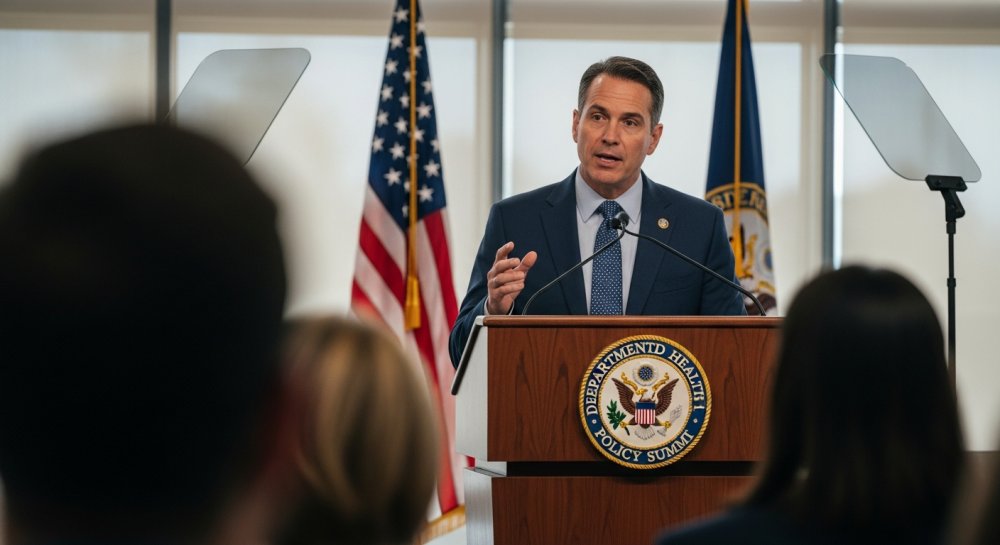
Health and Human Services Secretary Robert F. Kennedy Jr. unveiled a major federal initiative Monday aimed at addressing what he called the crisis of overprescribed antidepressants and psychotropic medications in America. The announcement came during an emotionally charged summit focused on pharmaceutical dependency and children’s health.
The new deprescribing program targets selective serotonin reuptake inhibitors (SSRIs) and similar medications that have become increasingly common prescriptions for both adults and children in recent decades. Kennedy’s initiative seeks to provide safer pathways for Americans who want to reduce or discontinue these medications under medical supervision.
“Withdrawal from SSRIs can be worse than heroin withdrawal,” Kennedy declared during the summit, highlighting the severity of dependency issues many patients face.
The initiative places particular emphasis on protecting children from overprescription of psychotropic drugs. Kennedy expressed concern about the long-term effects of these medications on developing minds and bodies, advocating for more cautious prescribing practices and greater exploration of alternative treatments.
The deprescribing program will establish protocols for medical professionals to safely guide patients through the process of reducing medication dosages. This approach recognizes that abrupt discontinuation can cause serious withdrawal symptoms, requiring careful medical oversight and support.
Kennedy’s announcement reflects growing concerns among many Americans about pharmaceutical dependency and the influence of drug companies on medical practice. The initiative aligns with broader efforts to prioritize natural health approaches and reduce reliance on prescription medications when appropriate alternatives exist.
For families of faith, this initiative offers hope that medical care can better align with values emphasizing whole-person wellness, parental authority over children’s health decisions, and freedom from unnecessary chemical interventions. The program seeks to restore balance to a healthcare system many believe has become too quick to prescribe powerful psychiatric medications.
The summit featured testimonies from individuals and families affected by SSRI dependency, creating an emotional atmosphere that underscored the human cost of overprescription practices. Their stories highlighted the challenges of withdrawal and the need for better medical support during the deprescribing process.
This initiative represents a significant shift in federal health policy, acknowledging concerns about pharmaceutical overreach that have been voiced by medical reform advocates for years. By providing structured deprescribing protocols, HHS aims to give both doctors and patients more confidence in safely reducing medication dependence.
Let us know what you think, please share your thoughts in the comments below.

Faith Facts
- A new report accuses the Armenian government of systematically targeting the Armenian Apostolic Church, one of the oldest Christian denominations in the world
- The allegations surfaced as European Union leaders gathered in Yerevan for high-level diplomatic meetings
- The Armenian Apostolic Church has served as the spiritual foundation of Armenian national identity since 301 AD, making it the world’s first officially Christian nation
A troubling new report has emerged accusing the government of Armenia of targeting the Armenian Apostolic Church, raising serious concerns about religious freedom in a nation that holds a unique place in Christian history. The timing of these accusations is particularly significant, as they coincide with a gathering of European Union leaders in the Armenian capital of Yerevan.
Armenia holds the distinction of being the first nation to officially adopt Christianity as its state religion in 301 AD, more than a decade before the Roman Empire would follow suit. The Armenian Apostolic Church has been the spiritual bedrock of Armenian identity for over seventeen centuries, preserving the faith through countless persecutions, including the genocide perpetrated by Ottoman Turkey in the early 20th century.
The allegations against the current Armenian government represent a disturbing development for a country whose very identity has been intertwined with Christian faith and resilience. For American Christians who value religious liberty as a foundational right, the reported persecution of an ancient Christian church should serve as a sobering reminder that faith remains under attack in many corners of the world.
The presence of EU leaders in Yerevan at the time these allegations surfaced adds another layer of complexity to the situation. Western nations have often positioned themselves as defenders of human rights and religious freedom, yet their response to reported persecution of Christians has frequently been muted compared to their advocacy for other groups.
The Armenian Apostolic Church is not merely a religious institution but a living connection to the earliest days of Christianity. Its liturgy, traditions, and theological heritage stretch back to the apostles themselves, making it one of the Oriental Orthodox churches that predates many of the denominational divisions familiar to Western Christians.
For believers who cherish religious freedom and the preservation of historic Christian witness, the situation in Armenia deserves careful attention and fervent prayer. When governments turn against the church, history has shown that the faithful often face not only administrative obstacles but genuine persecution that tests the very foundations of their witness.
The international community, particularly nations built on Judeo-Christian values like the United States, should take note of these allegations and consider what diplomatic pressure might be brought to bear in defense of religious liberty. The silence of Western powers in the face of Christian persecution sends a dangerous message to authoritarian regimes worldwide.
As this situation continues to develop, American Christians should remember their brothers and sisters in Armenia in their prayers and advocate for policies that prioritize religious freedom in our nation’s foreign relations. The church has survived far worse trials throughout history, but that does not diminish our responsibility to stand with the persecuted.
Let us know what you think, please share your thoughts in the comments below.
Faith Facts
- Islamic State West Africa Province terrorists killed at least 12 Christians in a brutal attack on a village in northeastern Nigeria’s Adamawa State
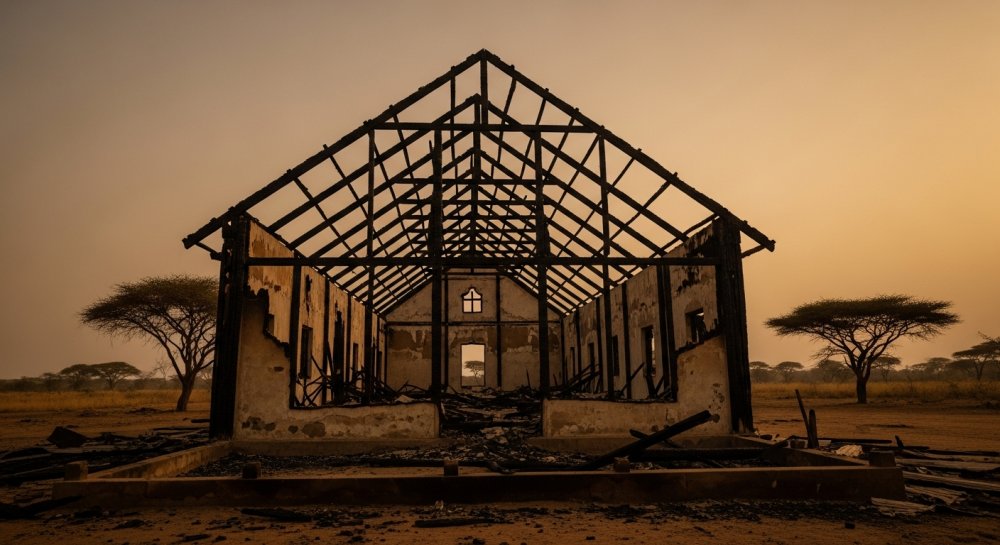
- The attackers burned a church building to the ground during the assault on the Christian community
- International Christian aid organization Barnabas Aid confirmed the details of this latest persecution of Nigerian believers
Christian communities in Nigeria continue to face deadly persecution as Islamic terrorists intensify their campaign of violence against followers of Christ. The Islamic State West Africa Province (ISWAP) carried out a brutal assault on a Christian village in Adamawa State, leaving a trail of destruction and heartbreak in their wake.
At least 12 believers lost their lives in the attack, according to reports from Barnabas Aid, an international Christian aid organization that monitors persecution worldwide. The terrorists didn’t stop at murder—they also torched a church building, destroying a sacred place of worship for the local Christian community.
This horrific incident is part of a disturbing pattern of violence targeting Christians in northeastern Nigeria. The region has become a battleground where faithful believers risk their lives simply for professing their faith in Jesus Christ. Islamic extremist groups like ISWAP have made it their mission to terrorize, displace, and eliminate Christian populations from the area.
The attack in Adamawa State serves as a stark reminder of the persecution our brothers and sisters in Christ face daily in many parts of the world. While Western Christians enjoy religious freedom, believers in Nigeria must live with the constant threat of violence, kidnapping, and death at the hands of radical Islamic terrorists.
ISWAP, an offshoot of Boko Haram, has pledged allegiance to the Islamic State and operates with the goal of establishing an Islamic caliphate in the region. Christian villages and communities remain primary targets for these extremists, who view believers as obstacles to their radical vision.
The destruction of the church building represents more than just property damage—it’s an attack on the very foundation of Christian community life. Churches serve as gathering places for worship, fellowship, and mutual support, especially in regions where believers face constant threats.
This tragedy calls for urgent prayer and support from the global Christian community. Our Nigerian brothers and sisters need our intercession, our advocacy, and our tangible assistance as they continue to stand firm in their faith despite unimaginable challenges.
American Christians must not remain silent in the face of such persecution. We have a moral obligation to speak up for those who cannot speak for themselves and to support organizations working to protect and aid persecuted believers around the world.
Let us know what you think, please share your thoughts in the comments below.


-

 Self-Reliance1 year ago
Trump’s Bold Move Uncovers Massive Social Security Fraud
-

 Faith1 year ago
New Clues Emerge in Noah’s Ark Mystery
-

 News1 year ago
Governor Walz’s Rhetoric Sparks National Controversy
-

 News1 year ago
Mel Gibson’s ‘The Passion of the Christ’ Sequel Title Announced
-

 Family1 year ago
Texas Lawmaker Targets Furries in Schools
-

 Freedom1 year ago
Maine Lawmaker Challenges Sports Fairness Controversy
-

 Family12 months ago
Canada’s Controversial Policy Sparks Ethical Debate
-
Faith5 months ago
Congress Hears Pleas for Nigerian Christians