
Faith
Why a Leaflet Cannot Stop What Faith Once Prevented

Faith Facts
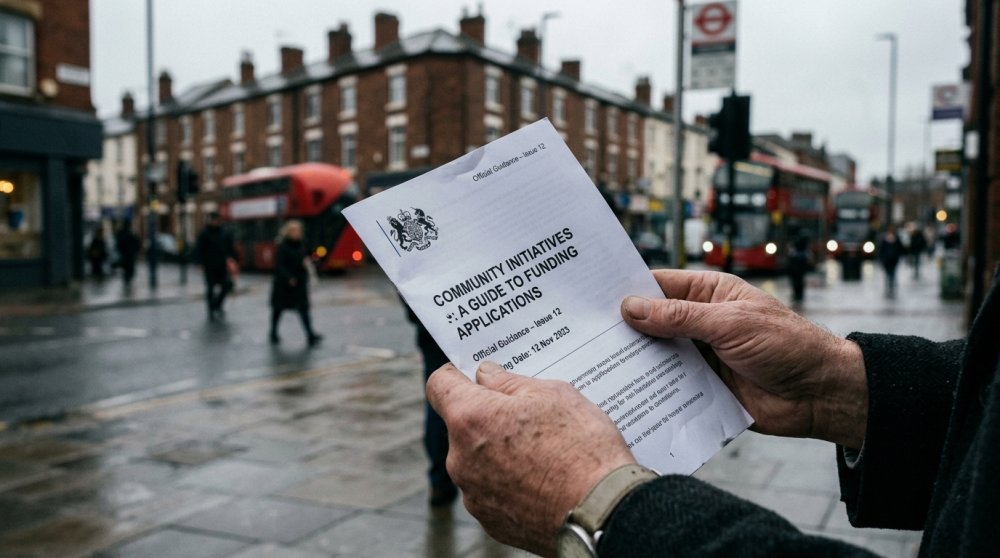
- British authorities are distributing rape awareness leaflets to asylum seekers in an attempt to address cultural differences regarding women’s rights
- Former UK Member of Parliament Miriam Cates argues that Britain’s historic respect for women stems directly from Judeo-Christian values that shaped Western civilization
- The leaflet approach fails to address the deeper spiritual and cultural transformation needed to instill reverence for human dignity and women’s safety
Britain’s response to a troubling pattern of violence against women reveals a nation attempting to solve a spiritual crisis with a pamphlet. The approach exposes how far the West has drifted from the foundational truths that once protected the vulnerable and elevated the dignity of every person.
Former Conservative Member of Parliament Miriam Cates has drawn attention to the government’s distribution of rape awareness materials to asylum seekers. The booklets attempt to communicate basic principles about consent and women’s rights — concepts that Western nations long took for granted as self-evident.
“British ideas about the rights of women point to the historic Judeo-Christian values our country is founded on,” Cates explains. “Seeking to change the deep-seated cultural beliefs of some asylum seekers by issuing a booklet just won’t work.”
Her observation strikes at the heart of a contradiction plaguing modern Britain and much of Europe. Nations built on centuries of Christian moral teaching are now discovering that once you abandon the foundation, the structure begins to crumble. The rights and protections women enjoy in Western societies didn’t emerge from secular humanism or government decree — they developed organically from a biblical worldview that recognized every human being as created in the image of God.
For generations, the Christian understanding of human dignity, complemented by the virtue of chastity and the sanctity of marriage, created cultures where women could walk streets safely and expect respect as a matter of course. That safety wasn’t maintained by informational pamphlets but by shared moral conviction rooted in faith.
The leaflet strategy represents the bankruptcy of secular solutions to spiritual problems. Government officials apparently believe that individuals raised in cultures with fundamentally different views of women, sexuality, and human dignity can be reformed through a brief reading assignment. This ignores the reality that worldviews are shaped by religious and cultural formation that runs soul-deep — not by bureaucratic literature.
What made Western civilization safe for women wasn’t merely laws on paper, but the internalized moral framework Christianity provided. Men were taught from childhood that women deserved honor, protection, and respect — not because the government said so, but because Scripture commanded it and the culture reinforced it.
The current crisis illustrates what happens when a nation welcomes people from non-Christian cultures without any expectation or mechanism for genuine cultural and spiritual integration. A leaflet about consent assumes a shared moral foundation that simply does not exist across all cultures. Some worldviews do not recognize the equal dignity of women, and no government handout will change hearts shaped by entirely different religious systems.
Cates’ point is both obvious and controversial in today’s Britain: real change requires transformation at the level of belief, not just behavior modification through information. The Christian faith offers such transformation through the renewing of minds and hearts by the Gospel.
Britain once knew this. Its laws protecting women, its cultural expectations of male honor, and its relatively safe society were all fruits of Christian civilization. As that civilization has been systematically dismantled in favor of secular multiculturalism, the safety women once enjoyed has diminished accordingly.
The solution is not more leaflets but a return to the moral and spiritual framework that made Western nations beacons of human dignity in the first place. That framework is inseparable from the Christian faith that built it. You cannot maintain Christian fruits while cutting down the Christian roots.
For America, the lesson is clear. As our own nation faces similar challenges with immigration and cultural integration, we must recognize that assimilation requires more than paperwork and pamphlets. It requires a commitment to the Judeo-Christian values that made our nation a place where liberty and safety could flourish together.
The West is learning a hard lesson: once you tell people that objective moral truth doesn’t exist, that all cultures are equal, and that traditional Christian sexual ethics are outdated, you lose the ability to insist on standards of behavior. A secular society has no transcendent ground on which to stand when declaring that certain actions are absolutely wrong.
Christianity provides that ground. It declares that every person — male and female — bears the image of God and therefore possesses inherent dignity and worth. It teaches that sexual intimacy is reserved for the covenant of marriage between one man and one woman. It calls men to sacrificial love and protection, not exploitation.
These aren’t just nice ideas; they are the pillars that upheld safe, flourishing societies for centuries. Remove the pillars, and the structure collapses — no matter how many informational pamphlets you distribute in the rubble.
Let us know what you think, please share your thoughts in the comments below.

Faith Facts
- The Moulton Church of Christ in Alabama recently celebrated its 200th anniversary of gospel preaching and worship.
- Church records trace the congregation’s roots to the early 19th century Restoration Movement led by Barton W. Stone and evangelist Benjamin F. Hall.
- Five generations of the Hardin family continue to worship and serve together, preserving a legacy of faith and community leadership.
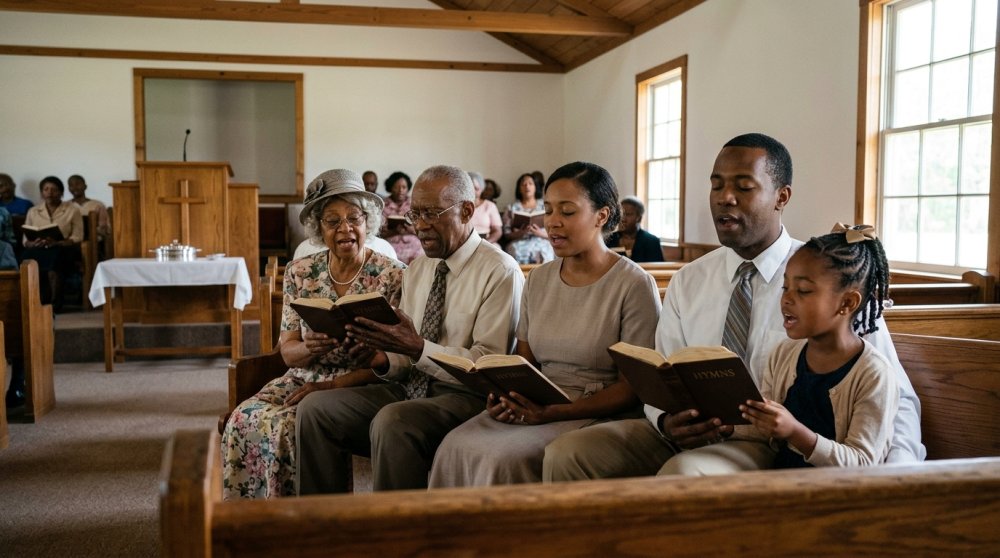
Two hundred years ago, evangelist Benjamin F. Hall planted a congregation of the Lord’s church in rural Moulton, Alabama. The congregation recently gathered to thank God for His faithfulness and to look forward with hope.
Church records credit Hall, influenced by Restoration Movement leader Barton W. Stone, with establishing the Moulton Church of Christ in 1826. Other historical sources mention Tolbert Fanning’s involvement in 1830 or a 1843 debate that brought twenty-two baptisms.
“I rejoice in such triumphs no little myself; but oh Lord, to Thee, and thy precious word, I am indebted for all that I have witnessed in Moulton,” the evangelist wrote of the church. “The brethren are strong in numbers, talent and influence, and I pray God they may be kept humble.”
Local deacon and historian Michael Strickland returned to his childhood congregation to teach its chronology and preach on the importance of remembrance. Two hundred ten members and guests attended the bicentennial worship service.
“Our mission, brothers and sisters, is to show the love of God to everyone,” Strickland told the congregation. “I want to suggest that God has been showing his love in this congregation for 200 years. And I pray he gives us 200 years more.”
Third-generation member Cindy Henry traveled from Hope Hull, Alabama, to celebrate with her family. Her grandfather and father served as elders, and her son Mitchell now serves as a deacon.
“This is still home in a lot of ways,” Henry said. “There’s new faces, but there’s still people that helped raise me.”
Her father, 88-year-old Clint Hardin, has worshiped at Moulton for most of his life. He recalls godly Sunday school teachers and parents who passed on their dedication to the word of God.
“We’ve had good preachers, and we’ve had good leadership,” Hardin said. “Really good leadership carried us through the problems I guess that all churches have.”
Young mother Ashley Nelson joined the church ten years ago through her husband Ross, whose grandfather once preached at Moulton. She now helps lead the children’s ministry known as the Sun Shiners.
“We have so many young kids now,” Nelson said. “We have a big, strong little kids group. And so, anytime we have an event, we usually have about 20 to 30 kids at those events.”
Through every season of growth and challenge, the Moulton Church of Christ has remained rooted in Scripture and committed to passing the faith to the next generation.
Let us know what you think, please share your thoughts in the comments below.

Faith Facts
- Christians in Essex are taking legal action to defend their right to share the Gospel in public spaces.
- A local council has banned the use of loudspeakers and prohibited street preaching about Hell.
- The church maintains that sharing the Gospel belongs on the streets and is a core expression of faith.
Christians at a church in Essex are fighting in court for the right to share the Gospel on British streets after a city council banned their use of loudspeakers and ordered them to stop warning people about Hell.
The case highlights growing tensions between traditional Christian witness and local government restrictions on public preaching.
“The Gospel belongs on the streets,” church leaders declared in their legal challenge.
Faithful believers see this as part of a broader pattern of restrictions aimed at silencing biblical truth in the public square.
“We will not be silenced from proclaiming the truth that saves,” a church spokesperson stated.
Let us know what you think, please share your thoughts in the comments below.

Faith Facts
- A Colombian pastor was murdered in Cartagena for refusing to allow gang members he had evangelized to use his motorcycle.
- The pastor’s death highlights the dangers faced by Christians boldly sharing the Gospel in violent urban areas.
- His sacrifice serves as a sobering reminder of the cost of faithfulness to Christ in regions controlled by criminal gangs.
A Colombian pastor was beaten to death by members of a criminal gang he had been evangelizing in the city of Cartagena.
The gang members attacked the pastor after he refused to allow them to use his motorcycle, according to a report.
Let us know what you think, please share your thoughts in the comments below.


-

 Self-Reliance2 years ago
Trump’s Bold Move Uncovers Massive Social Security Fraud
-

 Faith2 years ago
New Clues Emerge in Noah’s Ark Mystery
-

 News2 years ago
Governor Walz’s Rhetoric Sparks National Controversy
-

 News2 years ago
Mel Gibson’s ‘The Passion of the Christ’ Sequel Title Announced
-

 Family2 years ago
Texas Lawmaker Targets Furries in Schools
-

 Freedom2 years ago
Maine Lawmaker Challenges Sports Fairness Controversy
-

 Family1 year ago
Canada’s Controversial Policy Sparks Ethical Debate
-
Faith11 months ago
Congress Hears Pleas for Nigerian Christians