
Faith
Why a Leaflet Cannot Stop What Faith Once Prevented

Faith Facts
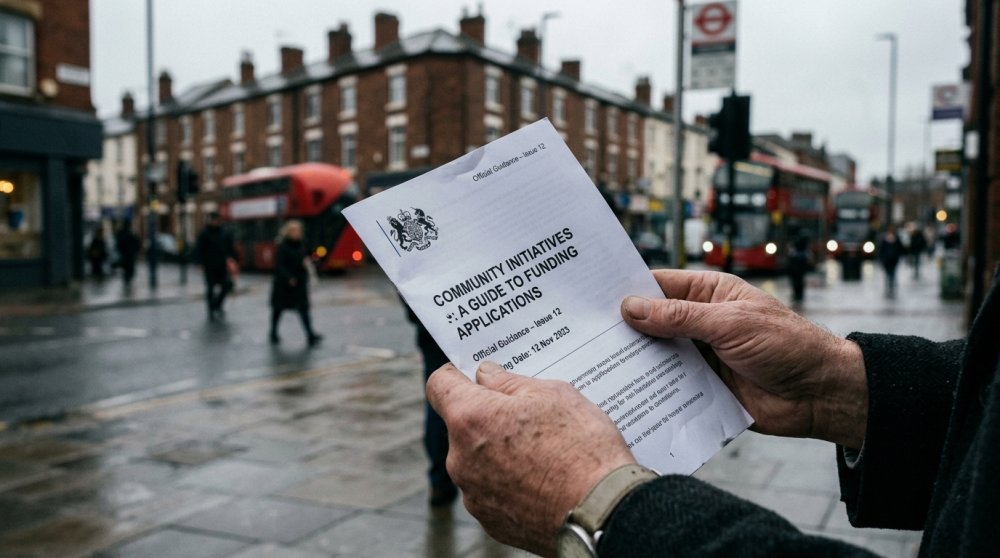
- British authorities are distributing rape awareness leaflets to asylum seekers in an attempt to address cultural differences regarding women’s rights
- Former UK Member of Parliament Miriam Cates argues that Britain’s historic respect for women stems directly from Judeo-Christian values that shaped Western civilization
- The leaflet approach fails to address the deeper spiritual and cultural transformation needed to instill reverence for human dignity and women’s safety
Britain’s response to a troubling pattern of violence against women reveals a nation attempting to solve a spiritual crisis with a pamphlet. The approach exposes how far the West has drifted from the foundational truths that once protected the vulnerable and elevated the dignity of every person.
Former Conservative Member of Parliament Miriam Cates has drawn attention to the government’s distribution of rape awareness materials to asylum seekers. The booklets attempt to communicate basic principles about consent and women’s rights — concepts that Western nations long took for granted as self-evident.
“British ideas about the rights of women point to the historic Judeo-Christian values our country is founded on,” Cates explains. “Seeking to change the deep-seated cultural beliefs of some asylum seekers by issuing a booklet just won’t work.”
Her observation strikes at the heart of a contradiction plaguing modern Britain and much of Europe. Nations built on centuries of Christian moral teaching are now discovering that once you abandon the foundation, the structure begins to crumble. The rights and protections women enjoy in Western societies didn’t emerge from secular humanism or government decree — they developed organically from a biblical worldview that recognized every human being as created in the image of God.
For generations, the Christian understanding of human dignity, complemented by the virtue of chastity and the sanctity of marriage, created cultures where women could walk streets safely and expect respect as a matter of course. That safety wasn’t maintained by informational pamphlets but by shared moral conviction rooted in faith.
The leaflet strategy represents the bankruptcy of secular solutions to spiritual problems. Government officials apparently believe that individuals raised in cultures with fundamentally different views of women, sexuality, and human dignity can be reformed through a brief reading assignment. This ignores the reality that worldviews are shaped by religious and cultural formation that runs soul-deep — not by bureaucratic literature.
What made Western civilization safe for women wasn’t merely laws on paper, but the internalized moral framework Christianity provided. Men were taught from childhood that women deserved honor, protection, and respect — not because the government said so, but because Scripture commanded it and the culture reinforced it.
The current crisis illustrates what happens when a nation welcomes people from non-Christian cultures without any expectation or mechanism for genuine cultural and spiritual integration. A leaflet about consent assumes a shared moral foundation that simply does not exist across all cultures. Some worldviews do not recognize the equal dignity of women, and no government handout will change hearts shaped by entirely different religious systems.
Cates’ point is both obvious and controversial in today’s Britain: real change requires transformation at the level of belief, not just behavior modification through information. The Christian faith offers such transformation through the renewing of minds and hearts by the Gospel.
Britain once knew this. Its laws protecting women, its cultural expectations of male honor, and its relatively safe society were all fruits of Christian civilization. As that civilization has been systematically dismantled in favor of secular multiculturalism, the safety women once enjoyed has diminished accordingly.
The solution is not more leaflets but a return to the moral and spiritual framework that made Western nations beacons of human dignity in the first place. That framework is inseparable from the Christian faith that built it. You cannot maintain Christian fruits while cutting down the Christian roots.
For America, the lesson is clear. As our own nation faces similar challenges with immigration and cultural integration, we must recognize that assimilation requires more than paperwork and pamphlets. It requires a commitment to the Judeo-Christian values that made our nation a place where liberty and safety could flourish together.
The West is learning a hard lesson: once you tell people that objective moral truth doesn’t exist, that all cultures are equal, and that traditional Christian sexual ethics are outdated, you lose the ability to insist on standards of behavior. A secular society has no transcendent ground on which to stand when declaring that certain actions are absolutely wrong.
Christianity provides that ground. It declares that every person — male and female — bears the image of God and therefore possesses inherent dignity and worth. It teaches that sexual intimacy is reserved for the covenant of marriage between one man and one woman. It calls men to sacrificial love and protection, not exploitation.
These aren’t just nice ideas; they are the pillars that upheld safe, flourishing societies for centuries. Remove the pillars, and the structure collapses — no matter how many informational pamphlets you distribute in the rubble.
Let us know what you think, please share your thoughts in the comments below.

Faith Facts
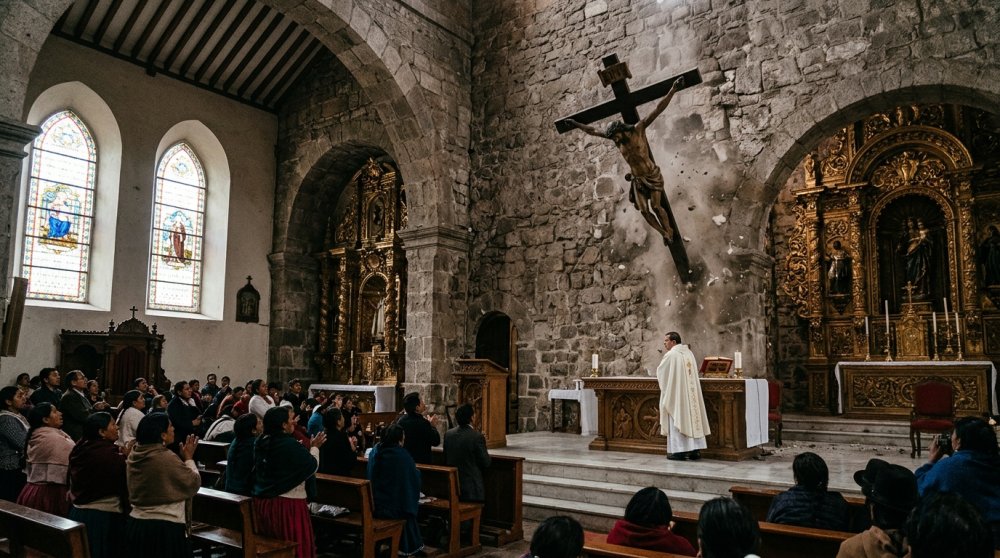
- A priest in Ecuador died during a church service when a large crucifix fell from the wall.
- Kenny Kinglesmith addresses unbelieving friends in an open letter about hope in Jesus amid suffering.
- Christian believers continue to place their trust in Christ even when tragedy strikes inside the sanctuary.
The sudden death of a priest while leading worship has shaken believers across Ecuador. Questions about suffering and divine purpose are rising again.
Kenny Kinglesmith has written an open letter to friends who do not believe. He explains why his hope in Jesus remains firm despite the pain.
“In the face of inexplicable suffering, I still choose to place my hope in Jesus.”
Many Christians are wrestling with how a loving God could allow such a loss inside His house. The event has prompted renewed reflection on the mystery of suffering.
Kinglesmith does not offer easy answers. Instead he points to the cross itself, where Christ endured the ultimate injustice yet brought redemption.
“I still choose to place my hope in Jesus.”
The tragedy has become a moment for believers to examine their own trust in God. It is also an opportunity to demonstrate compassion to those who question.
Kinglesmith urges Christians to live out their faith openly. He believes the witness of steadfast hope can speak louder than arguments.
“In the face of inexplicable suffering, I still choose to place my hope in Jesus.”
Let us know what you think, please share your thoughts in the comments below.
Faith Facts
- Franklin Graham was raised in the shadow of his father Billy Graham, one of the most influential Christian leaders of the twentieth century.
- He has publicly stated that he never tried to become Billy Graham and instead sought to follow the distinct path God set before him.
- The younger Graham has carried the Gospel message across the globe through Samaritan’s Purse and the Billy Graham Evangelistic Association while maintaining a clear Christian conservative witness.
Franklin Graham recently opened up about the challenges of growing up in the household of the twentieth century’s most renowned evangelist. He explained that being the son of Billy Graham carried both a tremendous blessing and a heavy weight of expectations.
Despite the public scrutiny and inevitable comparisons, Graham made a deliberate choice early in life. He decided he would not attempt to replicate his father’s ministry or persona in any way.
“I never try to be Billy Graham,”
he said. This statement reflects the conviction that God equips each believer for a unique assignment rather than a copy of someone else’s.
Graham’s own ministry has grown into a powerful force for the Gospel through both the Billy Graham Evangelistic Association and the international relief work of Samaritan’s Purse. His approach has been marked by direct, unapologetic proclamation of biblical truth on issues ranging from religious liberty to the sanctity of life and traditional marriage.
“I never try to be Billy Graham,”
he reiterated, underscoring that his calling has always been to serve the Lord faithfully in the time and culture where God has placed him.
Today Franklin Graham continues to lead large-scale evangelistic events across the United States and around the world. He remains a steady voice for Christian values at a time when many pulpits have grown silent on cultural matters.
Let us know what you think, please share your thoughts in the comments below.
Faith Facts
- James Talarico is a member of the Presbyterian Church (U.S.A.)
- Rev. Jim Rigby serves as Talarico’s longtime pastor
- Talarico describes his Senate campaign as a form of ministry
Democratic Texas state Rep. James Talarico addressed a gathering of faith leaders on Monday evening. The lawmaker shared how his pastor encouraged him to seek higher office.
Talarico credited the Rev. Jim Rigby with shaping his decision to run for the U.S. Senate. He presented the campaign as an extension of his Christian calling.
“A form of ministry.”
The PCUSA pastor reportedly framed political service as a faithful response to God’s calling. Talarico embraced this view in his remarks to the audience.
The Presbyterian Church (U.S.A.) has long maintained a progressive stance on social and political issues. Talarico’s comments align with that denominational direction.
Texas voters will soon weigh whether this interpretation of ministry resonates with their understanding of Christian citizenship. The race promises to test competing visions of faith and public service.
Let us know what you think, please share your thoughts in the comments below.


-

 Self-Reliance2 years ago
Trump’s Bold Move Uncovers Massive Social Security Fraud
-

 Faith2 years ago
New Clues Emerge in Noah’s Ark Mystery
-

 News2 years ago
Governor Walz’s Rhetoric Sparks National Controversy
-

 News2 years ago
Mel Gibson’s ‘The Passion of the Christ’ Sequel Title Announced
-

 Family2 years ago
Texas Lawmaker Targets Furries in Schools
-

 Freedom2 years ago
Maine Lawmaker Challenges Sports Fairness Controversy
-

 Family1 year ago
Canada’s Controversial Policy Sparks Ethical Debate
-
Faith11 months ago
Congress Hears Pleas for Nigerian Christians