
Faith
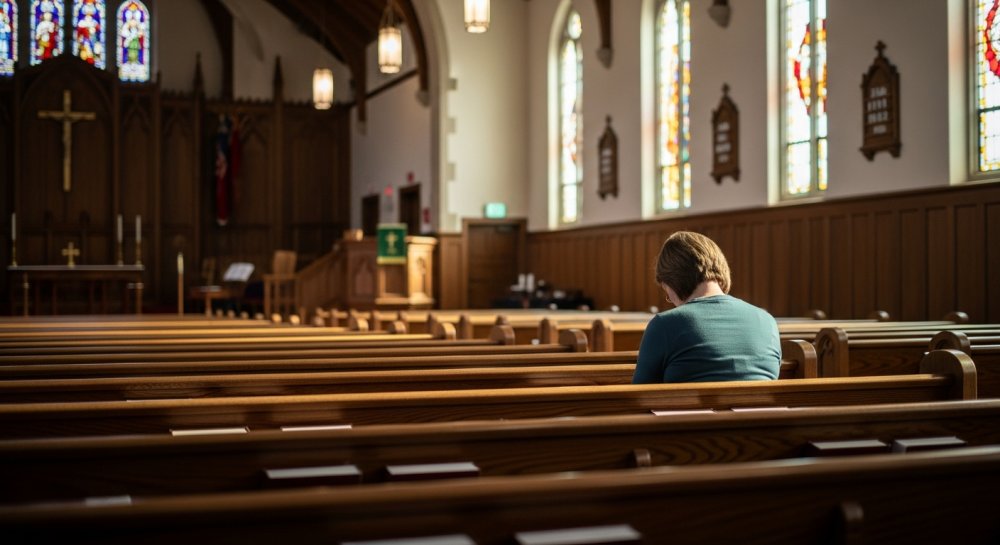
When My Church of 23 Years Abandoned Me in Crisis

Faith Facts
- A longtime church member shares her painful experience of spiritual abandonment after 23 years of faithful service and fellowship
- Despite institutional failure, Christ’s personal faithfulness proved constant and brought healing to deep wounds
- The testimony highlights the critical distinction between human religious institutions and the unchanging nature of Jesus Christ
After more than two decades of faithful service, fellowship, and commitment to a single congregation, one believer faced the devastating reality that the church community she trusted would fail her in her darkest hour. Yet in that valley of disappointment and heartbreak, she discovered an eternal truth: while human institutions may crumble, Jesus Christ remains faithful.
The pain of spiritual abuse and institutional abandonment cuts particularly deep for those who have invested years building relationships and serving faithfully. When the community that should embody Christ’s love instead turns away, the wounds can seem insurmountable.
But this testimony carries a message of hope that transcends human failure. While a church body may disappoint, the Head of the Church never does.
“Jesus continues to heal my broken heart, and in His merciful kindness has allowed me to share that comfort with others,” the believer shared, pointing to the restorative power of Christ even amid ecclesiastical failure.
This powerful distinction matters deeply for Christians navigating similar disappointments. Our faith is not ultimately in buildings, programs, or even beloved pastors and congregations—it is in the person of Jesus Christ, who promises never to leave or forsake His own.
The experience also speaks to a growing crisis within American Christianity: the confusion between institutional loyalty and devotion to Christ Himself. Too often, believers invest their identity in a particular church rather than in their relationship with the Savior, leaving them vulnerable to devastating spiritual injury when leadership fails or community fractures.
Scripture repeatedly warns that even religious communities can become sources of harm rather than healing. Jesus Himself faced rejection from the religious establishment of His day, and He promised His followers would experience similar treatment.
Yet God’s word also reveals His character as the Father of mercies and God of all comfort, who comforts us in our affliction so that we may comfort others with the same comfort we ourselves have received. This divine pattern transforms victims of spiritual abuse into ministers of healing—not through their own strength, but through Christ’s restorative work in their broken hearts.
The journey from heartbreak to healing often requires time, truth-telling, and the support of healthy Christian community. Finding believers who will listen without judgment, validate the pain without excusing the harm, and point consistently back to Christ’s faithfulness becomes essential for recovery.
This testimony also serves as a sobering reminder to church leaders and members: we are called to be instruments of Christ’s love and healing, not sources of additional wounding. When we fail in this calling—whether through neglect, abuse of authority, or abandonment—we do damage not only to individuals but to their perception of Christ Himself.
For those walking through similar darkness, the message remains clear: your church may fail you, but Jesus will not. Human shepherds may scatter the flock, but the Good Shepherd continues to seek, save, and heal the wounded sheep.
The pain of institutional betrayal is real and deserves to be acknowledged. But it need not have the final word. Christ’s merciful kindness continues to heal broken hearts, and He transforms our deepest wounds into sources of comfort for others walking the same difficult path.
Let us know what you think, please share your thoughts in the comments below.


Faith Facts
- Michael Porter Jr openly shared the gospel with a Muslim streamer during a live conversation.
- The NBA player spoke with clarity, confidence, and compassion about his Christian faith.
- The exchange highlights the power of respectful witness in a divided culture.
NBA star Michael Porter Jr recently engaged a Muslim streamer named N3on in a candid conversation about faith. The discussion took place in a public online setting where the athlete presented the gospel with both boldness and gentleness. His approach drew attention for its clarity and sincerity.
“The exchange shows how believers can speak truth with both conviction and kindness,” said commentator AJ Gomez. “Michael Porter Jr modeled the kind of evangelism that respects the listener while remaining faithful to Scripture.”
Christian viewers praised the player for using his platform to proclaim the gospel without compromise. The moment stood out in a culture where public expressions of faith often face criticism or ridicule. Porter Jr’s example encouraged many to seek similar opportunities in their own circles.
“It is important for young people to see professional athletes who are unashamed of Jesus,” one observer noted. “This kind of witness can plant seeds that last a lifetime.”
The conversation also reminded believers of the biblical call to be ready to give an answer for the hope within them. With millions watching online, Porter Jr used his influence to point others toward Christ. His tone reflected both the love of God and the truth of His Word.
Let us know what you think, please share your thoughts in the comments below.

Faith Facts
- Nearly 100 students at a Christian high school in Colorado have been baptized following athletic events this year.
- Five separate worship gatherings were organized after games, drawing students seeking faith commitments.
- The baptisms reflect a growing movement of young people responding to the Gospel in school settings.
High school athletic events have long been community gatherings, but one Colorado Christian school is seeing those moments turn into something far more eternal.
After five post-game worship services, nearly 100 students stepped forward for baptism, marking a powerful season of spiritual renewal.
School leaders say the response has been both unexpected and deeply encouraging, as students publicly declare their faith in Christ.
“It has been incredible to watch these young people take this step,” one administrator shared.
The gatherings combine prayer, worship, and testimony, creating a space where students feel welcomed to respond to the message of salvation.
Parents and faculty have noted a renewed sense of purpose and unity among the student body as a result.
“We are seeing the Holy Spirit move in powerful ways,” a staff member added.
Christian education advocates view the events as evidence that faith-based environments can shape hearts as well as minds.
The school plans to continue the post-game worship gatherings in the coming seasons, hoping to build on the momentum of spiritual awakening.
Let us know what you think, please share your thoughts in the comments below.

Faith Facts
- Matthew West releases new album titled ‘Jesus Is King’
- Album emphasizes surrender, vulnerability, and Scripture after nearly 30 years in Christian music
- West challenges the culture of self-empowerment with a message of Christ-centered living
Christian music artist Matthew West is calling believers to place Jesus above self in his latest album, ‘Jesus Is King.’ The project comes after nearly three decades of ministry and reflects a deeper commitment to Scripture and surrender.
West says the album confronts a culture obsessed with self-empowerment by lifting up the lordship of Christ instead. He believes true strength comes from laying down personal control and trusting God’s Word.
"The message of this album is that Jesus is King, and that changes everything."
Through honest lyrics and personal testimony, West hopes listeners will rediscover the power of vulnerability before God. He points to Scripture as the foundation for every song and every season of life.
"After nearly 30 years in Christian music, I am more convinced than ever that surrender is the doorway to real freedom."
Let us know what you think, please share your thoughts in the comments below.


-

 Self-Reliance1 year ago
Trump’s Bold Move Uncovers Massive Social Security Fraud
-

 Faith1 year ago
New Clues Emerge in Noah’s Ark Mystery
-

 News2 years ago
Governor Walz’s Rhetoric Sparks National Controversy
-

 News1 year ago
Mel Gibson’s ‘The Passion of the Christ’ Sequel Title Announced
-

 Family2 years ago
Texas Lawmaker Targets Furries in Schools
-

 Freedom2 years ago
Maine Lawmaker Challenges Sports Fairness Controversy
-

 Family1 year ago
Canada’s Controversial Policy Sparks Ethical Debate
-
Faith10 months ago
Congress Hears Pleas for Nigerian Christians