
Faith
Supreme Court Takes Up Religious Freedom Case That Could Reshape Faith-Based Education


Faith Facts
- Two Catholic schools in Colorado were denied participation in a state-funded preschool program due to their biblical teachings on marriage and gender
- The U.S. Supreme Court will decide whether excluding faith-based schools from public funding programs violates the First Amendment’s protection of religious exercise
- This case could set a critical precedent for religious freedom and the ability of Christian institutions to maintain biblical standards while accessing taxpayer-funded programs
The highest court in the land is poised to hear a case that could have sweeping implications for religious liberty and Christian education across America. At the center of the dispute are two Catholic schools in Colorado that were barred from participating in a state preschool funding program because of their adherence to traditional Christian teachings.
The schools were excluded from Colorado’s Universal Preschool Program after state officials determined that their biblical positions on marriage and human sexuality did not align with the state’s non-discrimination requirements. The exclusion raises fundamental questions about whether government can force religious institutions to abandon their deeply held convictions as a condition for equal treatment under the law.
This case arrives at the Supreme Court amid an ongoing national debate over the intersection of religious freedom and LGBT policies. For Christian conservatives, the stakes could not be higher — the outcome will help determine whether people of faith can fully participate in civic life without compromising their beliefs.
Legal experts note that the Supreme Court has increasingly sided with religious liberty claims in recent years, particularly in cases involving government funding programs. Previous decisions have established that states generally cannot exclude religious organizations from public benefit programs solely because of their religious character or mission.
The question before the justices is whether Colorado’s exclusion of these Catholic schools constitutes unconstitutional religious discrimination. Supporters of the schools argue that denying them access to a generally available public program because of their theological convictions violates both the Free Exercise Clause and the Equal Protection Clause of the Constitution.
Colorado officials, however, maintain that the schools’ policies conflict with state anti-discrimination laws and that participating institutions must comply with certain requirements to receive taxpayer funding. This argument sets up a direct clash between religious freedom protections and state-mandated ideological conformity.
The case underscores a broader cultural tension facing Christian institutions nationwide. As progressive policies on gender and sexuality become increasingly codified in law, religious schools, charities, and other faith-based organizations find themselves caught between maintaining biblical fidelity and accessing public resources available to secular counterparts.
For families seeking to educate their children in environments that reinforce Christian values, the Court’s decision could determine whether faith-based preschools remain viable options. Many parents choose religious education specifically because these schools teach and model traditional moral principles alongside academic instruction.
The Supreme Court’s eventual ruling will likely extend far beyond Colorado’s borders, potentially affecting similar programs and disputes in states across the nation. A decision favoring the Catholic schools would reinforce the principle that religious Americans cannot be treated as second-class citizens, while a ruling against them could signal that biblical teachings are incompatible with full participation in public life.
As the case moves forward, Christian conservatives and religious freedom advocates are watching closely. The outcome will serve as a barometer for how seriously the nation’s highest court takes the constitutional guarantee that government shall make no law prohibiting the free exercise of religion.
Let us know what you think, please share your thoughts in the comments below.

Faith Facts
- Actor Jim Caviezel says Jesus physically appeared to him more than twenty years ago while he was deciding whether to portray Christ in Mel Gibson’s 2004 film.
- Caviezel credits the encounter with giving him the courage to accept the role in The Passion of the Christ despite the physical risks involved.
- The actor’s testimony highlights how divine guidance can strengthen believers facing difficult decisions in their calling.
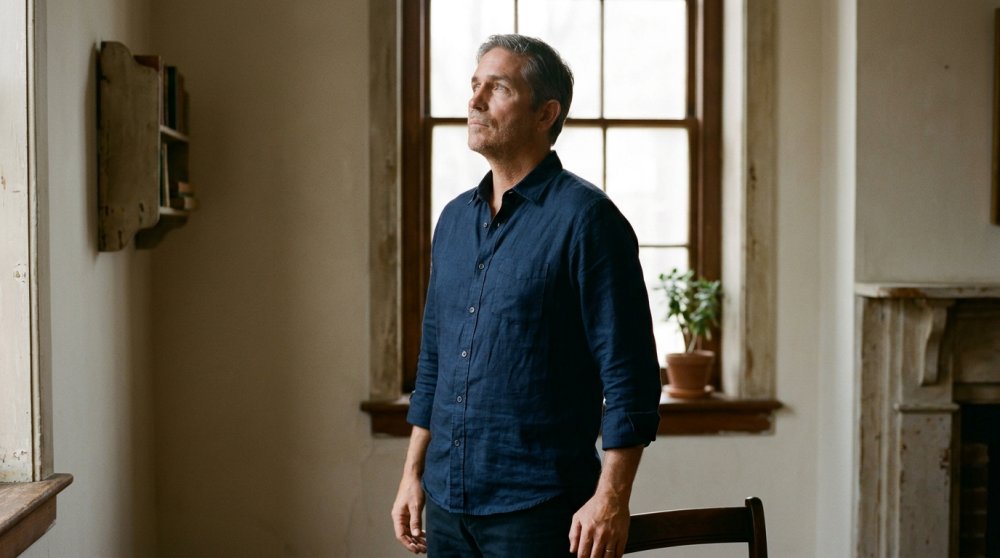
Jim Caviezel says Jesus Christ physically appeared to him while he was still weighing the offer to play the Savior in Mel Gibson’s upcoming movie. The actor made the claim during a recent interview, recalling the moment that changed his mind about the role.
The encounter came more than twenty years ago, just before Caviezel signed on to star in The Passion of the Christ. He described feeling a clear divine presence that gave him the peace and conviction he needed to move forward.
“I don’t have anybody else.” Jim Caviezel recalls the moment he says Jesus appeared at the foot of his bed before taking on his role in The Passion of the Christ. Full episode out Tuesday on YouTube, Spotify, and Apple Podcasts. https://t.co/cY1Vtek4mv
— Sean Hannity ???????? (@seanhannity) November 8, 2026
“I was asked to play Jesus Christ,” Caviezel said. “And I said, ‘I can’t do it.’ And then Jesus appeared to me.”
That supernatural moment settled the question for the actor. Caviezel went on to portray Christ in the film, which went on to become one of the most watched and discussed Christian movies of its time.
“He appeared to me,” Caviezel repeated, underscoring the personal nature of the visitation. The actor has often spoken about the spiritual preparation required for such a role and the physical toll it took on his body.
His testimony serves as an encouragement to believers that God still speaks and leads His people in clear ways when they seek His will. Caviezel’s account reminds Christians that obedience to a divine calling may require stepping out in faith even when the path looks difficult.
Let us know what you think, please share your thoughts in the comments below.

Faith Facts
- Christian artists like Amy Grant, Michael W. Smith, and Rich Mullins have shaped generations through their music.
- Scripture set to melody can strengthen biblical literacy in children during daily routines like car rides.
- Parents have a biblical responsibility to pass faith to the next generation through everyday moments.
Parents searching for ways to anchor their children in Scripture may find an unexpected classroom in the family vehicle. Familiar Christian songs from decades past continue to plant God’s Word in young hearts through simple repetition and melody.
Producer Brown Bannister, who worked with Amy Grant, Michael W. Smith, and Rich Mullins, notes that the same songs that once ministered to adults can now serve as effective tools for teaching children biblical truth.
“The songs that have Scripture in them, they just stick,” Bannister stated.
Many families already use car time for conversation or entertainment, but incorporating worship music offers a practical way to redeem those minutes for spiritual growth. Parents who remember the lyrics of classic Christian songs often discover their children are learning Scripture without realizing it.
With biblical values under increasing pressure in schools and media, faithful parents are looking for every opportunity to reinforce truth at home and on the go.
“If you grew up on Amy Grant, Michael W. Smith or Rich Mullins, you can probably still sing every word,” Bannister said.
Let us know what you think, please share your thoughts in the comments below.
Faith Facts
- Tony Rucinski urges Christian men to embrace courage, self-control, and sacrificial service as the foundation of biblical masculinity.
- The call emphasizes a return to traditional manhood grounded in Scripture and family responsibility.
- Churches are challenged to raise men willing to speak truth in a culture that often rejects these values.
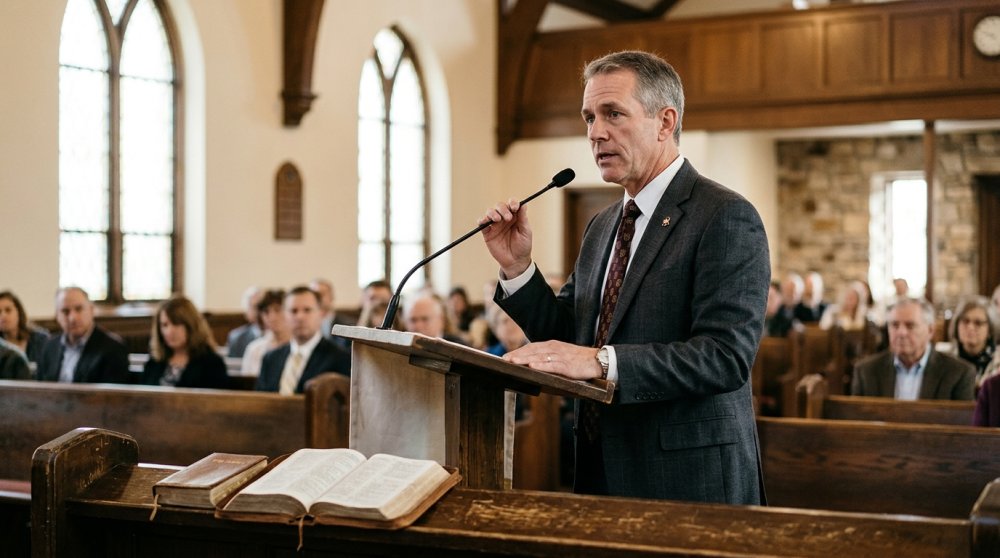
Tony Rucinski is calling on Christian men to recover a biblical vision of masculinity centered on courage, self-control, and sacrificial service. He believes the church needs men who are unafraid to speak up for truth in a time when such convictions are increasingly under attack.
According to Rucinski, modern culture has distorted the role of men, leaving many confused about their God-given responsibilities. He argues that true masculinity is not defined by cultural trends but by the clear teachings of Scripture.
“The church needs men willing to speak up,” Rucinski stated, stressing that silence is no longer an option for faithful believers.
His message challenges husbands and fathers to lead their families with conviction, modeling self-control and sacrificial love as Christ did for the church. Rucinski sees this as essential for restoring strong homes and communities.
The campaigner also warns that when men abandon their biblical roles, society suffers. He points to rising fatherlessness and moral confusion as evidence of what happens when traditional manhood is dismissed.
Rucinski calls on pastors and church leaders to boldly teach these truths rather than soften them to fit cultural preferences. He believes that a renewed commitment to biblical masculinity will strengthen both families and the wider body of Christ.
Let us know what you think, please share your thoughts in the comments below.


-

 Self-Reliance2 years ago
Trump’s Bold Move Uncovers Massive Social Security Fraud
-

 Faith2 years ago
New Clues Emerge in Noah’s Ark Mystery
-

 News2 years ago
Governor Walz’s Rhetoric Sparks National Controversy
-

 News2 years ago
Mel Gibson’s ‘The Passion of the Christ’ Sequel Title Announced
-

 Family2 years ago
Texas Lawmaker Targets Furries in Schools
-

 Freedom2 years ago
Maine Lawmaker Challenges Sports Fairness Controversy
-

 Family1 year ago
Canada’s Controversial Policy Sparks Ethical Debate
-
Faith12 months ago
Congress Hears Pleas for Nigerian Christians