
Faith
When Faith Made History: Three Moments That Changed Christianity Forever

Faith Facts
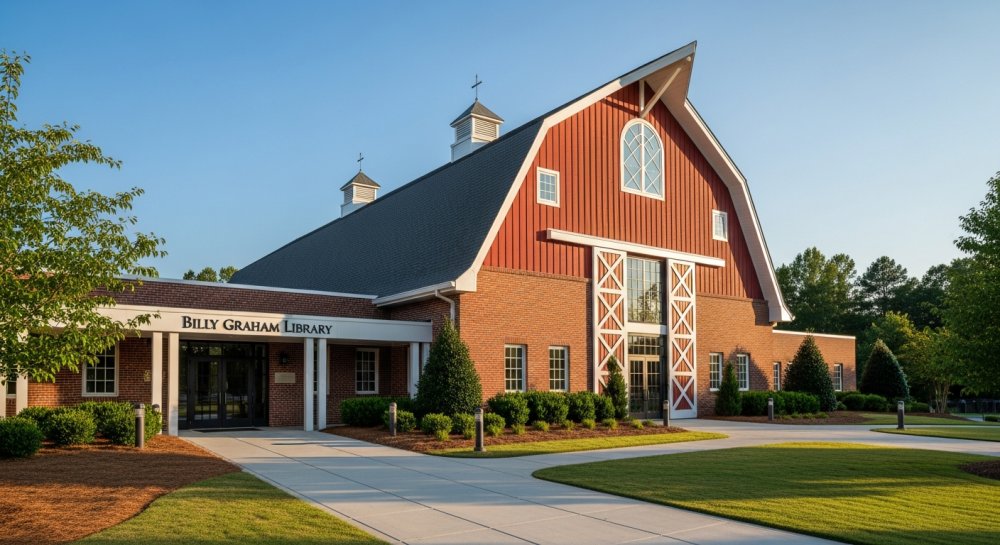
- The Billy Graham Library was dedicated on May 31, 2007, in Charlotte, North Carolina, honoring one of America’s most influential Christian evangelists
- St. Boniface, known as the Apostle of Germany, was martyred along with 53 companions on June 5, 754 AD while evangelizing pagan tribes
- These historical events demonstrate the enduring legacy of Christian witness and sacrifice throughout the centuries
This week marks the anniversaries of several pivotal moments in Christian history that continue to inspire believers today. From the dedication of a library honoring America’s most beloved evangelist to the ultimate sacrifice made by early missionaries, these events remind us of the powerful impact of faithful service.
On May 31, 2007, the Billy Graham Library was officially dedicated in Charlotte, North Carolina. The 40,000-square-foot facility serves as both a museum and a memorial to one of the most influential Christian leaders in American history.
Billy Graham preached the Gospel to more people in live audiences than anyone else in history—nearly 215 million people in more than 185 countries. The library stands as a testament to his decades of faithful ministry and unwavering commitment to sharing the message of Jesus Christ with the world.
The facility was designed to honor Graham’s humble roots, with the main building shaped like a barn to reflect his upbringing on a dairy farm. Visitors can experience multimedia presentations chronicling Graham’s life, ministry, and the countless lives transformed through his crusades.
Looking back further in Christian history, June 5 marks the martyrdom of St. Boniface in 754 AD. Born in England around 675 AD, Boniface became known as the “Apostle of Germany” for his extensive missionary work among Germanic tribes.
Boniface dedicated his life to spreading Christianity throughout what is now Germany and the Netherlands. He worked tirelessly to convert pagan populations, establish churches, and reform existing Christian communities that had drifted from orthodox teaching.
On June 5, 754, while preparing to confirm a group of new converts in Frisia (present-day Netherlands), Boniface and 53 companions were attacked and killed by a band of pagan warriors. According to historical accounts, Boniface refused to allow his followers to defend themselves with weapons, choosing instead to face martyrdom peacefully.
His death became a powerful testimony to the early Church and inspired countless others to continue the work of evangelization. Today, St. Boniface is honored as a patron saint of Germany and remains a symbol of Christian courage and dedication.
These commemorations serve as powerful reminders of the sacrifice and devotion that have characterized Christian witness throughout history. From the modern legacy of Billy Graham’s evangelistic ministry to the ancient example of Boniface’s ultimate sacrifice, believers today can draw inspiration from those who have gone before us in faith.
The events of this week in Christian history demonstrate that the call to share the Gospel transcends time and circumstance. Whether through preaching to millions in modern stadiums or bringing the message of Christ to unreached tribes in ancient forests, faithful servants of God have always been willing to give everything for the sake of the Gospel.
Let us know what you think, please share your thoughts in the comments below.


Faith Facts
- A Colorado Church of Christ congregation has developed a women’s yoga program that focuses on Biblical meditation, worship music, and Scripture-based teaching.
- The weekly classes draw up to 20 women ranging from their 20s to 70s, providing spiritual fellowship and physical exercise grounded in Christian principles.
- Participants report the sessions help them release anxiety, deepen their faith, and build meaningful Christian community outside Sunday services.
Many Christians know the routine. Church service ends, and it’s time to visit, but really there’s not much time to visit.
They might have children to round up. They might need to hurry home to prepare lunch, watch a football game or mow the lawn.
Casey Hymore, a member of the Castle Rock Church of Christ on Colorado’s Front Range, understands the challenge. “There’s a lot going on,” she said.
Blessedly for Hymore and other church members, there’s another place to meet during the week. A place to release burdens and talk about disappointments and victories. And a place to deeply consider the Word of God.
“Here,” Hymore said, “you just have time with your Christian friends. It’s a ‘what’s going on in your life’ kind of thing.”
“Here” is weekly Christian yoga classes for women led by Charity Morine. During the school year, Morine leads a group of up to 20 women in weekly sessions at a dance studio in Castle Rock. The ages range from 20s to 70s. The fitness range is just as varied.
The sessions begin with the women listening to soft worship music. Morine asks her students to notice their bodies and the state of their emotions. Are you at peace? Are you feeling fragile?
She tells them to unclench their jaws, relax their shoulders.
“Release what is clouding your mind,” she said, “and come into the presence of God. Breath in his goodness.”
In one recent session, she led her students in consideration of their blind spots. King David failed to comprehend his vicious role in the death of Uriah the Hittite, his friend and, alas, romantic rival.
It required a story from the prophet Nathan to confront the king’s intentional blindness and inexplicable cluelessness. David, with Nathan’s aid, finally saw the truth about himself.
Spend time listening to God as he reveals his wisdom, Morine encouraged participants. Shine light on those blind spots.
Jenn Anderson has been attending the yoga sessions for six years. She always leaves uplifted and inspired, she said.
“You remove yourself from whatever mood you’re in and focus on the biblical message for that day,” Anderson said.
“Whatever burden you brought into the class isn’t as important as you thought when you’re thinking about it from a godly and biblical perspective.”
To end a session, students close their eyes while considering the lesson of the day. Morine rubs their foreheads with a cool lavender-soaked washcloth and offers a brief head massage.
They are weary from the exercise, which can be demanding — but even more energized, said Lynn Lauterbach.
“I always go away feeling filled versus feeling exhausted from exercising,” Lauterbach said.
“Our bodies are the temple, you know, like the verses say, and we need to be using them. The process of doing that, it’s spiritually filling.”
Morine’s path to teaching Christian yoga began nearly seven years ago. She faced, in her words, “a pretty dark spot” in her life. She knew God held the answers, and she prayed each day, inspired by Philippians 4:6-7: “Do not be anxious about anything.”
Still, she felt anxious and unseen and unfavored by God. Then she watched Christian yoga on YouTube. At the end of a video session, she reclined on her back. Her palms were up. She was alone.
“I remember, in that quiet, hearing from God and allowing my body to release my anxiousness and the tightness in my gut and the racing in my heart,” she said.
“I began to find the peace that passes understanding. I was giving God space. I was quieting my mind and giving him room to speak.”
A few months later, during the height of the Covid pandemic, Morine began her yoga sessions, starting in her backyard in northwest Castle Rock.
Daphne Walsh has worked alongside Morine for four years. She first came to the sessions to work on her balance and core strength.
She found more. Much more.
“It has helped us when we carry a lot of stress, when we’re bogged down with worries,” she said.
“We see that we can present these things to Christ and come to him just as we are.”
Christian yoga has critics among followers of Jesus who see the practice — Christian or not — as a retreat from biblical faith and believe yoga never can be fully separated from its roots in Hinduism and Buddhism. Starting yoga sessions at a Church of Christ can lead to controversy.
During a recent visit to Morine’s home, a group of five of her students enjoyed a healthy lunch and talked of their enthusiasm for their weekly time together. Nobody in the group had heard from Christian friends who objected to Christian yoga.
“I have never received a negative reaction from my Church of Christ friends,” Morine said.
“I’ve experienced nothing but support.”
Christians who are critics and skeptics of God-based yoga are welcome at Morine’s sessions. Walsh offers a personal invitation.
“They need to come and experience it for themselves,” she said.
“To find out that it is a spiritual activity. We pray together. We meditate on the Word of God. We listen to Christian music.”
“It has nothing to do with eastern yoga. Nothing at all.”
It is, Walsh said, Christ based.
Let us know what you think, please share your thoughts in the comments below.

Faith Facts
- Religious Studies GCSE enrollment is increasing across the United Kingdom despite a critical shortage of qualified teachers
- The shortage of specialist religious education teachers continues to worsen, threatening students’ access to faith-based learning
- Experts warn the crisis could limit young people’s understanding of Christianity and other world religions at a crucial developmental stage
A troubling crisis is unfolding in British schools as demand for Religious Studies courses climbs while the number of qualified teachers to instruct them plummets. The shortage threatens to deny an entire generation of students the opportunity to explore questions of faith, morality, and spiritual heritage.
Despite rising interest in Religious Studies as a GCSE subject—a qualification typically pursued by students aged 14-16—education experts across the United Kingdom are sounding the alarm about the dwindling pool of specialist teachers equipped to lead these courses. The gap between student demand and teacher availability continues to widen, creating what some describe as an educational emergency.
For Christian parents and community leaders, the implications are profound. Religious education offers young people a structured opportunity to examine the Christian foundations of Western civilization, explore theological concepts, and develop moral reasoning rooted in biblical principles. Without qualified instructors, schools cannot adequately meet this need, leaving students with diminished access to faith-based learning during formative years.
The shortage also raises questions about educational priorities in modern Britain. While subjects like science and mathematics receive substantial investment and recruitment focus, religious education appears increasingly marginalized despite its role in character formation and cultural literacy. This imbalance reflects broader secular trends that often sideline faith perspectives in public institutions.
The consequences extend beyond individual students. A society that fails to educate its youth about religious heritage risks losing connection to the values, traditions, and wisdom that have shaped its history. For Christians, this represents not merely an academic concern but a spiritual one—a lost opportunity to plant seeds of faith and understanding in young hearts.
The crisis also highlights the importance of Christian involvement in education. As government schools struggle to staff religious studies programs, faith communities must consider how they can support religious literacy through church-based education, mentorship, and advocacy for policies that prioritize faith-friendly curricula.
The situation in the United Kingdom serves as a cautionary tale for Americans concerned about religious education. It demonstrates how quickly institutional support for faith-based learning can erode, even when student interest remains strong. Vigilance and active engagement are essential to preserve educational opportunities that honor our spiritual heritage.
Let us know what you think, please share your thoughts in the comments below.
Faith Facts
- Church leaders and Christians in Sudan’s Nuba Mountains are experiencing increasing killings, abductions, and violent attacks.
- The violence is intensifying in Sudan’s South Kordofan state as rival armed factions battle for control.
- Christian watchdog organization Open Doors has raised urgent concerns about the persecution facing believers in the region.
Believers in Sudan are enduring a terrifying surge of violence that threatens the very survival of Christian communities in the region. What many Americans may not realize is that while we enjoy religious freedom, our brothers and sisters in Christ face daily threats to their lives simply for holding fast to their faith.
The Nuba Mountains region has become a flashpoint of persecution as rival armed groups wage brutal campaigns across South Kordofan state. Christian leaders report that their congregations are being specifically targeted in what amounts to systematic religious persecution.
Open Doors, a respected international ministry that monitors and responds to Christian persecution worldwide, has issued urgent warnings about the deteriorating situation. Their reports document a disturbing pattern of kidnappings, murders, and coordinated attacks on Christian communities that appear designed to drive believers from their ancestral lands.
The civil conflict in Sudan has provided cover for those who seek to eliminate Christian witness from the region. Armed factions are exploiting the chaos to settle old scores and pursue ideological agendas that leave no room for religious minorities.
Church leaders on the ground describe a climate of constant fear where worship services become potential targets and simply identifying as a Christian can mark someone for violence. Families are torn apart by abductions, with many victims never seen again.
This crisis demands the attention and prayers of American Christians. The persecution in Sudan represents a grave threat to religious freedom and human dignity. As believers who cherish our own liberty to worship freely, we have a moral obligation to stand with those who face persecution for the same faith we hold dear.
The situation also highlights the ongoing failure of international bodies to protect vulnerable religious minorities in conflict zones. Despite numerous reports and documentation of atrocities, effective intervention remains elusive while Christians continue to suffer.
Organizations like Open Doors provide vital support to persecuted believers, but they cannot solve this crisis alone. American Christians must raise their voices, contact their elected representatives, and demand that our government prioritize religious freedom in its foreign policy.
The faithful in Sudan’s Nuba Mountains need more than our sympathy—they need our active advocacy and sustained prayer. Their courage in maintaining their Christian witness under such dire circumstances should inspire us to greater faithfulness in our own walk with Christ.
Let us know what you think, please share your thoughts in the comments below.


-

 Self-Reliance1 year ago
Trump’s Bold Move Uncovers Massive Social Security Fraud
-

 Faith1 year ago
New Clues Emerge in Noah’s Ark Mystery
-

 News1 year ago
Governor Walz’s Rhetoric Sparks National Controversy
-

 News1 year ago
Mel Gibson’s ‘The Passion of the Christ’ Sequel Title Announced
-

 Family1 year ago
Texas Lawmaker Targets Furries in Schools
-

 Freedom1 year ago
Maine Lawmaker Challenges Sports Fairness Controversy
-

 Family1 year ago
Canada’s Controversial Policy Sparks Ethical Debate
-
Faith9 months ago
Congress Hears Pleas for Nigerian Christians