
Faith
When Does Christian Disagreement Cross Into Heresy?


Faith Facts
- David French defended James Talarico’s Christian identity despite disagreements over abortion and gender.
- Critics say civil conduct cannot substitute for Biblical truth and historic Christian doctrine.
- The debate centers on whether public niceness can outweigh theological fidelity and moral clarity.
New York Times columnist David French has sparked concern among conservative believers by refusing to question the Christian faith of Texas politician James Talarico. Despite Talarico supporting abortion and non-biblical views on gender, French insists his polite demeanor makes him a positive example of faith in the public square.
Critics argue that civil behavior cannot replace adherence to the Word of God or the foundational tenets of the Gospel.
Theology that denies the exclusive nature of Christ or the sanctity of life represents a departure from the historical Christian witness and the moral clarity required of leaders.
“I’m just really not willing to say that James Talarico is not a Christian. I’m just not going to do it,” French stated during a recent interview.
As believers, we must remain vigilant against attempts to redefine our faith according to secular social trends or political convenience. True Christian leadership requires both a gracious spirit and an unwavering commitment to the absolute truths found in the Holy Bible.


Faith Facts
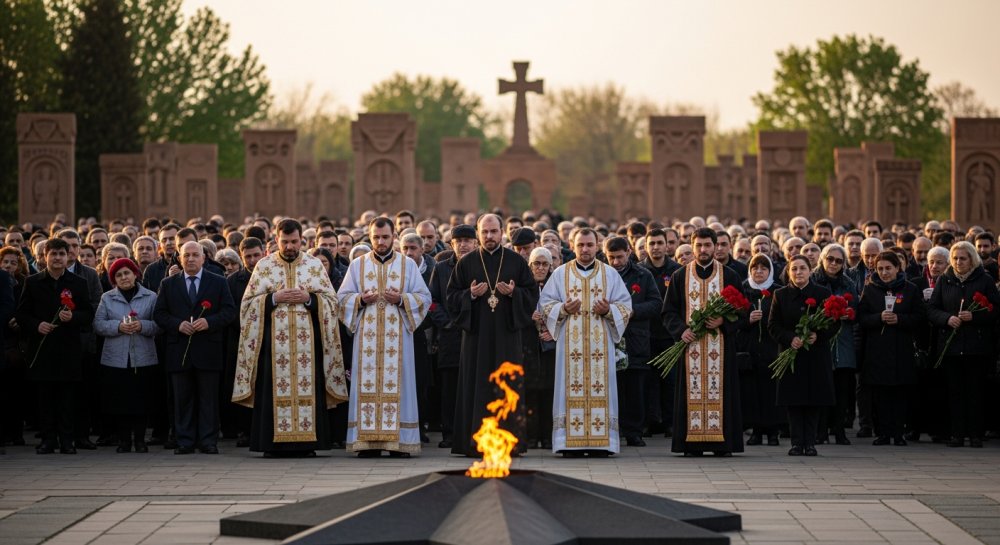
- April 24 marks Armenian Genocide Remembrance Day, commemorating the systematic extermination of 1.5 million Armenian Christians by the Ottoman Empire beginning in 1915
- Christians worldwide have a moral obligation to remember and advocate for genocide victims and their descendants
- The Armenian genocide represents the first major genocide of the 20th century and set a tragic precedent for future atrocities
Today, Armenians around the world gather in churches and public squares to remember the first genocide of the 20th century. As Christians committed to truth, justice, and the dignity of all people made in God’s image, we must not remain silent about this historical atrocity or its ongoing implications.
The systematic extermination of 1.5 million Armenian Christians by the Ottoman Empire beginning in 1915 stands as one of history’s darkest chapters. Yet more than a century later, the struggle for recognition and justice continues.
1. Demand Historical Truth and Recognition
Christians must insist on the full recognition of the Armenian Genocide by all nations, including those that continue to deny this historical reality for political convenience. Truth is not negotiable, and historical facts cannot be subject to diplomatic bargaining.
The deliberate killing of Armenian Christians—men, women, and children—through death marches, starvation, and mass executions was a calculated attempt to eliminate an entire people. Denying this truth dishonors the victims and enables future atrocities.
2. Stand Against Modern Persecution of Christians
The spirit that drove the Armenian Genocide has not disappeared. Christians in the Middle East, Africa, and Asia face escalating persecution today. We must connect the dots between historical genocide and contemporary attacks on Christian communities.
Recent conflicts have demonstrated that ancient Christian populations remain vulnerable. Our remembrance of 1915 must translate into active advocacy for persecuted believers worldwide.
3. Support Armenian Christians and Their Heritage
Armenian Christians have preserved their faith and culture despite genocide, exile, and ongoing threats. Supporting Armenian churches, cultural institutions, and communities honors the resilience of genocide survivors and their descendants.
The Armenian Church represents one of the oldest Christian traditions in the world, tracing its roots to the apostles. Defending Armenian heritage means defending a precious part of Christian history.
4. Advocate for Justice and Prevention
Christians must demand accountability for genocide and ethnic cleansing wherever they occur. This includes supporting international efforts to prevent genocide, protect vulnerable populations, and hold perpetrators accountable.
Our faith calls us to be voices for the voiceless and defenders of the oppressed. Genocide remembrance without action becomes mere sentimentality. We must advocate for policies that protect religious minorities and prevent the repetition of such horrors.
As we remember the Armenian Genocide, we also acknowledge ongoing concerns about ethnic cleansing and the displacement of Armenian populations in contested regions. The protection of Christian communities cannot be a secondary concern in American foreign policy.
The Armenian Genocide teaches us that evil unchecked and truth denied lead to unspeakable suffering. As followers of Christ, we bear witness to truth, stand with the persecuted, and work to ensure that “never again” becomes more than a slogan—it becomes a sacred commitment.
Let us know what you think, please share your thoughts in the comments below.

Faith Facts
- President-elect Laura Fernández met with evangelical leaders to discuss religious freedom and social policy before assuming office May 8
- The Federation of the Costa Rican Evangelical Alliance emphasized the importance of faith-based values in national governance
- The meeting signals continued recognition of Christian influence in Costa Rican public life and policy-making
Costa Rican President Rodrigo Chaves and President-elect Laura Fernández met Thursday with leaders of the Federation of the Costa Rican Evangelical Alliance (FAEC) in a significant gathering focused on religious freedom and social policy. The meeting comes as the Central American nation prepares for its May 8 transition of power.
The dialogue between government leaders and evangelical representatives underscores the vital role that faith communities continue to play in shaping the moral and social direction of Costa Rica. For Christian conservatives, this meeting represents an encouraging affirmation that elected leaders recognize the importance of engaging with religious voices on matters of national significance.
The Federation of the Costa Rican Evangelical Alliance has been a consistent advocate for traditional family values, religious liberty, and the protection of conscience rights in the public square. Their meeting with both the outgoing and incoming presidents demonstrates the enduring partnership between government and faith-based organizations in Costa Rica.
As the United States faces its own challenges regarding religious freedom and the marginalization of Christian perspectives in policy debates, Costa Rica’s example offers a refreshing contrast. The willingness of national leaders to prioritize discussions with evangelical leaders reflects a healthy respect for the role of faith in civic life.
The May 8 transition will mark a pivotal moment for Costa Rica as President-elect Fernández takes the helm. Her decision to meet with FAEC leaders early in the transition process signals an openness to incorporating faith-based perspectives into her administration’s approach to governance.
Religious freedom remains a cornerstone of democratic societies, and when government leaders actively engage with faith communities, it strengthens the social fabric and ensures that policies reflect the values held by significant portions of the population. Costa Rica’s approach provides a model worth watching.
For American Christians concerned about the erosion of religious liberty domestically, international examples like this meeting in Costa Rica serve as reminders that faith still holds a respected place in public discourse in many nations. It challenges us to remain vigilant in defending these same freedoms at home.
Let us know what you think, please share your thoughts in the comments below.

Faith Facts
- Evangelist J.John will keynote the newly launched Church Leaders Conference at CRE 2026 in England this October
- The Church Resources Exhibition (CRE), formerly the Christian Resources Exhibition, is bringing focused leadership training to UK church leaders
- The conference represents a strategic investment in equipping Christian leaders for effective ministry in challenging times
A prominent voice in Christian evangelism is set to address church leaders across the United Kingdom as they gather for a major new conference this fall. The announcement signals a renewed focus on strengthening pastoral leadership in an era when churches face mounting cultural and spiritual challenges.
The Church Resources Exhibition (CRE), a well-established gathering for Christian ministry professionals, has announced that evangelist J.John will serve as a keynote speaker for its newly launched Church Leaders Conference. The event will take place in England this October, bringing together pastors, ministry leaders, and church staff for focused training and encouragement.
J.John has built a reputation for clear, accessible presentations of biblical truth combined with practical application for everyday Christian living. His ministry has reached audiences across denominational lines, making him a fitting choice for a conference designed to serve the broader church community in the United Kingdom.
The Church Resources Exhibition has operated under various names over its history, previously known as the Christian Resources Exhibition. The organization serves as a hub for churches seeking practical resources, ministry tools, and professional development opportunities for their leadership teams.
The introduction of a dedicated Church Leaders Conference represents an expansion of CRE’s mission. Rather than focusing solely on resources and materials, the new conference component addresses the personal and professional development needs of those shepherding congregations in an increasingly secular society.
Church leaders in the UK face distinctive pressures as Christianity’s cultural influence continues to decline across Western Europe. Attendance trends, generational gaps, and hostile social attitudes toward traditional Christian teaching create an environment where pastoral encouragement and strategic training carry heightened importance.
By bringing together leaders from various streams of British Christianity, the conference creates opportunities for collaboration, mutual support, and shared learning. Such gatherings can help combat the isolation that many pastors experience, particularly those serving smaller congregations without extensive staff support.
The selection of J.John as a keynote speaker suggests the conference will emphasize evangelistic zeal alongside practical ministry skills. His track record includes major public evangelistic campaigns that have drawn thousands, as well as more intimate teaching settings focused on discipleship and spiritual formation.
October’s conference will provide an opportunity for British church leaders to refocus on core mission priorities while gaining fresh tools for effective ministry. In a cultural climate that increasingly marginalizes Christian voices, such gatherings offer crucial support for those called to proclaim truth without compromise.
The expansion from a resource exhibition to include a dedicated leadership conference reflects growing recognition that churches need more than materials and programs—they need leaders equipped with vision, biblical grounding, and practical wisdom for navigating complex ministry challenges.
Let us know what you think, please share your thoughts in the comments below.


-

 Self-Reliance1 year ago
Trump’s Bold Move Uncovers Massive Social Security Fraud
-

 Faith1 year ago
New Clues Emerge in Noah’s Ark Mystery
-

 News1 year ago
Governor Walz’s Rhetoric Sparks National Controversy
-

 News1 year ago
Mel Gibson’s ‘The Passion of the Christ’ Sequel Title Announced
-

 Family1 year ago
Texas Lawmaker Targets Furries in Schools
-

 Freedom1 year ago
Maine Lawmaker Challenges Sports Fairness Controversy
-

 Family11 months ago
Canada’s Controversial Policy Sparks Ethical Debate
-
Faith5 months ago
Congress Hears Pleas for Nigerian Christians