Faith
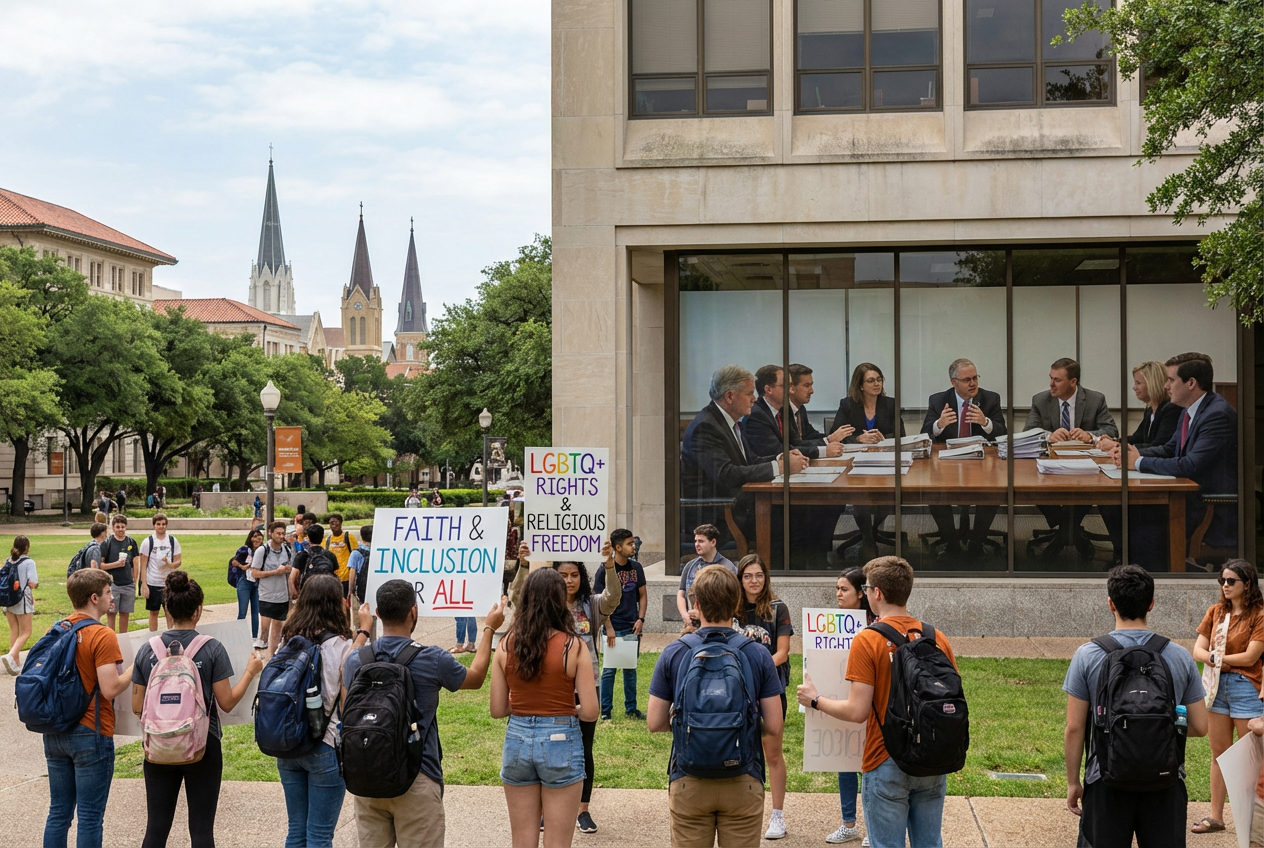
Texas Baptists Review Baylor Partnership After LGBT Event Approval
features the president of the Human Rights Campaign and has sparked concern among pastors and churches statewide.
Baylor leadership has expressed a willingness to engage in the review.
The convention says traditional biblical views are essential for cooperation and fellowship.
As believers, we must stand firm in protecting the theological integrity of our institutions.
Pray for wisdom for the Texas Baptists Executive Board as they seek to align their partnerships with the unchanging standards of the Gospel.
Faith
Church of Scotland Weighs Historic Apology Over Alleged Slavery Ties
Faith Facts
- The Church of Scotland’s General Assembly will consider a report on historic slavery links next month
- Church officials are proposing an official institutional apology for connections to the transatlantic slave trade
- The denomination is examining its institutional history amid broader denominational reckonings with historical practices
The Church of Scotland is set to confront a difficult chapter in its history as its General Assembly prepares to review a comprehensive report on the denomination’s alleged connections to the transatlantic slave trade. The governing body will meet next month to consider both the findings and proposals for an official institutional apology.
The report represents years of historical research into the church’s institutional practices and financial dealings during the era of slavery. Church leaders are now grappling with how to address these historical ties in a manner that acknowledges the past while serving the spiritual needs of their present-day congregation.
The consideration of a formal apology reflects a broader trend among religious institutions examining their historical involvement in practices that contradict modern Christian values and understanding of human dignity. The Church of Scotland joins other denominations worldwide that have undertaken similar historical reckonings in recent years.
For many Christians, the issue raises important questions about institutional accountability, repentance, and reconciliation. While acknowledging historical wrongs can be painful, it also provides an opportunity for churches to demonstrate Christian principles of confession, forgiveness, and restoration.
The General Assembly’s decision next month will determine how the Church of Scotland chooses to address this chapter of its history. The outcome may influence how other religious institutions approach similar historical examinations and what role institutional apologies play in the life of faith communities.
Critics of such institutional apologies sometimes question whether current church members should bear responsibility for the actions of previous generations. Supporters, however, argue that institutional continuity requires acknowledging the full scope of organizational history, both commendable and regrettable.
The Church of Scotland’s deliberations come at a time when many Western institutions are reassessing their historical practices through contemporary moral and ethical lenses. For churches specifically, these examinations test how biblical principles of justice and human dignity apply to institutional legacy and memory.
Let us know what you think, please share your thoughts in the comments below.

Faith
Churches Face New Decision on AI and Digital Tools
Faith Facts
- Christian leaders are grappling with how to use artificial intelligence and modern communication tools in ways that honor biblical principles
- The question facing congregations isn’t just about gaining attention, but about maintaining faithfulness to Christ in digital spaces
- Churches must balance technological advancement with spiritual discernment as new media platforms continue to evolve
As artificial intelligence and digital communication platforms reshape how Americans connect and share information, Christian churches across the nation are facing a crucial question: how do we use these powerful new tools in ways that truly serve God’s kingdom?
The challenge isn’t simply whether churches should adopt the latest technology. It’s about ensuring that every communication method—from social media to AI-generated content—points people toward Christ rather than merely chasing clicks and engagement metrics.
For centuries, the Church has adapted to new forms of communication, from the printing press to radio and television. Each technological leap has brought both opportunity and temptation. Today’s digital revolution is no different, but the pace of change has accelerated dramatically.
Churches now have unprecedented ability to reach people far beyond their physical walls. A single sermon can be viewed by thousands online. Prayer requests can be shared instantly across continents. Bible studies can connect believers who never meet in person.
Yet with this power comes responsibility. The same algorithms that can spread the Gospel can also trap congregants in endless scrolling, replacing prayer time with screen time. The platforms that enable connection can also foster comparison, division, and distraction from what matters most.
Christian leaders are recognizing that wisdom, not just technological savvy, must guide their media strategies. The apostle Paul wrote that all things are permissible, but not all things are beneficial. This biblical principle applies directly to how churches engage with modern communication tools.
Some congregations are establishing guidelines for their digital presence, ensuring that online content reflects the same theological integrity as their pulpit teaching. Others are training members to be discerning consumers of digital media, recognizing that spiritual formation increasingly happens in digital spaces.
The question of artificial intelligence adds another layer of complexity. While AI tools can help with administrative tasks and content creation, churches must consider what it means to offer pastoral care and spiritual guidance in an age where computer-generated responses are becoming commonplace.
The fundamental issue remains unchanged from the early church: faithfulness to the Gospel message. Technology may evolve, but the mission to make disciples and honor Christ does not. Every tweet, every post, every video must ultimately serve that higher purpose.
As churches navigate these decisions, they’re rediscovering that the medium truly does shape the message. A faith rooted in incarnation—God becoming flesh and dwelling among us—must be especially careful about how much of its ministry migrates to purely digital forms.
The path forward requires both embracing beneficial innovations and maintaining healthy skepticism about tools that promise reach but may compromise depth. It means asking not what will get the most likes, but what will bear lasting fruit for God’s kingdom.
Let us know what you think, please share your thoughts in the comments below.
Faith
Former MLB Draft Pick Remembered for Faith After Tragic Death Serving His Church
Faith Facts
- Brian Kirby, 46, a former Minor League Baseball player and two-time MLB draft pick, died on April 15 while serving as an HVAC technician on a church roof in North Little Rock, Arkansas.
- Kirby was laid to rest on Wednesday and remembered by family and friends as a devoted man of faith who put God and family first.
- The former athlete’s death while serving his local church community has touched hearts across the nation, highlighting the importance of faithful service in everyday life.
A former professional baseball player who traded the spotlight of the diamond for a life of humble service met a tragic end while working to serve his church community. Brian Kirby, 46, was remembered this week not for his athletic achievements, but for his unwavering commitment to faith and family.
Kirby, who was drafted twice by Major League Baseball teams and played in the minor leagues, died on April 15 while working as an HVAC technician on the roof of a church in North Little Rock, Arkansas. The circumstances surrounding his death remain under investigation, but the impact of his life has resonated far beyond the baseball field.
At his funeral service on Wednesday, family members, friends, and former teammates gathered to celebrate a life marked by dedication to Christian values. Those who knew Kirby best emphasized that while his athletic talent opened doors early in life, it was his faith that defined his character.
The former athlete’s journey reflects a truth often overlooked in our celebrity-obsessed culture: that true greatness is found not in fame or fortune, but in faithful service to God and community. Kirby chose a path that many would consider ordinary, working as an HVAC technician to provide for his family while serving his local church.
His death while performing maintenance work on a house of worship serves as a poignant reminder of the countless Americans who quietly serve their faith communities every day. These are the unsung heroes who keep churches running, who volunteer their time and skills, and who demonstrate their love for God through practical acts of service.
Kirby’s story also highlights the character-building nature of athletic competition when grounded in faith. The discipline, work ethic, and teamwork learned on the baseball field can translate into a life of service when guided by Christian principles.
For those who mourned his passing, the tragedy underscores both the fragility of life and the importance of living each day with purpose. Kirby’s willingness to use his skills to serve others, even in work that carried physical risk, exemplifies the biblical call to love one’s neighbor as oneself.
The circumstances of his death—working on a church roof—seem almost symbolic of a life spent building up the body of Christ in practical, tangible ways. While many seek recognition and acclaim, Kirby found meaning in the kind of behind-the-scenes work that keeps communities of faith functioning.
As his community in North Little Rock mourns this loss, they also celebrate a life well-lived according to principles that transcend earthly success. In an age where professional athletes often make headlines for the wrong reasons, Kirby’s story offers a different narrative—one of humility, service, and faith.
His legacy serves as an encouragement to Christians everywhere that our daily work, no matter how ordinary it may seem, becomes sacred when offered as service to God and others. The same hands that once gripped a baseball bat were later used to repair air conditioning systems, blessing congregations with comfort as they gathered to worship.
For the church community he served and the family he left behind, Brian Kirby’s life stands as a testament to what matters most: faith in God, love for family, and service to others. These are the values that build strong communities and leave lasting legacies that outlive any baseball statistic.
Let us know what you think, please share your thoughts in the comments below.
-
Self-Reliance1 year agoTrump’s Bold Move Uncovers Massive Social Security Fraud
-

Faith1 year agoNew Clues Emerge in Noah’s Ark Mystery
-

News1 year agoGovernor Walz’s Rhetoric Sparks National Controversy
-

News1 year agoMel Gibson’s ‘The Passion of the Christ’ Sequel Title Announced
-

Family1 year agoTexas Lawmaker Targets Furries in Schools
-

Freedom1 year agoMaine Lawmaker Challenges Sports Fairness Controversy
-

Family11 months agoCanada’s Controversial Policy Sparks Ethical Debate
-
Faith5 months ago
Congress Hears Pleas for Nigerian Christians