
News
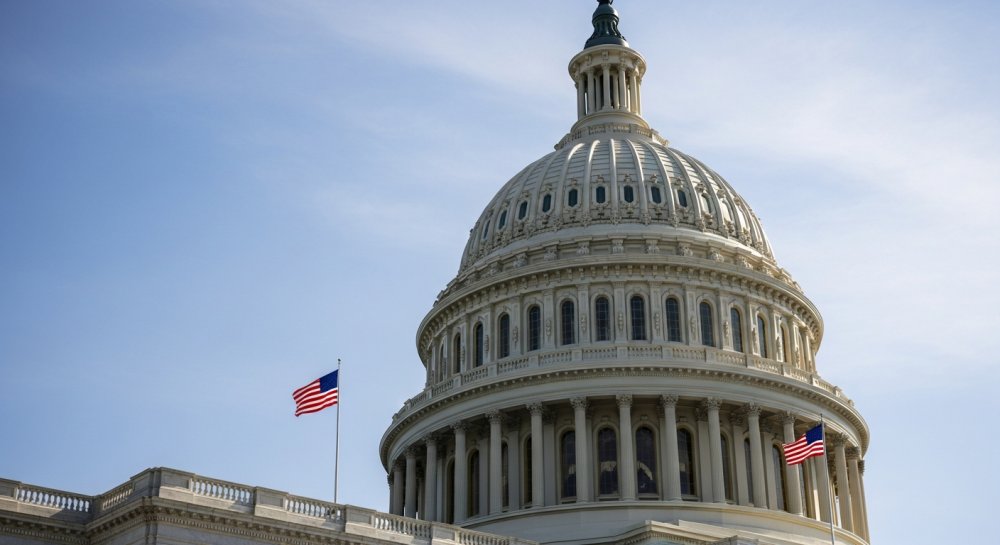
What Really Happened This Week in Washington

Faith Facts
- The House passed a resolution limiting presidential war powers against Iran, sparking constitutional debates about executive authority
- President Trump issued a memo to remove the Kennedy family name from the Kennedy Center, citing ongoing political disputes
- Key legislative battles this week highlighted fundamental disagreements about federal power and national security
This week in Washington brought significant developments that reveal the ongoing clash between traditional American governance and progressive resistance to executive authority. President Trump’s administration faced renewed challenges from Congress while continuing to assert constitutional prerogatives.
The House of Representatives passed a controversial resolution aimed at limiting presidential war powers specifically targeting potential military action against Iran. The measure reflects Democrats’ continued efforts to constrain executive decision-making on matters of national security, raising concerns among conservatives about undermining America’s ability to respond swiftly to threats.
Constitutional scholars have debated whether such congressional actions properly balance the separation of powers or inappropriately handcuff the Commander-in-Chief. Supporters of strong executive authority argue that the president needs flexibility to protect American interests abroad, particularly when facing adversaries like Iran that sponsor terrorism and threaten regional stability.
In another significant move, President Trump issued a memo directing the removal of the Kennedy family name from the Kennedy Center for the Performing Arts. The decision sparked immediate controversy, with the administration citing ongoing political disputes with certain Kennedy family members who have been vocal critics of Trump’s policies.
The Kennedy Center, a living memorial to President John F. Kennedy, has operated under federal charter since 1964. Trump’s directive raises questions about the appropriate role of politics in managing national cultural institutions and whether partisan disagreements should influence such decisions.
These developments underscore the deep divisions in American political life and the ongoing tension between different visions for the country’s future. For faith-based conservatives, the week’s events highlight the importance of principled leadership that upholds constitutional order while advancing policies that protect American sovereignty and traditional values.
The legislative battles over war powers reflect broader concerns about America’s role in the world and the proper balance between congressional oversight and presidential authority in an era of asymmetric threats. Many Christians who prioritize peace through strength see these constraints as potentially dangerous to national security.
Let us know what you think, please share your thoughts in the comments below.


Faith Facts
- Scripture warns against creating images that could lead to idolatry, as seen in the account of the golden calf in Exodus 32.
- The Bible teaches that God alone deserves worship, and any object resembling a pagan deity raises serious spiritual concerns.
- Christian leaders have long called for vigilance against cultural influences that could subtly compromise faithfulness to biblical truth.
A senior official in the Trump administration has reportedly raised concerns about plans to display a bull statue at an international exhibition, citing its resemblance to the golden calf condemned in the book of Exodus.
The official expressed worry that the statue could be interpreted as honoring a Canaanite deity rather than serving as a neutral cultural artifact.
“We should not be participating in something that could be seen as promoting idolatry,” the official stated, according to reports.
Critics of the exhibit argue that such displays risk normalizing symbols once associated with pagan worship, especially at a time when many Americans are seeking to reaffirm biblical values in public life.
Supporters of the display claim the statue is merely artistic and historical, but faith-based observers remain unconvinced that context alone removes the spiritual implications.
Concerned believers point to Exodus 20:3-5, which commands, “Thou shalt have no other gods before me,” as a clear reminder that God’s people must avoid anything that could lead to misplaced reverence.
Let us know what you think, please share your thoughts in the comments below.

Faith Facts
- Scripture teaches that wisdom is a gift from God, not merely human achievement (Proverbs 2:6).
- Believers are called to seek discernment and understanding in times of rapid change (James 1:5).
- Technology must serve human dignity and moral responsibility, never replace them.
The world is racing ahead with artificial intelligence at a moment when traditional institutions are already strained.
Many leaders worry that the speed of development leaves little room for careful moral reflection.
“The world does not lack intelligence. It lacks time for wisdom.”
Christians have long held that true understanding comes from the fear of the Lord, not from raw computational power.
Rapid deployment of AI tools risks amplifying existing divisions rather than healing them.
“The world does not lack intelligence. It lacks time for wisdom.”
Families and churches are urged to ground new technologies in biblical principles before embracing them uncritically.
Let us know what you think, please share your thoughts in the comments below.
Faith Facts
- The Rev. Jim Rigby, pastor of U.S. Senate candidate James Talarico, publicly endorsed an ‘inclusive’ Bible that removes gendered references to God and eliminates titles such as ‘Son of God’ and ‘Lord.’
- Traditional Christian doctrine holds that Jesus Christ is the eternal Son of God, a truth affirmed in Scripture and central to the historic faith of the church.
- Scripture warns against altering God’s Word, stating that ‘every word of God is pure’ (Proverbs 30:5).
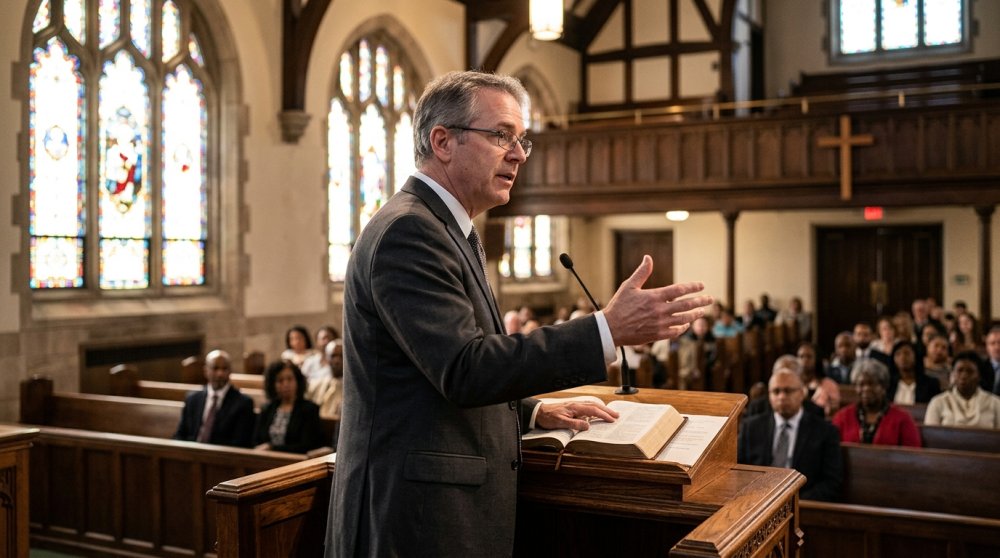
The Rev. Jim Rigby, pastor of Democratic Senate candidate James Talarico, was recorded promoting a new translation of the Bible that removes all gendered language for God.
Rigby encouraged listeners to ‘let go of the stupid stuff’ and praised the so-called ‘Inclusive Bible’ for replacing titles such as ‘Lord’ and ‘Son of God’ with gender-neutral terms.
“Let go of the stupid stuff.”
Critics argue that such changes distort the clear teaching of Scripture and undermine the deity of Christ.
The move reflects a broader effort by progressive churches to align biblical language with modern cultural preferences rather than preserving the historic text.
Let us know what you think, please share your thoughts in the comments below.
NEW: James Talarico’s longtime spiritual mentor, Rev. Jim Rigby, says his church provides copies of the “Inclusive Bible” to new members.
The “Inclusive Bible” strips the Bible of “gendered language.” It refuses to call Jesus the Son of God and describes traditional… pic.twitter.com/R6Nf4SPisg
— Amber Duke (@ambermarieduke) September 17, 2026


-

 Self-Reliance1 year ago
Trump’s Bold Move Uncovers Massive Social Security Fraud
-

 Faith1 year ago
New Clues Emerge in Noah’s Ark Mystery
-

 News2 years ago
Governor Walz’s Rhetoric Sparks National Controversy
-

 News1 year ago
Mel Gibson’s ‘The Passion of the Christ’ Sequel Title Announced
-

 Family1 year ago
Texas Lawmaker Targets Furries in Schools
-

 Freedom1 year ago
Maine Lawmaker Challenges Sports Fairness Controversy
-

 Family1 year ago
Canada’s Controversial Policy Sparks Ethical Debate
-
Faith10 months ago
Congress Hears Pleas for Nigerian Christians