
News
Trump Takes Aim at Media Elite During Unprecedented White House Correspondents’ Dinner

Faith Facts
- President Donald Trump delivered an unprecedented hour-long address at the rescheduled White House Correspondents’ Association dinner, directly confronting the mainstream media establishment
- The President received a notably cold reception from the press corps as he challenged individual reporters and Democratic political figures
- The confrontational tone marked a dramatic shift from the traditional format of the dinner, highlighting the ongoing tension between the Trump administration and legacy media outlets
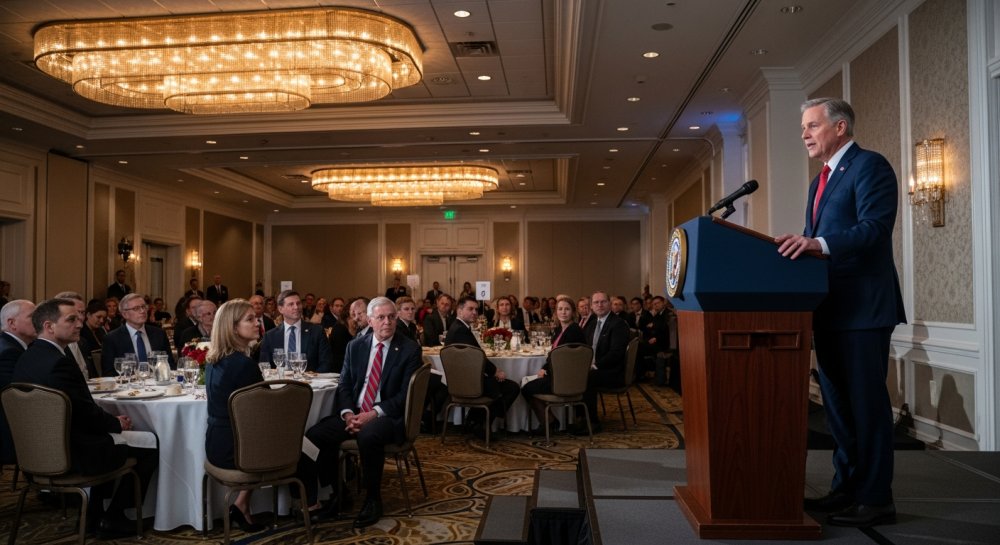
President Donald Trump made no apologies as he took the stage at the rescheduled White House Correspondents’ Association dinner Friday night in Washington, D.C. The President delivered an hour-long address that challenged the mainstream media establishment in ways rarely seen at the traditionally collegial event.
The reception from the assembled press corps was notably frosty. As Trump spoke, the atmosphere in the room reflected the deep divide between this administration and the legacy media organizations that have consistently opposed his agenda and questioned his policies.
Trump’s joke matchups for the next UFC fight at the White House…
“Sloppy Chris Christie, Chris Christie, one of the sloppiest human beings you’ll ever meet, fighting – I would say, I could mention the governor of Chicago, but I’m going to mention instead Jerry Nadler, and… pic.twitter.com/jpJaTkYb6j
— Curtis Houck (@CurtisHouck) July 25, 2026
Throughout his remarks, the President did not shy away from confronting specific reporters and media personalities who have shaped coverage of his administration. He also took aim at Democratic political figures, using the platform to address what many conservatives view as biased reporting and partisan attacks disguised as journalism.
The dinner, which had been rescheduled, became a stage for the President to bypass the usual diplomatic niceties. His willingness to speak plainly about media bias resonated with millions of Americans who feel the mainstream press has abandoned objectivity in favor of political activism.
At one point during the evening, Trump reportedly asked, “Is this supposed to be fun?” — a rhetorical question that captured the tension in the room. For conservative Americans who have watched the media’s treatment of this President, the question highlighted a broader truth about how the establishment press has abandoned its role as neutral observers.
The White House Correspondents’ Association dinner has long been a Washington tradition where politicians and journalists set aside their differences for an evening of humor and mutual respect. However, the event has increasingly become a symbol of the cozy relationship between the media elite and the political establishment — a relationship that excludes the voices and values of everyday Americans.
Trump’s approach to the dinner reflects his consistent refusal to play by the rules of a system that many conservatives believe is rigged against traditional values and constitutional principles. Rather than seek approval from media gatekeepers, the President continues to speak directly to the American people about issues that matter to them.
The confrontational tone of the evening underscores the fundamental disagreement between the Trump administration and much of the mainstream media about the proper role of journalism in American democracy. While the President advocates for transparency and accountability, critics argue the press has become an extension of the political opposition.
For Christians and conservatives across America, the President’s willingness to challenge media bias represents a refreshing departure from politicians who seek favor with influential journalists at the expense of truth. The values of honesty, integrity, and standing firm in conviction resonate deeply with those who believe the mainstream media has strayed from its foundational purpose.
As the evening concluded, the stark contrast between the President’s direct approach and the media establishment’s expectations was unmistakable. The dinner served as yet another reminder that the cultural and political divide in America extends far beyond policy disagreements into fundamental questions about truth, accountability, and who gets to shape the national narrative.
Let us know what you think, please share your thoughts in the comments below.

Faith Facts
- Leeds Minster is an historic Anglican church in the United Kingdom that serves as a place of Christian worship and community gathering.
- The Church of England has maintained a long-standing commitment to interfaith dialogue while upholding its Christian witness in the public square.
- Christians across the West continue to pray for the peace of Jerusalem and the protection of all innocent life amid the ongoing conflict in Gaza.
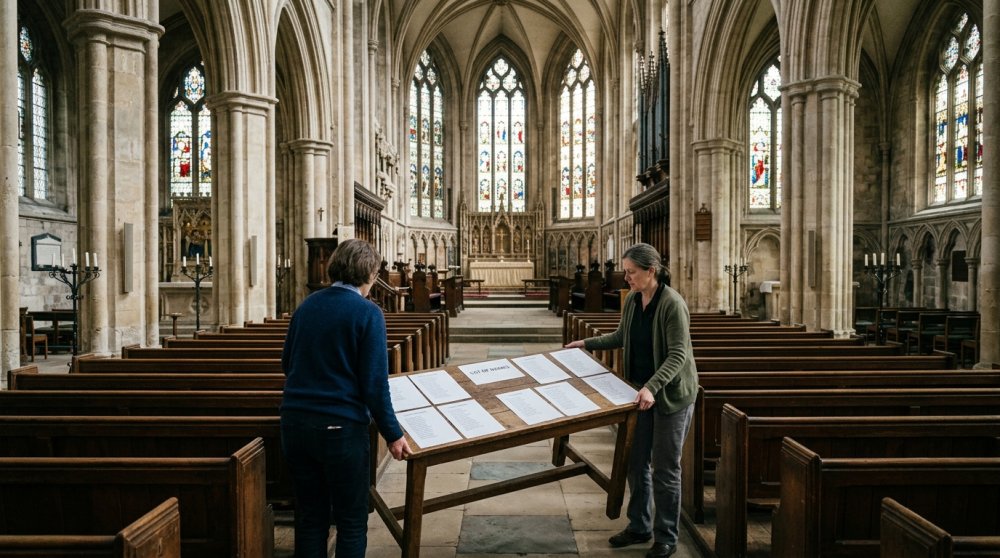
The woman who organized a memorial to Palestinians killed in Gaza has been asked to remove it from Leeds Minster after Jewish community members raised concerns about the names of Hamas terrorists being included.
The project was intended to honor those who died in the conflict, but it quickly drew criticism when several names on the list were identified as individuals linked to terrorist activities against Israel.
Church officials decided the display was inappropriate for a Christian place of worship and requested its removal to avoid further offense to the Jewish community and to maintain the sanctity of the Minster as a house of prayer.
The organizer expressed disappointment, saying the intention was simply to remember the dead and call for peace.
“We were just trying to show compassion for all victims of war,” she stated.
However, many Christians and Jewish observers welcomed the decision, arguing that a church should never host memorials that honor those who target civilians or glorify terrorism.
The incident highlights the growing tension between genuine humanitarian concern and the risk of inadvertently legitimizing groups like Hamas, whose charter calls for the destruction of Israel and the killing of Jews.
Christian leaders are reminding believers that true compassion must be rooted in truth and justice, not in selective outrage or political activism that blurs the line between victims and perpetrators.
Let us know what you think, please share your thoughts in the comments below.
Faith Facts
- Christians in Pakistan endure ongoing threats of forced conversion under pressure from local authorities and extremist groups.
- Religious freedom remains a fundamental human right rooted in Scripture and protected by God-given conscience.
- Prayer and advocacy for persecuted believers strengthen the global body of Christ.
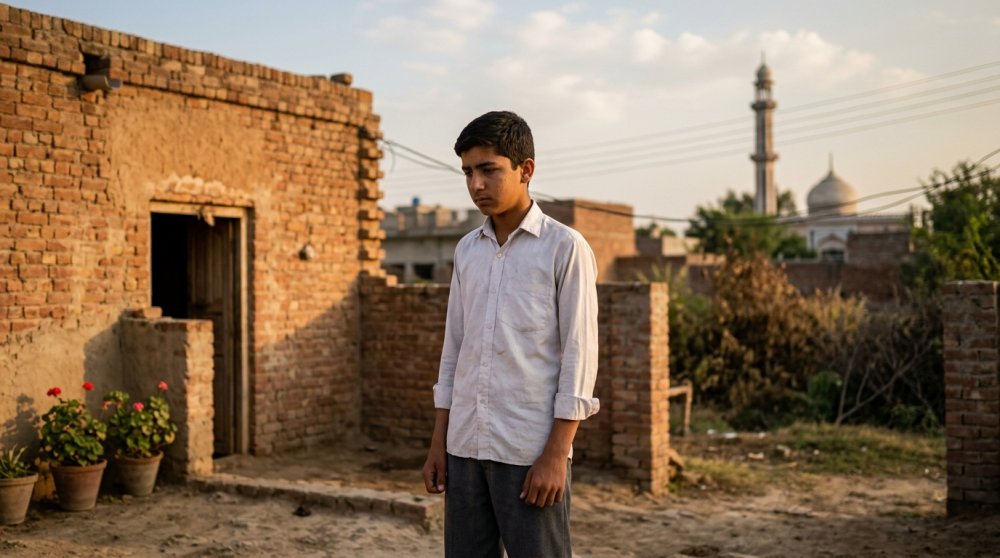
Forced conversion remains a serious and recurring problem throughout Pakistan, where minorities face daily pressure to abandon their faith.
Reports of coercion targeting young Christians continue to surface from multiple provinces, raising alarms among families and church leaders alike.
Parents and pastors describe threats, social isolation, and sometimes physical intimidation used to compel minors to recite Islamic declarations.
“We have seen children as young as fourteen taken from their homes and told they must convert or face consequences,”
“The authorities often look the other way when these cases involve influential families or local religious leaders,”
Christian communities across the country respond by strengthening prayer networks and urging international attention to these violations of conscience.
Believers remind one another that God sees every injustice and promises justice for the oppressed.
Advocates call on fellow Christians worldwide to intercede for protection and courage for those facing coercion.
Let us know what you think, please share your thoughts in the comments below.
Faith Facts
- The petition demands the resignation of Archbishop of Canterbury Sarah Mullally following her decision to honor a Muslim cleric who praised Osama bin Laden.
- The award was given on the anniversary of the September 11 attacks that killed nearly three thousand Americans.
- Thousands of Anglicans and concerned citizens have signed the petition calling for accountability and renewed commitment to traditional Christian values.
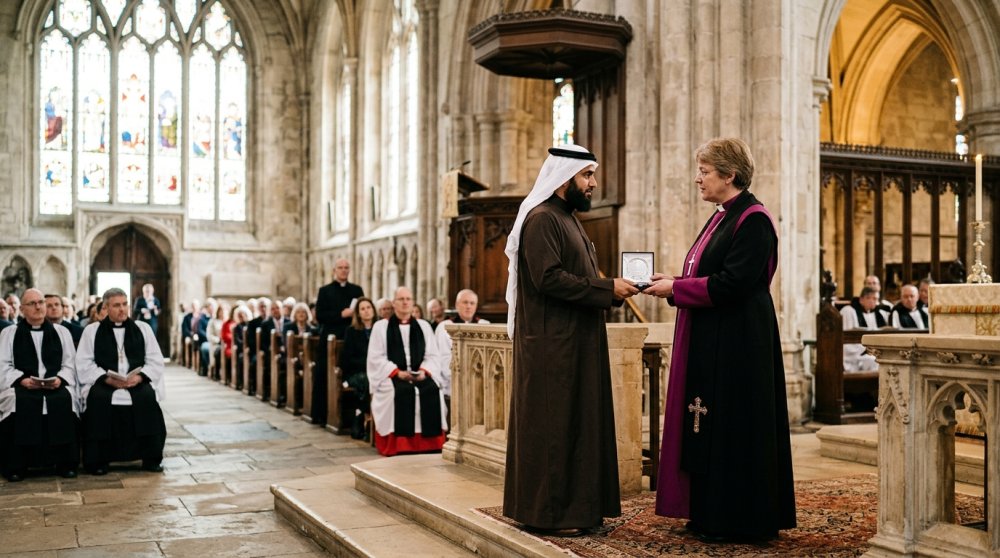
The Archbishop of Canterbury, Sarah Mullally, presented an award to a Muslim cleric who publicly praised Osama bin Laden on the anniversary of the September 11 terrorist attacks. The decision has sparked widespread outrage among Anglicans and conservative Christians across the United States and Britain.
A petition demanding her immediate resignation has quickly gained thousands of signatures. Supporters argue the award dishonors the memory of the victims and undermines the Church’s witness in a time of moral confusion.
“The timing and nature of this award represent a profound failure of leadership,” one petition organizer stated. “The Church must stand clearly against terrorism and for the values that built Western civilization.”
Many signers expressed concern that the gesture reflects a broader drift away from historic Christian teaching. They believe the Church should prioritize truth, national security, and the protection of innocent life rather than gestures of political correctness.
Critics also noted that honoring a cleric who praised the architect of the 9/11 attacks sends the wrong message to the faithful and to the watching world. The petition continues to gather support as more Anglicans and conservative Christians voice their objections.
Let us know what you think, please share your thoughts in the comments below.


-

 Self-Reliance1 year ago
Trump’s Bold Move Uncovers Massive Social Security Fraud
-

 Faith1 year ago
New Clues Emerge in Noah’s Ark Mystery
-

 News2 years ago
Governor Walz’s Rhetoric Sparks National Controversy
-

 News1 year ago
Mel Gibson’s ‘The Passion of the Christ’ Sequel Title Announced
-

 Family2 years ago
Texas Lawmaker Targets Furries in Schools
-

 Freedom2 years ago
Maine Lawmaker Challenges Sports Fairness Controversy
-

 Family1 year ago
Canada’s Controversial Policy Sparks Ethical Debate
-
Faith10 months ago
Congress Hears Pleas for Nigerian Christians