
Faith
What Melting Ice Cream Teaches About Eternal Truth


Faith Facts
- Simple everyday experiences like eating ice cream can reveal profound spiritual truths about gratitude and eternity
- Jesus used parables from ordinary life to teach deeper theological lessons to His followers
- Christian teacher J.John draws parallels between melting ice cream and the fleeting nature of earthly pleasures
What could a melting ice cream cone possibly teach us about life, gratitude, and eternity? More than most people might imagine, according to Christian teacher J.John, who uses this simple summer treat as a powerful illustration of timeless spiritual truth.
Ice cream serves as a reminder that some things simply aren’t meant to last. Just as Jesus used parables drawn from everyday life to highlight deeper truths, J.John finds meaning in common experiences that resonate with modern believers.
The melting nature of ice cream becomes a metaphor for the temporary pleasures of this world. No matter how delicious or satisfying, ice cream cannot be preserved indefinitely—it requires immediate enjoyment or it will be lost. This fleeting quality mirrors the transient nature of earthly comforts and material possessions.
For Christians, this simple observation carries profound theological weight. Scripture repeatedly warns believers not to store up treasures on earth, where moth and rust destroy, but rather to focus on eternal rewards. The melting ice cream becomes a tangible illustration of this biblical principle.
The lesson extends beyond mere impermanence to gratitude. When we recognize that pleasurable moments are temporary gifts rather than permanent entitlements, we develop a deeper appreciation for them. Each lick of ice cream on a summer day becomes an opportunity for thankfulness rather than something taken for granted.
This approach to finding theological lessons in everyday experiences reflects a rich Christian tradition. Throughout history, believers have understood that God’s truth is woven into the fabric of creation itself. From the parables of Jesus—featuring seeds, soil, shepherds, and wedding feasts—to the Psalms celebrating the heavens declaring God’s glory, Scripture affirms that spiritual truth can be discovered in ordinary moments.
J.John’s ice cream illustration also speaks to the importance of living in the present moment. Just as ice cream must be enjoyed before it melts, opportunities for faithfulness, kindness, and witness may not always be available. The urgency of the Gospel message finds an unlikely companion in the urgency of eating ice cream before it drips away.
For families, this simple lesson offers a valuable teaching tool. Parents can use everyday experiences like enjoying ice cream to introduce children to deeper spiritual concepts in accessible ways. The melting cone becomes a conversation starter about what truly lasts and what fades away.
The contrast between temporary pleasures and eternal realities remains central to Christian teaching. While ice cream melts, the love of God endures forever. While earthly delights fade, the promises of Scripture stand firm. While our physical bodies age and decline, the soul destined for eternity with Christ has imperishable value.
This theological reflection on ice cream also challenges the modern obsession with preserving and extending every pleasure. American culture increasingly seeks to make everything permanent, controllable, and endlessly repeatable. Yet some of life’s greatest joys derive precisely from their fleeting nature—the sunset that lasts only minutes, the childhood that passes too quickly, the ice cream that won’t wait.
Accepting impermanence with grace and gratitude reflects spiritual maturity. It demonstrates trust that God provides what we need when we need it, rather than demanding to control and extend every good thing beyond its appointed time.
The ice cream lesson ultimately points believers toward eternity. If earthly pleasures are this delightful yet so temporary, how much more glorious must be the eternal pleasures at God’s right hand? The melting cone becomes not a cause for despair but a signpost pointing toward something infinitely better and eternally lasting.
J.John’s ability to draw spiritual insight from summer fun demonstrates the creativity and relevance that effective Christian teaching requires. Rather than remaining abstract or disconnected from daily life, the most powerful theological lessons often emerge from the most ordinary circumstances.
As believers navigate an increasingly complex world, finding God’s truth in simple pleasures like ice cream offers both comfort and challenge. It reminds us that every moment contains potential for spiritual growth, every experience can teach us about our Creator, and even the smallest joys can point us toward eternal realities.
Let us know what you think, please share your thoughts in the comments below.

Faith Facts
- A Pakistani court sentenced one Muslim man to 10 years in prison for his role in the August 2023 attacks on churches in Jaranwala
- Thirteen other defendants were acquitted due to flawed police investigations into the violent anti-Christian attacks
- The Jaranwala attacks saw mobs destroy dozens of churches and Christian homes following blasphemy accusations
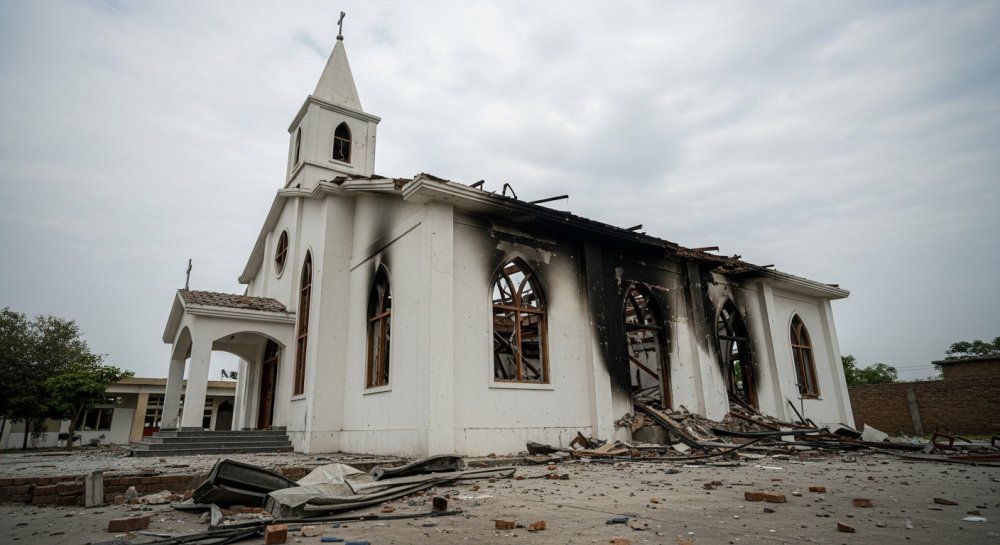
A court in Pakistan has delivered its first conviction related to the devastating August 2023 attacks against Christians in Jaranwala, sentencing one Muslim man to a decade behind bars. The ruling marks a rare instance of accountability in a nation where violence against religious minorities often goes unpunished.
However, the court acquitted 13 other defendants charged in connection with the violent mob attacks that terrorized the Christian community. The acquittals stemmed from what sources described as deeply flawed police investigations, raising concerns about Pakistan’s commitment to protecting its religious minorities.
The August 2023 attacks in Jaranwala shook Pakistan’s Christian community when Muslim mobs rampaged through Christian neighborhoods. Fueled by blasphemy allegations, the attackers set fire to churches and homes, leaving families homeless and congregations without places of worship. The violence underscored the dangerous consequences of Pakistan’s blasphemy laws, which are frequently weaponized against Christians and other religious minorities.
The single conviction, while a step toward justice, highlights the systemic challenges Christians face in Pakistan. With only one perpetrator held accountable while others walk free, many believers question whether the Pakistani justice system can adequately protect them from religious persecution.
For American Christians who cherish religious freedom as a foundational right, the situation in Pakistan serves as a sobering reminder of the persecution believers endure worldwide. The constitutional protections Americans enjoy stand in stark contrast to the daily threats faced by Pakistani Christians simply for practicing their faith.
The inadequate police work that led to the mass acquittals raises troubling questions about whether authorities deliberately undermined the cases or simply lack the resources and will to defend religious minorities. Either scenario points to a justice system that fails to deliver equal protection under the law—a principle American Christians hold dear.
As persecution of Christians intensifies globally, the Jaranwala attacks and their aftermath demonstrate the urgent need for international pressure on countries that fail to protect religious minorities. Faith communities in the United States can play a vital role through prayer, advocacy, and support for persecuted believers abroad.
Let us know what you think, please share your thoughts in the comments below.
Faith Facts
- A new generation of young Christian conservatives is attempting to restore biblical orthodoxy within America’s historic Mainline Protestant denominations
- Mainline Protestant churches have experienced decades of declining membership amid theological liberalization and departure from traditional Christian teaching
- Conservative believers like Alex Hibbs are working to reclaim their denominational heritage for Gospel-centered faith and traditional values
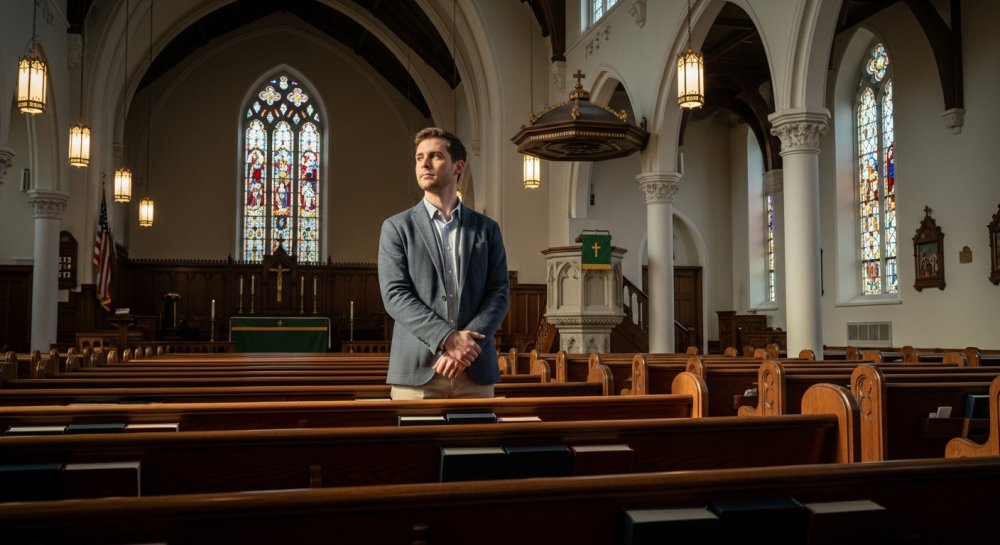
Across America’s historic Protestant denominations, a quiet revolution is underway. Young Christian conservatives are refusing to abandon the churches their grandparents built, instead choosing to fight for biblical truth within institutions that have drifted far from their founding principles.
Alex Hibbs represents a growing number of earnest young believers who are challenging the status quo. Rather than simply leaving for more theologically sound congregations, these faithful Christians are working to reclaim their denominational heritage for the Gospel.
The stakes could not be higher. America’s Mainline Protestant churches—including the United Methodist Church, Presbyterian Church (USA), Episcopal Church, and Evangelical Lutheran Church in America—have hemorrhaged members for decades as they’ve embraced progressive theological positions at odds with Scripture. These denominations, which once formed the spiritual backbone of American Christianity, now face existential questions about their future.
The decline has been stunning. What were once thriving communities of faith have become shadows of their former selves, with aging congregations, empty pews, and diminishing cultural influence. Many observers have written off these historic institutions as lost causes, destined for irrelevance.
But the young conservatives now stepping forward refuse to accept that verdict. They see the historic confessions, the beautiful liturgies, and the rich theological traditions of these denominations as worth fighting for. They believe that biblical faithfulness and traditional Christian teaching can be restored, one congregation and one presbytery at a time.
The path forward is not easy. These young believers face entrenched denominational bureaucracies, liberal leadership, and decades of institutional momentum moving away from orthodoxy. They are often outnumbered and outmaneuvered by those who have redefined Christianity to accommodate contemporary cultural values rather than biblical truth.
Yet their determination springs from a deep conviction that these churches belong to Christ, not to any particular generation or ideological faction. They understand that surrendering these historic institutions without a fight means abandoning not just buildings and endowments, but centuries of faithful witness and theological heritage.
The question remains whether this effort can succeed. Can a remnant of faithful believers turn around massive denominational ships that have been sailing toward theological liberalism for half a century? Can they overcome the structural and cultural barriers that have been erected against traditional Christian teaching?
History offers both encouragement and caution. Throughout Church history, faithful minorities have sometimes sparked remarkable renewals. But history also records many instances where theological compromise proved irreversible, leading to the necessity of separation and new beginnings.
What sets this current effort apart is the conviction and clarity of the young conservatives leading it. They are not seeking political power or institutional control for its own sake. They are motivated by a genuine love for the Gospel and a desire to see their churches proclaim biblical truth with courage and clarity.
The broader Christian community should watch these efforts with prayerful interest. The fate of America’s Mainline churches matters not just to those denominations, but to the witness of Christianity in American public life. These historic institutions still occupy significant real estate, literal and metaphorical, in communities across the nation.
Whether through internal reform or eventual realignment, the struggle for the soul of these denominations represents a crucial front in the larger battle for biblical faithfulness in American Christianity. The outcome will shape not just individual congregations, but the religious landscape of the nation for generations to come.
Let us know what you think, please share your thoughts in the comments below.
Faith Facts
- France’s National Assembly approved an assisted dying bill, sparking serious concerns from evangelical Christians about threats to the sanctity of life
- The national evangelical alliance warns vulnerable citizens will face pressure to end their lives rather than receive compassionate care
- Christian leaders view this legislation as another assault on biblical values of human dignity and the inherent worth of every person
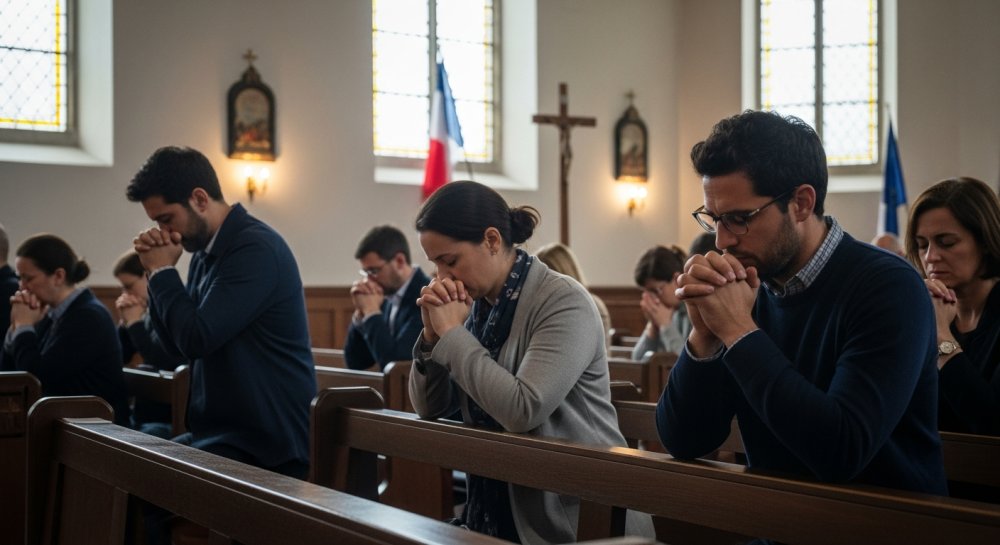
France’s National Assembly has passed a controversial assisted dying bill, and now Christian leaders across the nation are sounding the alarm about what this means for the most vulnerable members of society.
The national evangelical alliance issued a stern warning that this legislation will create dangerous pressure on elderly, disabled, and sick individuals to choose death over continued care. Rather than protecting the weak, Christian leaders argue, this law effectively encourages them to view themselves as burdens worthy of elimination.
This development represents yet another troubling departure from the Judeo-Christian values that once formed the foundation of Western civilization. Where the Bible teaches that every human life is created in the image of God and possesses inherent dignity from conception to natural death, secular governments increasingly embrace a utilitarian calculus that measures human worth by productivity and convenience.
French evangelicals recognize that true compassion means caring for the suffering, not eliminating the sufferer. They understand that legalizing assisted suicide doesn’t expand freedom—it creates an expectation that the vulnerable should consider ending their lives to avoid being a burden on family or society.
The pressure on vulnerable populations under such laws is well-documented in other nations that have traveled this path. Elderly patients report feeling obligated to choose death rather than continue receiving care. Those with disabilities face the implicit message that their lives are less valuable. The sick encounter doctors who present death as a reasonable medical option alongside treatment.
For Bible-believing Christians, this issue goes to the heart of what it means to be human and how a just society treats its weakest members. Scripture consistently calls God’s people to defend the vulnerable, care for the sick, and honor the elderly—principles that stand in direct opposition to state-sanctioned suicide.
The French evangelical alliance’s warning deserves serious attention from Americans watching similar debates unfold across the United States. What happens in France today could easily arrive on our shores tomorrow if Christians fail to stand firm on the sanctity of human life.
This battle is ultimately spiritual in nature. When societies reject God’s authority over life and death, they inevitably slide toward policies that devalue human existence. Only by returning to biblical truth about the inherent worth of every person can nations resist the culture of death that increasingly dominates secular governance.
French Christians are now called to be salt and light in their nation, speaking truth about human dignity and offering genuine compassion through sacrificial care for those who suffer. American believers should stand with them in prayer and learn from their courage to oppose laws that contradict God’s design for human flourishing.
Let us know what you think, please share your thoughts in the comments below.


-

 Self-Reliance1 year ago
Trump’s Bold Move Uncovers Massive Social Security Fraud
-

 Faith1 year ago
New Clues Emerge in Noah’s Ark Mystery
-

 News1 year ago
Governor Walz’s Rhetoric Sparks National Controversy
-

 News1 year ago
Mel Gibson’s ‘The Passion of the Christ’ Sequel Title Announced
-

 Family1 year ago
Texas Lawmaker Targets Furries in Schools
-

 Freedom1 year ago
Maine Lawmaker Challenges Sports Fairness Controversy
-

 Family1 year ago
Canada’s Controversial Policy Sparks Ethical Debate
-
Faith8 months ago
Congress Hears Pleas for Nigerian Christians