
Faith
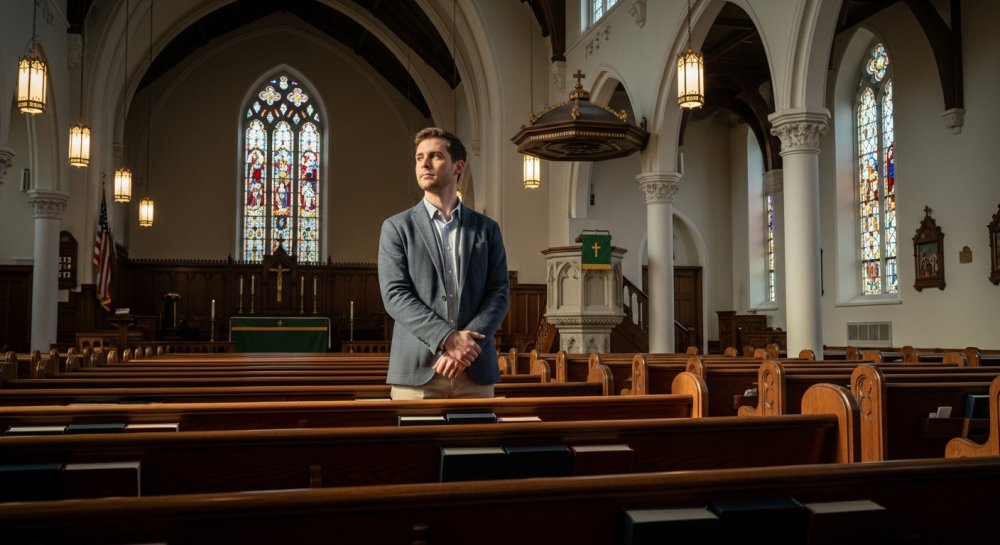
Young Believers Launch Unlikely Battle Inside America’s Oldest Churches

Faith Facts
- A new generation of young Christian conservatives is attempting to restore biblical orthodoxy within America’s historic Mainline Protestant denominations
- Mainline Protestant churches have experienced decades of declining membership amid theological liberalization and departure from traditional Christian teaching
- Conservative believers like Alex Hibbs are working to reclaim their denominational heritage for Gospel-centered faith and traditional values
Across America’s historic Protestant denominations, a quiet revolution is underway. Young Christian conservatives are refusing to abandon the churches their grandparents built, instead choosing to fight for biblical truth within institutions that have drifted far from their founding principles.
Alex Hibbs represents a growing number of earnest young believers who are challenging the status quo. Rather than simply leaving for more theologically sound congregations, these faithful Christians are working to reclaim their denominational heritage for the Gospel.
The stakes could not be higher. America’s Mainline Protestant churches—including the United Methodist Church, Presbyterian Church (USA), Episcopal Church, and Evangelical Lutheran Church in America—have hemorrhaged members for decades as they’ve embraced progressive theological positions at odds with Scripture. These denominations, which once formed the spiritual backbone of American Christianity, now face existential questions about their future.
The decline has been stunning. What were once thriving communities of faith have become shadows of their former selves, with aging congregations, empty pews, and diminishing cultural influence. Many observers have written off these historic institutions as lost causes, destined for irrelevance.
But the young conservatives now stepping forward refuse to accept that verdict. They see the historic confessions, the beautiful liturgies, and the rich theological traditions of these denominations as worth fighting for. They believe that biblical faithfulness and traditional Christian teaching can be restored, one congregation and one presbytery at a time.
The path forward is not easy. These young believers face entrenched denominational bureaucracies, liberal leadership, and decades of institutional momentum moving away from orthodoxy. They are often outnumbered and outmaneuvered by those who have redefined Christianity to accommodate contemporary cultural values rather than biblical truth.
Yet their determination springs from a deep conviction that these churches belong to Christ, not to any particular generation or ideological faction. They understand that surrendering these historic institutions without a fight means abandoning not just buildings and endowments, but centuries of faithful witness and theological heritage.
The question remains whether this effort can succeed. Can a remnant of faithful believers turn around massive denominational ships that have been sailing toward theological liberalism for half a century? Can they overcome the structural and cultural barriers that have been erected against traditional Christian teaching?
History offers both encouragement and caution. Throughout Church history, faithful minorities have sometimes sparked remarkable renewals. But history also records many instances where theological compromise proved irreversible, leading to the necessity of separation and new beginnings.
What sets this current effort apart is the conviction and clarity of the young conservatives leading it. They are not seeking political power or institutional control for its own sake. They are motivated by a genuine love for the Gospel and a desire to see their churches proclaim biblical truth with courage and clarity.
The broader Christian community should watch these efforts with prayerful interest. The fate of America’s Mainline churches matters not just to those denominations, but to the witness of Christianity in American public life. These historic institutions still occupy significant real estate, literal and metaphorical, in communities across the nation.
Whether through internal reform or eventual realignment, the struggle for the soul of these denominations represents a crucial front in the larger battle for biblical faithfulness in American Christianity. The outcome will shape not just individual congregations, but the religious landscape of the nation for generations to come.
Let us know what you think, please share your thoughts in the comments below.

Faith Facts
- Dr Michael Tang relocated from London to Yorkshire to serve rural believers after observing urban church trends.
- Smaller rural churches often rely on older faithful members who continue to uphold traditional worship and community.
- The focus on headline-grabbing urban growth can overlook the steady witness of countryside congregations.
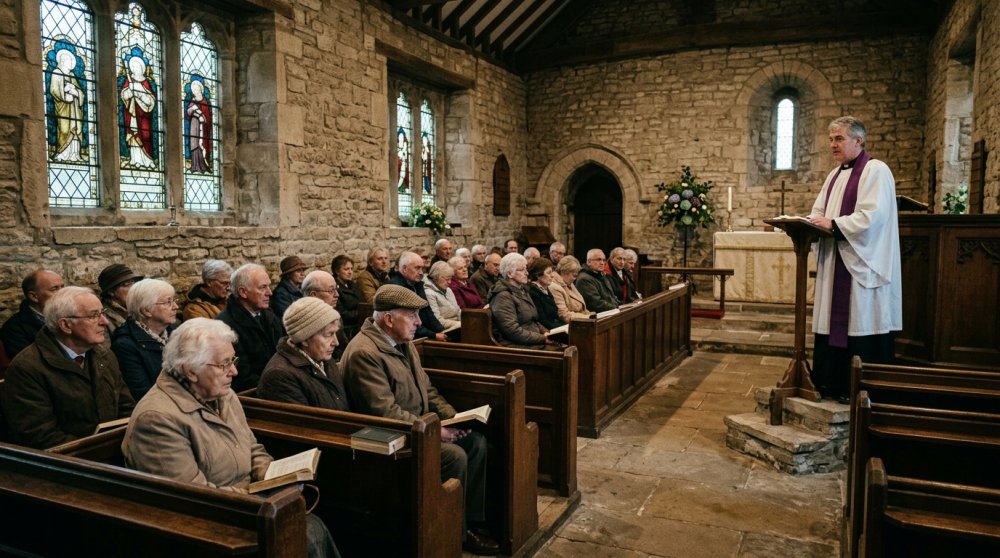
Big city churches full of young people are great, says Dr Michael Tang. But what about smaller rural ones, with their faithful older congregations?
After moving from London to Yorkshire, he’s learning to listen to the wisdom of age, not just the headline-grabbing reports of church growth.
“Big city churches full of young people are great, says Dr Michael Tang. But what about smaller rural ones, with their faithful older congregations?”
“After moving from London to Yorkshire, he’s learning to listen to the wisdom of age, not just the headline-grabbing reports of church growth.”
Let us know what you think, please share your thoughts in the comments below.
Faith Facts
- Eric Metaxas emphasizes the biblical foundation of American self-government.
- Nathan Hale, executed by the British at age 21, exemplifies early American faithfulness and courage.
- Remembering heroic figures like Hale strengthens national resolve rooted in biblical truth.
Author Eric Metaxas recently spoke with The Christian Post about the urgent need to recall the biblical principles that shaped American self-government.
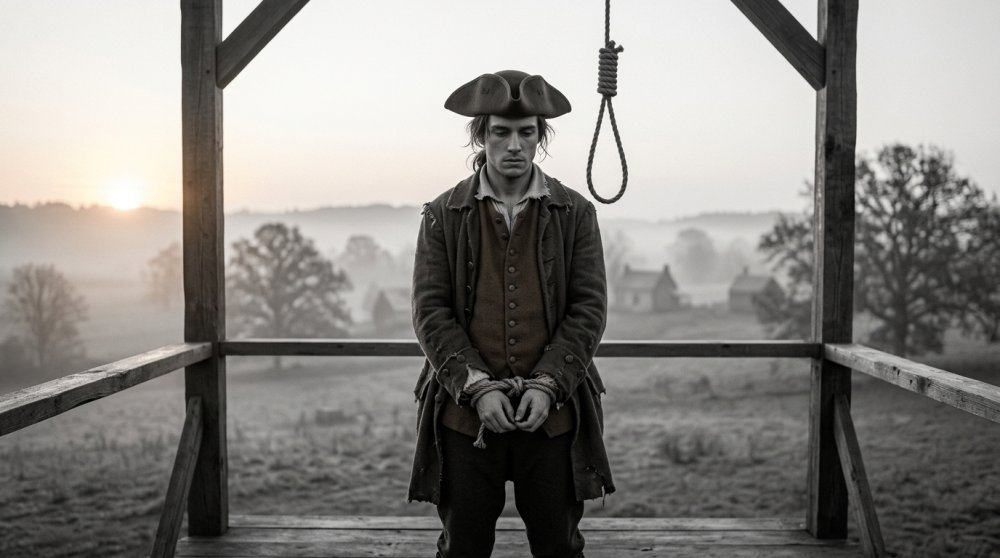
Metaxas pointed to the story of Nathan Hale, the 21-year-old patriot who was hanged by British forces 250 years ago this week, as a powerful example of sacrificial courage.
“We need to remember these heroic figures who laid down their lives for the cause of liberty,” he said.
The author stressed that such stories are not mere historical footnotes but living reminders of the Christian virtues that once defined the American experiment.
“Without these examples, we lose the moral imagination required to sustain freedom,” Metaxas added.
He urged believers and citizens alike to recover the memory of those who stood firm in faith and principle during the nation’s founding era.
Let us know what you think, please share your thoughts in the comments below.
Faith Facts
- A North Carolina church baptized 458 people in one day.
- This event marks the largest single-day baptism in the congregation’s 137-year history.
- The congregation attributes the record turnout to God at work in their community.
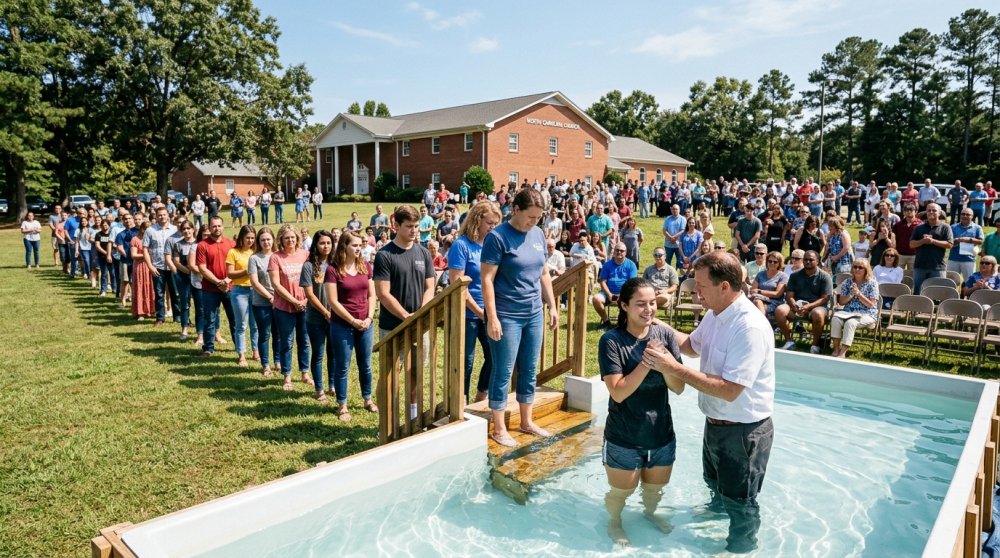
A multisite church in North Carolina baptized 458 people in a single day. This remarkable turnout set a new record for the congregation.
The milestone surpasses any previous single-day baptism in the church’s 137-year history. Church leaders say the outpouring reflects God’s active work among their members and surrounding communities.
Let us know what you think, please share your thoughts in the comments below.


-

 Self-Reliance1 year ago
Trump’s Bold Move Uncovers Massive Social Security Fraud
-

 Faith1 year ago
New Clues Emerge in Noah’s Ark Mystery
-

 News2 years ago
Governor Walz’s Rhetoric Sparks National Controversy
-

 News1 year ago
Mel Gibson’s ‘The Passion of the Christ’ Sequel Title Announced
-

 Family2 years ago
Texas Lawmaker Targets Furries in Schools
-

 Freedom2 years ago
Maine Lawmaker Challenges Sports Fairness Controversy
-

 Family1 year ago
Canada’s Controversial Policy Sparks Ethical Debate
-
Faith10 months ago
Congress Hears Pleas for Nigerian Christians