
Faith
What Melting Ice Cream Teaches About Eternal Truth


Faith Facts
- Simple everyday experiences like eating ice cream can reveal profound spiritual truths about gratitude and eternity
- Jesus used parables from ordinary life to teach deeper theological lessons to His followers
- Christian teacher J.John draws parallels between melting ice cream and the fleeting nature of earthly pleasures
What could a melting ice cream cone possibly teach us about life, gratitude, and eternity? More than most people might imagine, according to Christian teacher J.John, who uses this simple summer treat as a powerful illustration of timeless spiritual truth.
Ice cream serves as a reminder that some things simply aren’t meant to last. Just as Jesus used parables drawn from everyday life to highlight deeper truths, J.John finds meaning in common experiences that resonate with modern believers.
The melting nature of ice cream becomes a metaphor for the temporary pleasures of this world. No matter how delicious or satisfying, ice cream cannot be preserved indefinitely—it requires immediate enjoyment or it will be lost. This fleeting quality mirrors the transient nature of earthly comforts and material possessions.
For Christians, this simple observation carries profound theological weight. Scripture repeatedly warns believers not to store up treasures on earth, where moth and rust destroy, but rather to focus on eternal rewards. The melting ice cream becomes a tangible illustration of this biblical principle.
The lesson extends beyond mere impermanence to gratitude. When we recognize that pleasurable moments are temporary gifts rather than permanent entitlements, we develop a deeper appreciation for them. Each lick of ice cream on a summer day becomes an opportunity for thankfulness rather than something taken for granted.
This approach to finding theological lessons in everyday experiences reflects a rich Christian tradition. Throughout history, believers have understood that God’s truth is woven into the fabric of creation itself. From the parables of Jesus—featuring seeds, soil, shepherds, and wedding feasts—to the Psalms celebrating the heavens declaring God’s glory, Scripture affirms that spiritual truth can be discovered in ordinary moments.
J.John’s ice cream illustration also speaks to the importance of living in the present moment. Just as ice cream must be enjoyed before it melts, opportunities for faithfulness, kindness, and witness may not always be available. The urgency of the Gospel message finds an unlikely companion in the urgency of eating ice cream before it drips away.
For families, this simple lesson offers a valuable teaching tool. Parents can use everyday experiences like enjoying ice cream to introduce children to deeper spiritual concepts in accessible ways. The melting cone becomes a conversation starter about what truly lasts and what fades away.
The contrast between temporary pleasures and eternal realities remains central to Christian teaching. While ice cream melts, the love of God endures forever. While earthly delights fade, the promises of Scripture stand firm. While our physical bodies age and decline, the soul destined for eternity with Christ has imperishable value.
This theological reflection on ice cream also challenges the modern obsession with preserving and extending every pleasure. American culture increasingly seeks to make everything permanent, controllable, and endlessly repeatable. Yet some of life’s greatest joys derive precisely from their fleeting nature—the sunset that lasts only minutes, the childhood that passes too quickly, the ice cream that won’t wait.
Accepting impermanence with grace and gratitude reflects spiritual maturity. It demonstrates trust that God provides what we need when we need it, rather than demanding to control and extend every good thing beyond its appointed time.
The ice cream lesson ultimately points believers toward eternity. If earthly pleasures are this delightful yet so temporary, how much more glorious must be the eternal pleasures at God’s right hand? The melting cone becomes not a cause for despair but a signpost pointing toward something infinitely better and eternally lasting.
J.John’s ability to draw spiritual insight from summer fun demonstrates the creativity and relevance that effective Christian teaching requires. Rather than remaining abstract or disconnected from daily life, the most powerful theological lessons often emerge from the most ordinary circumstances.
As believers navigate an increasingly complex world, finding God’s truth in simple pleasures like ice cream offers both comfort and challenge. It reminds us that every moment contains potential for spiritual growth, every experience can teach us about our Creator, and even the smallest joys can point us toward eternal realities.
Let us know what you think, please share your thoughts in the comments below.


Faith Facts
- The Bible records Noah’s Ark as a historical vessel built at God’s command to preserve life during the Flood.
- Archaeologists and geologists continue to study sites in Turkey that some claim match the Ark’s resting place.
- Christians are urged to ground their faith in Scripture rather than unverified discoveries.
Explosive headlines this week announced that Noah’s Ark has been discovered beneath a mountain range in Turkey. The claims have quickly spread across social media and news outlets, stirring both excitement and skepticism among believers.
Chris Sinkinson, a respected Christian author and lecturer, cautions that such announcements often outpace the evidence. He urges fellow believers to remain anchored in Scripture and verified facts rather than sensational reports.
“Christians need to stick to the facts,” Sinkinson stated. His words serve as a timely reminder that faith rests on the unchanging Word of God, not on the latest archaeological headline.
While the possibility of discovering physical remnants of the Ark is intriguing, experts note that conclusive proof remains elusive. Many past claims have failed under closer scientific examination.
Scripture itself provides the foundation for understanding the Flood and God’s covenant with Noah. Believers are reminded that the reliability of the Bible does not depend on locating the physical Ark.
Let us know what you think, please share your thoughts in the comments below.
Faith Facts
- Revelation chapters 2 and 3 contain direct messages from Jesus to seven churches in Asia Minor, blending commendation with stern rebuke.
- Scripture records that Jesus declares, “I know your works,” underscoring His intimate awareness of both corporate and personal conduct.
- The warnings delivered to these early congregations still apply to contemporary churches that drift into compromise or complacency.
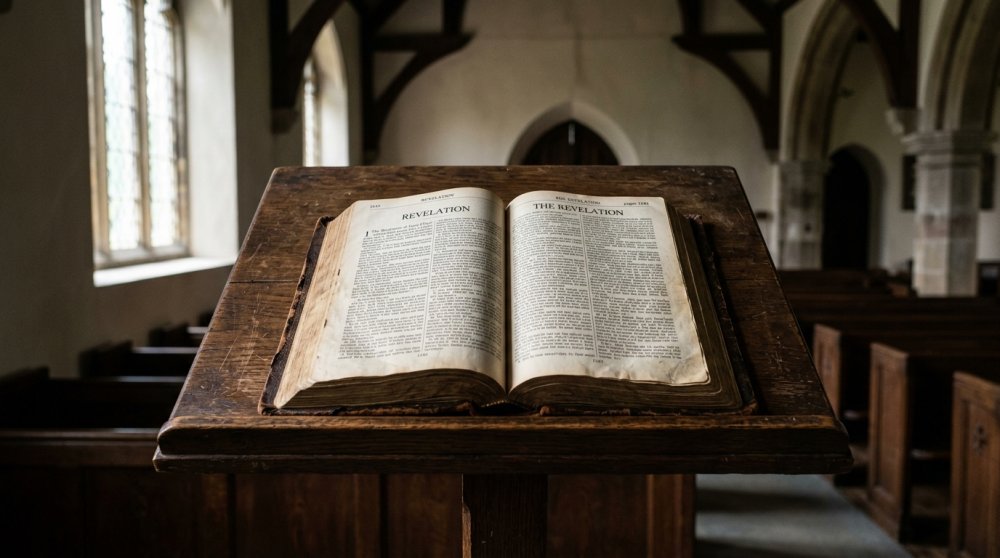
In Revelation 2 and 3, the gentle and lowly Jesus speaks to seven churches with both praise and severe warning.
He knows their works, their compromises and what they can’t see about themselves.
He knows ours, too.
Let us know what you think, please share your thoughts in the comments below.

Faith Facts
- Professional wrestler Samoa Joe has publicly encouraged Christians to give a portion of their income to the local church.
- Joe described his decision to tithe as one of his “greatest decisions.”
- The call to tithe reflects the biblical principle of returning the firstfruits of one’s labor to God.
Professional wrestler Samoa Joe is using his platform to point believers toward faithful giving. He recently shared that his commitment to tithing remains one of the most important choices he has made.
Joe described the practice as both a spiritual discipline and a source of blessing in his life. His public encouragement comes at a time when many families are weighing how to honor God with their finances amid rising costs and economic uncertainty.
“One of my greatest decisions was to tithe,”
The wrestler’s testimony underscores the biblical call found in Malachi 3:10, where God invites His people to bring the whole tithe into the storehouse. For Christian audiences, Joe’s words serve as a reminder that generosity is not limited to pastors or ministry professionals.
His straightforward challenge to tithe resonates with believers who see financial stewardship as an act of worship rather than mere obligation. In an industry often marked by self-promotion, Joe’s public stand for biblical giving offers a refreshing counter-example.
Let us know what you think, please share your thoughts in the comments below.


-

 Self-Reliance2 years ago
Trump’s Bold Move Uncovers Massive Social Security Fraud
-

 Faith1 year ago
New Clues Emerge in Noah’s Ark Mystery
-

 News2 years ago
Governor Walz’s Rhetoric Sparks National Controversy
-

 News2 years ago
Mel Gibson’s ‘The Passion of the Christ’ Sequel Title Announced
-

 Family2 years ago
Texas Lawmaker Targets Furries in Schools
-

 Freedom2 years ago
Maine Lawmaker Challenges Sports Fairness Controversy
-

 Family1 year ago
Canada’s Controversial Policy Sparks Ethical Debate
-
Faith11 months ago
Congress Hears Pleas for Nigerian Christians